Showing posts with label police. Show all posts

Sunday, August 24, 2025

Trump's (Dis)order Gamble


Trump is invading U.S. cities.

It's a disgraceful assault on American liberty; the predictable upshot of electing a tinpot authoritarian to the most powerful office in the world.

But because this is still (nominally) a democracy, we also have to consider how it will play out politically.

These moves are not popular. And I think that over the mid-term, they will backfire on Trump, because paradoxically they give the appearance of disorder.

To be clear, I think it's clear that the main motivator of the Trump invasion of our cities is not about short-term political calculus at all. It is a genuine, earnestly-felt commitment to sadistic authoritarianism that in particular views terrorizing blue city residents as its own reward. We shouldn't overinterpret this as a product of deep strategy.

That said, the political logic at work here is I think clear enough: it's a gamble that when voters see these images of the disordered city, they'll instinctively race back to the "law and order" party. Cities are dangerous (so dangerous we need the military to step in); Trump is keeping you safe.

But I don't think the gamble is going to pay off. When one sees men in army fatigues marching down city streets accosting residents (and the inevitable protests and resistance such conduct inspires), the thought that tends to follow is rarely "things are going great!" Deploying troops to American cities is the sort of thing one does in chaotic, all-is-near-lost situations. And so the more we have imagery coming out of an America where our communities are under military occupation, the more it entrenches a public sense that we're in dire straits -- a sentiment that rarely redounds to the benefit of the incumbent party.

So I do think that Democrats need to press that sense of disorder -- not randomly or haphazardly, but intelligently and judiciously (and yes, I recognize the paradox of promoting strategic, well-calibrated "disorder"). You want to encourage voters to associate the Trump reign with thoughts like "things are falling apart," "I'm afraid to go downtown because of the men Trump sent there," "is my job going away?", "things feel very unstable," and "I'm sick of this ride and I want to get off."

The trick -- and it's not always an easy trick -- is to make it so that voters attributed these sentiments to Trump, not the Democrats resisting Trump. But one major advantage Democrats have is that they're the out-party, and voters (rightly or wrongly) tend to attribute anything going on in the world, good or bad, to the incumbent. And in the current moment, where Trump is doing so many things that seem to prompt those negative thoughts, Democrats have a lot of opportunities to entrench a very simple overarching message: All those fears, all those anxieties, all those bad thoughts you're having -- that's Trump.

Thursday, June 12, 2025

"Personal Liberty Laws" for the MAGA Era


Earlier today, in response to the violent detention of California Senator Alex Padilla for the sin of asking an intemperate question of DHS Secretary Kristi Noem, someone quipped that "We have entered the 'caning of Charles Sumner' stage of historical parallels."

I've been thinking of antebellum precedents myself recently, albeit in response to a different issue: the new propensity of ICE and other federal police agencies to refuse to clearly identify themselves before purporting to make immigration-related arrests, and the corresponding rise in "ICE impersonator" events where criminals and scammers impersonate the agency to victimize vulnerable communities. What we are seeing, again and again, are police actions that to an immediate observer look indistinguishable from a kidnapping, abduction, or carjacking. On the one hand, this indistinguishability heightens Americans' vulnerability to violent crime; on the other hand, the adoption of these thuggish tactics by the police is itself rightly seen as an attempt to leverage terror against the population. Responsible states and cities should not cooperate in this project, and indeed they should take whatever steps they can to resist it.

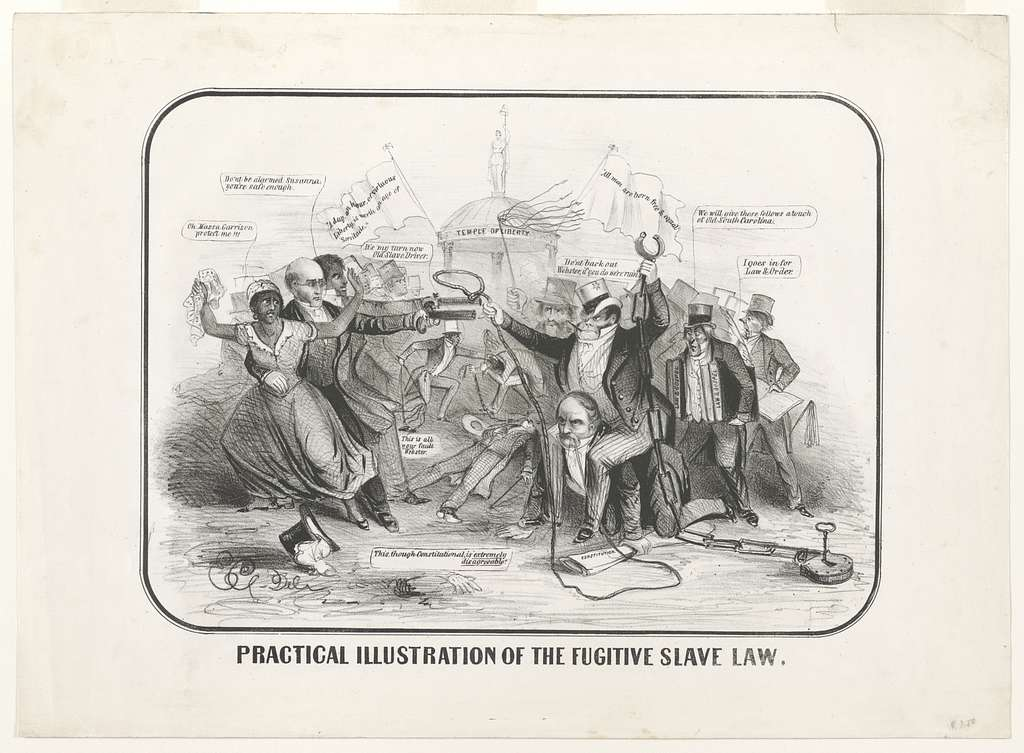
In the antebellum era, many northern states passed "Personal Liberty Laws" to blunt the effect of a different exercise of state-sponsored abductions: the Fugitive Slave Act. My proposal is for a new "Personal Liberty Law", that takes the form of directing how state and local police should respond* if they witness what appears to be a kidnapping, abduction, or the like. In essence, the policy should be as follows: 

  • Where the police witness what appears to be an abduction, they should assume it is an unlawful abduction and respond accordingly (including with use of appropriate force) unless they have actual knowledge that the detention is occurring under lawful authority (i.e., is an actual police operation).
  • "Actual knowledge" can include advance knowledge (in cases of coordination), or conspicuous display of law enforcement identification (such as a badge, or the use of marked police vehicles).
  • "Actual knowledge" does not include mere verbal or written declarations (including clothing labels) that the putative kidnapper is a member of any particular police agency, as such declarations are too easily fabricated.
Absent such "actual knowledge", the police should act as they would if someone conducted a street abduction before their eyes, up until the point they are satisfactorily given "actual knowledge" (which again, requires more than simply the raw assertion "we're with ICE"). If that means physically interceding to protect the individual at risk of abduction, so be it.

Now, I can already hear the MAGA howls: "this would put ICE agents at risk!" Whether or not that complaint moves you or not, I would humbly submit in reply that what's actually putting ICE agents at risk is that their behavior is indistinguishable from that of violent criminals, and that the proper remedy to ameliorate that risk is for ICE to avail itself of the many unique police resources -- such as badges, marked vehicles, and warrants -- that would serve to separate themselves from violent criminals. If they insist on forgoing such resources, then they take on the risk that other law enforcement officers will assume they are exactly who they appear to be. Responsible states and cities are under no obligation to leave their residents vulnerable to being targeted for kidnappings and abductions simply because Stephen Miller wants to impersonate his favorite street gangs.

* I'm bracketing the important, if not potentially fatal, issue of whether state and local police would ever follow this guidance even if it were issued. To be honest, I don't know how practically effective the original "Personal Liberty Laws" were when enacted, but the symbolism was important.

Friday, March 28, 2025

Unmasking a Social Collapse


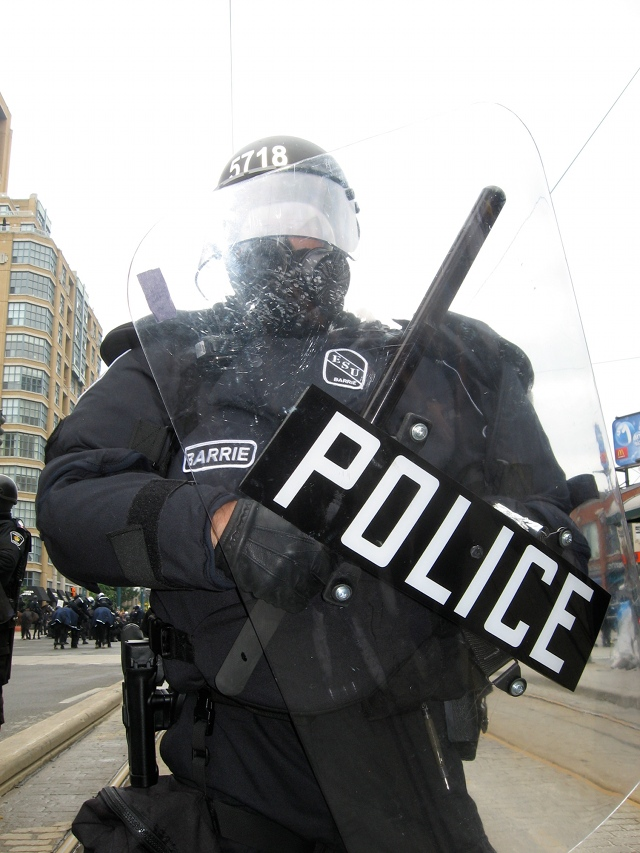
The image of masked federal agents seizing Rumeysa Ozturk on the street for the "offense" of writing a disfavored op-ed on Gaza is chilling enough. But surely there is an extra dose of irony in the masks themselves, seeing how the MAGA right has specifically identified banning masks as one of its main demands in its ongoing assault on academia in general and protests in particular.

Of course, wearing a mask has also become a progressive marker of good citizenship in recent years. There's always irony enough to go around.

In so many ways, masks are a microcosm of everything that's gone wrong in our politics over the last five years. First, we saw the histrionic conservative protests over mask mandates, where wearing a scrap of fabric over one's face in the middle of a lethal pandemic was portrayed as the greatest civil rights violation in living memory. Soon, not content with not wearing their own masks, the right extended outward to try to actively curtail voluntarily masking by others, using spurious comparisons to the KKK as flimsy justification for what was obviously kulturkampf.

A few years later, though, as masks became de rigueur in the protester scene, we saw a few too many progressives get a little too cute in merging the medical justification for masking with an obvious desire to shield people from accountability for criminal activity or violation of campus rules. The idea that the protesters who stormed an Israel history class at Columbia wore masks out of respect for avoiding contagious disease is ludicrous.

But it wasn't long afterwards that the progressives' legitimate concerns were validated once again, as unmasked individuals associated with campus protests found themselves easy marks for Trump's authoritarian predations. It was Mahmoud Khalil's decision not to wear a mask, after all, that made him a prime target to inaugurate Trump's censorial crackdown on international students. Here masking isn't about evading legitimate consequences for unlawful acts, it's about protecting oneself from out-of-control abuses of power.

And of course, the masked officers making sure to conceal their identity while abducting a student off the street for WrongThink makes for the full circle: a terrifying encroachment on civil liberties that brings to mind the secret police of history's most repressive regimes.

The reality is that the ethics surrounding masks seem uniquely resistant to being formalized into rules, and instead demand a modicum of virtue and common sense. Anyone should be able to tell the moral difference between masking as a prophylactic health measure, versus masking to shield oneself from public accountability. Yet any malicious actor can easily say, without being easily refuted, that they are wearing their mask for medical reasons. How would one refute that?

A healthy society resolves these problems simply by being healthy. We accept frankly trivial burdens like mask mandates if its necessary to stop a pandemic. We recognize that masked hooligans trashing a classroom are not the same as EMTs in an ambulance. We expect our police to conduct their operations in a manner that permits review and accountability, so that we can all be confident the law will be followed.

Our society is not healthy. And so choices that should be taken for granted, no longer can be.

Saturday, November 09, 2024

Another, (Mostly) Unrelated Way Life Sucks Now


A few days ago, I was chatting with my mom (who's retired down in Florida). After our usual pleasantries about the doomed world we live in, she told me about a weird thing that happened at her house while she was out (she has a Ring doorbell and so saw the recording).

Basically, two people, a woman and a man, came up and knocked on her door for awhile. Since nobody was home, obviously no one answered (though my mom said that if she was home alone, she'd be disinclined to talk to strangers banging on her door anyway). Eventually, the woman left a card and then they drove off. The card identified the woman as a U.S. Marshal, with a name, telephone, and email; on the back she wrote a note asking to please contact her ASAP about a "subpoena".

My mom thought, and I agreed, that this seemed pretty suspicious. My parents are law-abiding folk and aren't otherwise involved in any litigation; mom couldn't think of any reason that federal marshals would be delivering a subpoena. The note wasn't addressed to anyone in particular (it didn't have either of my parents' names, for instance). She was already on edge from the election, and living in DeSantis-land added to her fears that there might be some sort of political thuggery or intimidation at work. I googled the name on the card, which didn't reveal anything; on the other hand the phone number did match that of the local United States Courthouse. I asked my mom if she and dad had a lawyer and stressed that they should not let anyone pressure them into signing or paying or doing anything. Fortunately, my dad is a retired attorney and we know many people in the legal world, so they had plenty of resources to figure out if things were legitimate or not.

Anyway, the next day rolls around and it turns out that the card and the note and everything ... was entirely legitimate. An old case of my dad's from before he retired, that he thought had long fizzled out, had burbled back to life without warning (the reasons why this resulted in a federal subpoena are frankly too stupid to go into, but that's not my story to tell anyway). It'll be a quick bit of work for an old client in a few weeks, but everything was basically above board. No one was trying to steal their kidneys after all.

I told this story to a colleague of mine at work, and he relayed a similar situation he had been in a few months ago: he got a call from a man identifying himself as a police officer who claimed to have found a check under my colleague's name. The number from the call was a personal cell number; it was not that of the local police department. So my colleague called the department directly to ask if the man who called was really one of theirs, and the answer was ... yes. Apparently, some of his checks had been stolen out of the mail and recovered, and they really were calling to inform him of the situation. Again, everything was exactly as it was stated to be. No scam here.

In both cases, growing experience with spam and scams and hoaxes made people (quite reasonably) suspicious of genuine, legitimate interactions with authority figures. And hearing the outcome of these two stories, I thought back on something that happened to me a few weeks earlier, when I got a call from a man identifying himself as a county sheriff who asked me "why I missed my grand jury summons." I hadn't received any such summons and this is a scam I'm familiar with, so I told him something along the lines of "I'm pretty sure you're a scammer, otherwise contact my attorney" and hung up on him. Of course now, since the above two cases both turned out to be legitimate, I'm wondering if I just told an actual county sheriff to go fuck himself.

I haven't heard anything about this since, and again the "you missed your jury duty" bit is a common scam, so I'm pretty sure my instincts were right the first time. But again, it goes to a broader toxification in our informational ecosystem -- all these scams and hoaxes mean nobody knows who to trust at all: we risk falling for the fake, and we also risk ignoring what's real, and it's increasingly difficult to know how to ameliorate either of those risks. It is an exhausting and anxiety-laden way to live life, and it sucks.

And while I said this this particular suck is mostly unrelated to the main way life is terrible right now, there is a connection. Authoritarianism, Arendt teaches us, doesn't demand that people believe fictions. It flourishes best when people either do not care about, or lose confidence in their ability to distinguish, fact and fiction. 

One way this occurs is by a faux-worldly cynicism, where one congratulates oneself for recognizing that all politicians lie, are scoundrels, are in the bag for "the elites", etc., and so there are no differences worth sussing out. But another mechanism, that can afflict the more diligent and virtuous, is where institutions of authority and trust become so degraded or jumbled that it just becomes impossible to sort anything out. This is the risk of, for example, deep fakes -- one can entirely recognize that not everybody is lying while being helplessly unable to distinguish between an actual video of a political event and a manipulated or concocted one. 

Trusted institutions with reputations for vetting can help alleviate this problem. But as public confidence in those institutions fade -- or they simply become easier to spoof -- we're left with an endless sea of slop content, none of which can even in concept contain any markers of reliability or trustworthiness. And one thing we're seeing in 2024 is that this sort of toxified informational ecosystem is apocalyptically dangerous to a functioning democracy. It is not an accident that high on Trump's target list is leveraging government power to sabotage any effort -- public or private -- at combatting "misinformation". A world in which nobody can trust anything, where lies and truth become a single indistinguishable mass, is a world favorable to his brand of fascism.

One thing that I think "acab" sort of misses is that, even if it is correct to say things like "never trust the police", it is in fact bad to not be able to trust the police or other authority figures. Wondering if "the police" calling your house are really just Nigerian scammers, and wondering if "the police" calling your house are really just looking to harass you for lining up against the dominant governing faction, are two sides of the same coin. If I get subpoenaed, I want to know that without dialing up my entire legal network to figure out if it's a hoax! If I did accidentally miss a jury summons, I want someone to tell me so I can work things out!  More alarmingly, if an authority figure knocks on my door and says "there's a dangerous fugitive on the loose, have you seen anything," I want to be able to help out without wondering if the fugitive is a woman who had an abortion or an immigrant avoiding the deportation camps. When that trust fractures, it is a terrible way to live. The atmosphere of mistrust and suspicion that it cultivates, even -- maybe especially -- when it is well-warranted, is toxic to a free society. But in so many ways, this is the direction we're moving.

Tuesday, August 29, 2023

Another Case of Self-Inflicted BDS


Some of you are familiar with the "Deadly Exchange" allegation -- an effort by JVP and allied groups to block cross-training programs between Israeli and American police officers on the grounds that such programs really are just avenues for Israel to transmit brutality and oppression to their American counterparts. It's a signature campaign of the BDS movement, albeit one that -- like most BDS activities -- hasn't gotten much traction.

But today comes the news that Itamar Ben-Gvir, the notorious far-right racist who also happens to be Israel's National Security Minister, has taken it upon himself to bar Israeli police from partaking in programs run by the Wexner Foundation for Jewish Leadership. Wexner programs have hosted an array of significant figures in Israel's security establishment, but as is becoming increasingly passe they have come under predictable fire from the Israeli right upon allegations that they are a tool of leftist indoctrination and the ever-shadowy "deep state". So a ban was announced, and yet another screen of isolation falls upon the Israeli public vis-a-vis the outside world (and here, in particular, the Jewish diaspora world).

The Wexner programs are not, to be sure, exactly the sorts of police cross-training programs that "deadly exchange" targets. Nonetheless, this is yet another data point to the proposition that Israeli right is far more successful at actually instantiating a BDS regime than BDS activists ever have been.

Friday, February 10, 2023

A First Amendment Right To Take In Information

Last week, the 8th Circuit decided Molina v. City of St. Louis, granting qualified immunity to police officers who shot tear gas at a group of lawyers (wearing bright green hats saying "legal observer") congregating on their own property while observing protests. The lawyers contended that the police gassed them in retaliation for exercising their First Amendment right to observe the protests. In a 2-1 ruling authored by Judge Stras, the court held that it was not "clearly established" in 2015 that there was any First Amendment right to observe protests.

(Because this is the Eighth Circuit, this is not even the most outrageous qualified immunity decision authored by Judge Stras of its week. That honor has to go to Leonard v. St. Charles County Police Department, where a jailhouse nurse simply refused to give a mentally ill inmate his prescribed medication, instead placing him under suicide observation -- the end result being jail staff "observing" the man claw out his own eyeball. Is just refusing to provide prescribed medical care "deliberate indifference" to the inmate's constitutional rights? Of course not! After all, the nurse did not do nothing -- she placed the man on suicide watch! That's what's great about modern medicine: everyone knows it can be freely swapped out with "do nothing but observe the patient" with no material change in outcome. This is why nursing is such an easy and non-stressful occupational path).

The interesting thing about Molina is that the Eighth Circuit had already in prior cases appeared to recognize that there was a constitutional right to observe the police. And under the "prior panel" rule, those decisions are supposed to be precedentially binding. But the Molina panel argued that those cases only concluded that it was a Fourth Amendment violation to seize someone for observing police (since there's no probable cause to believe any crime was committed). This does not establish, in the court's view (and notwithstanding the broad language in the case stating that there is a "clearly established right to watch police-citizen interactions at a distance and without interfering."), that there is a First Amendment right that's been established.

Judge Benton's dissent makes mincemeat of this finely-parsed distinction. But I wanted to flag a particular passage from Judge Stras' opinion that appears to embody a sort of vulgar textualism that's way too clever for its own good. In a footnote, Judge Stras argues:

It is not beyond the realm of possibility that a First Amendment right to observe police exists, but our Fourth Amendment cases like Walker and Chestnut do not clearly establish it. And it makes good sense why. It is one thing to conclude that officers cannot arrest someone passively standing by and watching as they do their job. After all, in the absence of interference, there is no crime in it. But it is another matter to say that watching is itself expressive. Expressive of what? Not even Molina and Vogel can provide a clear answer.

This, to me, seems to prove way too much, seduced by the allure of a hyper-literal reading of "expression". This argument, after all, would suggest that there is no First Amendment interest in reading a newspaper or watching a television program. Certainly, the speaker is expressing something, but what is the reader or watcher expressing? For them too, we could ask "expressive of what?" One can shoehorn in an answer ("they're expressing interest in or approval of the material"), but the more obvious answer is that the First Amendment encompasses interests on both the side of the speaker and the listener, and it is a fluke of grammar that "expressive" only directly captures the former. It seems obvious to me that the First Amendment encompasses some sort of right to take in information, not just to transmit it, and any reading that denies the former under the guise of interpreting the word "expression" is completely misunderstanding how to do legal analysis.

Incidentally, many years ago there was a similar thing with Justice Thomas in his Lopez concurrence, where he tried to bring constitutional Commerce Clause jurisprudence all the way back to E.C. Knight and claim that manufacturing is not "commerce". Among his arguments was the point that, grammatically speaking, you can't really substitute "manufacturing" for "commerce" in the clause -- while one can engage in "commerce" with a foreign nation, one can't really engage in "manufacturing" with a foreign nation. This was an argument that, again, proved too much. If there was a constitutional clause authorizing Congress to "wage war with a foreign power", would the power to "wage war" permit Congress to authorize the construction of warships? As a matter of grammatical substitution, it doesn't work ("construct warships with a foreign power"?). But all that means is the broader phenomenon of "waging war" can include activities which are not grammatically interchangeable with the phrase "wage war". And so too with "commerce", which also can refer to a range of activities which, taken as a whole, operate upon or in relation with foreign nations, Indian tribes, or the several states.

It is not a good thing, but also perhaps not an accidental thing, that the turn towards hyper-textualism corresponds to judges becoming increasingly bad readers of texts. The First Amendment obviously encompasses activities that are about receiving information alongside transmitting them. Pilpul about "expression" doesn't change that.

Wednesday, May 25, 2022

Well-Trained, Courageous Police Won't Stop Another Uvalde

There's a lot of chatter right now about reports that police waited quite a long time before police entered in force the Texas elementary school where a shooter had murdered nearly two dozen people. Much of that chatter is of a very typical brand of Twitter discourse of the "what good are cops, what were they waiting for, they're cowards, even in a situation like this they won't risk they're lives" variety.

I think that at least some of this criticism, though not all of it, is probably unfair. But more to the point: it is because I think that some of this criticism is probably unfair that I am very confident police responses are not going to stop another Uvalde. 

Here's the blunt truth: a school shooter, who does not care about his own life and hopes to kill as many other people as possible, has (to put it extremely bloodlessly) flexibility that those trying to stop him do not. To take one example: the gunman can, whenever he wants, enter any room he wants firing entirely indiscriminately. The police, by contrast, cannot simply enter any room they want firing indiscriminately; nor would we want them to. It's not a matter of courage, or numbers; it is a structural imbalance that favors the gunman over those trying to stop him.

But that's exactly why all this talk of "hardening the target" or bringing even more cops with more guns is so clearly not a viable response. Putting aside (though we shouldn't) the problem that this "solution" is basically to convert our schools into fire traps or prisons. Once a shooter is on site with a gun and a disregard for human life, they have a built-in advantage that no amount of police presence can fully reverse. Sometimes their rampage will be stopped earlier, other times later, but it's all mostly a matter of luck. Short of turning schools into bunkers, the idea that the "right" security measures can stop a man who doesn't care about his own life and can freely and easily access high-powered weaponry without breaking a sweat is nonsense. 

I have no idea whether the Texas police who were on site during the Uvalde shooting responded with ideal tactics. And, as awful as it is to say, if a shooting is ongoing, there really isn't much replacement for bringing it to an end other than armed officers. But if a shooting is ongoing, we've already failed in the most relevant respects. If the goal is to prevent these shootings from occurring outright, not to shrug our shoulders and say "it could have been worse", armed police are not going to do much good -- and it has nothing to do with courage, or armament, or tactics, or temperament.

Saturday, January 29, 2022

Safety Through Solidarity (Or Else)

In the wake of the Colleyville synagogue hostage crisis, two things became clear about the congregation's approach to its safety and standing in the broader community. One was that the Rabbi had deep pre-existing relations with the local police and groups like the ADL, whose support and training he credited for ensuring that all the hostages emerged alive. The second was that the Rabbi had been intricately connected to interfaith and community-building initiatives, and was widely praised for his work in that domain. The former might be thought of as the "traditional" approach to Jewish security; the latter related to what is sometimes called "safety through solidarity."

In the case of Colleyville, these two approaches worked in tandem with one another, and to that extent they represent a success story (insofar as we can call anything about Colleyville a "success"). A Jewish life that is self-consciously isolated from our neighbors and their concerns, that solely concentrates on building walls and fortresses and maintaining access to state power and SWAT teams, will be something stilted and shallow. At the same time, "safety through solidarity" simply does not have anything to offer to provide "safety" as against a Colleyville style incident, at least in the short- to mid-term. Both approaches can do certain things but cannot do others. So they compliment one another. There can of course be squabbles about what issue belongs on what turf -- we can, for example, disagree on whether particular antisemitic incidents are best addressed through criminal law enforcement (even if the Colleyville case is an obvious call). But in the main, the Colleyville congregation did not choose one or the other, and its two-track approach served it well. And anyone who takes from Colleyville that the synagogue should abandon the solidaristic part of its mission, that it now should only rely on the police and the guns and the walls and the fortifications, is I think badly missing the point.

However. There is a version of "safety through solidarity" that does not accept the validity of this two-track approach. Insofar as a synagogue choices to have relationships with the local police, and groups like the ADL, it is, the argument goes, consciously choosing to forgo the solidaristic route and should be condemned for it. Few were so crass as to make that argument directly about the Colleyville synagogue while the crisis was ongoing. But as memories fade (and they seem to fade quickly), people become more brazen in acting as if the only reason a synagogue would have these connections with law enforcement is due to a self-conscious decision to imbricate themselves into a system of White supremacy. A synagogue or Jewish community that elects to do that is a synagogue that is electing out of "safety through solidarity". It is instead one that is choosing unabashed and unapologetic harm to the communities that might offer "solidarity", and so can be spurned in turn.

In this register, the mantra "safety through solidarity" is not outreach. It is a threat. It is a threat because, again, "safety through solidarity" has no reply to Colleyville-style incidents. There was no real, realistic alternative in Colleyville other than the use of police. Colleyville illustrates decisively how these sorts of partnerships and initiatives and relationships are essential to Jewish safety; they cannot simply be "dropped". Outside cases like Colleyville, the security network that has been developed by groups like the ADL in partnership, yes, with law enforcement is not easily replaced even if we can imagine myriad ways in which it could modified or supplemented. And yet the demand is not to see reform or alteration, it is to see them dropped, dropped immediately, dropped without real replacement, and if they're not dropped then the synagogue has marked itself as an enemy -- if they're left to survive on their own, well, the blood is on them and their children.

Mantra notwithstanding, this is not actual "solidarity", this is ultimatum -- and it's an ultimatum that everyone knows cannot and will not be generally accepted. Ironically enough, when presented in this form, "safety through solidarity" becomes a vehicle for fraying bonds of solidarity that might otherwise take root (imagine if all the churches and mosques with which the Colleyville synagogue had been doing laudatory interfaith work decided to pull out because the congregation was tainted by its association with the ADL). And that is a nasty threat indeed -- the impossible dilemma between staying alive and staying in community.

A genuine solidaristic approach would understand the promises and limits of the solidaristic approach, at least over the foreseeable future. Even to the extent we disagree about the extent to which police are necessary, there has to be recognition that the choice by Jewish communal institutions to have these relationships with law enforcement is not reducible to simply "endorsing White supremacy"; the basic respect that undergirds any genuine solidaristic relationship demands at least that much. After all, there is no major racial, religious, or ethnic community in the United States right now that is primarily comprised of police abolitionists; it would be folly to make ACAB a litmus test before solidarity can be extended, and for the most part it is not a litmus test demanded before solidarity is extended. It is entirely possible -- and the Colleyville congregation is by all accounts a sterling example -- to build out bonds of solidarity and community under circumstances where there is tension and disagreement, to hash those disagreements out, to find areas where the ball can be pushed forward, and to think creatively towards new solutions to seemingly intractable dilemmas. But that process cannot be circumvented by ultimatum, and those who try are not I think actually all that interested in developing genuine solidaristic relationships.

There are very, very good reasons why the Jewish community tries to build up relationships with law enforcement agencies. There are very, very good reasons why the Jewish community has organizations like the ADL. Part of building up solidaristic relationships means understanding these necessities and these relationships. Once that happens, we can think about how their contours might be modified or altered -- they are not sacrosanct. The Colleyville congregation, by all accounts, is an example of a Jewish institution that seems genuinely committed to doing this work and doing it right, proof positive that one can build out solidarity while still maintaining the requisite relationships necessary in the event of calamity. They deserve immense praise for that, a model that can be emulated. But skipping that work and beginning with the ultimatum is not solidarity. It is a threat. And Jews are not wrong to hear it as one.

Saturday, December 18, 2021

Being a Black Man Sure Sounds "Reasonably Suspicious" To Me, Says Eighth Circuit

It's another 8th Circuit special!

This week's entry is Irvin v. Richardson, involving a so-called "Terry stop" in Cedar Rapids, Iowa. Police were called to the scene by a woman who reported three Black men having an argument, one of whom displayed a weapon. Two of the men (including the alleged gun owner) were described further, the third was not. Officers show up and see two Black men who match the description of ... neither of two described gentlemen. So naturally, they draw their guns, force the men to the ground, handcuff them, and pat them for weapons as both men protest their innocence. No weapons are found, and eventually, the original caller comes by and says "no, these aren't the guys I was talking about". Oopsy-daisy.

The men sue and say "there was no reasonable suspicion to stop us -- we didn't look like the descriptions the officers had, and in particular not like the man who supposedly displayed a firearm." Eighth Circuit  (in a 2-1 decision, with Judge Kelly writing her usual exasperated dissent) replies "but there was a third, undescribed individual who was allegedly involved in the argument, and since the police didn't know what he looked like, that means there's 'reasonable suspicion' that any Black man in the vicinity could be that guy. Qualified immunity."

Every day I'm proud anew to be a clerkship alum of this august circuit.

Thursday, September 16, 2021

Bye Bye Nine Nine

*Spoilers*

Brooklyn Nine Nine had its series finale today.

Jill and I have watched the show from the beginning -- we were hooked from the first TV ads featuring "Detective Right-all-the-time" and "Detective Terrible Detective" (as opposed to you latecomers who only got onboard after "I Want It That Way"). It was a stellar show, no question about it, and I am sad to see it go.

This final season was a bit rocky -- I think everyone knew it would be, as they revamped the season entirely following the protests over George Floyd's murder. They didn't take my advice on story arcs, though Rosa did indeed leave the force. And at some level, the last season did in some ways reinforce the semi-popular narrative that all cop shows are "copaganda" -- precisely because it did try to tackle injustice and abuse in policing seriously (or at least, as seriously as a comedy program could).

The penultimate episode, where Jake gets suspended from the force, is what sealed it. Objectively speaking, what happened in that episode was what should have happened in every wild and wacky plot Brooklyn Nine Nine did throughout its entire run. All of Jake's fantasies about living out Die Hard or Speed or any other old cop movie staple completely blew past the fact that he's living a fantasy while being an armed state agent in a world of real people. Of course it would be irresponsible, of course it would mean innocents get caught up and hurt. The reason these things work on TV-land is partially because of suspension of disbelief, partially because every bone in our narrative-driven bodies expects some twist or turn that vindicates Jake after all. Even in this episode, where it was obvious that such a "twist" wouldn't be coming, one still felt the dissonance -- once it became clear that the episode would finally play it straight for once, it all just felt wrong. In a world where the potential for adverse consequences were real, Jake stops being a funny, I-don't-wanna-grow-up enthusiast, and just is a completely irresponsible jerk. A show that didn't make the police look good just wouldn't be fun.

All that said, the series finale itself did a stellar job bringing the show in for a landing. Jake leaving the NYPD to become a stay-at-home dad was exactly how the show should have ended -- him finally learning how to grow up indeed. Getting one last heist episode was a must, and it is incredible how the show managed to keep that concept fresh over eight iterations (Hitchcock winning, and winning in the most uncreative way possible -- he just paid Bill $40 for the trophy -- was fabulous). It was nostalgic and funny and reunifying in all the best ways -- really, a pitch perfect way of saying goodbye. Unlike, say, The Good Place finale, which was excellent but also wrecked my soul, I could actually watch this episode again. Arguably, it was the best episode of the entire season.

And so, if we do have to say goodbye, this was the episode to do it. We got to see most of our favorite characters one more time, having fun, doing what they love, being extra -- and it does help that the heist is completely divorced from actual police work, so the undertone of abject irresponsibility is lessened enough so that it can be comfortably ignored.

Ultimately, Brooklyn Nine Nine almost certainly would have been eclipsed by the politics of the time if it wasn't just too good to dismiss. That is to the tremendous credit of the actors, writers, and showrunners who made it great. From day one, it proved itself far better than a vehicle for Andy Samberg to get wacky. It demonstrated the incredible comedic chops of dramatic actors like Andre Braugher, and made folks like Terry Crews and Stephanie Beatriz into genuine stars (though lord knows whether Beatriz will ever be able to move beyond her "Rosa voice" -- fun fact: I'm pretty sure "Rosa high on cold medicine" and "Rosa sarcastically chipper" is just Stephanie Beatriz speaking normally).

So, one last time -- Nine Nine! (NINE NINE!)

Sunday, September 12, 2021

Going Local: My Op/ed on Vaccine Mandates and the Portland Police

Since I'm now an official Portland resident, I decided to write an op/ed for my local paper, The Oregonian: "Portland Police Should Not Be Exempt from Vaccine Mandates."

As some of you know, the city of Portland attempted to impose a vaccine mandate on the Portland Police Bureau, but backed off after union officials threatened a wave of vaccinations. In general, Oregon police have been viciously opposed to vaccine mandates in the state

My op/ed's argument is simple. Put aside (though we shouldn't) the fact that COVID has been the most lethal killer of police officers over the last year. The same justifications which support a vaccine mandate for teachers or health workers support a mandate for police officers as well. 

Even if we accept that some government employees need not be covered by vaccine rules, the police are the last agency that should be able to claim an exemption. The police are a public-facing agency that interacts with some of the most vulnerable Portlanders in unpredictable settings on a daily basis. Unlike, say, the Oregon Driver and Motor Vehicles agency, which can enforce a mask mandate or shunt unvaccinated customers into online services, the Portland police largely cannot control when and in what contexts they interact with members of the public. They can’t decline to investigate a crime until they’re certain the criminal is wearing a mask. They can’t refuse to interview a witness until they confirm she’s not immune-suppressed.

Moreover, we can't overlook the thuggish nature of the way in which the Police Bureau responded to the prospect of a vaccine mandate. Threats of mass resignation are characteristic of police departments which simply do not accept the fact that they are under civilian control and subject to civilian oversight. The claimed entitlement to flout local authorities is flatly toxic to principles of rule of law and democratic governance.

In terms of feedback I've gotten, it's about what you'd expect. Some praise, some "why do you hate cops" (I want fewer cops to die on the job from a deadly disease, what's your view on that?), some accusations of being a "bootlicker" for BigPharma because I'm not promoting Merck-manufactured ivermectin. 

The most substantive response has been to note a provision in Oregon code which only allows vaccine mandates for certain public officials if pursuant to a state or federal order. The Portland mandate was initially justified under a state vaccine mandate issued for healthcare workers; the nominal cause of the city's retreat was clarifying guidance from the state saying the mandate "probably" didn't capture police officers. A few readers too-cutely suggested that the reason Portland police were in an uproar had nothing to do with resisting a vaccine mandate per se, but was solely because Portland was jumping ahead of the order of operations specified in state code.

This strikes me as, shall we say, implausible. Nonetheless, in my piece, I said if that provision was the only holdup, then the obvious solution is for Gov. Brown to clarify that police officers are included (or issue a separate rule to that effect). If the backlash has nothing to do with a claimed entitlement to resist lawful regulation, then the Police Bureau and Portland officers should have no problem with the Governor's office issuing such a rule. Indeed, they should welcome it since -- to reiterate -- COVID is the single deadliest threat police officers face today.

Of course, we're not naive and so we know the precise scope of Gov. Brown's orders as authorizing sources for Portland's vaccine mandate is not driving the action. Portland police don't like being told what to do -- that's the prime motivator here. But as public servants, they need to get used to it. Whether it stems initially from the city or the state, vaccine mandates for police is the right public policy, and law enforcement shouldn't be able to bully its way to an exemption.

Wednesday, August 11, 2021

Sympathy for the Devil

I've never been (and still am not) a police abolitionist. I've also never felt any particular way about police officers -- neither lionizing them nor deploring them. If anything, my main feeling towards cops has been to be intimidated by them, though that sentiment is based more on certain idiosyncratic personal neuroses than any political instinct.

However, I've noticed recently an interesting trajectory in my own thoughts on the subject of policing that seems counter-intuitive, and so I wonder if it resonates with anyone else. To wit:

As I grow more sympathetic to police officers in controversial situations ("it's a hard job", "what would you have them do in this situation", etc.), I also grow more inclined toward abolitionism.

This certainly runs counter to the prevailing narrative, where abolitionism pairs up with ACAB views towards individual officers. So how come it's working differently for me?

As best I can tell, here's what's happening. When I read a story about egregious police misconduct -- the sort that would make me endorse the view "that guy's just a plain old bastard" --it doesn't on its own suggest a problem with policing as a concept. If the problem is that some people are bastards, the solution is to remove the bastards. When a nasty sort of person commits a murder in Oregon, that doesn't indicate that the very idea of "Oregon" is a failure. Bad people can do bad things in all sorts of systems without demonstrating that said systems are irredeemably flawed. Thinking of the problem in terms of individual moral failings leads me in a reformist, not abolitionist, direction -- ensuring that bad officers are punished, that systems of accountability are made more robust, that officers are given the proper training so that when they do bad things, it is obviously because they chose it rather than that they were thrown into a situation nobody told them how to handle, and so on. Even widespread instances of police misbehavior or ego tripping, such as the refusal to vaccinate, can resolve down to "then fire the bad actors en masse and replace them with better people--good riddance!"

But increasingly, one sees stories where policing injures, humiliates, even kills, vulnerable civilians in circumstances where I'm not sure the conduct can be reduced to or even characterized as a particular police officer being a plain old bastard. These are circumstances where I can imagine even someone who is, in some sense, perfectly public-spirited and who fully intends to serve and protect can nonetheless be the vector of terrible injustices upon innocent Americans. That's the hallmark of a systemic problem. It's one thing if a system generates injustices when bad people abuse it. It's another when a system generates injustice even when good people are doing their best.

The fact is, our system of policing regularly places officers in fraught situations with regular Americans; scenarios that are fast-moving, have murky expectations, and carry undertones of threats (especially given the absurd proliferation of firearms among the American populace). The police are simultaneously the violent arm of state enforcement and the enforcer of first resort for ordinary public disputes and missteps (imagine telling a Martian that the same agency has both "solve murders" and "stop drivers from turning right on red" in its portfolio!), and that will often put even decidedly non-bastard sorts in exceptionally difficult or precarious circumstances. That's not a problem that can be fixed by better training or better hiring, because it's not a matter of officers failing to do their jobs. It's a matter of the very contours of the job, as we've constructed it.

So yeah--that's where I'm moving. The more cases I see where a terrible injury inflicted on a civilian pairs up with a genuine "... but look at it from the officer's point of view", the more skeptical I grow of policing as a system, because if these problems persist even in cases where there isn't any obvious individual failing on the part of the officer then it suggests a problem that lies deeper than individual-level reforms could reach. It's very much not All Cops Are Bastards, and much more It Doesn't Matter If Any Cops Are Bastards. Do I stand alone on this?

Friday, June 25, 2021

Chauvin Sentenced to 22.5 Years

Former Minneapolis police officer Derek Chauvin has been sentenced to 22.5 years in prison for the murder of George Floyd.

No sentence can bring George Floyd back to life, and hence no sentence can in itself create justice. Moreover, no sentence of Derek Chauvin can, in itself, reform the structures of policing that enabled George Floyd's murder. A single sentence, after the fact, does not change anything.

Nonetheless, the criminal sentence is important -- it is important for providing some measure of closure to Floyd's family, it is important as a signal of the seriousness with which we take crimes of this nature, and it is important as a means of communicating to other officers that this sort of behavior will be met with significant consequences. Chauvin faced a maximum of forty years; he asked for probation. The guidelines for an offender without a previous record would have been 12-15 years, but as the sentencing judge noted there were aggravating factors in this case.

Paul Butler said that taking all of that into account, an 18 year sentence struck him as appropriate. Twenty-two and a half years is more than that, but in the same ballpark. It strikes me as appropriate, proportional, and -- as far as can be achieved in unjust circumstances -- just. But my opinion is not especially important, so my main hope is that Floyd's family and community feel the same.

Sunday, September 13, 2020

What Makes These Protests Different From All Other Protests?

I'm trying to figure out why this round of protests against police violence feels different, in terms of the public resonance it's having, than what came before. It seems every few days we get a new wave of breathless commentary about how the backlash is coming among White suburbanites in Wisconsin and ... so far, it hasn't manifested. It'd be wrong, obviously, to act as if the entirety of America is behind the protesters or anything like that, or if there aren't important divisions and controversies among people who generally do count themselves as supporters. But in the broad sweep of things, support has been far more robust than one might have predicted based on past history.

One candidate that stands out in my mind is that the latest round of protests, sparked by the police killing of George Floyd, occurred basically immediately after a different round of protests by mostly White right-wingers angry about mask-requirements and coronavirus lockdowns. Americans had just been swamped with pictures of heavily armed and kitted-out protesters getting right up in the face of police officers and screaming at them, as the officers stoically endured the assault. A lot of people remarked that the police would be a lot less stoic about this sort of thing if non-White people tried to pull it. And then, wouldn't you know it, we immediately got confirmation.

The response to the anti-lockdown protests was tangible proof that the police could, if they wanted to, respond to high-emotion and fraught protest situations without significantly escalating the situation. So when we saw how they responded to the Black Lives Matter protests occurring essentially at the same time -- indiscriminately using force, arresting journalists and lying about it, and more -- it really underscored that these were choices the police were making that were not inevitable byproducts of having a tough job and being in a difficult situation.

Of course, the differences in how some protests are treated compared to others is nothing that new under the sun when one takes the macrolens out. But the direct juxtaposition -- where one protest immediately followed the other, and the differences in the police response was so drastic and so visceral -- I think made a serious impact. Watching the police act like basically like a type of gang caused a lot of White observers who maybe had a basic faith in the general professionalism of the police to reassess their views. And that reassessment is proving stickier than I think many anticipated.

Friday, June 26, 2020

Rosa Diaz: The Face of Police Brutality

While it obviously is not anyone's top priority, many media observers have been wondering aloud about how Brooklyn Nine Nine will address the changing public perception of policing when it returns for its next season. Already, Terry Crews has suggested that several completed scripts have been scrapped as showrunners realize that they need to adapt. But it is going to be a very delicate line to walk. Since the show almost certainly is not going to return as a post office sitcom, it can't ignore the issue, or carry on as if the last few months haven't happened. Yet it probably can't do a full police abolition narrative, while if it takes a reformist approach it will be criticized for being too timid and out of touch.

As much as I love the show, I don't know if this is a hole it can write itself out of. But as I've thought about it, I keep on returning to one potential plotline:

Rosa Diaz gets kicked off the force for police brutality.

Now before I go further, I want to make two things clear.
(1) I adore Rosa Diaz. She's possibly my favorite character on the show. She's a queer icon. Stephanie Beatriz is a treasure.
(2) Rosa Diaz is definitely the main cast character most likely to physically abuse a suspect. Her whole character is based on her being violent, aggressive, and hot-tempered. She literally jokes about committing police brutality in the show's second episode!
It's not hard to imagine the scenario. Rosa is chasing a suspect through New York City alleys. She has to jump over dumpsters and garbage, she's hot, sweaty and frustrated. When she finally catches up with the guy at a dead end, she's basically snarling. And so even though he's cornered and not a threat, she takes him down -- hard. Which someone records, and it goes viral.

At this point, the squad divides. Jake, still hopped up on his childish notions on what it means to be a bad-ass cop, backs up his old friend from the academy; while Amy, in a new leadership position and more exposed to political fallout can't bring herself to defend Rosa's actions. Terry is sensitive to police brutality, having recently experienced a racist confrontation that nearly turned violent, and is surprised to learn that this is one area where Holt -- while not exactly approving -- is a man of his generation of cops, thinking that a rough take down of a suspect is business as usual and not worth getting riled up about. Hitchcock and Scully choose opposing sides for arbitrary reasons. Boyle is paralyzed by indecision.

Jake seizes on the notion that if he can prove the suspect really was guilty of a crime, Rosa's actions will be seen as justified. He works the case feverishly until he eventually discovers that the man Rosa injured had some drugs in his apartment -- a triumph, until Amy points out the obvious so what? So what if the guy smoked a few joints? Does that mean he deserved to be abused? Is Jake really going with "he's no angel"?

And so the resolution is not that Rosa is let off the hook, or learns a valuable lesson, or has the squad unite behind her. The resolution is that Rosa is fired from the NYPD (and, I imagine, written off the show).

Does it have to be Rosa? Could it be a random Nine Nine beat cop we had never seen before instead? No. It has to be Rosa, because it has to be someone we care about. The problem of police abuses is misjudged if it's viewed as the product of a few sadists hidden from public view. Those people exist, but the larger issue is that police abuse occurs by men and women who are in other respects normal, likable, courageous -- people who do good things, have friends who care about them and who care about others, people who in other contexts may do good or even heroic deeds. The Florida cop who attacked a peaceful protester, the one with 79 use of force complaints in three years? He also stopped a suicidal woman from jumping off a bridge. I bring this up not as an excuse -- just the opposite. It is to hammer home the gravity of the problem. This is the banality of evil at work; we deceive ourselves if we think it is a problem that is restricted just to some anonymous snarling monsters. We have to get used to the idea that police violence (like all injustices) are perpetrated by people who look familiar to us.

It has to be Rosa because it has to be someone who has already been fully fleshed out as a human, with the full array of human relationships and feelings and sentiments and history that humans carrying with them. It has to be someone we care about. Only that will give the issue the gravity it deserves.

Israel as Contagion

There's a narrative bubbling in certain areas of the left which seeks to tie American policing abuses to cross-training exchange programs some police departments do with Israeli counterparts. The narrative has its roots in Jewish Voice for Peace's "Deadly Exchange" campaign, which uses the claim as a means of further its campaign to see Israel isolated and ostracized in global society. As the issue of police violence surges to its place at the top of the public's deliberative agenda, the deadly exchange claim likewise attracted those eager for a anti-Israel or antisemitic hook. Just yesterday, new Labour leader Keir Starmer sacked Rebecca Long-Bailey -- a prominent Jeremy Corbyn ally and one-time rival for party leadership -- from her position in Labour's shadow cabinet after she approvingly shared an article where actress Maxine Peake claimed, without evidence, that "The tactics used by the police in America, kneeling on George Floyd’s neck, that was learnt from seminars with Israeli secret services."

This is not true. Many have cited an Amnesty International report where, they say, it is proven that Israeli police train their American counterparts in human rights violations. But Amnesty has since come out and said explicitly that "Allegations that US police were taught tactics of ‘neck kneeling’ by Israeli secret services is not something we’ve ever reported." This is not surprising, as the content of these exchange programs by all accounts rarely, if ever, focuses on what we might euphemistically call "interpersonal" or "tactical" elements of police activity (it generally concentrates on strategic questions regarding operational responses to mass atrocities -- a subject upon which Israeli security forces sadly carry much expertise).

So what is going on? The stock response from those objecting to the link is the simple but truthful observation that American police hardly need Israeli help on the subject of how to harass racial minorities. Some have argued that, because it is true that there are Israeli and American policing exchange programs (and apparently some Minneapolis officers had partaken), it is ipso facto fair to draw a connection between American abuses and those training seminars -- without any regard to what actually is or is not done in those programs. The argument, in effect, a contagion theory: anyone who associates with Israelis, we can assume, is at least partially corrupted by the contact. They're worse off coming out than coming in.

In apologizing for her comment, Peake said something very interesting: she said "I was inaccurate in my assumption of American police training and its sources." Assumption is the key word there: she had, presumably, read about Israeli and American police training together, and so she assumed that the bad American practices had Israeli roots. But the only evidence was the bare fact of contact -- that's what's driving the narrative. Hence: contagion.

This, I submit, is something antisemitism does. It allows such assumptions to become naturalized. They feel right. American police have done exchange training with counterparts in dozens of other countries, ranging from the UK to Germany to Mexico to Tanzania. Even those who take a dim view of, say, the Mexican police however would likely not jump from mere contacts to causality. If someone said "American police learned chokeholds from Tanzanian police," they'd ask for evidence. If the only evidence is "there are exchange programs between American and Tanzanian police", that likely wouldn't be sufficient. But antisemitism gives a smoother cognitive ride down -- it makes little connections look huge, and implausible leaps seem manageable. It is not accidental that the narrative is about Israeli police exchanges and not German or Mexican or Tanzanian ones.

This is an unorthodox but I think ultimately more accurate way of understanding what antisemitism does. We think of antisemitism often as a motive: because I hate Jews, I think or say or do this thing. But antisemitism is more often a force or process. We usually ask "did Burke or Long-Bailey say what they say because they hate Jews?" The answer to that may well be no. But that's not the right question. The right question is "did a particular way of thinking about Jews render what Burke or Long-Bailey said plausible or resonant in a way it otherwise would not have been?" And there I think it is quite clear that the answer is yes. It is because we think about Jews in a particular way that this contagion theory of Israeli culpability in American policing injustices -- a narrative which objectively stands on such a thin reed -- is plausible when it otherwise wouldn't be. That is the work of antisemitism.

Tuesday, June 02, 2020

Are Americans Grasping the Reality of Police Violence?

As the nation continues to be gripped by protests against police brutality, I've been struck by the near-constant footage of excessive police force against journalists and civilians who seem to be doing nothing more than exercising their constitutional rights. For me, it powerfully communicates the reality of a central theme of the protests: that the police are out of control and are acting as a tool of repression and violence against the Americans they nominally are there to protect.

But my vantage is only a partial one, and I've been waiting to see evidence about how the American people as a whole are reacting. We all still are living in the shadow of 1968, and there is the constant fear that the narrative that emerges will be one where the police are the victims and "law and order" must be restored. Is that what's happening?

Today, Kevin Drum links to new polling that gives cause for optimism: Asked over the weekend whether "police violence against the public" or "violence against the police" was a more serious problem, Americans picked the former by a 55/30 margin. Independents answered at roughly the same margin -- 54/27. Even White Americans agreed by a 50/35 margin (for Black Americans, the gap was a whopping 85/8).

It's just one poll, and just one question. But it does seem to point to a potential sea change (also on that note: a Minneapolis city councilor talking seriously about trying to disband the Minneapolis Police Department outright).

Meanwhile, it's primary night in several states across America -- off-hand, none of the marquee races seem like they'd be particularly impacted by the protests (maybe the effort to take out White Supremacist GOP Rep. Steve King), but I suppose we'll see.

Wednesday, January 22, 2020

Technically, Any Number of Seconds Can Be Split Any Number of Times

Yesterday, in Chestnut v. Wallace,* the Eighth Circuit denied an officer qualified immunity. That itself is arguably worthy of noting, since the Eighth Circuit is not exactly predisposed to denying qualified immunity.

The case itself is straightforward: a man (Chestnut) quietly observed a St. Louis police officer perform a traffic stop from about 30 - 40 feet away, while leaning against a tree. The officer viewed this as suspicious, and called for backup. A new officer asked for Chestnut's name, birthday, and social security number; he refused to provide the last of these. The officer then frisked Chestnut for weapons, found none, and then proceeded to have Chestnut handcuffed. After about twenty minutes and a conversation with the officer's supervisor, Chestnut was released. Since observing the police does not provide reasonable suspicion of criminal activity, and since people are allowed to not answer questions from the police (such as providing their social security number), no reasonable officer could have had suspicion of criminal activity, and so there is no qualified immunity.

Judge Gruender dissented. This is considerably less noteworthy, since an officer could probably shove a handcuffed detainee off a six-story building and Judge Gruender would conclude he has qualified immunity.

I do want to flag one thing though, from the end of Judge Gruender's opinion. He writes that "police officers are not—and should not be—expected to parse fine distinctions between statutory and constitutional law in split-second decisions." This rhetoric of "split-second decisions" is increasingly common in judicial opinions that seek to insulate police officers from accountability, particularly in use-of-force cases. Maybe we have sympathy for it in that context, maybe we don't.

But it is interesting to see this rhetoric make a near-reflexive showing in this case, as nothing about the police's interaction with Chestnut involved anything like a "split-second decision". There were no sudden movements, no unpredictable reversals or unexpected flinches. Chestnut was far away from the action and was not an imminent threat to anyone. By the time he was placed in handcuffs, the police already knew he was unarmed. That Judge Gruender nonetheless characterizes this case as involving a "split-second" decision suggests that anything the police do deserves that label. But it's just not true. Not every decision a police officer makes in the field is a "split-second" one; the decision to detain Chestnut certainly was not. It was a decision taken after many seconds, under no particular pressures and with ample time to deliberate.

In that same paragraph, Judge Gruender hoarily remarks that police officers in the field are not "participating in a law school seminar." Indeed, they are not. They are taking real actions which have real consequences for real people. Kevin Chestnut was placed in handcuffs for having the temerity to look at the police in public. That's a terrible thing to have experienced; obscured though it might be behind rhetoric of "reasonable suspicion" and the fuzzy line between "detention" and "arrest". We should step out from the legalese fictions that justify qualified immunity, and start taking the reality of what the police do -- and who they are doing it to -- a lot more seriously.

* The opinion was authored by Judge Arnold, joined by Judge Grasz -- and I'll reiterate again what a pleasant surprise Judge Grasz has been on qualified immunity issues.

Sunday, December 29, 2019

Some Nuanced Thoughts on Protecting Jews via Police

NBC News, which as a mainstream media source Is Not Covering Violence Against Jews(tm), has an interesting article up discussing how the Jewish community in New York is assessing calls to increase police presence in Orthodox Jewish neighborhoods as a means of combating rising antisemitic violence:
Audrey Sasson, executive director of Jews for Racial and Economic Justice, or JFREJ, a left-wing "movement to dismantle racism and economic exploitation" based in New York City, said deployment of more police would be an understandable reaction — and one that would worry her.

"Of course, we all need to feel safe. That's fundamental, and there is no arguing with that," Sasson said. "But how do we get there?"

Sasson said that her group is multiracial, as is the Jewish community at large, and that many Jewish people wouldn't feel safer with a greater police presence.  
"Right now, the tools we have for safety [are] more police and more guns," Sasson said, "but the question for me is how can we build other tools?" 
Those tools, according to Sasson and JFREJ, include making sure the Jewish community is in a coalition with other targeted communities, having a better system for reporting violence that doesn't rely so heavily on police, creating community-led transformative justice projects and implementing non-punitive and restorative-oriented approaches to violence. 
Sasson acknowledged that the vision is a long-term one, and she does not discount the desire for more police from people living in fear after "the whole holiday was marked by attacks." [emphasis added -- DS]
This is good, and I dare say snaps my long streak wherein everything I've ever read from JFREJ is neither bad nor good but "meh" (Mazel Tov!). The reason I like it is because:
(a) It does not disparage those Jews who desire police protection in the immediate term, or suggest that it reflects a failure of solidarity on their part to desire this solution;
 (b) It acknowledges that viable alternatives to police protection need to be built -- that is, they do not exist now -- and that this construction project is has a long-term time horizon attached to it.
Those twin acknowledgments are, I think necessary if the critique of "more police" is to have ethical traction. Without them, the objection to more policing sounds like a demand that Jews place our lives in the hand of vague feel-good bromides about "community building" or some such that have all the practical bite of a consciousness-raising bed-in project -- and if we don't accede to the demand we're basically giving into our inner-fascists. I think Sasson is read properly in tandem with Eric Ward:
"You can't tell a community that is being physically assaulted that they can't increase law enforcement response but then offer them nothing in response," Ward said. 
Still, Ward, who has studied anti-Semitism extensively, acknowledged that it's not that simple. 
"We know increased policing brings increased racial profiling," he said, adding that high police presence to protect Jews "is likely to be seen as feeding into black and Jewish tension."
Ward is, I think, making the same point as Sasson, just with the opposite emphasis. Telling Jews "how dare you ask for more police" when there isn't any practical, immediate-term alternative isn't going to be received well, and reasonably so. That's true even though, as Ward also points out, there are real costs to the "increased policing" proposal -- including costs along the very dimension its nominally supposed to help (tamping down on intra-group tensions and hostility). There's legitimate space to critique the "more police" response -- but it has to come with enough humility to acknowledge that there's ample reason to be skeptical of the existence of viable alternatives in the short-term.

Ultimately, my view on this is basically that of Batya Ungar-Sargon: Whatever my intuitions are on the wisdom of this strategy, I should defer to the people on the ground. Of course, the people on the ground will themselves often have divergent takes. But one suspects the consensus that will emerge will lie somewhere in between "abolish the NYPD" and "send in the National Guard."

Monday, June 17, 2019

There's No Wrong Way To Terrorize a Black Guy in the Eighth Circuit

Last week, the Eighth Circuit released an opinion in Clark v. Clark, a case involving a law-abiding Black gun owner in Missouri. Police responded to claims of gunshots in the vicinity of a Missouri rest stop. On arrival, they encountered Gregory Clark, a Black man sitting a table outside the building. Seeing they were officers, Clark immediately handed over his driver's license, retired military ID, and concealed carry permit, and also informed them he was armed. He was questioned if he had heard any gunfire (he hadn't) and where he was going (Chicago).

Then the police ran his identification (which came back clean). Clark was apparently not wild that the police ran his ID, which he thought was potentially a case of racial profiling, and asked a question gesturing in that direction ("[would you] have done that to anyone else?"). The officer responded poorly, angrily replying "don’t play the race card with me", and returned the identification cards back to Clark.

The police then left Clark, and Clark in turn returned to his vehicle and drove away in the direction of Chicago. The police trailed him, and Clark began to fear for his life. He made a U-turn, and officers continued to follow. After more cop cars began to arrive on the scene, he pulled over to the side of the road and placed both hands outside of the window to show he wasn't holding his gun. Officers nonetheless approached the car with weapons drawn, one pointing his gun at Clark while ordering him out of the car. After a bit more confusion and discussion, it was eventually determined that Clark had committed no crime and done nothing wrong, and he was allowed to leave once more.

The Eighth Circuit, in an opinion by Judge Erickson joined by Judge Colloton, concluded that the entirety of the police conduct -- which culminated, let's recall, in the police pointing their weapon at a Black man who had done absolutely nothing wrong and had seemingly taken every conceivable step to scream out "I am not a threat" -- was wholly lawful.

And that's why I flag this case. In an alarming number of circumstances, there is nothing a Black man can realistically do to avoid having a gun pulled on him by police. He can be entirely law-abiding, forthright about his (legal) gun ownership, compliant with police demands, going out of his way to and keep his hands clear -- doesn't matter. And likewise, he cannot seek to avoid police interactions -- even knowing (apparently accurately) that they put him at risk of having a gun pulled on him for no reason whatsoever. Judge Erickson, for example, argued that both Clark's highway U-turn to avoid the police, and his affirmative decision to put his hands out the window to show that he wasn't holding his gun, were "unusual and may be indicative of guilty conduct."

Chief Judge Smith disagreed -- and it is perhaps not coincidental that Judge Smith is the only African-American Judge on the Eighth Circuit. In his view, while the initial encounter at the rest stop was lawful (and I agree -- while I understand why Clark might have felt aggrieved, he was the only person in the vicinity where gunshots had been reported and he admitted he was carrying a gun), the police response to Clark on the highway was not (Judge Smith ultimately would have found that the officer nonetheless enjoyed qualified immunity).

Put simply, Clark is allowed to not want to interact with the police. African-American men have excellent reason to try to avoid police encounters for fully innocent reasons like "wanting to avoid an elevated chance of having a gun pulled on you" -- as this case well demonstrates. But there's really nothing they can do to avoid it -- including "literally trying to avoid it".

Meanwhile, today the Eighth Circuit en banc dismissed, by 5-4 vote, Dorian Johnson's claims against Ferguson, Missouri and Officer Darren Wilson for conduct stemming from the infamous shooting of Michael Brown (Johnson was walking beside Brown during the incident). Johnson alleged that Wilson ordered the pair to "get on the fucking sidewalk", then abruptly parked his car in front of the duo, blocking their path, struck Brown with the car door, got into a scuffle with Brown, and ended up firing his weapon at the pair (missing Johnson but striking and killing Brown). Nonetheless, the Court concluded that the pair had not been seized because (a) Johnson did not need to "remain by Brown's side" while Wilson and Brown fought and (b) the position of Wilson's police car did not literally block them entirely from fleeing the area.

The dissenters (Judge Melloy writing for Chief Judge Smith and Judges Erickson and Kelly) simply make mince-meat of this argument. The touchstone question for a seizure is whether the officer's actions would "have communicated to a reasonable person that he was not at liberty to ignore the police presence and go about his business". There might not be a single area of constitutional law with more ludicrous precedents than this -- the sorts of scenarios where courts say, with apparent straight faces, that people would feel free "to ignore the police presence" are beyond absurd (to take one example, cited in the dissent: in United States v. Hayden, we were told that any reasonable person would feel free to ignore the police when the officer pulled up alongside the defendant, shined a flashlight on him, and screamed “Police!”). Yet even here, the facts clearly "communicated an intent to use a roadblock to stop Johnson’s movement," and therefore a seizure.

The argument that the roadblock did not literally prevent all modes of escape from the area should be too ludicrous to reply to if the majority did not rely on it. Not only is that unrealistic in practice -- just how tight must the dragnet be, then, before it is conceded to be impossible to escape? Must the officers all lock arms in a circle? -- it has nothing to do with the legal inquiry, which is whether a reasonable person would understand the officers as trying to communicate an order to stop. Abruptly driving your police car to place it directly in front of your quarry's path does that, and it's not close. There's virtually no question that had Johnson attempted to "simply ignore" Wilson's directives the officer would not have thought "well, that's perfectly innocent conduct reflecting his right to ignore me under the Constitution" (look what happened to Clark!).

Of course, it's possible that in this case the extremely high-profile and heavily-reported nature of the controversy might have influenced the court's decision -- in particular, they might believe that the facts might not have been as Johnson alleged. But it is hornbook law that at this stage in the proceeding judges must accept Johnson's factual allegations as true -- disputes of fact are addressed at a later stage. And that matters because this case sets a precedent, which in turn applies to other cases down the line where the facts haven't been as thoroughly hashed out in the media as here. It is not just Dorian Johnson but any person who finds a police car screeching to halt inches in front of them after being screamed at by the officer who now will find that -- contrary to any actual "reasonable person's" perspective -- it would be wholly unreasonable for them to believe that the police were communicating that they needed to submit.

I'd say that the majority might have allowed itself to be swayed by the public nature of the controversy, except that gives them far too much credit. The fact is, the Eighth Circuit has near-infinite tolerance for police excesses directed against the citizens in its jurisdiction, in cases of any degree of public prominence. Clark is a low-profile case and Johnson is a very high-profile one, but they're tied together by the unifying cord of all the Eighth Circuit's jurisprudence in this area: extreme, complete, and unshakable deference to the police over and against ordinary citizens.