Showing posts with label Trump administration. Show all posts

Thursday, March 19, 2026

Leader Cannot Fail, He Can Only Be Betrayed


Almost as soon as America began its latest round of military strikes on Iran a sizable number of GOP officials have sought to frame Trump's decision as coming at the behest of Israel. From the outset, it seemed obvious to me why the GOP was taking this approach -- "it gives them a ready-made escape hatch if things go south".* It is impossible for Republicans concede that Trump did wrong. But it is possible to argue that he's been misled or betrayed. And so it struck me as inevitable that "[w]hen, in however many months/years, the GOP tries to run from this calamity, the line they will take about where they went astray will 100% be 'we were dragged into this by the Jews.'"

One should obviously read the Joe Kent resignation letter -- which contends that the Iran War (and the Iraq War, and America's intervention in Syria) all occurred at the behest of "Israel and its powerful American lobby" -- in this light. It gives Kent far too much credit to treat him as an isolationist naif who foolishly believed the "Donald the Dove" talk. Kent has no history of non-interventionism (he has a well-known history of bigotry and neo-Nazi associations). But as petroleum prices skyrocket, global trade routes are snarled, and the war labors under massive domestic unpopularity, the number of conservatives looking for a parachute is rapidly rising even as conspiratorial antisemitism is rapidly becoming the dominant force in conservative politics. Kent's resignation is not principle, it is opportunism -- he's looking for how best to flee his sinking ship.

But how can one do that, without committing the one absolutely unforgivable sin in conservative politics? Well, if one reads the letter, it is very careful not to blame Donald Trump. He is still wonderful. He is still a great man. Alas, he has been coaxed against his better judgment into this disaster by (((them))). They lie, they deceive, and Trump was caught in the middle. This framing was inevitable; it's the only way to metabolize viewing the war as a disaster while retaining the MAGA cult of personality. After all, if Trump is a God-like figure, who could possibly sway him off the righteous path other than those practiced in deicide?

And of course, what goes for his lackeys goes infinite for Trump. He will never admit error and misjudgment. There always must be someone else to blame. And Israel, for a host of reasons, makes for a very attractive "someone". We're already seeing a marked shift in Trump's tone on Israel, criticizing the latter's strike on the South Pars Gas Field in Iran. To my ears, that's laying groundwork. The worse things get, or the more this war gets blamed as an anchor on the economy or GOP polling numbers, the more we can expect to see Israel become the prime villain in a stabbed-in-the-back narrative. Anyone who thinks Trump is incapable of or even reluctant to turn on his erstwhile friend and ally isn't paying attention. As always, the notion that Israel would come out ahead in a world where liberal democratic values were supplanted by ethno-nationalist authoritarianism was fanciful.

None of this, to be clear, means that Israel shouldn't be accountable for its own choices. It also made a choice to go to war with Iran, and it can't hide from responsibility for the ensuing fallout. Israel is responsible for Israel's choices, and America is responsible for America's choices. But of course, the defining feature of MAGA-era conservativism is a complete and absolute refusal to take responsibility for anything. It must be someone else's fault. And when the time comes to stop claiming credit and start assigning blame, you can be very sure that Israel and those associated with it (i.e., Jews) will be top of the list. It can't go any other way.

* As I also observed, it is less clear -- by which I mean it is entirely clear -- why certain Democrats also acceded to this framing, as if the prospect that Donald Trump might make reckless warmongering decisions was some sort of bizarre anomaly only explicable via external intervention.

Monday, March 02, 2026

The Shock Has Passed, the Awe is Gone


One of the Trump administration's earliest and most vicious power abuses was its attempt to sabotage law firms who it viewed as tied to Trump's adversaries, targeting the firms with outrageous and draconian restrictions on everything from their ability to meet with federal agencies to their license to enter federal buildings. It was an existential threat to these firms' businesses if allowed to go through, and some firms, famously, caved in

But others fought, and won injunctions against the administration's unlawful retaliation. And today, the report is that the Trump administration is quietly dropping its appeal of those rulings. It is a victory for rule of law, and for the law firms that understood the actual demands of the moment beyond the most transient instinct for self-preservation.

The timeline of events here is instructive, offering hope and, I'd argue, a lesson. From their first week back in power, the Trump administration came out storming with a cavalcade of some of the most radical attacks on the American constitutional order that have been seen in my lifetime. It was shocking, and people and institutions were shocked. They'd never witnessed anything like this. Many were still reeling from an election they weren't expecting to lose. They didn't know how to respond. And the Trump administration exploited that shock and that awe to spend months just running over the institutional guardrails that should have existed to keep them in check. The law firm submissions were part of that story, but it was much larger than that. Media companies, universities, even the Democratic leadership was left floundering at best, trying to negotiate a panicked surrender at worst.

But now the tide is turning. Once again, the dropped initiative against the law firms is just one part of a larger story. The initial blitzkrieg is grinding to a halt. A dazed opposition has regained its footing. Resistance is mounting. Even the Supreme Court maybe is starting to recognize, just a little bit, that its constitutional role is not to act as the highest rubber stamp in the land. The shock has passed, the awe is gone. People are fighting back, and they are winning. And while nobody should expect the Trump administration to just slink away quietly (even if that's what they did do in this appeal), at the very least it's no longer a romp. They're in for a fight now, and it's a fight we can and will win.

This is not an exculpation of those who turned tail and ran. It is a praise of those who remained steadfast -- a few law firms, sure, but far more importantly ordinary American citizens in places like Minneapolis and Chicago and Portland who planted their feet and said no. Their continued faith and grit is what allowed others to rally and reestablish themselves. They are heroes. May their names ever be sung in our victory speeches.

That's the hope. Here's the lesson. The Trump administration's goals are evil. But the strategy -- of coming out the gates storming, front-loading as much aggressive policy content as possible, as fast as possible -- was a sound one. It worked. Yes, it bred backlash -- eventually. But much of the damage "accomplishments" they wrought is already well-entrenched. The lesson here is Machiavelli's, and I flagged it when the Supreme Court did something similar in loading up its most extreme right-wing agenda all at once in 2022.

[I]f you feel compelled to take certain actions that you know are unpopular, or will engender backlash -- do them all, do them early, and do them all at once.

Do not try to spread them out. Do not feel the need to pull back on some to balance the others. Do not hem and haw with baby steps. Do everything you want to do early, and immediately. The backlash will come, but the backlash won't be materially different between one outrageous thing and ten outrageous things. Spreading them out just creates new moments of fresh anger. Purported sops won't make people forgive in the moment.... Get them all out of the way in one fell swoop.

This was a lesson I argued Democrats should internalize, though it was already too late for them in 2022.

Democrats needed to do big things. Those things would be controversial. Talking them out indefinitely in a bid for a compromise that would never occur only would bleed resources (ask Barack Obama how that went with the ACA). Better to slam them through at the start. Voting rights, anti-gerrymandering, DC statehood, BBB, protecting abortion rights. Yeah, these things would be controversial. They wouldn't be any less controversial if they're spread out in drips and drabs. Do them all, do them together, weather the storm, and then spend the rest of your time consolidating your position. 

That would still be my basic advice if Democrats retake the Oval Office in 2028. By the end of the first week, I'd want to a complete pro-democracy package (including DC statehood) on the president's desk. I want to see prominent Republicans and ICE leaders who've committed crimes frog-marched in handcuffs. I want the corporate executives who approved "settlements" for Trump's frivolous lawsuits indicted for bribery. I want to see public resources and opportunities expressly redirected away from companies and firms who caved to Trump, and towards those who showed backbone, to show that there are penalties to being a quisling. I want the DOJ to announce an anti-corruption task force geared at identifying all the money stolen from the American taxpayer by the Trump family and clawing back as much of it as possible, and I want them to name and shame the Supreme Court as among the primary obstacles to providing accountability for their crimes. I want to uncover the corrupt insiders who bet on the lives of American servicemembers and have their identities blasted across every newspaper in America in advance of their trials. Do it all, do it fast, weather the storm, then consolidate your position.

Does the backlash to Trumpism discredit this strategy? I don't think so. For starters, a Democrat administration hopefully would not have the same proportion of incompetent and corrupt lickspittles undermining its progress at every turn -- it's not clear to me that the same level of backlash would emerge. Indeed, I suspect Trump's hyper-aggression was initially popular in a political climate where many people just have an inchoate desire to see some inchoate powerful "them" receive comeuppance. That instinct can be harnessed by Democrats, but, you know, without resort to random street kidnappings.

But even if there is a real backlash, again -- the brute truth is that Trump "accomplished" a lot in his shock and awe period. Those accomplishments are vicious and evil and destructive, but they're going to prove more terribly durable than they have any right to be. Democrats, too, should try to entrench big victories, even if it does generate adverse political winds. Those winds will come regardless -- that's how politics work. You might as well try to accomplish what you can -- and there's a lot that needs accomplishing.

UPDATE: Now Trump's lawyers are trying to undo their motion to dismiss. This does not undermine my assessment that the Trump war machine is sputtering to a halt.

Thursday, December 25, 2025

Collaborating With the Trump Administration's Xenophobia Was Worse Than a Crime ....


One of my favorite quotes of all time comes from the statesman Charles Maurice de Talleyrand-Périgord, who reportedly remarked after Napoleon's execution of the Duke of Enghien "It was worse than a crime, it was a blunder!" It is useful any time someone takes an action whose obvious moral bankruptcy is somehow eclipsed by its naked strategic idiocy.

For example, few can forget the ADL's fulsome praise when the Trump administration unlawfully seized pro-Palestinian activist Mahmoud Kahlil and tried to place him in a lawless pit. In terms of values, it was transparently appalling. And yet, as pure, cold-hearted tactical thinking, it was somehow even worse. At a time where antisemitism is at a historic ascendence, the ADL's bold strategic pivot is to cut itself off from its historic allies, abandon its longstanding principles, and proudly declare it's every man for themselves. Can anyone guess why that might not be a winning play for a minority community representing less than 3% of the American population?

The underlying assumption, incredibly, seems to be that the Trump administration will be a reliable and steadfast force against antisemitism (remember: Jonathan Greenblatt fundamentally trusts Donald Trump). Anyone with a pulse could have told you this was a sucker's bet, but somehow the American Jewish community's premier advocacy org went all in on it.

And lo and behold: as explicit right-wing antisemitism continues its rise to dominate mainstream conservative institutions, the brief period where the Trump administration even pretends to care about "fighting antisemitism" is snapping shut in favor of stepping up the xenophobic racism even further. The latest development here is the decision to place travel sanctions on several European-based media monitors combatting hate and misinformation, many of whom cut their teeth fighting antisemitism in cyberspace. Indeed, one of the targets, Imran Ahmed (who actually is an American permanent resident), was most well known for trying to flag instances of left-wing antisemitism. Ironically enough, his lawyers are comparing his case to that of Kahlil -- both unified by the Trump administration targeting immigrants for arbitrary arrest, detention, and deportation on the basis of their speech.

In their complaint, Mr. Ahmed’s lawyers likened his case to those of other foreign nationals who have been targeted, such as Mahmoud Khalil, a Columbia University graduate and legal permanent resident whom the Trump administration has sought to deport over his pro-Palestinian comments and activism that the administration equated with “antisemitic hate.”

For his part, Mr. Ahmed has said his organization was founded to look into the growth of antisemitism on the political left. He was among the activists who spoke about how to combat online antisemitism at a 2020 State Department conference during the first Trump administration. 

Who could have predicted that an administration dedicated to empowering racists and bigots of all stripes would use its claimed powers of arbitrary arrest and detention to help racists and bigots? (Everyone. Everyone could). 

And while there is some irony in Ahmed tying his case to Kahlil, the comparison between the two is an apt one. If nothing else it demonstrates that the bedrock motivator for the Trump administration is clearly and obviously not "fighting antisemitism" (or even a highly stipulated and partial "antisemitism" found only among the political left). The unifying thread is a desire to terrorize immigrants and create an open space for racism and White nationalism to spread. There was a brief window where the administration found "antisemitism" a useful fig leaf for its fascism, but that period is most certainly closed, and anyone who was gullible enough to believe it genuine in the first place should have the dignity to hide in shame forever.

Wednesday, December 24, 2025

Sick Baby


Nathaniel is feeling under the weather.

He has a cough, which he caught from me, and before I go any further, he's fine. In fact, he's mostly been handling it like a champ. This really is the first time he's been truly sick-sick (he's had runny noses and such before, but he's frankly scarcely noticed them), and by and large he's being a real trooper.

But last night he got caught in a bit of a spiral where he coughed himself awake, and found that a bit scary and starting crying, which made it a bit harder to catch his breath, which exacerbated the cough ... and all of the sudden, it's a full meltdown. About an hour of screaming and sobbing and coughing, all while he's clearly exhausted. No fun.

Again, to reiterate, he is (and was) fine. We kept a close eye on him to make sure he wasn't actually struggling to breathe or anything like that, and there were no issues there. He was just (understandably) upset, and miserable, and honestly a bit scared, and obviously as a parent you hate seeing your kiddo like that.

As sicknesses go, this really is about as basic as you can get. But even still, as a parent, it's miserable. Nathaniel is a baby. He doesn't understand what's going on. He just knows he's in this bad situation and he's looking to you to help him, and there's really not all that much you can do other than give him cuddles and comfort. (The saddest part for me was that whenever one of us would hold him, he'd reach for the other parent, as if to say "surely, one of you can help me!").

This sort of thing happens to every baby and every parent. That doesn't make it easier; in fact, I suspect most parents would categorize times like this as among the toughest parts of being a parent.

But as I was cuddling him last night, watching him sob uncontrollably and feeling absolutely helpless in the face of his misery, my mind kept drifting to Robert F. Kennedy Jr. Because as terrible as this experience was for a normal, non-dangerous childhood cough, I cannot fathom how I would feel grappling with this feeling of helpless impotence in the face of my baby's confused misery if it were a serious illness. Measles. Pertussis. Mumps. Things that could put him in the hospital. Things that could endanger his life.

Take this awful feeling I had last night, and magnify it to an incalculable degree. That is what Kennedy -- and all those who enabled him, a cadre that includes Donald Trump, most Republican Senators, and every one of their voters -- is unleashing on America. That my mind associates last night with that experience is testament to just how little I can comprehend -- am willing to comprehend -- what going through that hell would actually be like.

Having a sick baby should be the flip side of my vaccine post: you want to know what's way worse than the feeling of impotent helplessness watching your baby suffer from a cough? The feeling of impotent helplessness watching your baby hospitalized with the measles. The former is inevitable. The latter is eminently avoidable, and it is infuriating that this conspiratorial maniac is endangering my baby -- all of our babies -- by trying to put safe vaccines out of reach and facilitate the spread of dangerous diseases.

There are so many reasons why we as Americans should be ashamed of the choices we've made as a polity over the past few years. But amidst stiff competition, Robert Kennedy has to be very, very high on the list.

Friday, October 10, 2025

The Frog Prince


A few days ago, a viral video circulated of a neo-Nazi agitator interrupting a psychology class at the University of Washington ... and then being chased out of the room and across campus by basically all the students in the class (as well as the professor). At the end of the video the guy trips and is held down by some of the students (you can hear him pathetically mewling "I thought you were the party of peace!") until campus security arrived to arrest him; those students also prevented anyone from enacting any violence on the man.

On the reddits, I saw a lot of praise for the students' solidarity and discipline, and in particular their decisive action to assume that the Nazi scumbag they had on the ground was not physically attacked or injured. But I remember reading one commentator who was a bit confused by that angle of praise. Aren't we all fans of punching Nazis? Don't we understand that violence is sometimes necessary to defeat fascism? Why was everyone so insistent that this Nazi, who very clearly brought it upon himself, be left unharmed?

My response to that was simple: if you're not a pacifist, then yes, you accept that sometimes violence is necessary to achieve important political ends. But if you're at all a liberal, then violence should never be your preferred choice. If there is a nonviolent way to accomplish your goals, then that's what one should do -- violence is not a good for its own sake (in fact, it's quite bad "for its own sake"). In this circumstance, the students were able to neutralize the Nazi without resort to meaningful violence. Violence wasn't necessary, so it was good that they didn't resort to unnecessary violence.

I was thinking about this with respect to the anti-ICE protests in Portland, and in particular, the comical sight of inflatable frogs, chickens, and other absurd animals that have taken center stage in these protests. This being Portland, the worry when Trump announced his invasion plan for our city was that some group of rabble-rousers or agents provocateurs would take it upon themselves to enact violence, which Trump would then use to bolster his lies about Portland being a wartorn hellscape. But instead, they've been met with these ridiculous animal outfits, which have been incredibly effective at making the fascists look ridiculous. Kristi Noem trying to play tough gal while overwatching an "army of antifa" comprised of about a dozen peaceful protesters, one in a chicken suit? Comedy gold. But also, political gold: it highlighted in brilliant and excruciating detail how profoundly unserious Noem and her gang of fascists are. They are playacting a crisis of their own creation so that they can present themselves as action stars; countering that absurdism with humor and whimsy and comedy does more to resist their agenda than any masked stone thrower could accomplish.

In saying this, I'm in no way downplaying the seriousness of the moment we are in. Nothing could be more serious than the specter of one's own government invading your city in order to enact an explicit agenda of ideological terror and suppression. But it is that very seriousness that compels serious thought about what would constitute the most effective countermeasure to that attempt.

The violent/non-violent protest debate, too often, is presented in ethical and philosophical terms -- (when) is violence justified? But this skips past the more immediately practical question of (when) is violence useful? Often times, one can (or should) leave aside the question of justification because the utility just isn't there. And often times, it seems like those who grimly intone the need for violent action because "power cedes nothing without a demand" or some such cliche are very self-evidently excited at the opportunity for violence. It is something they revel in, and desire for its own sake -- the move of first resort, not the last. As much as that instinct presents itself as rising to the demands of the moment -- "by any means necessary" -- it more often than not represents an abdication of the need to actually respond to the demands of the moment in favor of personal indulgence.

So once again, kudos to Portland for resisting that impulse. The point of activism is not to provide an outlet for one's personal rage (however warranted it may be). The point is to figure out effective strategies for undermining one's opposition, and seize on those weak points. Fascists are weak wherever the people show joy. The Portland protests, which show our city in all of its joyful weirdness, represent the best possible response to Trump's pathetic efforts to slander our city as something it isn't.

Saturday, September 27, 2025

Face Forward

It is another day of milestones for Nathaniel.

First of all, we put him in a front-facing stroller seat for the first time. I already miss being able to look at his adorable little face as we go out for walks, but I'm excited for him to get a better view of the great big world out there (admittedly, today the "great big world" was mostly Target and the mall. But we did walk a bit around Multnomah Village, so there was that).


Pictured: Two desperate civilians on the streets of war-torn Portland

Second, we purchased what we hope will be Nathaniel's "permanent" car seat, as he's almost too big for his baby car seat. It's got some lovely bells and whistles -- the 360 swivel to get him out is especially appreciated -- but once again it comes with cost: the baby car seat functioned as an easy-breezy carrier (it easily detached from the car seat dock and latched into the stroller, and it was also easy to just carry around), and once again it looks like those days are just about over. Now if we want to carry Nathaniel, we have to actually carry him. RIP my back.

And third and finally, tonight we are leaving Nathaniel for the first time with an actual babysitter, as Jill and I go out to see Dan Soder (aka Mafee from Billions) do standup comedy. To be clear, we've left Nathaniel with grandparents before. And we've had a non-relative babysitter play with Nathaniel while we were still in the house before. But this will be the first time we're combining both. Unfortunately, Nathaniel seems to be at a strong stranger-danger/separation anxiety phase, and so we can imagine there might be a lot of tears and screaming. Obviously he'll be fine, this is an important milestone, there will be no permanent damage, etc. -- but mostly, we're just trying not to think about it too hard.

And meanwhile, as all of this is happening, my own government is threatening to invade my city.

This feels reminiscent of the last post I wrote before Nathaniel was born -- the many, many ways that moment (just days before inauguration) felt like a "midpoint" in my life. Before child, after child. Before age, after age. Before autocracy, after autocracy.

And this feels similar. I am still, in the scheme of things, new to Portland. We've been here less than five years. But I can honestly say that I love this city. I love living here, I love working here, and I love the idea of raising a family here.

The stories that Trump and his lackeys tell of Portland are -- and I cannot stress this hard enough -- lies. They are lies. This city is not "war-torn". It is not some sort of anarchistic hellscape. We are not unsafe here -- we go downtown all the time to enjoy Portland's culture offerings. What would make us unsafe is the prospect of being literally subjected to an invasion because the man in charge of the most powerful army in the world has decided he hates my city and hates the people who live here -- which is to say he hates me, hates my wife, hates my baby, and hates all my friends and neighbors. Make no mistake: that's why this is happening. It is not for our benefit. It is not to make Portland safe. It is to make Portland suffer.

And we will suffer. How many people will avoid downtown because they don't want to get caught in the Stasi crosshairs? How many shops will lose business? How many families will be broken up, or even if they're not, have sleepless nights and days terrified that they will be broken up? That's the wages of this war, and they're not remotely accidental. The cruelty continues to be the point.

Sunday, August 24, 2025

Trump's (Dis)order Gamble


Trump is invading U.S. cities.

It's a disgraceful assault on American liberty; the predictable upshot of electing a tinpot authoritarian to the most powerful office in the world.

But because this is still (nominally) a democracy, we also have to consider how it will play out politically.

These moves are not popular. And I think that over the mid-term, they will backfire on Trump, because paradoxically they give the appearance of disorder.

To be clear, I think it's clear that the main motivator of the Trump invasion of our cities is not about short-term political calculus at all. It is a genuine, earnestly-felt commitment to sadistic authoritarianism that in particular views terrorizing blue city residents as its own reward. We shouldn't overinterpret this as a product of deep strategy.

That said, the political logic at work here is I think clear enough: it's a gamble that when voters see these images of the disordered city, they'll instinctively race back to the "law and order" party. Cities are dangerous (so dangerous we need the military to step in); Trump is keeping you safe.

But I don't think the gamble is going to pay off. When one sees men in army fatigues marching down city streets accosting residents (and the inevitable protests and resistance such conduct inspires), the thought that tends to follow is rarely "things are going great!" Deploying troops to American cities is the sort of thing one does in chaotic, all-is-near-lost situations. And so the more we have imagery coming out of an America where our communities are under military occupation, the more it entrenches a public sense that we're in dire straits -- a sentiment that rarely redounds to the benefit of the incumbent party.

So I do think that Democrats need to press that sense of disorder -- not randomly or haphazardly, but intelligently and judiciously (and yes, I recognize the paradox of promoting strategic, well-calibrated "disorder"). You want to encourage voters to associate the Trump reign with thoughts like "things are falling apart," "I'm afraid to go downtown because of the men Trump sent there," "is my job going away?", "things feel very unstable," and "I'm sick of this ride and I want to get off."

The trick -- and it's not always an easy trick -- is to make it so that voters attributed these sentiments to Trump, not the Democrats resisting Trump. But one major advantage Democrats have is that they're the out-party, and voters (rightly or wrongly) tend to attribute anything going on in the world, good or bad, to the incumbent. And in the current moment, where Trump is doing so many things that seem to prompt those negative thoughts, Democrats have a lot of opportunities to entrench a very simple overarching message: All those fears, all those anxieties, all those bad thoughts you're having -- that's Trump.

Wednesday, August 13, 2025

The MAGA Embrace of the Nazi Aesthetic

A few days ago, the Department of Homeland Security put out an ad for new ICE recruits that featured a rather distinctive font:


It was yet another wink and nod to Nazism -- the original, German variety -- a move that was already present during Trump's campaign but has become increasingly ascendant since he entered office.

Consider a few examples:
I will pause here so we can all let out the collective "CAN YOU IMAGINE IF ILHAN OMAR!!!!" that's slowly been building to a breaking point.

Now, in all these cases, one can -- with extraordinary effort -- try to explain them away. The DHS' font is not technically called "the Nazi font" (it's "Fraktur"), it's just wildly popular with neo-Nazis (despite being banned by the Nazi Party in 1941!). We've already heard tale from Harlan Crowe about how enjoyment of Nazi paraphernalia doesn't make one a Nazi, just a history buff. Even Gutfield's gleeful embrace of being a "Nazi" was framed as "reclaiming" a slur.

That all of these excuses are dumb and unpersuasive is no barrier. Indeed, the foolishness is the point -- recall Sartre's famous discussion of how antisemites like to "play"; to force their adversaries to take seriously their frivolous assertions, then mock them for treating the frivolous as serious. The antisemites wink at their fellows with their choice of font, then say "dude, it's just a font!" with a smirk when the alarm is raised.

But also, it's easier to dismiss these cases when they're viewed in isolation. Put together, there's a pattern, and that pattern is a straightforward embrace of Nazi imagery as a key part of the MAGA aesthetic. This, of course, is coupled with the promotion of policy and personnel who also align with neo-Nazism and White Supremacism. And while the policies are obviously more concretely dangerous, the aesthetic choice is, in its way, more damning as evidence of who this administration is -- it cannot hide behind putatively neutral "policy debates", it serves no purpose other than to elevate bigots and haters. That's what it's designed to do, and that's what it is doing. The arrows all point in the same direction. And we should not hesitate to name what is happening.

Thursday, April 10, 2025

The Global Right Ascendance Will Leave Israel in the Wreckage


Many people have taken note of recent poll data regarding American attitudes towards Israel, which are (to summarize) cratering. Among Democrats, 69% now view Israel unfavorably. This doesn't surprise me, as Israel has done everything it possibly can to spit in the eye of Democrats and liberals (and yet somehow seems ever-so wounded that it's resulted in declining support). To paraphrase Chidi from The Good Place: In order to be a liberal, you have to do liberal things!

But what really should get people's eyebrows up are the numbers amongst young Republicans, where a majority (50%) also view Israel unfavorably (this is in contrast to older Republicans, who overwhelmingly like Israel; amongst Democrats there is a little generational gap). The MAGA Young Turks have no reservoir of good will towards Israel. They may sometimes find it a useful rhetorical trope to instantiate other goals (like xenophobic nativism), but it's a purely instrumental play. Ultimately, the rising tide of antisemitism amongst young Republicans is going to swamp whatever residual utility Israel has in the toolkit of right-wing domestic authoritarianism.

Indeed, reading this poll data reminded me of Robert Kagan's article a few years ago about Israel's future in an illiberal world -- namely, that Israel is delusional if it thinks that, in a world governed by reactionary nationalism combined with short-sighted faux-realpolitik, it will retain any sort of "special relationship" with its erstwhile patrons. Negative polarization alone will accelerate already deteriorating relationship Israel has with other western powers as Israel becomes associated with the new illiberal bloc; but if you look at the prime players in said bloc (Russia, China), Israel's never had an especially warm relationship with them either. Add that to the waxing influence amongst young MAGA sorts of figures like Tucker Carlson and Candace Owens, and why would Israel expect to remain anyone's favorite? Why wouldn't the right jettison Israel the moment it becomes an inconvenience to dealmaking with nations possessing more people, more territory, more wealth, and more oil?

We're already seeing inklings of this in how Israel has been treated in the tariff, er, "negotiations." First, they were slapped with higher tariffs than Iran. Israel tried to preempt that move by dropping its tariff rate for the United States to zero, but it didn't work even after an embarrassing bit of personal supplication from Bibi. Turns out Israel isn't Trump's special favorite; the best it can hope for is to be relegated to a pure client-state, begging for scraps (even antisemites, after all, sometimes are willing to tolerate Jews when they sit in states of permanent abasement).

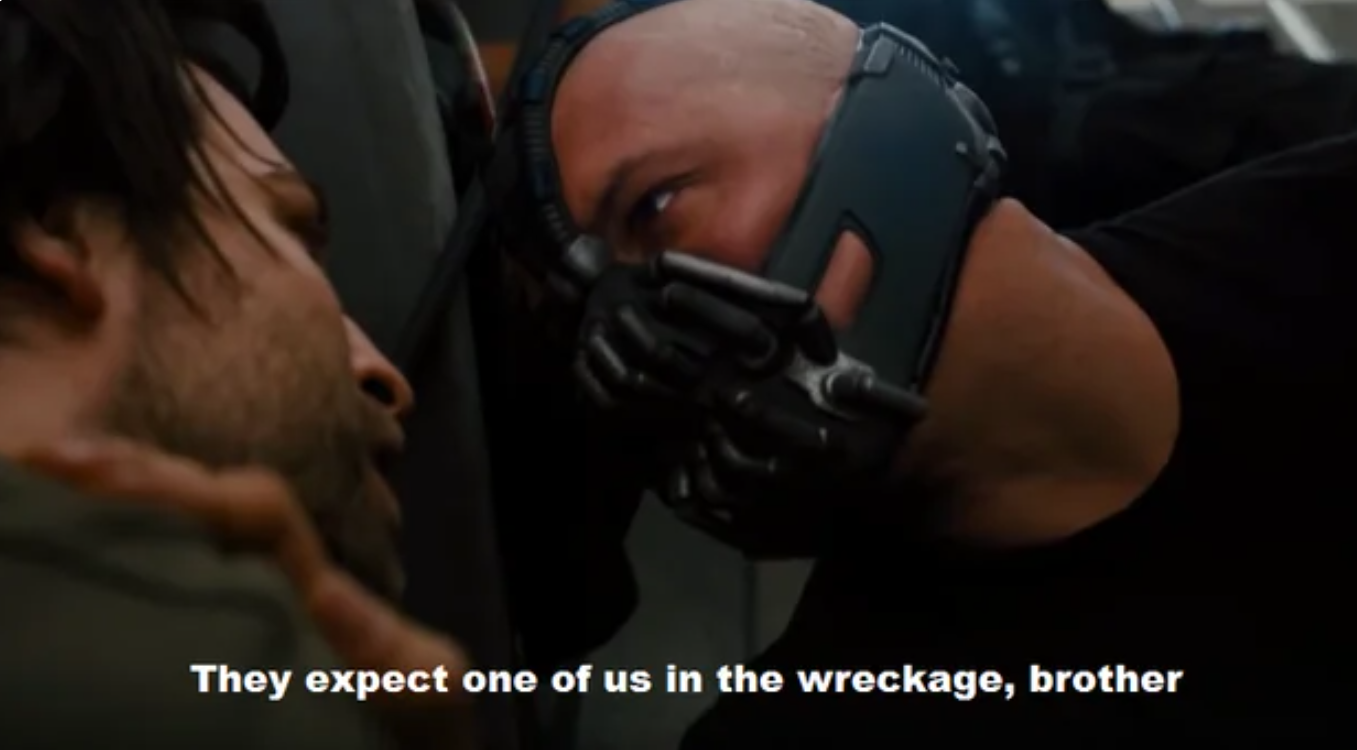
This is all, of course, leopards-eating-faces on a geopolitical scale. But Israeli conservatives are, I think, in complete denial as to what's happening here. There may or may not be an ascendance of illiberal conservatism over the next few decades. But I predict that, of all the countries that might identify with and try to hop aboard that bandwagon, Israel is the most likely to be left behind in the wreckage.

Sunday, March 16, 2025

What's the Point of a Senate Minority Leader?


Senator Sheldon Whitehouse (D-RI) had an interesting thread trying to explain the logic of why Chuck Schumer and several other Senate Democrats voted in favor of cloture on the GOP spending bill and averted a government shutdown. Whitehouse voted against cloture, but his object is to explain why some of his colleagues went the other way in good faith (i.e., not just because they're spineless capitulators). The short version is that a shutdown gives Trump greater power to accelerate the program closures and evisceration of disfavored government entities, and would even give him a veneer of legality that isn't present now. For Whitehouse, that risk is outweighed by the need to plant one's feet and take a stand now -- crystallizing the crisis the Trump administration has created and clearly fighting back against it -- but Whitehouse doesn't think it's impossible for someone in good faith to think the other way.

The Whitehouse thread is obviously meant to be a counterbalance to the growing anger being directed at Schumer from the Democratic base, who see him as an ineffectual leader incapable of mounting the resistance necessary against the Trump administration. How fair is the latter charge? To some extent, I think it depends on whether you think the role of the Senate Minority Leader is outward or inward facing.

If the role is outward facing, then Chuck Schumer's job is to be an exponent of the Democratic Party's message to the public, galvanizing the base and convincing others to rally against the Trump regime. Arguably, with Democrats out of the White House, he and Hakeem Jefferies are the two most powerful Democrats in the country and de facto co-leaders. People look to them to see what the alternative to Trump would be.

It is hard, I think, to dispute that if that is the job of the Senate Minority Leader, then Chuck Schumer has been bad at it. He has not been an effective messenger for the Democratic Party. He does not inspire the base. Nobody in the public looks to him for leadership.

However, there's a solid case to be made that the job of the Senate Minority Leader is not supposed to be outward facing. We are not a parliamentary system; the legislative head of the opposition party is not the prime minister waiting in the wings. When you think of the next generation of Democratic Party leaders -- the potential presidential candidates -- Chuck Schumer is not on that list, nor has he indicated any interest in being on that list. The folks who we should be looking at in terms of outward, public-facing Democratic messaging are folks like Tim Walz, Josh Shapiro, AOC -- people we can imagine running a presidential campaign. The role of Senate Minority Leader is inward-facing -- it is about governing a legislative caucus and figuring out how to orient that caucus towards a cohesive and effective legislative strategy.

Under this telling of the Schumer's role, I think the report card has to be considered more mixed. I am astounded by how many people had unreasonably high expectations of what Schumer could accomplish with a zero-seat majority anchored by at least two extremely mercurial actors; I think objectively speaking he did an incredible job. In his last stint in the minority, there likewise were simply absurd expectations over what he could plausibly accomplish (people thinking he just "let" the Senate confirm Brett Kavanaugh, for instance). And particularly in an inward-facing role, there's a solid case that part of Schumer's job is to take bullets for the rest of his caucus -- doing tactically necessary but unpopular things so that the public-facing leaders can keep a clean record. Even if Schumer is right about the relative demerits of letting the government shutdown, it was clear that any ambitious Democrat who acceded to the cloture vote has probably kneecapped their future prospects. In that case, Schumer's job is to take the righteous fire from the base so that other Democrats -- ones who are viable presidential contenders or who are outward-facing messengers -- remain pure. The willingness to do that, more than anything, is as far as I can tell the reason why Schumer has retained the support of his caucus even in the face of widespread external discontent.

All that said, it is entirely plausible to believe that right now Schumer hasn't figured out a good legislative strategy for his caucus either -- that he's failing in the inward-facing role. Some of that debate also returns us to Whitehouse's description of the split in the caucus  -- is now the time to plant one's feet and do pitched battle; or is it still better to try to maneuver for position? This, I think, is a more reasonable way of framing the current divide amongst Democrats that is sometimes presented as "fighters" versus "appeasers"; but I say that with a lot of sympathy towards team "fight". After all, saying one "has a plan", delaying action yet again to "maneuver" into a better position -- these can rapidly simply become excuses for inaction and quiescence. Once you cut away the paranoid underbrush where Schumer is deliberately selling out his party because he's closet-MAGA, this is far and away the strongest argument against Schumer as Senate Minority Leader from the inward-facing perspective -- that he's making serious tactical misjudgments by an unwillingness to commit to a pitched battle when Democrats need to show they're standing firm.

Where do I land on this? As alluded to above, Schumer has caught to my mind unreasonable fire for a long time; I've been far more forgiving of him in his leadership role than many of my peers. But one of my lodestone political beliefs (this was my take on the vice presidential nomination too) is that nobody "deserves" a role like Senate Minority Leader. There's no fairness here, no deserts. Maybe it's silly for people to look at the Senate Minority Leader as an outward facing role, but it seems like they are, and in that capacity Schumer has completely lost the trust of the base and doesn't have any particular cachet with "moderates" or "independents" to make up for it. And on the inward-facing side, again, even painting Schumer's strategy in the best light and giving him the benefit of the doubt, I'm inclined to credit Whitehouse's belief that Democrats needed to pick this fight and do it clearly. Perhaps that's me having blinders on and just desperately wanting someone to punch back at Trump; Schumer almost certainly would say I'm not looking at the long game. But my strong instinct is that Democrats need to  be punchier, and Schumer is not fitting the bill.

Who would fit that bill -- and do so, importantly, while filling the less visible inward-facing needs of caucus wrangling and legislative strategizing -- isn't totally clear to me. Nominations welcome.

Friday, March 07, 2025

We Won't Be Fig Leaves For Your Fascism


Last night, I posted about the Trump administration's declaration of war on American academia, there taking the form of a threatened academic boycott of Georgetown University for having "DEI" in its curriculum. Today, the Trump administration continued its attack in even more aggressive fashion, axing $400 million of government grants to Columbia University, putatively as a sanction for campus antisemitism.

Let's get one thing clear off the jump: this is not about "fighting antisemitism". It is about destroying American higher education. We do not need to pretend, even for a moment, that fighting antisemitism -- which is very real, at Columbia and elsewhere -- has even the slightest relevance to the Trump administration's decision. As Jews, our only response should be to declare, loudly and without hesitation, for Trump to get lost. We will not be fig leaves for your fascism.

Because in reality, the only role Columbia's Jews are playing in this drama is that of the scapegoat -- Donald Trump is using us to soak up the blame for his authoritarian thuggery. As I noted the last time I posted on MAGA government officials targeting Columbia for "BDS"-style tactics, if it seems like these choices are hurting the Columbia Jewish students they putatively are supposed to "help", that's entirely by design. These people loathe Jews, generally, and Columbia's Jews, specifically -- the claimed love for "Jews" is entirely superseded by seething hatred for actual Jews. And so while the main goal is to hurt the university as a whole, hurting Columbia's Jewish students is I'm sure seen as a delightful bonus.

That the Trump administration is colonizing "fighting antisemitism" in service of his authoritarian agenda is despicable, and it makes Jews less safe (which, again, is entirely intentional). The other day, I was thinking about my baby boy growing up and starting school here in Portland, and, as all parents are wont to do on occasion, I began catastrophizing a little bit. I imagined him the victim of some antisemitic incident, and what I would do about it. 

And what paralyzed me was the thought that if I did need external support in some way (to go to the press, to blog publicly about it, to get the local Jewish Federation involved, etc.), I knew things would rapidly spiral out of my control, and my son would become a mascot for politics we never signed up for and fervently reject. We'd see people exploit our tragedy to attack DEI or indulge in anti-Palestinian racism, and nothing we could say or do would stop them, and nothing we could say or do would stop others from projecting those agendas onto us.*

It's a paralyzing thought because this fear -- and I think it's a very realistic fear -- would genuinely and seriously deter me from seeking aid I desperately need. It would push me to stay silent and quiet and suffer because seeking support would only make things worse. That's an incredibly lonely position to be in, and it's one that I think aptly characterizes how many campus Jews feel right now. We're lonely -- lonely because of the antisemitism we endure, and lonely because we know any steps we do take to publicize the issue will rapidly and brutally rebound against us, often by the very actors who most loudly boast they're "standing with us".

It is this loneliness that the Trump administration is intensifying. By wrenching "fighting antisemitism" away from what Jews actually want, and seizing it for his personal authoritarian revenge project, he isolates Jews yet further. We're isolated from other members of our community, we're isolated from actual resources of care and support, we're isolated from one another. It's despicable, and it's disgusting, and it is frankly terrifying. But the only way to fight it is to fight it. Don't indulge it, don't tip toe around it, don't even for a second pretend to think it has anything to do with actually fighting actual antisemitism.

We will not be fig leaves for your fascism.

* In many ways this is just the JV version of "dying politically", and if you think people would respect the victims they're nominally "protecting", you should see how people are responding to Hayim Katsman's mother right now.

Thursday, March 06, 2025

Georgetown Stands Up in the Face of the Trump Admin's Attempted Academic Boycott


A little while ago, the Interim United States Attorney for the District of Columbia, Ed Martin -- who has rapidly begun distinguishing himself as one of Trump's most odious foot soldiers -- sent a letter to Georgetown Law School demanding that they eliminate all "DEI" from their curriculum and threatening to refuse to hire Georgetown graduates until they do so (if "a little while ago" sounds vague, that's because it took Martin two attempts to send the letter -- he misaddressed it the first time).

Martin's threats are reminiscent of the announced boycott of Columbia grads by Judge James Ho and some of his fellow far-right travelers, and the Dean of Georgetown responded exactly how I wish the Dean of Columbia would have responded: by refusing to give in and also by naming exactly what is happening here: a threat of official government penalty against private institutions for refusing to kowtow to official ideological orthodoxy. This goes way beyond the "jawboning" or informal requests that caused conservatives to shriek their heads off during the Biden administration; we have in these cases an explicit promise of legal retaliation on private actors who don't toe the government's line. It is hard to imagine a clearer instance of de jure censorship than this, and Georgetown Dean Bill Treanor doesn't mince words:
As a Catholic and Jesuit institution, Georgetown University was founded on the principle that serious and sustained discourse among people of different faiths, cultures, and beliefs promotes intellectual, ethical, and spiritual understanding. For us at Georgetown, this principle is a moral and educational imperative. It is a principle that defines our mission as a Catholic and Jesuit institution. Georgetown University also prohibits discrimination and harassment in its programs and activities and takes seriously its obligations to comply with all federal and local laws.

Your letter challenges Georgetown’s ability to define our mission as an educational institution. It inquires about Georgetown Law’s curriculum and classroom teaching, asks whether diversity, equity, and inclusion is part of the curriculum, and asserts that your office will not hire individuals from schools where you find the curriculum “unacceptable.” The First Amendment, however, guarantees that the government cannot direct what Georgetown and its faculty teach and how to teach it. The Supreme Court has continually affirmed that among the freedoms central to a university’s First Amendment rights are its abilities to determine, on academic grounds, who may teach, what to teach, and how to teach it.

This is a bedrock principle of constitutional law – recognized not only by the courts, but by the administration in which you serve. The Department of Education confirmed last week that it cannot restrict First Amendment rights and that it is statutorily prohibited from “exercising control over the content of school curricula.” 

Your letter informs me that your office will deny our students and graduates government employment opportunities until you, as Interim United States Attorney for the District of Columbia, approve of our curriculum. Given the First Amendment’s protection of a university’s freedom to determine its own curriculum and how to deliver it, the constitutional violation behind this threat is clear, as is the attack on the University’s mission as a Jesuit and Catholic institution.

Georgetown Law has one of the preeminent faculties in the country, fostering groundbreaking scholarship, educating students in a wide variety of perspectives, and thriving on the robust exchange of ideas. Georgetown Law faculty have educated world leaders, members of Congress, and Justice Department officials, from diverse backgrounds and perspectives. We pride ourselves on providing an excellent graduate and professional education, built upon the Catholic and Jesuit tradition. Georgetown-educated attorneys have, for decades, served this country capably and selflessly in offices such as yours, and we have confidence that tradition will continue. We look forward to your confirming that any Georgetown-affiliated candidates for employment with your office will receive full and fair consideration.

Very well said. The appeal to religious liberty is also appreciated in this context, though I suspect the Jesuits will fare as well as liberal Jews will under the new free exercise jurisprudence.

It should be clear by now that the Trump administration and its right-wing fellow travelers are launching a full-fledged BDS campaign against American universities that don't bow to its ideological agenda. The proposed academic boycott against Georgetown is one example, the myriad donor threats to divest their funding from colleges that don't crackdown on disfavored programs or speech is another, the proposal to sanction Columbia by axing over $50 million in contracts is yet another. These endeavors are an anathema to academic freedom and First Amendment values, and must be opposed by all principled defenders of the academy.*

* What a shame that the AAUP recently and abruptly shifted course and decided, after decades of strong opposition, that actually academic boycotts are a-okay. It's almost like it was eminently predictable that abandoning that principle might backfire very quickly given how the right has been racing for excuses to punish universities who they've deemed "complicit" in ideological projects and activities they oppose!

Monday, February 24, 2025

The Irrelevant Innumeracy of the Swarmed GOP Town Halls


Surely by now you've seen the stories about GOP congressmen, in deep red districts, being absolutely swarmed by angry constituents furious that they're not standing up to Trump, Musk, DOGE, and the buzzsaw attack on hardworking federal employees.

My thesis about this will be twofold. First, there's objectively less to these events than meets the eye. And second, it doesn't matter that there's objectively less to these events than meets the eye, and we should all behave like they're exactly what they appear to be.

Start with the first. The excitement over these protests relates to the sense that anger and outrage over Trump has expanded beyond the blue bubbles and is penetrating even dark red terrain. But the mistake here is something I alluded to in my How To Tokenize with Proportions post. A congressional district where a Republican won by, say, a 66-33 margin is by any measure a dark-red district. But it also is a district where one in three voters voted Democrat. One in three is a lot of people! In a congressional district of 750,000, it's 250,000 people! It is not hard to fill a high school auditorium, particularly if that 250,000 is feeling especially angry and activated.

It's an issue of framing, if you're generous, or innumeracy, if you're not: 33% doesn't feel very common, 1 in 3 feels very common. Politically speaking, the former is closer to accurate, which is why congressional districts where one sees 66/33 margins aren't typically treated as competitive.

But what innumeracy taketh away, innumeracy also giveth. The fact is that most people see a crowd of angry constituents filling an auditorium in a deep-red district and don't start doing math about how easy or hard it is to fill up the space given the baseline number of Democrats around. They just see the crowd. Politics is often a game of perception and of momentum -- people see others in their community and in their spaces expressing anger and fear and frustration, and it validates their own nascent feelings of anger, fear, and frustration. It makes them feel like they're not alone. It encourages them that these sentiments are common in their community, and that they're not weird or outcasts or loners if they feel them too. All of that starts to build a narrative conducive to resistance. And even if it doesn't mean the deepest-red congressional districts will flip blue in 2026, it gets that permission structure going that will make life very difficult for Republicans in more vulnerable seats.

So keep swarming. Keep yelling. Keep sharing those vids. Build up that narrative that people everywhere are mad as hell, and they're ready to fight. In politics, image becomes reality before you know it.

Tuesday, February 18, 2025

Falling on the Reputational Grenade, Part II


The other day, I had the thought that, sometime in the next four years, we will likely see the first legal filing by a government lawyer that will include some AI-hallucinated citations. Leaving aside that this is already happening with private firms (including sizeable ones) and so it only seems a matter of time, we also are entering the realm of overconfident and underqualified tech bros ransacking their way through Washington. AI-generated legal briefs are exactly the sort of "optimization" I can imagine Musk and his DOGE youth pushing out onto the bureaucracy, with predictably farcical results.

Generally, courts have responded rather mercilessly to lawyers who've submitted AI-generated hallucinated cases. Their reputations are ruined, and the underlying case is permanently discredited. And that thought got me thinking -- what would happen if an enterprising government lawyer decided to sabotage their own case by deliberately inserting AI-hallucinations into it?

Imagine the birthright citizenship case -- already viewed as a legal non-starter, with the usual conservative guns-for-hire flailing about trying and failing to whip up an even halfway plausible mechanism for circumventing the constitution's clear text and history. In court, the DOJ files a brief citing some late 19th century caselaw that seems to endorse a narrower view of the citizenship clause than currently prevails ... but it turns out that the citations are all made up.

Such a move would detonate the Department's credibility. As a form of internal sabotage, it would be devastatingly effective -- but (in here's the rub) only if the public didn't know it was sabotage. If the ruse was revealed, the plan doesn't work (having one's own attorney deliberately sabotage your case is not the sort of thing held against the client). But if the public remains unaware, the attorney who made the "mistake" would have committed career suicide twice over -- first, in putting his name on a defense of whatever neo-fascist Trump policy is before the court, and then second being a public laughingstock by "defending" it via inept use of generative AI.

During the first Trump administration, I wrote about actors who were knowingly wrecking their reputation by working in the Oval Office on the (probably correct) theory that if they didn't do it, someone worse would. They knew that history would view them as a villain, and accepted that judgment in order to avert greater evil. The above example is a perhaps even more extreme case -- a sort of reputational suicide bomber. The attorney would sabotage some great evil, but at the cost of everyone for all time thinking of him as Trump's most incompetent lickspittle.

We saw recently a longtime DOJ attorney, Ed Sullivan, agree to file a motion to dismiss the Eric Adams indictment, reportedly to avert a complete and total purge of the Public Integrity Unit by one of Trump's cronies. The order to dismiss the Adams case had already led to widespread resignations over what was transparent quid-pro-quo corruption -- trading non-prosecution in exchange for Adams' cooperation in enforcing Trumpist immigration policies. Sullivan reportedly agreed to fall on the grenade so as to spare his colleagues; this has in turn generated a roaring debate over whether Sullivan was right to do so or should have forced Trump's lackey to fully reenact the Saturday Night Massacre. I don't here make any judgment on which side of that debate got things right. But we're going to see more difficult questions as those on the inside consider how to resist abuse and forestall catastrophe. And while we like to imagine that the "right" choice at least comes with the perk of being viewed heroically, the more interesting choices may be ones where it is precisely one's reputation that must be sacrificed in order to truly avert the greatest evil.

Sunday, February 02, 2025

Can One Man Really Stop the Senate?


As Donald Trump's disastrous march through America's legal institutions continues unabated, progressives are desperately looking for something -- anything -- that can stem the tide. One possibility folks have seized upon is Senate obstructionism. The line goes that even a single Senator can do a ton of things to throw sand in the gears -- objecting to unanimous consent, slowing down hearings, delaying votes -- that can extract real costs on the MAGA agenda and provide Democrats with some negotiating leverage. So far, no Senator has taken this approach, and that in turn is a source of considerable frustration to progressive partisans who feel that Democrats have been rolling over without a fight.

But for me, the fact that no Senator has done this raises a different question: If this strategy was so effective, wouldn't someone have done it by now?

There are 47 Democratic (or Democratic-aligned) Senators in Congress right now. And as a collective, I absolutely believe there are plenty of plausible explanations for why they're hesitant to adopt the defiant, resistant pose so many of us are thirsting for. If you told me that (too) many still harbor a gut desire for "bipartisanship" and "working across party lines", I'd believe you. If you told me that (too) many remain attached to Senate norms of civility and comity, I'd believe you. If you told me that Chuck Schumer has attempted to unify the caucus around a strategy that, for whatever reason, doesn't include maximal obstructionism, I'd believe you.

But if it's really true that just one Senator has in his or her power the ability to grind Congress' gears to a halt, is it really possible that not one of the forty-seven would try it? There wouldn't be a single defector?

Do you really think Bernie Sanders is afraid to rattle cages? Do you really believe that Adam Schiff has in the past few weeks become enamored by venerable Senate traditions? Do you really imagine that Tammy Baldwin is inclined to cower before any and all Chuck Schumer diktats (do you really believe Chuck Schumer is that good at keeping his entire caucus in absolute ramrod lockstep)?

It just doesn't seem plausible to me. Someone would have defected by now. In fact, even if this strategy was considerably less effective than it's cracked up to be, or even if you think Senate Democrats are all fat cat posers who don't actually care about resisting Trump at all, you'd still think someone would have tried it simply to be a clout-chaser. The fact that nobody has done it suggests that either it is a lot less effective than people think, or there are a lot more (and more serious) hidden costs to it than people recognize.

I won't claim to be an expert on Senate procedure, and reading about the various machinations around blue slips and unanimous consent and holds makes my head spin. So it's entirely possible I'm missing something here. But whatever I'm missing has to explain not why "Senate Democrats", collectively, aren't adopting an obstructionist strategy; it has to explain why every single individual Senate Democrat has so far refrained from using their power as a one-Senator army to bring things to a halt. And I just don't see what that explanation is, aside from this alleged silver bullet not actually being one.

Tuesday, January 28, 2025

Nothing Else Like It


In one sense, what we're going through in America is highly reminiscent of other countries which have recently gone through authoritarian regresses. Hungary, India, Israel, the Philippines, and Brazil, to name a few, all have seen liberal democratic institutions decay in the face of far-right populist demagogues.

I've found this weirdly comforting -- not because what's happened in those countries hasn't been awful, but because somehow knowing this sort of thing doesn't stand outside history is reassuring. It's not the end of time, it is a thing happening in time.

Yet even this reassurance is, I fear, somewhat misleading. Because while it may be true that Hungary, India, Israel, etc. have gone through this before; and even true that (some of) these countries have or will come out the other side, what we have not ever seen is a global hegemon going through this sort of regression. Without understating the havoc that a recklessly authoritarian India or Israel can wreak on a local or even regional scale, they're unlikely to take down the entire international order with them. An out-of-control America could tank the global economy, could cause anarchic chaos to break out all over the planet, could set off a literal World War III. There's literally been nothing like it.

And domestically, with the possible exception of the Redemption-era South, we haven't in American history seen as rapid an authoritarian rollback of democratic equality and rule of law as what the Trump administration has inaugurated in its first week(!) in office. Every aspect of our constitutional order feels like it under attack, all at once, and nobody really knows how to respond.

This uncertainty, unfortunately, is sometimes paired with a strangely confident certainty that purports to know exactly how to respond -- which is to say, "something not what we're doing now."

At one level, I understand where this frustration is coming from -- "what we're doing now" can't be the right response, because it's not stopping things that need to be stopped. At another level, it really does elide the brute reality that nobody knows exactly what the most effective response is to Trump's blitzkrieg fascism. For example, I saw a report that House Minority Leader Hakeem Jeffries (D-NY) was taking the stance that Democrats should ignore Trump's "flood the zone" tactics and focus, laser-like, on the economic damage he was wreaking. I also saw many panning this tactic as leaving many critical issues unaddressed while missing opportunities to make hay out of massively unpopular oversteps that weren't clearly economic. I certainly see the weight of this critique, but I also understand the other side -- that trying to cover everything will inevitably result in an unfocused, chaotic response that lacks a clear narrative and just reinforces a "Dems in disarray" sensibility. How do I resolve that tension? I'm not sure -- and to be blunt, I think most people are unsure too.

My best proposal is this: the important thing is to keep fighting. The where or when or how is far less important than that it happens at all. This means I do agree wholeheartedly with the stance that Democrats' job is to be the opposition party and not give any free inches to Republican policies. But beyond that, I'm not sure the best use of our energy is engaging in internal sniping regarding who is prioritizing what messaging or narrative point best.

Is that a possible line to hold? I don't know. Is it even the best line to hold? I don't know! We're in new territory here. There's been nothing else like it.

Thursday, January 23, 2025

What Will Go Wrong Hardest, Fastest?


It's hard to keep track of the firehose of sewage the Trump administration has already started pumping out in its first few days. From civil rights to cybersecurity, the administration has been taking a wrecking ball to the American governmental project, with consequences that will likely reverberate for years, if not decades.

But I don't want to wait that long. I'm curious: which of Trump's endeavors are likely to blow up hardest, fastest, in a way that is noticeable to the broader public?

For example, take the cancellation of scheduled funding meetings at the National Institute of Health. This is a terrible thing, that will needlessly obstruct critical medical research. But while it's certainly noticeable to the doctors and scientists on the inside, the public impact of it won't be felt for a long time. It's not like there's a cancer cure that was scheduled to come out tomorrow that now is being shelved.

Ditto Pete Hegseth likely getting confirmed as Secretary of Defense. It is very bad that an alcoholic sexual predator is overseeing America's military, but we're not going to lose Buffalo to a Canadian invasion in the short-term. The fallout -- in terms of military readiness, efficiency, professionalism, and so on -- will occur over a longer timescale.

By contrast, the myriad governmental hiring freezes Trump has announced do seem to be breaking out of containment, insofar as they are kneecapping many people who in many cases were all set to move long distances to start a new job, only to have it abruptly pulled out from under them. I'm already seeing a few "leopards ate my face" posts by Trump supporters who are sure that Trump couldn't possibly have meant to do exactly what he said he was going to do.

Tariffs are another good candidate for something that will immediately, dramatically, and noticeably impact American pocketbooks -- especially if they set off another bout of inflation.

But maybe there's something else that will explode harder, faster, and stronger than I anticipate. I would say I can't wait to find out, but I suspect my preferences will have little to say on the matter.

Monday, December 02, 2024

We Who Are About To Die


The Romans loved their gladiator games.

I actually have no idea if that's true. Most of what I know about gladiators comes from how they're portrayed in Ridley Scott movies. For all I know, Romans did not actually enjoy seeing innocent people torn apart in the arena by wild animals or what have you.

But, to quote Philip J. Fry, "it's a widely-believed fact!", so we'll run with it.

It seems clear that a huge part of the second Trump administration will be vindictive political prosecution of his "enemies". This was a recurrent campaign theme of his, from proposing "military tribunals" for the likes of Liz Cheney to alleging "COVID crimes" by Anthony Fauci. Willingness -- implicit or explicit -- to engage in such thuggery has been a theme of his early announced appointees, from Kash Patel to Brendan Carr to Pete Hegseth. Concern over such tactics was expressly raised by Joe Biden in his pardon announcement for his son, Hunter. How deep down the list will he go? Unclear, though normalcy will not save you. The hammerfist coming to smash American rule of law is something unprecedented in my lifetime.

These prosecutions will be lawless along every possible dimension. The people driving them won't care about the law. The venues will be selected based on political convenience (I bet one will be amazed at how many of the "crimes" in question will center on the Western District of Texas). The "crimes" themselves either will be frivolous or nakedly selective. It will be undisguised authoritarian thuggery: the apparatus of law enforcement entirely perverted to immunize the president's allies while harassing his enemies (the almost-assured pardon of the January 6 insurrectionists is also part of this story).

I won't here venture a prediction as to how the judiciary will respond to these endeavors. It's possible they'll hold the line, as they largely did in 2020. But it's also the case that in 2024 the conservative legal movement has embraced and assimilated into full-blown MAGAism to a far greater degree than in 2020; even if they don't actively embrace the conspiracism (which they might), one can very easily imagine them hiding behind rules of deference to enable Trump to run wild.

The open question I want to consider, though, is how the public will respond to all of this. Of course, Trump's base will love it -- they've been baying for blood since 2016. And equally obviously, people like me will hate it. But I have a bad feeling -- maybe doom-mongering, maybe not -- that these spectacles of prosecution will go over better than one would think with low-information independents.

The reason isn't because they necessarily have strong opinions that Joe Biden or Anthony Fauci or various military generals actually are criminals. Rather, it is a more inchoate desire to see "the powerful" get their comeuppance. It almost doesn't matter whether they're guilty or not; the mere practice of seeing people one is accustomed to thinking of as "above you" laid low, ripped apart by the animals in the arena, is desired in of itself.

Consider what is for me one of the most infuriating aspects of Trump's victory: that he will not be held accountable for his many, many blatant crimes. No sentencing for the New York felony convictions, no consequences for the attempted 2020 insurrection, no pursuit of the document theft case, no nothing. It is maddening, to see such naked abuses of power result in nothing simply because Trump is powerful enough to evade responsibility for anything. If you take that indignant sensation and shear it from any substantive political knowledge, you're just left with the boiling resentment that a vague "they" keep "getting away with it". And the mere performance of going after a "they" can appeal to those resentments -- a fascist essence where the struggle is valuable in of itself, to show oneself to be the tribune of the people.

This suggests that Democrats could have leveraged this same atavistic desire to get at a powerful "them" by, for example, a fast Garland or prosecuting big bankers for the financial crisis or going after Elon Musk. And much like with echo chambers, I'm of two minds on this: torn between thinking that (for better or for worse) this is the strategy that works, versus thinking that it is a bad thing to encourage this sort of political climate (to be clear: I have no quarrel with "going after" big bankers or whoever when they commit crimes, but performatively going after an "enemy" class -- no matter who it is -- untethered by normal rule of law constraints strikes me as bad both morally and also conducive to a political environment that ultimately helps the right).

So once again, I'm at a bit of a loss here. But if we're relying on a natural popular revulsion to politicized sham prosecutions by the Trump administration, I'm not sure we're going to get it. We are going to be entering a very, very dark time.

Wednesday, November 13, 2024

Will Matt Gaetz Finally Cause the Senate GOP To Stand Up To Trump? My Money's On No!


I really thought I'd laid the bar on the floor, but somehow Donald Trump has already burrowed under it by announcing (former*) Florida Congressman Matt Gaetz as his pick for attorney general. I had the pleasure of sharing this news with several of my law school colleagues, where it literally provoked a laugh-out-loud howl of incredulity.

It wasn't just my people though. Senate Republicans also seem rather blindsided by the pick:

The selection of Mr. Gaetz blindsided many of Mr. Trump’s allies on Capitol Hill. The announcement was met with immediate and unvarnished skepticism by Republicans in the Senate who will vote on his nomination. Senator Susan Collins of Maine said she was “shocked” by the pick — and predicted a difficult confirmation process.

[....]

Senator John Cornyn, Republican of Texas, when asked about Mr. Gaetz’s selection, said, “I don’t know the man other than his public persona.”

Mr. Cornyn said he could not comment on the chances that Mr. Gaetz, or Tulsi Gabbard, Mr. Trump’s pick for director of national intelligence, would be confirmed: “I don’t know — we’ll find out.”

“He’s got his work cut out for him,” Senator Joni Ernst, Republican of Iowa, said as other senators dodged questions from reporters.

Representative Max Miller, Republican of Ohio, told reporters that many members of the G.O.P. conference were shocked at the choice of Mr. Gaetz for attorney general, but mostly thrilled at the prospect that he might no longer be a member of the chamber.

The House, Mr. Miller added, would be a more functional place without Mr. Gaetz.

He predicted a bruising confirmation fight, adding that if the process revealed evidence to corroborate the allegations of sex trafficking against Mr. Gaetz, he would not be surprised if the House moved to expel him, as it did with Representative George Santos. Mr. Santos lost his seat after the Ethics Committee documented violations of the chamber’s rules and evidence of extensive campaign fraud.  

But things aren't all bad. You'll never guessed who raced ahead of the pack to greet Trump's failson pick with open arms:

One of the few lawmakers to offer a positive assessment was a staunch Trump ally, Senator Lindsey Graham of South Carolina, who called Mr. Gaetz “smart” and “clever” but predicted tough confirmation hearings.

So, how long will it take for the Senate GOP caucus to fall in line? I'm guessing it'll happen before the first confirmation hearing. (That is, if we have confirmation hearings).

Oh, and speaking of organizations that have put their dignity in a lockbox, we did finally learn what bridge is too far for the ADL, which blistered the Gaetz selection because of his "long history of trafficking in antisemitism," including "defending the Great Replacement Theory." How he's distinguished from the ADL's glowingly-praised Elise Stefanik, who also promoted Great Replacement Theory, was left unsaid.

* Gaetz hastily resigned his seat following the announcement, also getting ahead of a planned House Ethics Committee report that was set to issue findings on Gaetz's myriad, er, "controversies" -- including allegations of sex trafficking minors. Score one for QAnon!