Friday, July 04, 2025

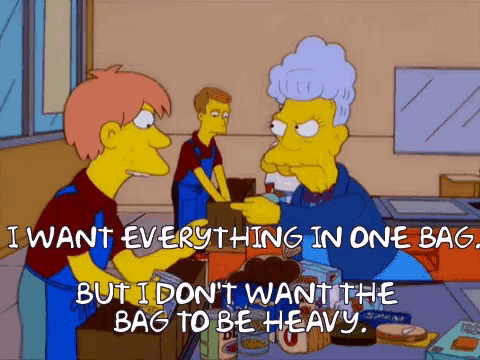
More Than You Can Handle: An Ode To Murkowski (and Others)


Observers are rightfully hammering Alaska Senator Lisa Murkowski for admitting she didn't like Trump's catastrophic budget bill right after her decisive vote in favor of passing it.

Murkowski's actions, as has been noted by others, symbolize all that's wrong in American politics. But it did inspire me to write a little missive about people like her, in situations like this.

* * *

They say "God doesn't give you more than you can handle."

But we know that's not true.

Sometimes, the weave of fate thrusts people into situations where to do the right, necessary, and crucial thing demands great moral courage, or great physical courage -- a fortitude that some people simply do not have.

They're tragic figures, in a sense (not quite as tragic as the millions of lives they destroy, of course). For they might be perfectly adept in other domains: kind parents, skillful administrators, prudent negotiators, incisive analysts. And these are virtues too! Nobody is great at everything, and most of us should be so lucky to not have to demonstrate great moral or physical courage in order to fulfill our most basic civic duties.

Unfortunately, for some, fate demands of them this specific virtue, and they do not have it.

But the tragedy, to be clear, is not an apologia. To the contrary, the tragedy is that this will be their sole legacy, and rightly so. The same person who, in a different role or in a different time, might be memorialized as a kind parent, skillful administrator, prudent negotiator, or incisive analyst, will instead be remembered for their terrible failure to rise to the moment. They may deserve pity, but they don't deserve forgiveness; understanding, but not salvation.

(Feel free to apply this John Roberts as well).

Thursday, July 03, 2025

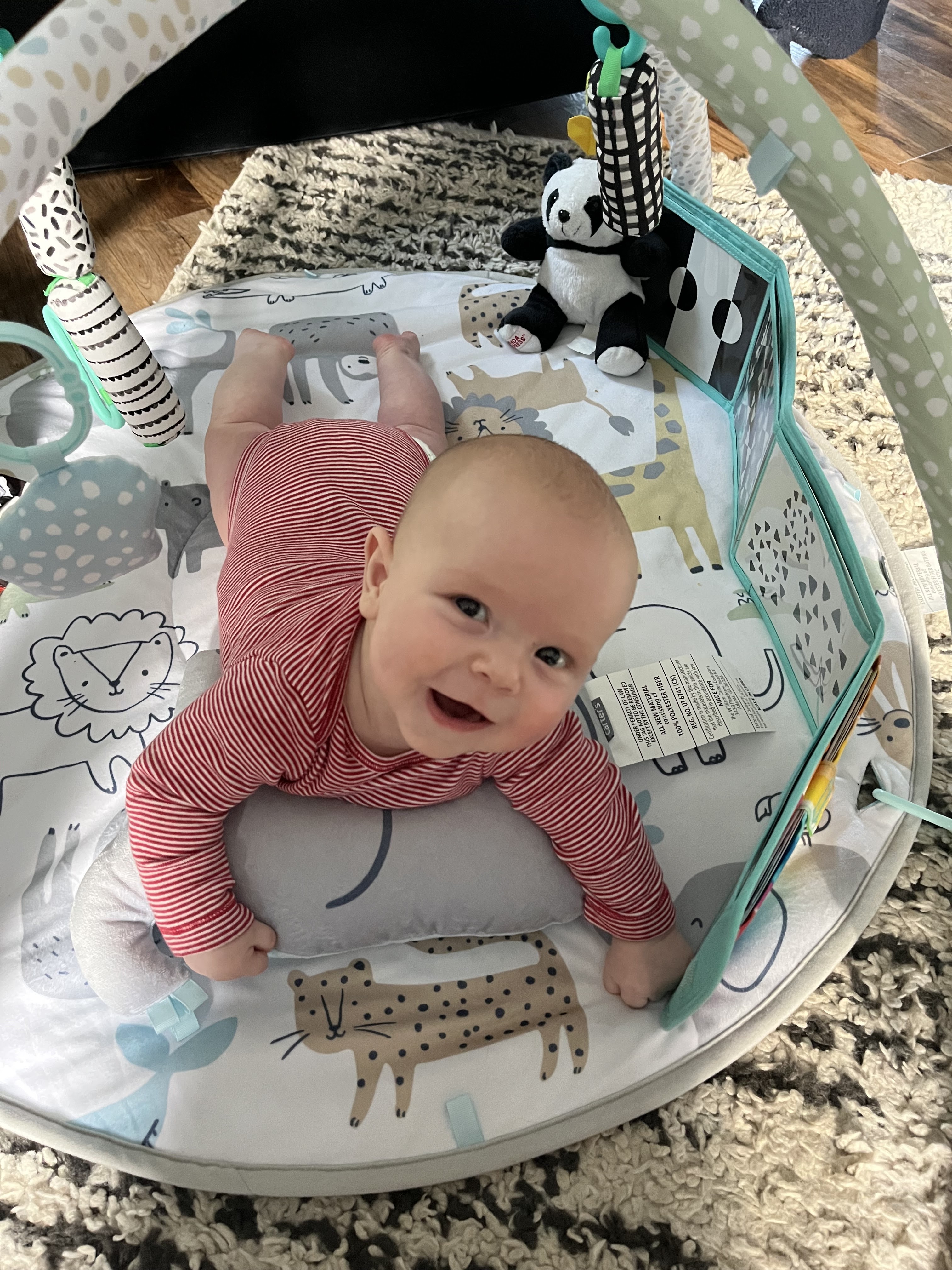
Number 2 Ranked Baby in a One Baby House


A few evenings ago, Jill was awakened in the middle of the night because someone spit up all over the bedsheets in their sleep.

That someone was me. I must have eaten something that didn't agree with me, and the Pepcid I took before bed proved insufficient for the task.

Nathaniel slept soundly through the night, as he does almost every night. 

But spit-up? Seriously? I'm nearly forty. And it's a bit embarrassing, as a near-forty-year-old, to not even be the lowest-maintenance "baby" in the house.

Then again, in other respects it's a lot better when it's me than him. When something's wrong with me, I can self-regulate, and I can usually understand what it is and communicate what I need. Nathaniel, of course, lacks those capacities. So on the rare occasions when he does start crying without a clear cause, Jill and I just sort of haphazardly throw comfort-ideas at him in the hopes that something sticks (pick him up, put him down, leave the room, stay in the room, stay just outside the room but in eyeshot, give him toys, try to give a nap, feed him, change him, burp him ... it goes on).

The other day, Nathaniel had probably his worst meltdown since he was born -- even worse than vaccine day. The day started normal, except that he was unusually uninterested in his bottle (normally he takes it with no trouble whatsoever). But he was cheery enough as the day progressed, so I didn't think much of it. We have our next door neighbor's kid come over once a week to watch Nathaniel (we stay home, it just lets us catch up on work or chores or sleep), and when we passed him off to her Nathaniel started crying. Even that isn't too unusual -- he'll usually cry for a minute or so on such a handoff -- but this time it didn't really stop. To her credit, the sitter tried everything she could think of (playing, bouncing, carrying, music), until eventually I suggested maybe we try to put him down for a nap.

Bzzt. Dad guessed wrong, and Nathaniel absolutely blew up. Crying turned into flat out hysterical screaming, and finally I pushed the big red abort button and got Jill. Mom managed after a lot of cuddles and soothing to calm Nathaniel down and eventually get him to sleep, and we let the sitter go home early.

We still aren't sure what set him off. Right now, our best guess is a mix of separation anxiety and an upset stomach (he took a mega-poop shortly after the sitter left), that sort of fed on itself until he spiraled. But we're not sure, and of course we never will know for sure. What we do know is that there's little that's more awful than seeing your kiddo uncontrollably upset and not knowing how to help him. Even when you're pretty sure it's nothing (and we did take his temperature and check for anything that might be causing pain or discomfort), it's still awful -- though I'm thankful it was nothing, since it'd be far worse if it was caused by something.

Oh, and lest anyone worry -- he was back to better after his nap. And today we discovered that he really likes beer ads (at least in fine art form). So there's that.

Monday, June 30, 2025

Things People Blame the Jews For, Volume LXXIV: Zohran Mamdani

A disproportionate chunk of oxygen surrounding Zohran Mamdani's decisive victory in the NYC mayoral Democratic primary has been taken up by the question "is he antisemitic?" The main hinge points for the charge, aside from a generic linkage to his sharp criticisms of Israel, are his support for the BDS movement and his refusal to condemn the phrase "globalize the intifada" (some have wrongly suggested that Mamdani himself uses the phrase, but that doesn't appear to be true). 

Predictably, things have spiraled out of control -- for what's it worth, I do think Jews are permitted to object both to Mamdani's BDS support and his apologia for "globalize the intifada", but the possibility of reasonable objections has been obliterated thanks to a glut of hysterics urging Jews to flee the city or, perhaps, the country.

In any event, while it does seem like Mamdani did not win NYC's Jewish vote this cycle, it's undeniable that he has a non-trivial amount of Jewish supporters. Some would point to these supporters (cynically or not) as a bulwark against the antisemitism charge. And others, well, others would see Mamdani's entire rise as part of Soros-led plot dating back to Mamdani's teenage years.

The above linked article is by Asra Nomani, and I encourage you to read it because it is a good example of what I've called Potemkin expertise. It rattles off a dizzying array of facts and numbers and connections to create the illusion of being deeply-researched, but it's actually the written equivalent of a corkboard with red string connecting names with wild abandon. It is unsurprising to anyone with a familiarity with this sort of "it's all connected!" raving that George Soros will be at the center of it, and so too here. But the short version is that Soros funded a range of post-9/11 initiatives that pushed back on racial and religious targeting of Muslim, Middle Eastern, and South Asian Americans, and these projects should actually be seen as a systematic attempt to create a "red-green-blue spider's web" that will take over American politics in pursuit of a Islamist-socialism.

There are people who have called Islamophobia "the new antisemitism"; a maneuver I generally hate because it wrongly suggests the "old" antisemitism has gone away when it clearly hasn't. That said, it is clear that certain aspects of Islamophobia move to very familiar beats vis-a-vis antisemitism, and that's illustrated almost too neatly here, where utterly mundane Muslim political mobilization against discrimination is recast as a devious plot to destroy America (with the shadowy Jewish financier at the center of course).

On that note, I have to give an honorable mention to Inez Stepman who, as one wag put it, basically "reinvented antisemitism from first principles" in her description of Mamdani.

A man "essentially from nowhere", an "elite class global citizen with no loyalty to a place or its people"  -- boy, does that ever sound familiar. New York hasn't had a Jewish mayor since Bloomberg, but if antisemites were missing the chance to pull out the old hits they've found a new mark with Mamdani.

Wednesday, June 25, 2025

Please Do Not Destroy (Portland)


Now that I've lived in Portland for a few years, it is time to buckle down and complete my local politics journey from angry ignorant voter to angry informed voter.

Portland has a new city council -- literally, we only just switched to a city council form of government this past election cycle -- and it's definitely still finding its sea legs. Our election system is a bit convoluted, dividing the city into four geographic districts (I'm in District 4, which encompasses Portland's west side) represented by three councilors each. 

The voting system is, as far as I understand it, designed to promote some measure of ideological pluralism via multi-winner ranked choice voting, leading to a city council that is (mostly by design) divided into a center-left and left bloc. The latter includes several DSA or DSA-aligned politicians, including one of my three councilors, Mitch Green (the other two District 4 councilors are Olivia Clark and Eric Zimmerman, who are part of the center-left bloc). My pre-election post last year gave a bit of a hint as to the wild-west character of our first council election, but I'm pretty sure I ended up ranking all three of the figures who eventually were elected (I know I ranked Clark first). With respect to Green in particular, the DSA endorsement gave me pause (as I noted), but he had gotten enough praise from enough of a diverse base for me to think he earned a shot.

Unfortunately, now that everyone's in office, there have definitely been some actions that have given me pause. The first was when Green threatened Portland State University's budget unless it altered disciplinary decisions meted out to pro-Palestinian protesters. Obviously as an academic I'm especially sensitive right now to politicians holding university budgets hostage in order to get them to change their self-governance practices, what with the outright war Trump has declared on American academia and the existential threat his actions pose to university independence and academic freedom. That Green saw those actions and thought not "that's repulsive!" but rather "that's inspirational!" is deeply worrying to me. To be clear: government should not be leveraging the power of the purse to get universities to punish pro-Palestinian protesters more harshly or more leniently. From the get-go, this sort of conduct by Green smacks of someone who is far too comfortable utilizing MAGA-style authoritarian tools so long as it meets his preferred ideological objectives.

More recently, a huge controversy is starting to brew after the council, in a 7-5 vote (with the left/DSA bloc, including Green, in the majority), decided to reject the Portland Children's Levy grant package and instead extend funding to preexisting grantees for another year.
The council’s June 4 vote is the first time the PCL, established in 2002, had its selections rejected en masse. The consequence is that 36 nonprofits expecting $17.4 million in funding to begin flowing July 1 won’t receive that money for at least a year.

That’s an extraordinary move by the newly elected 12-member body, who cited concerns about equity and racial justice as a reason for rejecting two years of work by program staff, a group of volunteer scorers, and a community council set up to help guide funding priorities. It’s the latest signal of the council’s appetite to reassess long-standing city funding practices, and has left members of the PCL Allocation Committee seething.

The opposing councilors cited "doubts about the fairness of the PCL’s scoring process, citing anecdotal examples of organizations, some of which are Black-led, that were not recommended for funding," but the PCL experts explained that many minority-led or -focused organizations received funding and the non-recommendees lost out because they badly underperformed on transparent metrics. As the Oregonian noted in its editorial (which called the vote "the most reckless" decision the council has made in its short tenure), the putative arguments against the PCL's recommendations were mutually inconsistent and seemed nakedly pretextual, with a thin veneer of "anti-racism" used to mask an uninformed council protecting politically well-connected but underperforming legacy organizations. It smacks of cronyism, and it's gross. And while the blowback has led some unidentified councilors to express "regret" over "unintentional consequences" (they're not "unintentional"; it was very clear what the council voted to do), they do not as of now seem inclined to reverse their decision. It is reminiscent, again, of the games the Trump administration is playing with its various grants -- overriding expert judgment to reallocate spoils to its special favorites.

What do I make of all of this? Well, right now I'd be very disinclined to rank Green again. But -- rhetoric about being an "angry" voter aside -- I'm not as upset as you might think with the council. These people won a chance to govern Portland, fair and square. If they end up doing a bad job and making bad choices, the remedy is to vote them out. But I don't view it as some existential catastrophe that they were given a shot in the first place. As obnoxious as these decisions are, they are not going to destroy Portland. We live, we learn, and hopefully we elect new people.

The subtext here is the DSA's Zohran Mamdani getting the Democratic nomination for mayor of New York. He's not a complete shoo-in -- won't make that mistake again -- but he's the heavy favorite. I've seen people suggest that his socialist ideas are pie-in-the-sky fantasies that will never work and will be terribly destructive to the people of New York. For me, I have no strong opinions about city-owned grocery stores. Maybe they'll work, maybe they won't. But I am reasonably sure that New York City will not be irreparably damaged by his mayorship. Maybe his ideas will work, maybe they won't. I don't view it as an existential catastrophe that we'll find out.

Tuesday, June 24, 2025

Don't Rank Cuomo, and Other Less Important Thoughts


The Democratic primary for the NYC mayoral race is today. The front-runner has been former Governor Andrew Cuomo, but he's facing a stiff challenge from a surging Zohran Mamdani, who's aligned with the Democratic Socialists of America.

I don't live in New York, obviously. But I've been casually following the race, and I do have some thoughts.

1) Don't rank Cuomo. That's the mantra of nearly all the progressives in the race, and it is correct. It's not just that Cuomo is a sex pest (though, dayenu). He was also an awful governor who actively sabotaged Democratic prospects in New York in order to promote his own presidential ambitions -- and yet was so manifestly incompetent he ended up wrecking his presidential ambitions too! Personally mendacious, hostile to his own party, and piss-poor political instincts? No. Get this guy out of here. And honestly, "don't rank Cuomo" is, far and away, the most important thought.

2) David endorses Lander. Not that it matters, but if I had a vote in New York I'd probably rank Brad Lander first. I always liked him. And with ranked choice voting, I could do it without worrying that I was tossing my vote away and/or involuntarily supporting Cuomo.

3) The NYT's cowardly Cuomo quasi-endorsement is nauseating. The NYT recently said it would stop issuing endorsements in local races (why?). But that makes this editorial, where it twisted itself in knots to not-expressly-say it is endorsing Cuomo while effectively endorsing Cuomo because Mamdani is just too lefty and scary, the most spineless thing I've seen in opinion journalism since everything the Washington Post has done over the past 8 months.

4) I'd rank Mamdani. But... I think there is a lot to like about Mamdani. He's clearly better than Cuomo (see #1, above). And I don't think he's antisemitic. But people are allowed to not like his evasive defense of the phrase "globalize the intifada". His response to that question is a reasonable source of criticism, and he can take those lumps.

5) It's not cheating when they don't roll over. On that note, one of the single most annoying habits of the Bernie/DSA wing of the left is how they act as if it's cheating when more centrist candidates don't just roll over and let them win. "The DNC conspired to defeat Bernie Sanders and coronate Joe Biden" -- no it didn't. Biden ran a campaign and beat Sanders, fair and square. That's how democracy works. In any given race, I hope my preferred candidate or faction wins, but I don't expect the opponent to not try (see also: Democrats are responsible for MAGAism because Barack Obama inexcusably refused to just concede the 2012 race to Mitt Romney). We're already seeing similar moaning about how "the Democratic establishment" apparently moved heaven and earth to anoint Cuomo and defeat Mamdani. Again, I think Cuomo is scum, and there are absolutely things he's done in his campaign which aren't kosher. But yes, the left-wing of the Democratic Party is going to have to actually win races where their opponents show up -- it's not going to have things handed to them. Grow up. 

6) If Mamdani does win, he should get a chance to govern. That's the perquisite of winning, and he deserves a fair shot. And I'm still curious how DSA domestic policies will play out if implemented (though I still wish we had gotten a test-run a bit further from spotlight in Buffalo). That said, the fact that he won't have a perfectly pliant city council and agreeable municipal bureaucracy putting his policies on a glide path is not sabotage, it's city politics. Much like having to actually win an election against an opposition that's actively campaigning, one is not being sabotaged when one faces the same basic set of obstacles and frictions that are inherent features of local governance in a large city with diverse stakeholders

Calculated Deaths


One of the macabre realities of developing self-driving cars is that someone, somewhere, has to program them to kill people.

I don't mean that in a nefarious or conspiratorial way. What I mean is that the car's algorithm must have a decision tree governing how it will respond to unavoidable tragedies -- say, a person suddenly jumping into the road, and the only choice is for the car to strike the pedestrian or swerve into oncoming traffic. Someone is (likely) going to be seriously hurt, the car's manufacturer has to decide who that will be.

Human drivers, of course, also periodically face these situations. But in most cases, they don't "decide" who they're going to strike -- at least, not in the same way. A human driver faced with a sudden and unavoidable calamity is likely to make a "decision" based on some mix of instinct, reflex, and random chance. Some will hit the pedestrian, some will hit oncoming traffic, but virtually none of it is based off of any sort of real consideration or calculation.

In the abstract, this seems worse, philosophically-speaking. Philosophers might disagree on the right resolution to various trolley problems, but I can't imagine they don't think that it'd be better if we didn't think up an answer at all. Yet in this case, my instinct is that knowing someone was killed by operation of a programmed algorithm feels worse, somehow, than knowing they were killed by what is essentially thoughtless chance. The former invites a sort of "who tasked you with playing God" response. The latter, by contrast, is clearly tragic, but is a tempered one. We understand the driver could not have reasonably even made a decision, so we can't hold him or her accountable for it. What happened, happened.

That non-intuitive intuition intrigues me. It suggests there are cases where it is better that decisions -- including critical life-or-death ones -- be made thoughtlessly and without advance consideration. Obviously, the first question to ask is whether I'm alone in holding this intuition in this case. But assuming I'm not, the next question is where else this intuition extends to. Notably, I don't think I'd feel better if the self-driving car was programmed to essentially randomly choice who to kill or maim in one of these situations. But why not?

Anyway, that's my thought of the evening. Further thoughts welcome.

Tuesday, June 17, 2025

What Turned Jonathan Greenblatt?


The widely-reported loud resignation of an ADL regional board member, specifically criticizing Jonathan Greenblatt's disastrous leadership decisions, gives me occasion to explore a question I suspect many have wondered about: what the hell happened to Jonathan Greenblatt? 

It's not as if Greenblatt was ever the best civil rights leader. But he certainly wasn't always like this. So what happened? What zombie bit him?

I have two stories to explain this, which are not competitive but rather I think are complementary. Moreover, these accounts are explanatory, not exculpatory. In fact, I would hope that someone with the self-awareness to recognize they're falling into these patterns -- however understandable they might seem -- would recognize that they probably aren't currently suited to lead the world's preeminent Jewish civil rights organization.

Story #1 is that Greenblatt is simply following in the footsteps of other tech magnates (remember, that's his pre-ADL background). A lot of these tech bros -- Jeff Bezos is a really obvious template what with his Washington Post trajectory, but it's a pattern one can see in folks like Mark Zuckerberg or even, in extremis, Elon Musk -- went through an arc where they adopted (at least to some extent) various liberal causes and shibboleths yet did not receive the adulation and hero-worship they thought was their due, and so bitterly rebelled.

The ADL (and Greenblatt) certainly went through this -- in many ways, a more intense version of it than did Bezos or any of his ilk. From 2016 when it took a leading role in resisting MAGA predations (particularly against the Muslim ban), the ADL really did try to adopt itself to the changing progressive patterns on civil rights issues. It took a ton of heat on this from the right, which accused it of being Marxist and America-hating and not even a Jewish organization at all. That experience did not see the ADL become beloved on the left; it continued to endure the usual flack it's always faced of the "Drop the ADL" variety. I'm not here debating whether the latter is or was justified, but I think it's pretty clear that the conjunction of the two engendered a lot of bitterness, and some of that motivated Greenblatt's rightward pivot that began in earnest during the Biden admin.

Story #2, though, relates more specifically to what I imagine it's like to be the head of the ADL and the trauma that must come with the job. We talk a lot about how individuals whose job it is to see awful things -- e.g., social media content moderators -- really can get messed up from the experience (this is one reason why people in the know recommend not mainlining graphic images of whatever violent atrocity is currently in the news; it's not "bearing witness", it's just soul-destroying). Well, I have to think that being the head of the ADL means that one is constantly being exposed to the worst moments in Jewish life, over and over again, without respite or break. Every traumatized Jewish student harassed on the way to class, every fearful Jewish parent wondering if their child's school is a safe place to attend, every terrified business owner with a brick through their window -- it is your job for all of that trauma to flow through you. And it really doesn't matter if not every one of the cases is "technically" antisemitic under whatever definition you prefer. The point is the head of the ADL is just a magnet for Jewish trauma, and I have to think that going through that will eventually mess you up.

So yes, my suspicion is that over the past few years, Jonathan Greenblatt has had to absorb way, way too much in the way of Jewish trauma, and going through that has put him in a very bad headspace. This, too, is a trajectory I've seen from many other people in the civil rights/non-profit space; they're asked to endure too much and eventually it frankly breaks their brains and leads them to one extreme or another.

But again, this isn't an exoneration project for Greenblatt. However "normal" his response is in terms of being a not-unpredictable reaction to the stimuli he's faced, it doesn't change the fact that he's not the right man to lead the ADL in this moment. But I do think these stories can help explain what went on, and hopefully provide some guidance on how to guard against it in the future (even if the guidance is simply "don't let one guy hold the reins of your Jewish organization for longer than most eastern European dictators").

Sunday, June 15, 2025

A Day of Milestones


Today is a pretty big day.

For starters, it's my blog's birthday! It is a whopping 25 years old today, with over 7,400 posts. That's a lot of writing!

In addition, Nathaniel turns five months old today. You wouldn't know it by looking at him, though -- he's 20 and a half pounds and over 27 inches long! We've already got him in nine-month old clothing, and he stretches some of that.

And of course, related to the above, it is my very first Father's Day as a father. I am so lucky to have the best baby in the world, co-parented by the best wife in the world.

I cannot express how lucky, grateful, and blessed I feel.

Thursday, June 12, 2025

"Personal Liberty Laws" for the MAGA Era


Earlier today, in response to the violent detention of California Senator Alex Padilla for the sin of asking an intemperate question of DHS Secretary Kristi Noem, someone quipped that "We have entered the 'caning of Charles Sumner' stage of historical parallels."

I've been thinking of antebellum precedents myself recently, albeit in response to a different issue: the new propensity of ICE and other federal police agencies to refuse to clearly identify themselves before purporting to make immigration-related arrests, and the corresponding rise in "ICE impersonator" events where criminals and scammers impersonate the agency to victimize vulnerable communities. What we are seeing, again and again, are police actions that to an immediate observer look indistinguishable from a kidnapping, abduction, or carjacking. On the one hand, this indistinguishability heightens Americans' vulnerability to violent crime; on the other hand, the adoption of these thuggish tactics by the police is itself rightly seen as an attempt to leverage terror against the population. Responsible states and cities should not cooperate in this project, and indeed they should take whatever steps they can to resist it.

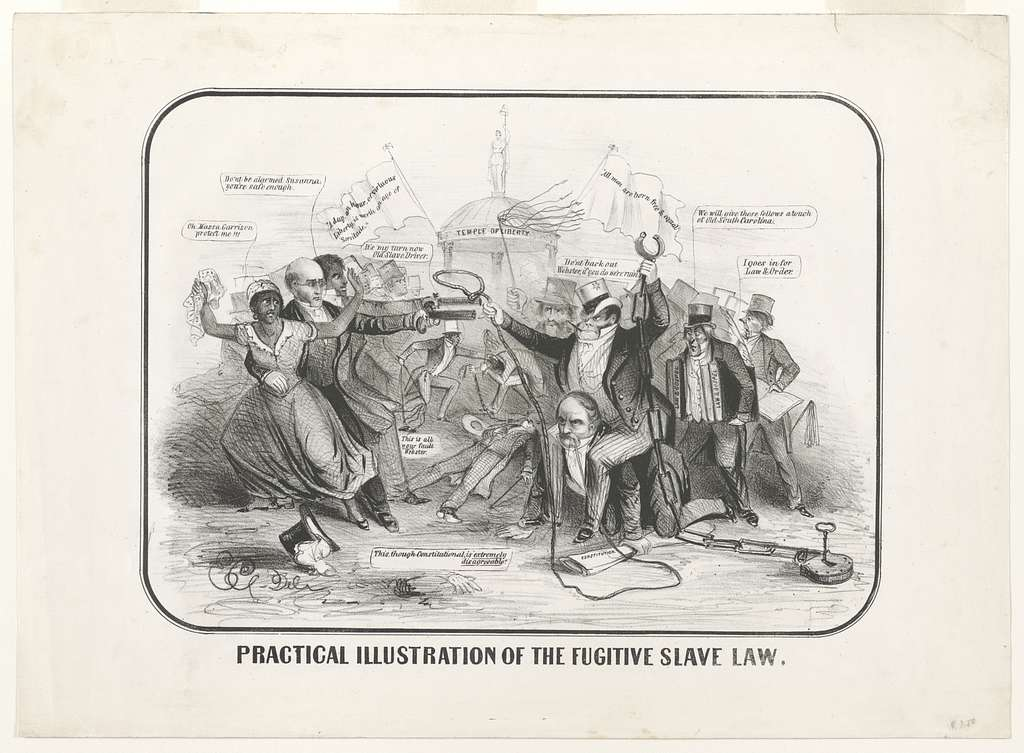
In the antebellum era, many northern states passed "Personal Liberty Laws" to blunt the effect of a different exercise of state-sponsored abductions: the Fugitive Slave Act. My proposal is for a new "Personal Liberty Law", that takes the form of directing how state and local police should respond* if they witness what appears to be a kidnapping, abduction, or the like. In essence, the policy should be as follows: 

  • Where the police witness what appears to be an abduction, they should assume it is an unlawful abduction and respond accordingly (including with use of appropriate force) unless they have actual knowledge that the detention is occurring under lawful authority (i.e., is an actual police operation).
  • "Actual knowledge" can include advance knowledge (in cases of coordination), or conspicuous display of law enforcement identification (such as a badge, or the use of marked police vehicles).
  • "Actual knowledge" does not include mere verbal or written declarations (including clothing labels) that the putative kidnapper is a member of any particular police agency, as such declarations are too easily fabricated.
Absent such "actual knowledge", the police should act as they would if someone conducted a street abduction before their eyes, up until the point they are satisfactorily given "actual knowledge" (which again, requires more than simply the raw assertion "we're with ICE"). If that means physically interceding to protect the individual at risk of abduction, so be it.

Now, I can already hear the MAGA howls: "this would put ICE agents at risk!" Whether or not that complaint moves you or not, I would humbly submit in reply that what's actually putting ICE agents at risk is that their behavior is indistinguishable from that of violent criminals, and that the proper remedy to ameliorate that risk is for ICE to avail itself of the many unique police resources -- such as badges, marked vehicles, and warrants -- that would serve to separate themselves from violent criminals. If they insist on forgoing such resources, then they take on the risk that other law enforcement officers will assume they are exactly who they appear to be. Responsible states and cities are under no obligation to leave their residents vulnerable to being targeted for kidnappings and abductions simply because Stephen Miller wants to impersonate his favorite street gangs.

* I'm bracketing the important, if not potentially fatal, issue of whether state and local police would ever follow this guidance even if it were issued. To be honest, I don't know how practically effective the original "Personal Liberty Laws" were when enacted, but the symbolism was important.

Wednesday, June 11, 2025

Back in the USA


If you're wondering why I've been silent around these parts over the past week, it's for a generally happy reason: I was in England, attending a conference at Oxford on "Religion, Speech, and Vulnerability." The whole family attended -- me, Jill, and Nathaniel, and my parents met us as well -- and so we stretched the trip into a family vacation spending time in both London and Oxford.

The trip was amazing -- first and foremost because Nathaniel was an absolute rockstar who had no trouble with the nine-hour flight and is apparently immune to jet lag (unlike his parents). Highlights of the trip include going to Tate Modern, doing a gallery walk in Mayfair, and seeing Operation Mincemeat in the West End. It really is the sort of trip that will be a lifelong memory.

But now that I'm back, I do want to temper that happiness with a bit of a dark cloud.

Before I left, I found myself thinking -- seriously -- about information security. Do I bring my normal cellphone? Do I bring my laptop? If so, do I delete any sensitive files, or refrain from posting controversial content while I'm away?

These thoughts, of course, were triggered by the high-profile stories of the USCBP's new MAGA marching orders, which have captured U.S. citizens in their draconian talons. Even among citizens, I certainly knew I wasn't the most likely target, but there were certainly elements of my profile (anti-Trump, academic, Jewish but averse to Trump's putative anti-antisemitism initiatives) that at least mildly elevated my risk factors.

Ultimately, I didn't do much differently -- packed my laptop in my checked bags, turned off my phone on arrival, and mostly refrained from social media posting while I was gone. And, unsurprisingly, my reentry into the U.S. was entirely unremarkable and smooth aside from an annoying long line -- no odd questions (to say nothing of detention).

But even still, I think I can fairly say that it is a bad thing I'm even thinking along those lines -- that my own government might snatch me away for no other reason than my political opinions and drop me off to fester in a lawless pit. And I can honestly say that this is a thought I've never had before in any prior administration, including Trump I (to say nothing of Biden, Obama, or Bush). Of course, there are those who have had these worries with far more grounded basis for far longer than I have; I'm not trying to minimize that. My point is only that we should identify the spread of these sentiments as a klaxon warning sign that the democratic freedoms we take for granted are fading. And even if you don't think of yourself as among the "usual" targets, your mundanity will not save you.

Even in fascist states, for the most part most people aren't being snatched off the street most of the time. When typifies the oppressive regime is not the experience of being snatched, but the constant ambient worry that it's a possibility. That worry is not one I have experienced until now -- indeed, not experiencing it is something I had taken for granted until now -- and it's not a good or healthy sign of the vitality of our democracy that I'm feeling it now.

Tuesday, June 03, 2025

In Defense of Government Waste


It's a pretty common refrain, particularly among the people who have recently found themselves leopard chow: "I support cutting government waste, but ...."

The "but" usually is something like ".... but my job really is valuable" or ".... but this program really is important to the community" or ".... but they're going about it all wrong."

And of course, my first thought when reading that is "who supports 'government waste'?"

Well, here I will. Sort of.

The easiest point to make is that one person's "waste" is another person's "valuable job" or "program important to the community." How much of what people imagine to be "waste" actually is quite valuable? A lot, I'd wager. We're already seeing how frequently people could use a dose of Chesterton's fence -- the fact that they don't understand why there's a government program doing X does not mean that there is no good reason why there's a government program doing X. Bring back small-c conservatism!

But I'll take a bigger swing. Let's stipulate that there is some amount of actual, undeniable government waste: money being spent inefficiently, savings that could be obtained with better processes, programs that serve no valuable purpose other than make-work, etc. I'm sure that's true. So who could oppose trying to root that undisputedly wasteful activity out?

Well, I might. Might is the operative word. It depends on how much waste there is. Because ferreting out wasted dollars ... costs dollars. And runs the risk of false positives, either of which can make the "anti-waste" program end up costing more money than it saves. DOGE might end up being an example even as it took a chainsaw to a huge range of government programs. And while DOGE may be distinctive in just how idiotically it is being run, the broader principle holds: there is, in any system, some amount of inefficiency that it is paradoxically more efficient to ignore, because the time, energy, and cost of trying to uproot it will dwarf any potential savings.

One area we see this a lot is in the management of entitlement programs that are "means-tested" or have other barriers and hoops to jump through for recipients to prove their eligibility. The goal is to ensure that no one who is, say, not actually poor or not actually unable to work gets a share of government money they shouldn't. But the usual result of creating these hoops is actually a large drop off in enrollment by eligible families, who find the requirements too confusing or onerous to navigate, even as it creates extra layers of bureaucracy and administration that are expensive to run. We'd almost certainly be better off just swallowing the fact that some "undeserving" people will enroll -- "waste" -- in exchange for better and more streamlined service for the people we are trying to target. It's not soft-heartedness. It's both more empathic and more efficient -- a win-win.

Now again, this is dependent on how much waste we're dealing with. Where waste, fraud, and abuse are rampant, then tamping down on them probably is both necessary and cost-effective (in part because where these things are rampant, there's also a lot of low-hanging fruit that can be picked without much effort). The point, though, is that "cutting waste" isn't self-evidently a good thing; it needs to be cost-justified. And my sense is that the story of widespread of government waste is just that -- a story -- and that in most cases "anti-waste" activity does more harm than good.

Saturday, May 31, 2025

You Can’t Theorize a Hand

When we last left off my artist's journey, I was making mediocre (and that's okay!) renditions of a fruit stand. But since then, I've started taking an introductory drawing class at the Multnomah Arts Center (good news -- it looks like we saved it!), and I'm actually very pleasantly surprised by my progress!

We've drawn something different each week. For example, in week two we did self-portraits -- mine would haunt your nightmares insofar as it makes me look like a serial killer. But I do think it's clearly a rendition of me as a serial killer, so that's something.

Last week, we focused on drawing hands, which I know are the bane of every artist. But I think mine turned out pretty good! A little meaty, but to be honest my hands are chonky boys. So good job me!

Moreover, while I was drawing, I think I said something quite profound (in the sense that I said something very obvious, but in a manner that wraps around into being profound). Namely:

You can't theorize a hand.

What does that mean?

I know what a hand looks like. If you asked me to describe it, I'd start with the palm, thumb, and four additional fingers. Going into more detail, there are the fingernails, the knuckles, and the palm lines. And so it's easy to think, when you're trying to draw a hand, to just take the parts of the hand that you know a hand has, and try to render them onto a page.

But that's not actually how one draws a hand.

To draw a hand, you can't just have in your mind the theoretical components of a hand. You have to actually look at your hand, and draw what you see. Not "a fingernail" or "a knuckle", but a darker spot here against a lighter spot there. When you think not in terms of a theoretical hand, but in terms of what you're actually seeing, a lot of what you see actually won't seem to line up with your theoretical image of a hand. The dark shadow here isn't a knuckle or a fingernail, it's just present. It's there whether you imagine it being there or not. So you actually have to resist the part of you that's only looking to draw the theoretical hand, and draw what's actually in front of you.

This is really quite bracing, since for awhile it looks like you're just drawing random lines and dark spots that don't correspond to anything. It takes a lot of trust in the process to believe that, when it all comes together, you'll have a hand. But you will! Whether or not you think the above hands are "good", they are a lot better than if I tried to just draw what my mind's eye imagines a "hand" to look like.

A good lesson for me to learn. Onward!

Obtuse Corneal Hydrops


Well, my corneal hydrops are back. And just in time for me to get on a nine-hour flight to London with a four-month-old baby!

I've done some of my own research, which I know are among the scariest words a non-medical professional can speak (but like being a mad, ignorant voter, it's so fun!), but really I don't think I was able to do much damage, because it doesn't seem like much is known about the condition by anyone. 

Corneal hydrops occur when a layer of your cornea called Descemet's membrane rips, letting fluid leak where it shouldn't and resulting in extreme tearing and eye swelling. It is an uncommon side-effect of my already uncommon keratoconus -- don't I feel special -- and nobody really seems to know what causes it or how to prevent it. Likewise, in terms of treatment the prevailing medical opinion seems to be summarized as "suck it up, buttercup". There are some saline drops to draw out the fluid, and you can take Tylenol for the pain, and other similar OTC medications for other secondary symptoms (e.g., Sudafed for sinus congestion) but that's about it.

There was one interesting thing I did find, though. Virtually every source on corneal hydrops appends "acute" in front of it ("acute corneal hydrops"). The "acute" means that it presents suddenly and without warning. But that doesn't describe mine -- in my case, I start noticing symptoms progressively over the course of a week or so. In fact, even that's a bit misleading, since the "symptoms" that correlate with hydrops for me -- essentially, sinus-like symptoms on the left side of my face -- are not as far as I can tell normally associated with hydrops at all. But for me, they always go hand-in-hand, and they predict a forthcoming hydrops event with alarming accuracy.

So a week ago I started noticing those symptoms start to appear and wrote my doctor asking if there was anything I could do to forestall the hydrops before my trip. He replied, in so many words, "nope -- good luck!" I was able to manage the sinus-symptoms with OTC medication, but last night my eye finally -- for lack of a better word -- exploded. Have you ever woken up feeling dehydrated because of the amount of fluid you've lost leaking out of your eyeball? Because I have!

This is the third time I've had hydrops in the past year. The first time occurred while I was on a plane from Portland to Tallahassee, and it was deeply unpleasant (as in, the flight attendants who saw me asked if I needed paramedics to meet me at the gate). I think the dry airplane air exacerbates the effects dramatically. So you can imagine how excited I am to get on a nine-hour international red-eye flight with an infant while ailing with this particular condition.

We leave on Wednesday evening. Saturday, Sunday, Monday, Tuesday ... basically, four and a half days for my condition to improve.  I'll stock up on eye drops and other palliative interventions, but still -- pray for me. (And remember, all of this could have been averted if we had a functioning health care system).

Thursday, May 29, 2025

I Dream in Generative AI


I've always been a lucid dreamer. I typically know when I'm dreaming, and am able to exert some level of control over the course of the dream.

Recently, though, my dreams have become, for lack of a better word, more mundane. It'll be morning (in the real world), and I'll think "I wonder what time it is", and then I will dream that I checked my clock. Then I will start thinking in accordance with what the "clock" said, up until I remember that I didn't actually check the clock and it could be essentially any time. 

But when I "see" the "clock", why does my brain pick the time that it does? My wife said that my brain is basically acting like ChatGPT -- collating together a mesh of experience to level a prediction of the time it most expects to correspond with me checking my clock while lying in bed asleep. So, for example, this morning I dreamt it was 9:45 AM, which is around when I usually wake up -- in fact, this time I actually genuinely wasn't sure if I had actually checked the clock or had dreamt doing so, since it was quite plausible that I would wake up around 9:45 and check my clock.

Another example: sometimes I encounter text when I dream. I'll see a newspaper or come across a plaque on the wall. Of course, my brain knows a newspaper or plaque should have text on it, and I am congenitally incapable of passing by text without reading it. Yet it would ask a lot out of my brain to put together a full and cogent newspaper article on the fly while I'm dreaming. So it does what image-generative AI does in that situation -- it creates a sort of hazy swirl of jumbled together letters -- a really disorienting effect when I'm trying to read something in the dream. It's really a fascinating effect.

Anyway, this all led to me having one of my dumber thoughts, which was to describe my brain as "like a kind of biological A.I.". Maybe the machines should replace us.

Tuesday, May 27, 2025

Faithless in Gaza


The other day I was enmeshed in a Facebook thread, as one does, where a colleague was complaining about a post that equally condemned the Capital Jewish Museum shooting by a pro-Palestinian terrorist and the bombing of family homes by the IDF (the sin of "equating", not to be confused with the sin of "one-sided"). The argument was a familiar one: the DC shooter was intentionally seeking to murder civilians (true), while the killing of Palestinian families is an "undesired", tragic byproduct of fighting an urban counterinsurgency.

My response to this argument was not to contest it, exactly. It was to ask my colleague a more basic question: what would falsify his belief? He believes that, for Israel, the deaths of Palestinian civilians are undesired. What evidence would suffice so that he would no longer believe that?

He wouldn't answer.

To be sure, he gave an answer -- but it was just more arguments for why it was still correct to think that these deaths were "undesired". Pressed again to say, okay, but what evidence would make you think otherwise, and I was met with silence.*

That was when it was clear the issue wasn't one of belief, but of dogmatic faith. The bottom line -- "Israel does not desire civilian deaths" -- was written in stone. Everything above that could and would be erased and rewritten to cohere to the bottom line. The "what would falsify" question was impossible to answer, because he knew deep down that if he committed to any non-ludicrous answer, there was a real chance his criteria would be met, and then what would he do?

This does not work. I am familiar with the arguments why the spiraling death toll in Gaza does not mean that Israel "desires" those deaths. I don't find them especially compelling anymore,** but I'm familiar with them. But one argument that has no purchase is the pure tautology: "these civilian deaths are undesired because Israel does not desire civilian deaths". That boils down to rejecting the claim because accepting it would make you feel sad. It does not work.

Nir Hasson had a powerful column the other day about how much of the Israeli media has responded to the IDF killing nine Palestinian children. The media is obsessed with every fuzzy detail or misplaced accent, every AI-generated image or overwrought recharacterization -- but all in order to kick dust around the acknowledged truth that the IDF did kill those children. It is a mirror-image of 10/7-denialism, and, as one expert observes, it is in its perverted way a form of moral self-policing:

"Denying the atrocities that your side has committed is an attempt to maintain your humanity," [Dr. Assaf David, of the Forum for Regional Thinking and the Van Leer Institute] explains. "When you say, 'There are things that my side cannot do,' it is actually a statement saying that I cannot justify these things. It's true that it's a lie and that we do do these things, but denial is trying to set a moral standard."

Denial and justification go hand-in-hand. If it was unjustified then it didn't happen, and if it happened it was justified. Flit back and forth between those positions, and one can keep the faith indefinitely.

But it doesn't work. As one side of the fulcrum grows increasingly untenable, unbearable pressure grows on the other. Here is where one starts to see either absurd exercises in denialism (most 10/7 victims were gunned down by Israel; the images of Gaza destruction are "Pallywood" concoctions) or sickening excursions into justifications (the Bibas children would have grown up to be monsters anyway; Gaza's population are tantamount to Nazi collaborators). Such maneuvers are soul-destroying, but they are inevitable when one's dogmatic faith matters more than truth.

So to my pro-Israel friends, this is my challenge to you. If you still believe that Israel is only acting in the interests of self-defense, that its overall policy and practice is one that provides Palestinian civilians with the protections they are due under international law and as human beings, that the scenes of death and destruction are not "desired" but a regrettable byproduct of the inevitabilities of urban warfare against a terrorist entity like Hamas, I won't argue with you. I'll simply ask you to ask yourself, earnestly and without flinching, what would cause you to think otherwise. Commit to something, now, so that if the evidence does come to pass you don't rationalize it away later.

And if you can't bring yourself to do that simple thing, ask yourself what that really means about the status of your faith.

* The closest he did come to an answer was by citing to civilian:combatant casualty ratios which, he said, were lower in the Gaza campaign compared to other analogous counterinsurgencies (e.g., the anti-ISIS campaign in Mosul, which he said had a ratio of 2.5:1). The Gaza ratio, he said, was closer to 1.5:1 or 1.2:1; so if the Mosul campaign wasn't one of desired civilian death, neither was Gaza. But when I pressed him as to what ratio would flip that intuition (particularly given that the 10/7 ratio was slightly worse than 2:1), he refused to commit to a number -- I suspect because he was not as confident in that 1.2 - 1.5:1 ratio as he made himself out to be and knew that if he, say, matched the 10/7 2:1 figure, he might end up being put to the proof (for my part, I've seen the 1.2 and 1.5:1 ratios cited but I've also seen much worse estimates pegging the ratio at closer to 4:1). The cynic, I suggested, might suspect that the only number he'd commit to is .5 higher than whatever ends up being the real number.

** My view is that the prevailing outlook in both the IDF and the Israeli political establishment is, at best, utter indifference to Palestinian civilian life. To the extent Palestinians civilian safety poses any impediment to a military or political objective -- which always centered around "keeping Bibi in power", and which now includes "conquering" Gaza to boot -- that interest is given virtually zero weight. As the value of children's lives approaches zero, the number of children one can justify killing to get at one Hamas operative (or keep Bibi out of prison one more day) approaches infinity.

Among the bits of evidence that buttresses that view are the spiraling death tally itself (and the individual instances of horrifying death and destruction that are virtually impossible to justify), the regular statements by top-level Israeli officials evincing criminal intentions towards the Palestinian people, the credible reports that the IDF has greatly relaxed its operational controls previously meant to assure adherence to rules of distinction and proportionality in favor of establishing effective "free-fire" zones, and the prevalence of deeply racist attitudes towards Arabs and Palestinians that polling suggests are present in Israel's military-aged populations. 

There may be individual units or actors holding themselves to higher standards; there also are no doubt those holding themselves to a lower one where the death and destruction is itself a desired and terminal end. And none of this is incompatible with the belief that Hamas also is utterly indifferent to the wellbeing of the Palestinian population under its de facto rule, that it operates in civilian areas in a manner designed to further imperil the non-combatant population, and is effectively holding Gaza's population hostage in service of a crude desire to retain power. But in any case, it is wrong to say the deaths Israel inflicts on innocent Palestinians are "undesired", as that implies some level of care and concern for which there is little evidence of.

Friday, May 23, 2025

A Lifetime of Pride Awaits


Nathaniel turned four months old last week.

And I’m already a proud papa.

Of course, he isn’t really doing that much right now. But why should I let that stop me?

Here’s a list of some of things I’m proud about my baby:

I’m proud of how big he is: Nathaniel scared us a bit at the hospital—he lost a lot of weight after he was born, and wasn’t waking up for feedings. But now he’s a veritable giant! 96th percentile for weight, and literally off the charts for height (28 inches long!). Anyone have advice for raising a jock baby?

I’m proud of what a great observer he is: Whenever we go out, Nathaniel is incredibly well-behaved. He almost never fusses in public, but he also rarely smiles in public either. Instead, he gets this thoughtful, observant look on his face and just silently soaks everything in.

Then we get home and it’s silly-town. But not in public. He’s not an animal.

I’m proud of how strong he is: Almost from the get-go, Nathaniel has been very strong. He was holding his neck up and looking around even while we were still in the hospital.

I’m proud of what a great sleeper he is: Don’t kill me, fellow parents, but Nathaniel basically started sleeping through the night immediately. I can count on one hand the number of times we’ve been woken up by him crying. He’ll take a midnight bottle, but sleep right through it—I don’t even have to rock him back down. And otherwise, he sleeps consistently from 7 to 7. Daytime naps are a little dicier, but he’s getting better, and in any event I’ll take that trade all day.

I’m proud of how patient he is: For awhile, Nathaniel had no interest in waiting even a second for a bottle once he got hungry (our running joke trying to soothe him while the bottle warmed was to agree “we’ve never fed you once in your life”). But now he’s much more understanding. It’s even more pronounced when he wakes up in the morning—no tears, no yelling, he’ll just happily entertain himself in the crib until mom is ready to get him.

I’m proud of how resilient he is: This is a big one, because it is not my forte. But when he got his shots, mom and dad were upset for longer than he was. And we’re already seeing him develop self-soothing practices to help him fall back asleep or get through a challenging time. I could learn from him.

I’m proud of how joyful he is: He may not show it in public, but Nathaniel has the best smile. He loves to giggle when being tickled, he loves to jabber while on his playmat, and he loves to dance when we sing him songs (we hold him upright as he bounces about). There’s nothing I love more than watching him take joy in the world around him.

This is just a short list. And it will only grow as he grows older. I’m not going to lie and say there’s nothing he could do that wouldn’t make me proud; but what is true is that there are an infinite number of ways he can make me proud, and I can’t wait to discover what they all will be.

Thursday, May 22, 2025

The Joy of Being a Mad, Ignorant Citizen


I'm still learning about the fault lines of local Portland politics. Everyone is a Democrat here, so that's no help. We just completely revamped our city governmental structure, abandoning the "commission" model (where elected city commissioners were responsible for particular bureaus of city governance) in favor of city council featuring three elected members each from four geographic districts. I think that's an improvement, though the last election was a bit of a free-for-all.

Anyway, Portland is in a time of budget cuts, and the city council is deciding what to slash. One proposed cut is to permanently close the Multnomah Arts Center (MAC), where I happen to be currently taking an introductory drawing class (if you want a charcoal self-portrait that will haunt your nightmares, hit me up). Since I'm enjoying my class (and am anticipating taking my son to family art classes when he's a bit older), I was horrified at the prospect that the center might close -- it's got a lot of great programming and it's five minutes from my house. So I wrote to my city councilors urging they keep the MAC open and find other places to make budget cuts (I apparently wasn't the only one).

Congratulate me on being an engaged public citizen? Maybe. But the thing is, here's the relevant information I was bringing to the table in forming this opinion and deciding to yell at my councilors about it:

  1. I like the MAC.
End of list. 

Obviously, in the abstract the MAC is a nice thing and worthy of support. But in times of scarcity, the question is about relative priorities -- the money has to come from somewhere. And for my part, I have no idea what other things might be cut instead of the MAC is kept open, nor do I have any insight in how to weigh potential competing priorities even if I was told of potential alternatives. And moreover, I don't really have any interest in learning more. "There must be another way", I say, while having no idea what those alternatives might be and no interest in finding out.

To be clear, I'm not saying it's likely that the MAC is actually a good place to cut. The hue and cry to save it makes me feel more confident that there really are better places to trim from. And the proposal to close the MAC came from one councilor -- it's not a situation where all the experts agree this needs to be done while I stubbornly refuse to accept it. 

But the point is that I'm getting to be an uninformed voter (for real this time!) and it is glorious. I just get to see something I don't like and be mad about it! Do you know how much more relaxing that is compared to when you do know the difficulties and complexities of an issue? I can also decide that the reason we're facing the need for such cuts is Donald Trump. Do I know that? No, but I can't imagine his slash and burn attack on effective governance is doing Portland any favors, and that's good enough for me!

This could get addictive. I have to be careful.

Wednesday, May 21, 2025

What Internet Randos Are Saying About the DC Jewish Museum Shooting


Earlier this evening, two staffers with the Israeli embassy were shot and killed while leaving an event at the Capital Jewish Museum in Washington, DC. The event was a multifaith and multinational gathering exploring "how a coalition of organizations - from the region and for the region - are working together in response to humanitarian crises throughout the Middle East and North Africa (MENA) region." The attacker reportedly shouted "free Palestine" after committing the killings.

(Tomorrow, the Museum was scheduled to host an event on "Pride: The Policy Accomplishments of the LGBTQ+ Movement", but this doesn't seem related to that).

Whenever events like this happen to the Jewish community, I have the macabre habit of trawling through the comment sections of my favored social media outlets, looking for people to block. I say macabre, but I actually find it quite cathartic: every block is another terrible person I don't ever have to deal with. Is it an endless and Sisyphean task? Of course. But you know that story about the kid throwing starfish back into the ocean and being told "why bother -- there's so many, you'll never make a difference throwing them back one by one", and he throws another one back in and says "I made a difference to that one?" It's like that, but oppositional.

I digress. After hearing the news, I did my perusing on Bluesky, and I have some anecdata to report.

First, a positive: Most people are reacting with what I would consider basic normalcy and decency. Just generally expressing horror and sadness or worry about how actings of political violence are only going to make a bad situation worse. Sometimes people I think exaggerate the pervasiveness of the "bad" takes on Bluesky -- and at one level I get why: if 1000 people are commenting on a political event, and 10% have a repellant take, that's simultaneously only 10% (a pretty small minority) and also that's 100 repellant comments, which can feel very overwhelming, very quickly. So while I don't begrudge anyone who can't look past the bad actors, I want to put it in some perspective. To everyone who had a normal response to a terrible tragedy: you get a sticker.

On the "bad" side, I sort the bad actors into a few groups. The number of people I saw affirmatively cheering the murders was very small. More common was either an overacted performance of yawning indifference ("huh -- anyway, did you see the Pacers game?"), or a dashed off "I'm not saying I support this..." followed by a very long "but...."

To be honest, though, none of these surprised me (either in their content or their relative numbers). The response I saw which did surprise me in terms of the frequency I encountered it was the number of people suggesting the shooting may have been a false flag, designed to justify either complete ethnic cleansing in Gaza and/or further authoritarian repression here at home. 

To be clear: I'm not including in this group people suggesting the Trump and Netanyahu administrations will attempt to exploit this shooting to further their malign agenda. That goes without saying. I'm talking about people who think the shooter was himself an Israeli operative, or otherwise acted at the behest of the Israeli government.

This is "the paranoid style", leftist version, and I was stunned at how many people seemed ready to indulge in it.  I probably shouldn't have been -- one still sees people arguing that Israel intentionally let October 7 happen (and massacred its own people) in order to justify its invasion of Gaza -- but still, it stood out. A lot of people really are prone to believing these sorts of conspiracies.

Anyway, that's my impressionistic take on what random reply-guys are saying. Mostly normal, some cheerers or apologists, and a bit more conspiracy theorists than I was comfortable seeing. Your mileage may vary.

UPDATE: One other thing I noticed -- the replies are much worse in the replies to politicians' posts (compared to news stories). Chris Van Hollen's skeet is overrun with people screaming "but you don't have a word to say about Gaza, you AIPAC-bought bastard!", which suggests they're either bots or aren't paying attention.

Tuesday, May 20, 2025

The Audacity To Love


As many of you know, one of the artists I collect (in fact, the artist who got me into art collecting) is Halim Flowers. Halim's backstory is incredible: he was convicted of felony murder as a juvenile in DC  after an accomplice shot a man during a home invasion of a rival drug dealer (Halim was not the trigger man and had already left the house when the killing occurred). He was sentenced to life in prison, eventually being released after twenty years thanks to a law targeting life sentences handed out to juvenile offenders. Since then, he has become a very successful artist showing internationally (his solo exhibition was featured at a Paris gallery this month).

Some people who promote Halim have described his story as "going to prison for a crime he didn't commit." I understand why they might say that, given confusion over what "felony murder" is,* but it isn't really true (and to be clear, I've never seen Halim say this or in any way try to skirt responsibility for his actions).

In any event, Halim has published a letter to "Face", the alias he went by on the streets as a kid (so-named because of his babyface). 


It's powerful reading. What impacted me the most is, again, how it doesn't try to avoid accountability, but also doesn't adopt the cliched narrative that prison was necessary to make him the man he is today. Rather, the theme of his letter is that none of this needed to happen. He didn't have to partake in crime. He didn't have to do the home invasion. There were, always, people who loved him. There were, always, people who wanted him to be the man he was always meant to be. He could've been that guy from the get-go.

The letter resonated with the post I wrote a few weeks ago about the American parents grieving their son who died after volunteering to fight for Russia against Ukraine, as part of a misguided tankie-ish "anti-imperialism", and also last year's article in Mother Jones about the mother of the UC-Santa Barbara mass shooter. These cases are all about the terrible maelstrom where unconditional parental love slams into commission of terrible crimes. You'd think something would have to give -- either denial of the crime, or abandonment of the love -- but the reality is that in many cases both persist and coexist in a terrible, chaotic symphony.

Those of us lucky enough not to be directly connected to the principals still can experience a pale echo of this. Halim's life, even after he was implicated in a serious crime, is precious -- the tremendous beauty he has created since his release is testament to that, though I don't want to say one has to be an artist of his talent for his life to matter. The man Halim's accomplice killed, even though he was also involved in the drug trade, is also precious -- we don't know what he would have done with his life, but I have no doubt he also had people who loved him and who he loved in return. The impossible necessity is to hold those truths together at the same time.

In my post, I wrote about
a nineteen-year old man arrested in Berkeley for attempted murder after stabbing someone during a fight outside a bar (as it happens, a bar I periodically frequented). When I read that, I was hit with a wave of despondency -- in part over the senseless of the stabbing, but in part as a sort of third-party grief on behalf of his parents. Didn't he know he had people who loved him? Didn't he realize how much him doing this would hurt them? How awful they must feel, and how alone, given that (understandably, and reasonably) the bulk of the community's care and concern will be directed at the victim and his family, not the perpetrator.
Part of what makes Halim's letter so powerful is that -- without being saccharine or wide-eyed -- just seeks to suffocate the problem it identifies in love. The audacity to keep loving, and the wherewithal to understand that one is loved, could alleviate and avert so much pain. In the overwhelming majority of cases, the love is already there, like a precious resource waiting to be tapped.

* Simplified, "felony murder" is the charge when a murder occurs in the course of a dangerous felony you're taking part in. It is not the same thing as "the felony of murder", which is confusing. In Halim's case, only the triggerman could be prosecuted for first-degree murder, but all accomplices to the felonious home invasion could get hit with a felony murder charge.

Image: Halim Flowers, "Audacity to Love (IP) (Blue)", silkscreen (ed. 10), 30" x 22" (2023). This print was executed shortly after October 7, and features the colors of the Israeli and Palestinian flags (there is a color-swapped white version as well). Even -- or especially -- in that moment, the audacity to love is an essential prerequisite to healing and providing for a just future.

Monday, May 19, 2025

The Religious Liberty Commission's Coming Attack on (Non-Orthodox) Jews


Donald Trump has named a set of appointees to his newly formed Religious Liberty Commission. This article does a good job covering much of the "Jewish" angle of the appointees, noting their general Orthodox slant and connections to various right-wing advocacy groups. None of that is surprising, particularly given the sharp split within the Jewish community where the Orthodox minority strongly supports Trump while the non-Orthodox supermajority despises him.

But there was one name that wasn't mentioned in the above story that I think deserves special attention from the American Jewish community: Josh Blackman, a professor at South Texas College of Law, who was appointed to the committee's legal advisory board. And the reason his appointment deserves special mention is simple: Blackman has argued that non-Orthodox Jews -- which is to say, the vast majority of American Jews -- should be categorically barred from making religious liberty claims. A "religious liberty" commission with him guiding the ship is a commission that presents a clear and present danger to the basic standing of American Jews like myself.

Blackman's argument against permitting non-Orthodox Jews access to religious liberty protections is breathtaking in its audacity and sweep. His view is that since only Orthodox Jews consider themselves bound by halacha, they are the only Jews who can ever sincerely claim to ever be "burdened" by impositions on their religious exercise. Non-Orthodox Jews are, in his view, relegated to little more than a cultural grouping or philosophical debate club; we are dismissed as incapable of having legally cognizable religious commitments at all. And when we dare purport otherwise, Blackman suggests, we should be seen essentially as liars -- opportunistically "gerrymandering" their claims to fit the Supreme Court's new free exercise jurisprudence.

Blackman's position represents an extreme version of burgeoning hostility on the political right towards non-Orthodox Jews perceived as politically liberal. It's no accident he was a central figure I highlighted in my "Liberal Jews and Religious Liberty" article as providing the "intellectual" architecture for de jure discrimination against non-Orthodox Jews, In particular, I argued in that article that a key component of the new conservative orientation regarding Jews was a decided belief that non-Orthodox Jews are not really Jews at all. In an ironic recreation of Karl Lueger's infamous "I decide who is a Jew!" declaration; conservatives are now declaring that the Jews they don't like don't count as Jews to begin with. 

Consider Trump's recent claim that Chuck Schumer was "not Jewish anymore" because of his opposition to Trump's MAGA agenda. It wasn't just random flailing. It was part of a pattern of denying that liberal Jews are properly viewed as Jews at all. This denial is critical to metabolizing the dissonance between conservative's imagined identity as warriors against antisemitism and the reality that they loathe the overwhelming majority of American Jews. Where they can successfully deny that most Jews even count as "Jews", this dissonance can be relieved, and their love for "Jews" can coexist with their hatred of actual Jews. 

Blackman is a leading figure seeking to promote a vicious and reactionary form of "religious liberty" where the bulk of the Jewish community are not only not protected, but are in fact among the primary enemies, all while draping itself in the mantle of "fighting antisemitism". It's despicable, and to anyone with a modicum of respect for the Jewish community as it is actually constituted it should be viewed as a form of antisemitism in its own right.

Blackman's appointment thus should be seen as a dramatic escalation of President Trump's war on the Jewish community. If adopted, Blackman's position would exclude the vast majority of American Jews out of the protections of the First Amendment and other religious liberty protections. At the very least, his appointment further underscores the degree to which the Trump administration's rhetorical claims about opposing "antisemitism" are coupled with disdain, even outright hostility, to most American Jews. But if his legal views are accepted, it would officially codify discrimination against non-Orthodox Jews into the body of American law.

This is not a drill. The Jewish community needs to know: if you are Reform, Conservative, Reconstructionist -- if you're a member of any or all but one preferred denomination of Jewish religious practice -- the Trump administration is laying the groundwork to strip you of your Jewishness and treat you as an enemy. Plan accordingly.