Showing posts with label GOP. Show all posts

Friday, November 22, 2024

What If Echo Chambers Work?


A few days after the election, I remember seeing a Washington Post column that said something like "You can't win an election if you're going to shun or denigrate half the electorate." And I remember wishing I could ask the author, in all earnestness: Why not?

After all, hadn't we just seen someone win an election while shunning and denigrating half the electorate? Clearly it's possible! The Post's hypothesis had been decisively falsified less than a week before!

This came up again today with the ongoing "echo chamber" discourse about BlueSky, paired against the fact that Republicans did in fact manage to win an election while generating an almost entirely cloistered epistemic bubble for themselves. The belief that echo chambers are antipathic to good electoral strategy is a comforting belief for people of a certain political persuasion (myself included!), but it just seems not to be true.

So the real question, and I think harder question, for Democrats is -- what if echo chambers work? What if one can win an election by constructing an epistemic fortress and just mainlining as many conspiracy theories and wild accusations about the other sides as humanly (or AI-ing-ly) possible?

It's a harder question because, at least for someone like me, this would be a very sad reality to come to grips with. I very fervently don't think democracy should be about scratching your way to the thinnest possible plurality and then steamrolling the other side. If you asked me what I would hope to happen to MAGA Republicans in rural Idaho or whatever after a Kamala Harris win, I'd have answered "I hope they get good healthcare, decent jobs, and well-funded schools." I have no desire to unleash recriminations upon "enemies", and I hate the idea of politics as a lawless bloodsport where all is fair if it wins you an election.

But maybe people like me are naive, and the lesson that has to be learned from 2024 (and 2016) is that brutal, no quarter, snarling attacks are an electorally winning play, and that for Democrats to win they need to harness their inner demonization machine and find some people to vilify. Of course, one could respond to this by saying that even if such a strategy is electorally superior at the margins, it's just plain wrong. That's always a valid response, and one might notice that it's the same response given to arguments that Democrats need to throw trans persons under the bus for electoral wins. There, of course, the retort is "well, enjoy feeling morally pure as you lose the Senate for the next decade" -- it's of course fascinating that the Post would never apply a similar retort to those who demand foreswearing scorched-earth electoral tactics against the GOP ("have fun patting yourselves on the back for your moral purity!"). It goes to show which moral commitments are truly seen as sacrosanct by the mainstream media, and which aren't.

But if we leave the moral objection aside, there remains one circle I cannot quite square. I've never been one to think, contra some narratives, that Democrats have just preemptively surrendered at every turn (e.g., as far as I know I'm the only person who thinks Chuck Schumer has done a pretty good job keeping a very thin majority dependent on some very unreliable actors relatively unified over the course of his tenure). Nonetheless, I am, with great reluctance, coming to believe that Democrats cannot win elections solely by taking the high road and demonstrating sober commitment to good governance and rule of law, when pitted against the emotional fever-dream populist pitch that characterizes the modern GOP. Again -- this is not a conclusion I'm happy to accede to. There probably are some people whose every instinct is to destroy the opposition at all costs and have to be persuaded to stay within the lines; but as noted above that's not me. My sensibilities are extremely wedded towards sober technocracy and good governance, and I reflexively recoil at the sort of hardball, "crush the enemy" tactics we're talking about here.

But here's my problem: if over the short term I think Democrats need to compete with the GOP on the level of back-alley brawl politics, over the long term I think that a politics that takes that form is inherently slanted towards the right. We will never be able to out-hate the GOP. We'll never be better than them at conjuring up some shadowy enemy to put people into a frenzy. There are absolutely ways to pitch distrust towards established institutions and a belief that "They" are out to get "Us" in a left-ish manner, but ultimately those narratives are going to benefit the right more (and we're already seeing how that pipeline flows from left-to-right in the form of folks like RFK Jr. and Tulsi Gabbard). So even if I may believe that my fighting faith of good governance liberalism just isn't winning elections, I'm also very concerned that the punchier left-wing populist alternatives will generate a political environment that is even more systematically slanted towards the right. Conspiratorial populism is home turf advantage for the right -- if that's the field we're playing on, we're always going to be starting from behind.

As I said, I don't have a way to square this circle. I'm not a political strategist, and I'm trying to avoid the temptation of "just agree with me and of course we'll win elections." But it's something I'm feeling very glum about.

Wednesday, October 23, 2024

Do Republicans Care That Trump Admires Hitler?


The Atlantic's bombshell story this week was that Donald Trump expressed an admiration for Hitler, saying "I need the kind of generals Hitler had." This had been reported before, but the confirmation by former Trump Chief of Staff John Kelly gave an extra boost of confirmation from Trump's inner-most circle.

How are Republicans responding to the news? In a variety of ways. Door #1, from the Trump campaign itself, is just to declare it all a lie:

Trump’s campaign categorically denied The Atlantic’s reporting and blamed Harris for encouraging Trump’s assassination. Steven Cheung, a campaign spokesman, said Harris “continues to peddle outright lies and falsehoods that are easily disproven. The fact is that Kamala’s dangerous rhetoric is directly to blame for the multiple assassination attempts against President Trump and she continues to stoke the flames of violence all in the name of politics.”

I actually respect this response the most, since it at least concedes the premise that Trump being pro-Hitler is a bad development that should be shunned. 

Not every Republican agrees. Behind Door #2 is New Hampshire Governor Chris Sununu, who said that Trump supporting Hitler is "baked-in to the vote at this point." In other words, Republicans already had figured Trump was a Hitler supporter and were fine with it. No surprises here.

And then finally, there's Fox News' Brian Kilmeade, who's response was to say "actually, Trump was making a good point!"

On Fox News, anchor Brian Kilmeade said Trump was justifiably frustrated by aides who refused to carry out orders they deemed illegal.

Kilmeade said, “I can absolutely see him go, ‘It’d be great to have German generals that actually do what we ask them to do,’ maybe not fully being cognizant of the third rail of German generals who were Nazis or whatever.”

"...or whatever," indeed. What sort of president wouldn't want generals who blindly follow executive orders to commit the most horrific atrocities humanity has ever witnessed? (Answer: the sort of president who isn't interested in replicating the most horrific atrocities humanity has ever witnessed).

Meanwhile, yesterday on Bluesky I snarked that I couldn't wait for the inevitable "Jonathan Greenblatt response that contains three paragraphs of effusive praise for Trump’s allyship towards the Jewish community sandwiching a vague gesture that 'this sort of rhetoric isn’t helpful.'" That drew off of this post which observed how Greenblatt's recent treatment of Trump has been defined by a fundamental trust in Trump as a true "ally of the Jews," the commitment to which he regrettably occasionally falls short of realizing.

So was my prediction on Greenblatt's response correct? Answer: We don't know, because as far as I can tell the ADL hasn't issued a statement on this news at all! What a sterling performance by America's preeminent antisemitism watchdog.

Wednesday, April 17, 2024

As They Do


The ongoing fallout of the Dobbs decision, and the way it's made manifest the GOP's extreme and retrogressive anti-abortion priorities, has caused no small amount of soul-searching amongst Republican politicians. We saw, for example, a slew of Arizona Republicans race to disavow their own hand-packed-picked supreme court's decision to resurrect a pre-statehood near-total ban on abortion. Donald Trump also came out and said he opposed a national abortion ban. What should voters make of this about-face?

Nothing. Absolutely nothing. Why not? Because Republicans are, to be blunt, lying. No matter what they say, no matter what press releases they write, no matter what interviews they give, when push comes to shove, they will absolutely either endorse or acquiesce to the most draconian possible limitations on female reproductive autonomy. That's the full truth.

The list of supporting evidence on this is essentially endless, but I'll just give two examples:

Exhibit A: Arizona, where the GOP-controlled legislature -- fresh off their oh-so-pained public squirming over the aforementioned state supreme court ruling -- has continued to block legislative efforts to actually, you know, repeal the offending law.

Exhibit B: Florida, where Senator Rick Scott rapidly backtracked from his own heresies calling for greater moderation on abortion after that state's supreme court reversed decades-long precedent clear the way for abortion bans by clarifying that of course he'd support even a six-week ban if given the opportunity.

These are two among many.

I suspect that over the next few months, we will continue to see more Republican rhetoric that gestures at some sort of "moderate" or "compromise" position on abortion, occurring right alongside more extreme tangible implementations of the right's extremist anti-choice agenda (what's going to happen when the Supreme Court permanently allows states to murder pregnant women in defiance of federal law). Even as rhetoric, it's hollow -- the "exceptions" they promise are nugatory or impossible to implement, the "deals" on offer are to impose unwanted bans on blue states while letting red states be as extreme as they desire -- but more than that they're lies. No matter what they say, no matter what they earnestly promise, no matter what soul-searching they might promise, where Republicans are in charge what they will do is push for and defend the most draconian abortion bans they can possibly get away with.

There's no lever that will get Republicans to behave differently; no weird trick that can change their minds. Where they have power and hold office, this is what they will do. Our only option is to deprive them of that power. No matter what they say, no matter what they believe, anyone who is taking any steps right now to assist Republicans taking or keeping office is tacitly endorsing extreme abortion bans. There's no way around it.

Saturday, January 27, 2024

How Should the Single-Issue Palestine Voter Vote?


One of the bigger political stories to cross my path the past week was the report that a planned meeting between Biden campaign surrogates and Arab and Muslim community leaders in Michigan was canceled due to local furor at Joe Biden's support for Israel during the current war in Gaza. It was a punctuation mark on evidence that Muslim and Arab voters are seriously considering, if not outright committed to, withholding their votes from Joe Biden come November -- a decision that could have serious electoral ramifications in a swing state like Michigan.

Some Democratic commentators have clearly been surprised at the scope and severity of this reaction. But their surprise, I think, stems a fundamental misunderstanding of how closely -- or not -- the Arab and Muslim community was tied to the Democratic Party in the first place. These ties were much, much shallower than it appeared; a shallowness that was masked by the seeming impossibility of Muslims voting Republican in the post-9/11 and especially Trumpist era of extreme GOP Islamophobia. But much like with Latinos, Democratic strategists confused a negative polarization story for deeper partisan loyalty. 

Before 9/11, Arabs and Muslims were considered a swingy, even potentially right-leaning, voting bloc. Those sentiments still have plenty of purchase, and for persons who hold them it's hardly unfathomable to not pull the lever for a Democrat. And while for White people, "I'm so mad at Biden about Palestine that I won't vote for him" is almost certainly a phenomenon overwhelmingly associated with the leftier edge of the progressive coalition, that almost certainly is not the case amongst Muslim and Arab voters, for whom strong support for Palestine is -- if not quite wall-to-wall -- something that very much crosses ideological borders. If you envision that centrist or even conservative Muslim who nonetheless voted Democrat in the last few elections for no other reason than the relatively straightforward rationale of "Republicans hate us", it wouldn't necessarily take that much for them to decide to drop Biden or even vote GOP if their furor at Biden's Israel policy grows intense enough.

On that note, Matthew Petti has a fascinating and thoughtful piece on how we might expect Muslim-American conservatism to affect partisan politics in the coming years. He runs through several possibilities, from "Muslim conservatives will perform right-wing pro-Israel bona fides" (something we've definitely seen in recent years) to "the GOP will grow significantly more open to pro-Palestinian politics". The latter possibility has been largely masked because of the degree to which the GOP has defined itself by extreme chest-thumping pro-Israel politics. But while it may not be the most likely outcome, at least in the near-term, there are burblings that might give hope or fear (depending on your point of view). The true nationalist-conservative MAGA base absolutely contains significant elements that (for the usual unsavory reasons) are absolutely prepared if not eager to jettison support for Israel and instead cast Israel and Zionism as enemies of the American volk. While these views aren't common amongst elected Republicans, they aren't utterly unheard of either -- as in Rep. Thomas Massie (R-KY)'s social media post pitting "American patriotism" against "Zionism". And while much has been written about young liberals turning against Israel, there's also evidence of similar ebbing of support amongst young conservatives -- both amongst the nationalist right and amongst evangelicals -- a trend which offers rare opportunities for the GOP to fight in a demographic they sorely want to make inroads with. Back in 2021 I floated the possibility -- unlikely, but not absolutely impossible to imagine -- of Trump turning against Israel in 2024 (remember the "fuck him!" heard 'round the world?); if that happened, it could really crack some coalitions wide open. At the very least, Trump's mercurial enough to do it, and the GOP base is slavish enough to follow along with it.

Given all that, I've been wondering: what should the pure single-issue pro-Palestine voter do in 2024? By single-issue voter, I mean someone for whom the sole and decisive basis upon which they'll cast their vote is the issue of Palestine. While for most people that's an oversimplification of their decisionmaking process, it might not be for everyone, and it in practice might also roughly capture a classic "centrist" or "independent" voter for whom all the other issues that might push one towards Biden or Trump (abortion rights, democracy, health care, whatever) basically wash out, such that Palestine becomes the decisive issue.

To that person, the Biden 2024 pitch has been pretty straightforward: If the only thing you care about is Palestine, Trump would be worse on Palestine. No matter how angry you are at Biden, he's still the lesser of two evils on this issue.

Of course, some people aren't willing to vote for the lesser of two evils. But let's leave even that cadre aside. One can absolutely imagine arguments contesting the premise -- is Biden actually a lesser evil? Obviously, if Trump makes the pivot against Israel discussed above, that would sharply contest the premise. If that possibility seems unlikely, there's also the argument that Trump and Biden are equivalently evil -- their positions are materially identical. Even if, by stipulation, Trump's rhetoric might be worse and more cheerleader-y of Israel's worst excesses, it might be that such additional "support" makes no marginal difference at the level of policy. If one thinks that Israel already is maxing out the brutality it can impose upon the Palestinian population, then Trump being "more" pro-Israel is superfluous -- it doesn't make a difference. In such a world, how one votes in 2024 will make no difference on the level of policy except to the extent that it signals that the pro-Palestine voting bloc is a force that needs to be reckoned with going forward. So what vote -- Biden, Trump, or neither -- would send that signal most strongly? That's not self-evident -- there's cases to be made for all three. But while, contrary to many loud internet folks, I don't think the case for "vote neither" is self-evident (leftists "voting neither" in 2000, far from generating the lesson "we are indispensable", instead led to widespread hatred for the left from normcore liberals that took almost two decades to work past), it's absolutely not implausible either.

And this argument extends even if one does agree that Trump would be materially worse for Palestinians if elected to office in 2024, because then the question is whether the marginal difference in Trump's badness -- which we can ruthlessly measure in "number of additional Palestinian lives taken or ruined" -- is worth the possible advantage of cracking historic bipartisan pro-Israel consensus and opening the door for a more robust, genuine pro-Palestinian position to take root in at least one of the two parties going forward. If it seems horribly cruel to sacrifice Palestinian lives in the short-term for sake of a political long game, you might be right; but calculations like that are sadly omnipresent in this space. In a much more brutal sense, this was after all Hamas' calculation behind the 10/7 attack -- the goal was to provoke a bruising Israeli military response that would lead to the loss of innumerable Palestinian lives and, in doing so, fixate the world's gaze in a way that would lead to long-term, durable shift in global attitudes towards Israel on the one hand and the Palestinian cause on the other -- a calculation which has proven to be successful beyond their wildest estimations (this is one reason why Hamas has -- contrary to the assumptions of some of its more gullible western supporters -- not demonstrated itself to be especially interested in a ceasefire; to some extent, it's happy for the war to continue because it's proven itself eager to sacrifice Palestinian lives in exchange for global sympathy, and doesn't want that trade route to be closed).

Note, once again, that this chain of logic only holds if one truly is a single-issue voter. The logic falls apart once one starts adding in all the additional bads of not voting for Biden (abortion rights, health care, death of democracy, and so on). At that point, to adopt the above chain of logic is to say "the possibility of cracking the historic bipartisan consensus over Israel come 2028 is worth seeing (among other things) women thrown in jail for miscarriages, trans status being criminalized, LGBTQ books banned in schools, and potentially permanent damage to the basic status of the country as a democracy." To be a single-issue voter (on Palestine or anything else) sells all those other issues out, and that choice does and should in my view be judged exceptionally harshly. Put differently, the decision to not vote for Biden in 2024, no matter why one does it, is a decision to abandon the people and values that would be devastated by a Trump victory -- anyone who does this absolutely should be said to not care about reproductive freedom or democratic robustness or reining in the extreme right judicial branch or any of the other issues of pressing importance whose futures are on the ballot in 2024. 

But the moral jeremiad aside, it's undeniable that caring about absolutely nothing but a single issue -- any issue -- gives one a sort of tactical flexibility that others don't have. And for a person who is genuinely in that state of mind, it's not actually that clear what the choice in 2024 should be.

Tuesday, December 19, 2023

Endless Stunt Investigations is All the House GOP Has Done, Because It's All They Can Agree Upon

Back in January, I registered a prediction that the only thing the new House GOP majority would do with its newfound power would be launch endless stunt investigations into the Biden administration because they literally can't agree on anything else.

That's the shot, here's the chaser.


That chart is obviously a bit misleading in presentation, but the ultimate payoff is still right: this House has been historically unproductive in actually enacting laws. Unsurprising, given that the governing party is a completely dysfunctional mess. The only thing they can do is authorize blatant fishing expedition impeachment inquiries literally justified by the fact that they haven't actually found any evidence of an impeachable offense yet.

How embarrassing for them. But how heartening for my predictive capabilities! (nb: this was actually an incredibly easy prediction to make).

Thursday, November 30, 2023

Roundup for Reading Days

We've just concluded our semester here at Lewis & Clark -- it's now "reading days" as students prepare for exams. I've already written my exam, so I'm going to use this time to clear some tabs off my browser. It's a roundup!


* * *

My latest article, "Liberal Jews and Religious Liberty," has been published in the N.Y.U. Law Review. It's good -- you should read it!

Standing Together is a joint Jewish-Arab Israeli group with a simple idea: under any future for Israel and Palestine, Jews and Arabs are going to have to live together. So no matter what your plan is for the future of Israel and Palestine, we have to start laying the foundations for mutual co-existence now. In that vein, organizational co-head Sally Abed, a Palestinian feminist socialist, had a message for the way international leftists are talking about current goings-on in Israel and Palestine: "If it's not helping, then shut the fuck up." I already posted a link to this on BlueSky and it basically went viral, but it's worth being memorialized here (and the entire piece is worth reading).

It's not surprising that Arab-Americans are reacting negatively to the Biden administration's policies regarding the Israel/Hamas war, but it may be surprising that more Arab-Americans now identify as Republicans than Democrats. That said, maybe not that surprising -- up through the 1990s, Arab-Americans were a swingy but lean-GOP voting bloc. And that makes sense when you think about it: it's a relatively socially conservative and comparatively affluent community; there's plenty of room for GOP appeal. 9/11 changed things dramatically, and one might think that continued rampant anti-Arab racism and Islamophobia would make the GOP brand toxic today. But between frustration with Democrats' continued pro-Israel stances and a backlash against socially liberal policies, there does seem to be an at least momentary shift back towards the Republican camp. We'll see if it holds through 2024.

I don't speak German so I can't backcheck the cited study, but this post claims that antisemitism is on the rise in Austria's Turkish- and Arabic-speaking communities ... but that rates are actually higher amongst persons who were born in Austria or lived there for some time compared to new immigrant arrivals. So far from validating the "imported antisemitism" narrative, the problem perhaps is that immigrants are assimilating a bit too well into traditional Austrian culture.

A sometimes-overlooked variable in the Israel/Hamas conflict is that most neighboring Arab states are not fans of Hamas either, viewing it as a destabilizing influence. Though Hamas' threat isn't as immediate to them as it is to Israel, it definitely still poses a threat. So there is quiet pressure emerging from Arab nations on Hamas to "disarm before it is destroyed."

Mark Harris is much, much more empathetic towards folks tearing down posters of Israeli hostages than I am, but in some ways that makes this essay -- documenting the sense of abandonment such an act generates amongst the Jews who see it -- even more powerful.

Tom Friedman has a great column from a few weeks ago on the "rescuers" in the Israeli Arab community who helped save their compatriots in the midst of Hamas' 10/7 attack.

I first heard about today's shooting attack in Jerusalem (which killed three civilians) via a social media post which used it to further emphasize the need for a "ceasefire". My first thought was "we're already in a ceasefire"; my second thought was "this demonstrates a problem with a 'ceasefire' -- even if Hamas agrees to it, other armed Palestinian factions won't feel bound." But apparently Hamas actually has claimed responsibility for this attack, so, take from that what you will vis-a-vis the vitality of the ceasefire.

I try not to be an alarmist about campus antisemitism, while simultaneously not being a denialist about its presence. Jews are not perpetually on the verge of mass expulsion, but nor is the entire concept of campus antisemitism a concocted astroturf campaign by bad faith right-wingers. All that said, this account in Rolling Stone (from a current student at Columbia) feels fairly reported and is harrowing.

Saturday, September 02, 2023

Steeled for Stealing


Last night, I had -- well, epiphany is probably too strong of a word. Crystallization, perhaps. A thought I already basically knew just became clearer in my mind. Namely: that the next time a major Republican candidate tries to overturn the results of an election, they're going garner a lot more support from the Republican establishment (in particular, the GOP judiciary).

Oddly enough, it was the 5th Circuit's latest ivermectin ruling that triggered the realization. Even at the start of the pandemic, we wouldn't see right-wing judges pulling stunts like this. The seals were still in place; it takes time for them to crack. But as they start to come undone, there's no backstop of legal or ethical duty to hold them in place.

Despite Trump's regular warnings (dating back to 2016) that he would not respect the results of an election that he lost, few in our political and legal elite really believed that he would go through with an overt plan to steal the election. Remember "What's the downside for humoring him?" It wasn't real until suddenly it was. And as a consequence, Republican elites hadn't really braced themselves to go all in for election theft. It's not just that it was too much, it was that it came too fast. They weren't ready.

But with time and distance, the Republican Party has come to assimilate Trump's actions as justified (same as they've done for every other one of Trump's abuses). Those who actually did unashamedly oppose Trump's actions have been ruthlessly purged from the party. Nascent momentum to support consequences for Trump during the second impeachment trial have entirely disappeared as far as the GOP is concerned. The unthinkable became thinkable, and Republicans have had four years to come up with clever rationalizations and apologias for why actually overturning democratic elections is fair play and What The Founders Would Have Wanted.

I've remarked before that GOP election theft attempts are akin to the carnival game where you swing a hammer and try to ring the bell. They weren't strong enough to ring it the first time. But they're getting stronger. It's not just that the next attempt will be less slap-dash and more well-organized (though it is that). It's also that the GOP has had time to mentally brace itself that stealing elections is appropriate, even necessary, and certainly just.

In 2020, virtually all GOP judicial actors refused to go along with Republican efforts to steal the election. Come 2024, I do not expect to see that unanimity anymore. They've steeled themselves for stealing, and next time they will come harder than before.

Tuesday, July 18, 2023

Could RFK Jr. Succeed as a Republican?


[Patrick Semansky / AP]

The utterly unsurprising news that the majority of Robert F. Kennedy Jr.'s major financial backers are dyed-in-the-wool Republicans, and that his "surging" poll numbers are being driven primarily by newfound love from Republican voters, makes me wonder: how would he fare if he actually ran as a Republican?

Obviously, on the issues he's a much closer match to the GOP these days. The anti-vaxx paranoia and overall conspiracy mindset goes without saying. His foreign policy stances are called "tankie" when they're nominally coming from the left, but if you're a Republican they're just bog-standard "isolationist" Putin-worship. Even some of his seemingly more "progressive" government spending ideas could easily be folded into a MAGA-style "build baby build" argument; the same goes for his railings against big business vis-a-vis a Josh Hawley style of politics (it's all easier once you remember that all of these positions -- whether held by Kennedy or Trump or Hawley -- are all vibes, no content, so it's no struggle to assimilate them into a new host).

And symbolically, I think he has a lot to offer to the GOP. It's not just the high-profile "defector" thing (as absurd as that label is to apply to someone like Kennedy). He also -- again, symbolically, not substantively -- harkens back to "my granddaddy's Democratic Party", feeding into the larger grievance narrative of older White voters who retain some nostalgia for the mid-20th century glory days but are convinced that "the party left them". And even in presentation, Kennedy has some Trumpian vibes: the superficial visage of power and influence, paired with the superficial visage of being a "rebel" who's standing up to his own "class" (I can't keep repeating that this is all nonsense, but nonsense is very appealing to GOP primary voters).

Do I think he could oust Trump? No, because I don't think anybody can oust Trump in a GOP primary. Do I think he could become a serious player -- more so than the shooting star crashing meteor that is Ron DeSantis? Absolutely. And as, for example, a Trump VP pick, RFK Jr. makes an alarming amount of sense. The biggest question might be whether the delusions that prompted Kennedy to run in the first place will obscure the greener grass that awaits him on the GOP side of the fence; because otherwise going GOP seems like the obvious play for him.

Tuesday, June 27, 2023

2008 2012 2016 2020 2024 2028 Will Be The Year!

Some early polling has been released on how Jews plan to vote in 2024, and the big surprise is there's no surprise: Jews will, as in every other year, overwhelmingly support the Democratic candidate. In a Biden/Trump matchup, Jews favor Biden by a crushing 72/22 margin.

Other highlights:

  • Biden enjoys a healthy 63/33 approval rating. Trump is absolutely toxic at 19/80. But Ron DeSantis is barely better, clocking in at 21/76. Oh, and Netanyahu? Not such a hot commodity himself, at 28/62.
  • What's the biggest issue that concerns Jewish voters? "The future of democracy". 37% of Jewish voters placed that in their top two most important voting issues. Other issues which got flagged by at least 20% of respondents include inflation/the economy, abortion, climate change, and guns. 
  • Israel, for what's worth, got top two billing by just 6% of respondents. But 72% of respondents still maintain an "emotional attachment" to Israel. This does not stop them from viewing the Netanyahu's judiciary proposals extremely negatively -- 61% say they will have a negative effect on Israel's democracy.
  • Abortion continues to be the 900 lbs monster of Jewish politics: 88% of Jews believe it should be legal in most or all cases. There's no other issue area that sees that level of agreement.
I also want to flag in particular the questions regarding "Who do you trust more to fight antisemitism?" Democrats hold a significant advantage over Republicans -- 57/22. And the gap has climbed considerably in the past year -- in April 22, that margin was 45/20. It appears that most of the gain has come from a ten point drop in the percentage of people who responded "trust neither party". This, to me, suggests that Biden's public and aggressive push to get out on front on antisemitism has paid dividends, "bringing home" more centrist-y Democrats who had been ambivalent or displeased about Democrats' commitment on the issue in years prior.

In any event, major condolences to the Republican Jewish Coalition on yet another imminent failure. But I have no doubt 2028 will be the year that Jews finally flock en masse to the GOP!

Thursday, April 06, 2023

The Tennessee Three: Whataboutism as Fascism Apologia

You've no doubt heard at this point about "the Tennessee Three", three Democratic members of the Tennessee State House facing an expulsion vote for their role in a protest against gun violence that occurred on the state legislative floor. Expulsion is a rarely-invoked procedure in Tennessee, typically reserved for obvious cases of criminality of misconduct (e.g., a bribery scandal) in cases that garner bipartisan support. To use it to kick out minority party members for a raucous protest the majority found embarrassing is a huge overreach, an exploitation of the GOP's supermajority status to further undermine basic democratic principles.

I wanted to flag a particular comparison Tennessee Republicans are using to justify their conduct -- comparing the protest to the attempted insurrection on January 6:

House Speaker Cameron Sexton compared the incident to Jan. 6: "What they did today was equivalent, at least equivalent, maybe worse depending on how you look at it, to doing an insurrection in the State Capitol," he said.

Sexton also noted that Jones and Johnson had previously been "very vocal about Jan. 6 and Washington, D.C., about what that was."

There was, of course, no insurrection here: the protest had no ambitions of overthrowing the government. But there's something revealing about this rhetorical move that I think typifies the way conservatives are normalizing and justifying fascist behavior.

Even now, many Republicans are kind of willing to concede that there was something ... untoward about January 6, and the broader campaign of election denial that spawned it. "Kind of" because they face tremendous pressure to outright endorse it, as Sexton's "maybe worse" aside makes clear. But to the extent they to recognize that there's something wrong with what happened on January 6, what they want to do is present things like January 6 as an ordinary sort of ugliness, the sort of foul or misconduct one can see from all parts of the political spectrum. Yes, maybe the January 6 thing went a bit too far. But it's not distinctive; this is a problem one can see across the aisle too. Look at Black Lives Matter protests -- why aren't they being treated like the insurrectionists? Maybe Trump shouldn't have denied the election, but is it really any different from Al Gore demanding a recount in 2000? Trump stole classified documents; well, what about her emails? Whatabout, whatabout, whatabout.

By transferring these egregious examples of anti-democratic thuggery into the realm of "normal" politics, Republicans justify treating them via the "normal" (partisan) political process. Sure it might be a bit distasteful, and more than a little opportunistic, but hey, that's politics. There's nothing exceptional here that demands standing on a broader principle. Everything blurs into an indistinguishable mush of "sometimes politics gets ugly." And in that universe, well, it's just realistic that Republicans probably won't pay much attention to their "normal" nips that might cross the line. Cynicism styles itself as realism, but it's really just cowardice.

None of this is to say that straightforward political thuggery isn't sufficient explanation for why Tennessee Republicans are acting the way they are. But there is a broader justificatory narrative being crafted here. The Tennessee Three isn't just about state and national Republicans being contemptuous of democratic norms (though it's certainly about that too). It's yet another effort to pull the extreme conservative threats to basic rule of law principles out of the realm of "extreme" and blur them into the normal hurly-burly of every day politics. Exploiting the media's instinct to "both sides" everything, the GOP will just troll all the way down

Monday, January 30, 2023

Endless Stunt Investigations is All the House GOP Will Do, Because It's All They Can Agree Upon

Having finally secured his chair as House Speaker, Kevin McCarthy (R-CA) has given his caucus marching orders -- and those orders are "do nothing but launch petty performative investigations of the Biden administration".

Kevin McCarthy has told House Republicans to treat every committee like the Oversight panel — that is, use every last bit of authority to dig into the Biden administration. That work begins in earnest this week.

Several sprawling probes — largely directed at President Joe Biden, his family and his administration — set the stage for a series of legal and political skirmishes between the two sides of Pennsylvania Avenue. It’s all with an eye on the true battle, the 2024 election, as Biden flirts with a reelection run and House Republicans hope to expand their control to the White House.

After two impeachments of former President Donald Trump and a select committee that publicly detailed his every last move to unsuccessfully overturn the 2020 election results, GOP lawmakers are eager to turn the spotlight. And their conservative base is hoping for fireworks, calling on Republican leaders to grill several Biden world figures, including Department of Homeland Security Secretary Alejandro Mayorkas, retired chief medical adviser Anthony Fauci and presidential son Hunter Biden.

This isn't at all surprising, of course. In fact, it was probably inevitable after the Speaker vote fiasco exposed just how bitterly divided the GOP is (and how in thrall it is to its nihilist caucus). They're never going to forward an affirmative policy agenda, since they can't agree on any particulars beyond sloganeering (and also, policies tend to require money, which the GOP adamantly refuses to raise or spend unless it is on gut-busting upper-bracket tax cuts). But investigations? That doesn't require any policy agenda at all -- that's just mugging for the camera and talking about how much they hate Democrats. Right in their wheelhouse! 

That the GOP is still nursing ludicrous levels of grievance over the terrible unfairness of a House panel exposing why coups are bad only exacerbates their belief that this is naught but turnabout being fair play. And as the New York Times reported the other day, the GOP's view of "investigations" is to take it as a divine axiom that they and theirs are being abused, then pursue that axiom to hell and back no matter how little evidence ends up supporting the proposition.

So this is entirely within expectations for the new GOP House. Expect nothing but loud yelling investigations for two years as they throw everything they can at a wall and wait for something to stick. They don't agree on or even believe in anything else, but they can agree on doing that.

Thursday, January 05, 2023

Performative Brinksmanship is Obviously Stupid from the Outside

The farce that is the GOP House leadership fight continues, as Rep. Kevin McCarthy (R-CA) has just lost the eleventh ballot for speaker in the face of a small but entrenched far-right rebellion. The knot of far-right extremists who refuse to back McCarthy has led to chaos in the GOP, with no signs of a compromise being reached. Ringleader Rep. Matt Gaetz (R-FL) has even indicated that he'd be fine if the fallout of his putsch results in Democratic leader Hakeem Jeffries (D-NY) ascending to the speaker position (though if a compromise is reached with Democrats to thwart the right-wing rebellion, I suspect it will not involve Jeffries as speaker).

For the most part, pretty much everyone on the left-side of the political spectrum has been content to sit back, munch on popcorn, and watch the GOP eat itself alive. Democrats are enjoying making a show of unity against GOP irresponsibility; meanwhile, Republicans are literally arguing that their decision to cripple the House doesn't matter because if a real crisis occurs President Biden will be there to set things right (the infantilization of the American right continues apace). The whole thing is one ongoing trainwreck for the GOP, and I absolutely agree with what I take to be the Democratic Party conventional wisdom that we need not lift a finger to bail out the GOP unless we get some superb concessions for our trouble.

So here's my question for the peanut gallery. I'm sure the arson caucus of the GOP has its boosters among other far-right extremists. But is there anybody on the left side of the spectrum observing what's happening here and thinking "I may not agree with their policies, but this is a savvy play by Gaetz and co."? Does anybody think this sort of performative brinksmanship is smart politics?

It doesn't seem so to me -- progressives right now are laughing our heads off at a GOP in complete disarray, and rightfully so. We're not jealous of the far-right for having the gumption to take a stand; we see just how catastrophic this whole farce is for the conservative agenda (and thank god for that!).

So perhaps there's a lesson to be learned here. Thankfully, there are few if any Democratic equivalents to the bomb throwers currently making chaos in the House. Even our far-left members so far have known when to rein it in -- a quality which sometimes yields loud cries of "betrayal!" and "spineless!" from certain corners of the commentariat. I might suggest that next time such an instinct comes over you, you remember this moment. Remember how you didn't look across the aisle and marvel at the steely-eyed rebels who stood their ground and played hardball. Remember how what you actually saw was a bunch of children embarrassing themselves and self-sabotaging for their own self-aggrandizement. And then remember that it's probably a bad idea for Democratic progressives to emulate the GOP's dumbest members' most nihilist strategies.

UPDATE: And the winner for the first prominent left outlet to praise the GOP's political savvy and declare it a model to emulate is ... Jacobin Mag! Who's shocked?

Wednesday, November 09, 2022

The 2022 Almost-Post Mortem

I was a bit hesitant to write my post-mortem recap today, since some very important races remain uncalled. Incredibly, both the House and Senate remain uncalled, though the GOP is favored in the former and Democrats have the slight advantage in the latter. It would be truly delightful if Catherine Cortez Masto can squeak out a win in Nevada and so make the upcoming Georgia run-off, if not moot, then slightly less high stakes. But again, things are up in the air that ought make a big difference in the overall "narrative" of the day.

Nonetheless, I think some conclusions can be fairly drawn at this point. In no particular order:

  • There was no red wave. It was, at best, a red trickle. And given both the underlying fundamentals  on things like inflation and the historic overperformance of the outparty in midterm elections, this is just a truly underwhelming performance for the GOP. No sugarcoating that for them.
  • If Trafalgar polling had any shame, they'd be shame-faced right now, but they have no shame, so they'll be fine.
  • In my 2018 liveblog, I wrote that "Some tough early results (and the true disappointment in Florida) has masked a pretty solid night for Democrats." This year, too, a dreadful showing in Florida set an early downer tone that wasn't reflected in the overall course of the evening. Maybe it's time we just give up the notion that Florida is a swing state?
  • That said, Republicans need to get out of their gulf-coastal-elite bubble and realize that what plays in Tallahassee doesn't play in the rest of the country. 
  • That's snark, but also serious -- for all the talk about how "Democrats are out-of-touch", it seems that the GOP also has a problem in not understanding that outside of their fever-swamp base most normal people maybe don't like the obsession with pronouns and "kitty litter" and "anti-CRT". Their ideological bubble is at this point far more impermeable, and far more greatly removed from the mainstream, than anything comparable among Democrats.
  • Abortion is maybe the biggest example of this, as anti-choice measures keep failing in even deep red states like Kentucky, while pro-choice enactments sail to victory in purple states like Michigan (to say nothing of blue bastions like California). Democratic organizers should make a habit of just putting abortion on the ballot in every state, and ride those coattails.
  • It's going to fade away almost immediately, but I cannot get over the cynical bad faith of what happened regarding baseless GOP insinuations that any votes counted after election day were inherently suspicious. On November 7, this was all one heard from GOP officials across the country, even though delays in counting are largely the product of GOP-written laws. But on November 8, when they found themselves behind on election night returns, all of the sudden folks like Kari Lake are relying on late-counted votes to save them while raising new conspiracies about stolen elections. Sickening.
  • Given the still powerful force of such conspiracy mongering, Democrats holding the executive branch in key swing states like Wisconsin and Michigan is a huge deal. Great job, guys.
  • For the most part, however, most losing MAGA candidates are conceding. Congratulations on clearing literally the lowest possible bar to set.
  • The GOP still should be favored to take over the House, albeit with a razor-thin majority. And that majority, in turn, seems almost wholly attributable to gerrymandering -- both Democrats unilateral disarmament in places like New York, but also truly brutal GOP gerrymanders in places like Florida. This goes beyond Rucho, though that case deserves its place in the hall of shame. The degree to which the courts bent over backwards to enable even the most nakedly unlawful districting decisions -- the absurd lawlessness of Ohio stands out, but the Supreme Court's own decision to effectively pause enforcement of the Voting Rights Act because too many Black people entering Congress qualifies as an "emergency" on the shadow docket can't be overlooked either -- is one of the great legal disgraces of my lifetime in a year full of them.
  • Of course, I have literally no idea how the Kevin McCarthy will corral his caucus with a tiny majority. Yes, it gives crazies like Greene and Boebert (well, maybe not Boebert ...) more power, but that's because it gives everyone in the caucus more power, which is just a recipe for chaos. Somewhere John Boehner is curling up in a comfy chair with a glass of brandy and getting ready to have a wonderful day.
  • My new proposal for gerrymandering in Democratic states: "trigger" laws which tie anti-gerrymandering rules to the existence of a national ban. If they're banned nationwide, the law immediately goes into effect. Until they are, legislatures have free reign. That way one creates momentum for a national gerrymandering ban while not unilaterally disarming like we saw in New York. Could it work? Hard to know -- but worth a shot.
  • Let's celebrate some great candidates who will be entering higher office! Among the many -- and this is obviously non-exhaustive -- include incoming Maryland Governor Wes Moore, incoming Pennsylvania Governor Josh Shapiro, incoming Pennsylvania Senator John Fetterman. Also kudos to some wonderful veterans who held their seats in tough environs, including Michigan Governor Gretchen Whitmer, Virginia congresswoman Abigail Spanberger, New Jersey congressman Andy Kim, Maine Governor Janet Mills, and New Hampshire Senator Maggie Hassan.
  • Special shoutout to Tina Kotek, who overcame considerable headwinds (and the worst Carleton alum) to apparently hold the Governor's mansion in my home state of Oregon. Hopeful that Jaime McLeod-Skinner can eke out a victory in my congressional district too, though it looks like that might come down to the wire.
  • I also think it's important to give credit even to losing candidates who fought hard races. Tim Ryan stands out here -- not only did he force the GOP to spend badly needed resources in a state they should've had no trouble keeping, but his coattails might have pushed Democrats across the finish line in at least two House seats Republicans were favored to hold. (I hate to say it, but Lee Zeldin may have played a similar role for the GOP in New York).
  • I'm inclined to agree that, if Biden doesn't run in 2024, some of the emergent stars from this cycle (like Whitmer or Shapiro) are stronger picks for a presidential run than the also-rans from 2020. But I also think that Biden likely will get an approval bump off this performance -- people like being associated with winners!
  • On the GOP side, the best outcome (from my vantage) is Trump romping to a primary victory and humiliating DeSantis -- I think voters are sick of him. The second best outcome might be DeSantis winning narrowly over Trump and provoking a tantrum for the ages that might rip the GOP apart. DeSantis himself, as a presidential candidate, is an uncertainty -- I'm not convinced he plays well outside of Florida, but I am convinced that if he prevails over Trump the media will fall over itself to congratulate the GOP on "repudiating" Trumpism even though DeSantis is materially indistinguishable from Trump along every axis save that he's not abjectly incompetent (which, in this context, is not a plus).
  • The hardest thing to do is to recognize when even candidates you really like are, for whatever reason, just not going to get over the hump. This fits Charlie Crist, Beto O'Rourke, and (I'm sorry) Stacey Abrams. It's no knock on them -- seriously, it isn't -- but they're tainted goods at this point. Fortunately, Democrats have a deep bench of excellent young candidates who we can turn to next time around.
  • And regarding the youth -- I'm not someone who's a big fan of the perennial Democratic sport of Pelosi/Schumer sniping. I think they've both done a very good job under difficult circumstances, and deserve real credit for the successes we saw tonight and across the Biden admin more broadly. However, we do need to find room for some representatives from the younger generation to assume leadership roles. Younger voters turned out hard for the Democratic Party and deserve their seat at the table. It says something that Hakeem Jeffries, age 52, is the immediate current leadership figure springing to mind as a "young" voice -- that (and again, there's no disrespect to Jeffries here) is not good enough.

Monday, November 07, 2022

Why the GOP Can't Quite Quit Kanye and Co.

It's been a month and this tweet is still up:


Why? Why, after spending countless hours railing against "Black antisemitism", is the GOP not interested in repudiating Kanye West?

At one level, the answer is obvious: As I talk about in my latest Haaretz column, the GOP has gone full Jeremy Corbyn this cycle, up to and including the antisemitism. The GOP won't condemn Kanye because the GOP is antisemitic.

At another level, the answer is still obvious: fair weather opposition to antisemitism is hardly a rare phenomenon, and the GOP has hardly shown much in the way of moral fortitude when it comes to denouncing hatred from their "side". The aforementioned "countless" hours attacking "Black antisemitism" were, as any half-awake political observer could tell you, not about genuine solidarity with Jews but a cynical way of living out the GOP's favorite hobby (trashing Black people).

But at still another level, there is something at least a little less obvious, and perhaps more provocative, that can be said. Namely: antisemitism may be a quick and easy way for the GOP to make inroads among Black voters. More than any other issue, antisemitism is a growth opportunity for the Republican Party.

Now I want to be absolutely clear: antisemitism is not a way to actually win a majority of Black voters, or anything close to it. Most Black voters are not antisemitic, most are not interested in antisemitism and are actively turned off by it.

However, the Republican Party doesn't need to win Black voters. It just needs to increase its margins from the currently abysmal levels to the merely horrible. Going from a 10% share to, say, a 25% share still objectively means they're getting absolutely crushed among Black voters -- but it also would make a huge difference in swing-y states like Georgia or Virginia.

So the operative question is not whether antisemitism is popular amongst Black voters, generally. The question is whether it is appealing to the particular tranche of Black voters who are most amenable to being picked off by GOP appeals. And there's good reason to believe the answer is yes. Or put differently: If you're a political strategist trying to flip even a few Black voters to the GOP, the small but not utterly trivial number of Black antisemites represent the lowest hanging fruit.

Kanye himself is evidence of this, of course, as is Candace Owens, recently spotted boosting far-left antisemite extraordinaire Max Blumenthal on their shared hatred of the ADL allegedly inventing contemporary antisemitism. Indeed, the dirty secret of contemporary data on antisemitism in the US is that there is a spike in minority communities -- but that spike is clustered along the most conservative tranche of the community. So it is entirely plausible that this subclass of Black voters -- likely the most natural target of conservative political appeals generally -- could be particularly attuned to emergent GOP rhetoric relying on antisemitic dogwhistles about Soros, about "globalists", about the ADL, and so on.

When one thinks about it, this isn't really anything unique to African-Americans. Similar dynamics are also playing out in Latino communities, for similar reasons. And if it weren't for the fact that White antisemites already vote overwhelmingly GOP, this strategy would work on them too (indeed, such appeals probably are part of what makes the antisemitic alt-left -- including folks like Max Blumenthal or Jimmy Dore -- at least MAGA-curious). Antisemitism appeals to conservatives, and that includes conservatives who -- for either idiosyncratic personal or communal historical reasons -- haven't voted Republican in the past. It so happens that in the Black community that there are more conservative individuals who haven't voted Republican, but the underlying dynamic is little more complex than "conservatives are attracted to antisemitism."

So this perhaps completes the answer of why the GOP can't quite quit Kanye and company. It's not just or exactly that they agree with him, or even pure partisan tribalism. Kanye is symbolic of a particular political opportunity conservatives have to win over, not the majority of Black voters or even a sizeable minority, but a large enough cohort of the most conservative group members.  Kanye represents an incredibly tempting future where the GOP again does not "win the Black vote" or come anywhere close to doing so, but does grab an additional 10% or so that might make all the difference in some crucial races. But the point is that, in terms of that opportunity's content, antisemitism is not just an unfortunate hanger-on. It is central to the appeal.

Wednesday, September 07, 2022

It's Not Cheating for Republicans To Lose: Ranked-Choice Voting Edition

I know it's not worth it to engage in Republican histrionics about how ranked choice voting is anti-majoritarian after Democrats won an Alaska House seat last week. The actual objection, as Republicans have made manifestly clear in their behavior over the past few years, is to "Democrats winning elections", and there's nothing deeper than that going on under the surface.

But the arguments they're making about how ranked choice systems are anti-democratic because "60% of the voters in Alaska voted for the Republican agenda" are so transparently ridiculous, and are being repeated with such vigor, that they need to be addressed.

Of course, it is a misnomer off the bat to say that a majority of Alaskans voted for "the Republican agenda". Voters don't vote for "agendas", they vote for candidates. And leave aside the notion that Republicans suddenly care about majoritarianism in a electoral system riddled with anti-democratic elements ranging from gerrymandering to the Senate to the Electoral College.

Nonetheless, it is the case that something feels off when more voters choose candidates from party X but, because they're divided, a single candidate from party Y prevails with a plurality. This can afflict Democrats as well as Republicans (witness worries about Democratic "lock outs" in California's top-two primary system). And it's worth noting that this circumstance is actually very common in a multi-candidate field with first-past-the-post rules. Indeed, Mary Peltola won a plurality of first-choice votes -- she would have won the election without a ranked-choice run-off! (Peltola had 41% of the initial vote, with Palin receiving 31% and Begich 28%).

But here's the thing: when we see voting patterns where 40% of the electorate backs a Democrat, 35% back Republican A, and 25% back Republican B, the reason we think it's unfair that the Democrat wins is that we assume if we asked the supporters of Republican B "if you had to choose, would you back Democrat or Republican A", they'd pick the latter. It's a reasonable enough assumption in a party system, to be sure, and in many occasions I suspect it's an assumption that'd be borne out. But all ranked choice voting does is actually ask the question rather than assume its answer. And it turns out that in Alaska, enough supporters of "Republican B" (Begich) did not prefer Republican A (Palin) over Democrat (Peltola). So the Democrat won, for the simple democratic reason that most Alaska voters preferred her over the most popular Republican competitor. That's not cheating, that's an election!

Put simply, if a majority of Alaska voters' preference was to elect a Republican -- any Republican -- over a Democrat, the voting system in Alaska gave them ample opportunity to make that choice. They chose otherwise, because it turns out that their preferences weren't that simple. And ultimately, that's what's driving Republican rage here: they think the voters' preferences were wrong, and so it is cheating for their will to have prevailed. Hard to think of a pithier summary of contemporary GOP attitudes towards democracy.

Monday, August 22, 2022

The Infantilization of the American Right Continues

Scott Lemieux has a good post overviewing and refuting claims that Democrats are responsible for Republicans nominating neo-fascist extremists like Doug Mastriano in Pennsylvania. The argument in favor is that some Democrats have spent money on ads which supposedly "boosted" Mastriano over his primary foes. This, critics continue, is recklessly irresponsible insofar as Mastriano is, again, a far-right lunatic whose presence within a country mile of levers of power would be an existential threat to democracy. 

The problem with this argument is that the ads in question are attack ads against Mastriano. They are clear and forthright that Mastriano is a neo-fascist extremist who represents an existential threat to democracy. They nonetheless "boost" him because Republicans like all of these things. But that's a problem with Republicans, not Democrats. As one commentator pointed out, it's one thing to run an ad that lies about the health benefits of poison -- if people ingest the poison, that's on you. It's another thing to run an ad that says "poison is dangerous!" only to witness scores of people say "actually, I love poison, I'm going to take a double dose!" That's on them.

The fact of the matter is that anti-democratic fascist flirtations are an overwhelmingly popular position amongst the GOP primary electorate. Mastriano's closest contender in the GOP primary was Lou Barletta, who is himself a far-right figure with a history of White supremacy. There was no constituency amongst Republicans for a non-poisonous figure, so Democrats hardly committed some foul by trying to inform the general electorate of who Doug Mastriano is.

Lemieux's post covers pretty much all I want to say. All I'll add is that we're just seeing the extension of the infantilization of the American right; perhaps the defining feature of American conservatism over the past six years. Republicans make terrible choices and then whine that Democrats aren't better babysitters. But that's not the job of Democrats. Republicans are adults, they can make their own choices, and they are consciously choosing to promote candidates with Nazi ties and fascist sympathies. That's bad. That's also their own decision, and trying to fob responsibility off onto Democrats is pathetic.

Saturday, June 25, 2022

What Politics Has Done, Politics Can Undo

"The majority has overruled Roe and Casey for one and only one reason: because it has always despised them, and now it has the votes to discard them."

That's from the joint dissent in Dobbs. It's true. Nothing about the Constitution changed from the start of this week to the end of this week, or indeed (in relevant part) from 1973 to today. What changed was politics. The conservative right spent fifty years in a slow, grinding war of political attrition -- gaining power, entrenching itself in key institutions, pushing forward -- and Dobbs was the payoff. That's a political accomplishment, not a legal one.

It is difficult to tell my students that no legal argument that they will learn in my Con Law class will make the slightest difference in terms of potentially seeing Dobbs overturned, just as no legal argument actually played any role in seeing Roe overturned. Nonetheless, it is true. But that just means the relevant arena for fighting is different. What politics did, politics can undo.

There is a bruising fight coming. There is no weird trick by which Democrats can win it in a one-punch knockout tomorrow. It will likely take years. Overturning Roe took Republicans nearly fifty years. God willing, reviving Roe will not take that long. Indeed, my fondest dream is that the reversals happen while at least some of the current GOP justices are on the Court. I want them to be there as their work crumbles to dust, I want them to mewl helplessly as their precedents (and I don't just mean Dobbs here) are brushed aside as aberrant malignancies on the constitutional body politic. But it will take a sustained, disciplined political campaign, at all levels of government, that matches or even exceeds what anti-abortion advocates threw at the issue for the past fifty years.

And while no, "just vote" is not a sufficient part of that strategy, yes, voting is a necessary and indeed critical and central part of that strategy, and anybody is who is indulging in mocking voting or undermining voting or depressing voting is functionally abetting the anti-abortion cause no matter what else they claim to be doing on the issue. All the other components of fighting for abortions rights in 2022 -- from protests to strikes to mutual aid programs to deleting your period tracking apps -- are at most rear-guard actions without more Democrats in power. It doesn't matter who the Democrat is. Yes, even the supposed "pro-life" Democrats. Why? Because when Democrats, as a party, are in a stronger position, the gravitational pull of politics moves all Democrats in a pro-choice direction. It's no accident that Joe Manchin, who long has presented himself as "pro-life", is now talking about codifying Roe. It's also no accident that Susan Collins, who long has identified as "pro-choice", was a key player in ensuring that the anti-Roe majority was present on the Supreme Court. Republican power alters the center of gravity of politics in an anti-abortion direction even if individual Republicans claim to be pro-choice; Democratic power does the oppose even if individual Democrats claim to be pro-life. It's obviously better to have pro-choice Dems than pro-life Dems, but it's better to have any Dems than any Republicans in office. If nothing else, Susan Collins is testament to the strategy that if you keep control of the dice long enough, eventually the party apparatus will win out.

I won't claim to be especially impressed with the manner in which the Democratic leadership has responded to Roe's demise -- but then, crushing defeats are rarely pretty for the defeated party. Nonetheless, unless more Democrats are elected, there is no hope of reviving Roe. It's that simple. There's no substitute for having power.

Sunday, June 05, 2022

"Economically Liberal, Socially Conservative" Will Always Decay into Fascism

It's one of the great paradoxes of modern politics. The "economically liberal, socially conservative" quadrant of the political map, which most polls say is quite well-populated amongst voting-aged Americans, also has the least obvious political representation. Many pundits have long suggested that Democrats should try to move into this space -- retreat on "cultural war" issues while talking up bread-and-butter economic interventions that will help working Americans.

I'm skeptical this strategy will work, for one simple reason: the "economically liberal, socially conservative" quadrant is an inherently unstable position that will inevitably decay into fascism.

Terms like "economically liberal" are always kind of fuzzy, but I tend to think of it as meaning tolerance for government spending and intervention in the economic realm; as compared to the more hands-off, laissez-faire approach of economic conservativism. If you're socially liberal and committed to norms of equality and aid for the disadvantaged, that spending and intervention naturally is going to be directed towards either the public, broadly, or the least well off, specifically.

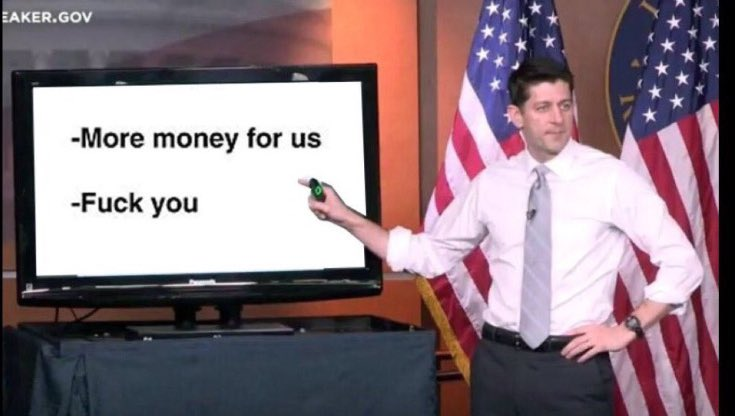
But shorn of those social liberal commitments, economic "liberalism" need not be tied to either a Rawlsian aid for the disadvantaged nor an egalitarian conception of the common good. A socially conservative economic "liberal" is perfectly happy to see government intervene to direct resources into his own pocket while leaving members of outgroups and the underclass to rot. Remember Paul Ryan's famous Obamacare replacement plan?


Yeah, it's like that. The right-wing "hur hur hur 'Nazi' stands for national socialist guess it's a left-wing ideology" was always exceptionally dumb, but the tiniest grain of truth there is that if you take "socialist" ideas of public support but violently demand they be provided solely to the favored and dominant in-groups, well, yeah, then you have a fusion of "nationalism" and "socialism". The problem is that the creeping fascism of the GOP is at best already adjacent to that position (what do you all think "America first" means?). 


The GOP does not now have, if it ever did, any commitment to free markets. That was already well known from such Republican-favored boondoggles as infinite subsidies to fossil fuel manufacturers or favored treatment for capital gains. Nowadays, Ron DeSantis more or less openly favors distributing government boons and penalties on the basis of political loyalty. The "economic liberal/social conservative" voter is probably delighted. So long as he gets his, what does he care that the distribution of government cheese is governed by corrupt criteria? If anything, that's a benefit! Democrats can't occupy this quadrant because the whole point of being economically liberal and socially conservative is that it matters to you that the economic distributions support a social hierarchy where your group is at the top and outsiders are punished for their foreign race, religion, nationality, or values, and that's a political space where Republicans will always carry an insurmountable advantage.

Tuesday, May 24, 2022

Inventing "Fraud" Isn't Necessary for the GOP's 2024 Robbery Plans

In 2020, Republican politicians made bogus claims of fraud in order to justify attempting to steal an election they lost. But why bother with the "fraud" allegation at all? Why not just attempt the robbery? The answer, presumably, is that claiming fraud -- however spuriously -- was necessary to justify overturning the will of the voters and assigning electoral college voters to a candidate who got fewer votes.

The problem with this strategy was, of course, that the fraud claims were obvious nonsense and every sane observer -- including virtually all judges -- knew it. Insofar as the strategy was based on a flagrant lie, it was vulnerable to rejection once it actually hit the judiciary.

Fast forward a few years, though, and Republicans are coming to a realization: They don't need to claim fraud. They can cut out the middleman entirely and just assert the right to ignore the voters entirely. The claim being developed is a version of the "independent state legislature" doctrine that just asserts that state political officials (themselves often in highly gerrymandered seats that bear no relationship to the popular will) have free reign to decide who gets their state's electoral votes. Their decision need not be in any way constrained by such piddling trivialities like "who the voters of their state actually voted for" -- even in the funhouse mirror sense of "well if you discount the votes that we assert are fraudulent because *mumble mumble brown people*, then the voters actually chose our guy." The new version of the steal is a straight line argument that if the state legislature wants to assign their EVs to Trump, Trump gets them. The people can pound sand.

Unlike the concocted fraud allegations, this is fundamentally a legal assertion -- an extreme, terrifying legal assertion, but a legal assertion all the same. Getting the GOP judiciary to accept it does not depend on forcing judges to deny reality, it just depends on getting the right mix of reactionary nihilists who can issue a chin-stroking pontification about how slave states in 1810 organized their elections with a straight face -- and recent history suggests that a welter of federal court judges will be eager to accommodate them. 

Nonsense fraud claims might gild the lily of this endeavor, but they aren't necessary to the strategy. And for that reason, this strategy for stealing the election is far more likely to succeed than the last one. The 2020 steal attempt was a largely ad hoc, on-the-fly paint splatter thrown together by the least competent attorneys Trump's money could buy in a context where it still was mostly taken for granted that the vote tallies ought determine the winner. In 2024, the GOP establishment will have had time to prepare itself logistically, but also mentally -- it will have come to terms with making the argument that in our allegedly constitutional democracy votes don't have to matter at all (See the Senate! See the electoral college itself! We're a republic, not a democracy!).

Republicans swung as hard as they could in 2020, but they just weren't strong enough to ring the bell. This time around, they'll be trained, toned, and ready. I hope we are too.

Wednesday, April 13, 2022

The Feast of the Baby Heads

Upon Virginia Governor Glenn Youngkin's inauguration, I made an observation about how wonderful it is to be Republican in purple-state America. Namely, that so long as you hold off on biting off a baby head during the campaign, the media will declare you the very essence of sobriety and moderation, and dismiss anyone who tries to tell otherwise. Then, once you enter office, you can bite as many baby heads as you want -- shocking the professional punditocracy (and gullible "independent" voter) who was ever-so-sure you were actually quite reasonable!

I made that observation upon Youngkin's opening gubernatorial salvo designed to help COVID be even more lethal. But it also applies to his latest round of petty partisan vindictiveness, vetoing widely popular bipartisan initiatives that passed the legislature by overwhelming margins for no other reason than that they were sponsored by Democrats. After "earning" the title of a moderate for, as best I can tell, no other reason other than that he wears fuzzy fabrics, Governor Youngkin has in his first few months been gorging himself on the baby heads that he temporarily deprived himself of on the campaign trail -- governing as a virulent right-wing extremist in a state that remains purplish-blue. The best analogy I can think of is if a Democrat manages to sneak into the Missouri governor's mansion in an off-year election and immediately abolishes the police. It's simultaneously unfathomable and yet exactly what one gets from these so-called "moderates".

The reality is that there are, functionally speaking, no more moderate Republicans -- a fact which does not remotely seem to dampen the media's willingness to be duped into believing that this Republican will be a moderate. We went through this a few years back with Cory Gardner -- the Denver Post endorsed him in 2014 against then Senator Mark Udall, saying it was "unfair" to label Gardner an "extremist" and predicting he'd be a fresh and independent voice in the Senate, only to shame-facedly admit its mistake when it turned out he was an utterly bog-standard right-wing hack. Who could have predicted? Answer: everybody! And so it is too with Youngkin. But alas, we didn't learn the lesson then and we certainly won't learn it now. Instead, we're doomed to repeat this dance every single election cycle it seems.