Showing posts with label economy. Show all posts

Friday, May 17, 2024

Raises and Inflation


I'm embarrassed to admit that it was alarmingly late in life that I realized that part of the reason workers get (and expect) raises each year is to account for inflation.

In my head, for most of my life, I associated a raise solely with being rewarded for performance and/or seniority. As you advance in your career, you (hopefully) become more effective, take on more responsibilities, develop additional competencies, etc.. That makes you more valuable to your employer, and so in turn, you get more money. It would of course be possible that in bad economic times one's employer might not have the money to give you a raise. But the raise you do get is meant to be an advancement -- it improves you vis-a-vis your position in the year before. By the end of my career, assuming I stay on the same professional arc I'm on now, I should be making more money than at the start of it.

This is one function of a raise. But because of inflation, it's not the only or even initial function. At the outset, a raise is not about advancing you economically compared to the prior year, it's about maintaining parity. Not getting a raise isn't career stagnation, it's actively losing money. If throughout your career you only get a raise equivalent to that year's inflation rate, you've basically never gotten a raise at all.

I'm not realizing anything that isn't obvious. That said, it's been noted that the view that raises are earned based on merit while inflation is imposed is actually a pretty common one amongst American workers, so I wasn't entirely alone on it as an unreflective intuition. The mental uncoupling of wage growth from inflation, in turn, probably causes all manner of misshapen beliefs about the state of the economy and what constitutes reasonable wage growth -- particularly if one (rightly!) thinks that one's real, not just nominal, salary should increase as one gains experience and seniority.

Tuesday, September 19, 2023

ACS Oversights and the Unconstrained Court


In the Atlantic, Caroline Frederickson, until recently head of the American Constitution Society, proffers a "mea culpa" for the ACS generally not during her tenure focusing on economic issues. Over at PrawfsBlawg, Paul Horwitz ventures several guesses as to what caused this longstanding oversight in the ACS' prioritization.

Without challenging any of Horwitz's explanations, all of which are plausible, I'll offer one more: the ACS, like most liberal legal institutions of its era, focused on issue areas where the judiciary would intervene to stop bad actions by other branches of government. On gay marriage, for example, the liberal focus was on judges striking down legislative prohibitions on same-sex marriage. On policing the goal was for judges to hold accountable instances of officer brutality and abuse. On gerrymandering the idea was for judges to invalidate imbalanced or unfair maps. In all of these cases, courts are in an antagonistic posture to other facets of the government and intervene to in some thwart or ameliorate some policy or practice implemented by another branch.

From this vantage, "economic issues" would not have been seen as a natural fit for an organization like ACS. From a template of judicial intervention against other branches, liberals still labor under the ghost of Lochner which holds that judicial overrides of democratic decision-making in the economic realm, in particular, is the sine qua non of illegitimate judicial activism.

Of course, in many cases the liberal desire out of judges in these economic realms (like competition policy and anti-trust) is for judges to stay out of the way and let the democratic or administrative branches do their thing. But here a different bias or blindspot of groups like the ACS emerges: the assumption that liberals don't need to urge the courts towards judicial restraint. Even as the conservative takeover of the judiciary marched along, liberals tended to react to it with dismay that courts might not intervene in areas where liberals believed they should. They wouldn't strike down gay marriage bans, they wouldn't curb abuses of post-9/11 surveillance, they wouldn't combat partisan gerrymandering. Some of these concerns proved prescient, others didn't pan out. But the framing was still in terms of seeking judicial intervention. Restraint was taken for granted.

It took a long time for liberals to fully grok the threat of judicial conservatism not manifesting as too much restraint, but of a complete lack of restraint -- a counter-activism. There were plenty of warning signs that liberals should be worried. But old habits die hard. For example, surely one of the most important liberal legal victories of the past two decades was the Supreme Court upholding Obamacare. Yet Frederickson did not say, and I think most legal liberals still would not say, that one of ACS' priorities either is or should have been "health care". In terms of judicial intervention, health care is seen as an inappropriate, Lochner-esque subject. And in terms of judicial restraint, well, liberals took judicial restraint for granted.

Now, finally, this ingrained presumption is cracking. We are in an era where the conservative judiciary's primary sin is not at all taking restraint too far, but its indulgence in wild interventionist non-constraint. In this epoch, where Chevron and the entire administrative state are under siege, where First Amendment Lochner-ism is roaring back to life, it becomes absolutely essential for liberals to reassert boundaries on judicial arrogance. And so now there is a lot of room for a group like ACS to make economic policy a priority. Today, efforts to shore up the vitality of administrative bodies seeking to police the economic realm isn't a redundancy, but a dire necessity.

When I first started teaching constitutional law, I spent a lot of time trying to pour some cold water on my liberal students' Warren Court idealism and have them consider the risks of judicial activism and the virtues of democratic deference. This was not so much because I was especially inclined towards judicial restraint or minimalism, but rather because the entire concept that courts shouldn't be vanguards of social change was effectively alien to the average student such that the only way I could give them anything new was by trying to at least partially counterbalance the narrative. In 2023, it has become less necessary for me to explain the perils of unconstrained judicial intervention and the dangers of an activist court; now, to some extent, the counterintuitive pitch I have to make sometimes is to explain why and how courts can still be useful forces for good in the world.* But the point is that the conventional wisdom amongst liberals is finally stopped viewing restraint and democratic deference as something they are entitled to on demand. In a world of rampant conservative judicial activism, there is a lot more space for legal liberals to pay attention to the economic realm. 

* Though I will say that I'm surprised, in a world where Brett Kavanaugh is the median SCOTUS vote, just how resilient my students' faith in judicial interventionism remains.

Sunday, September 03, 2023

Media Alt-Centrists in Disarray


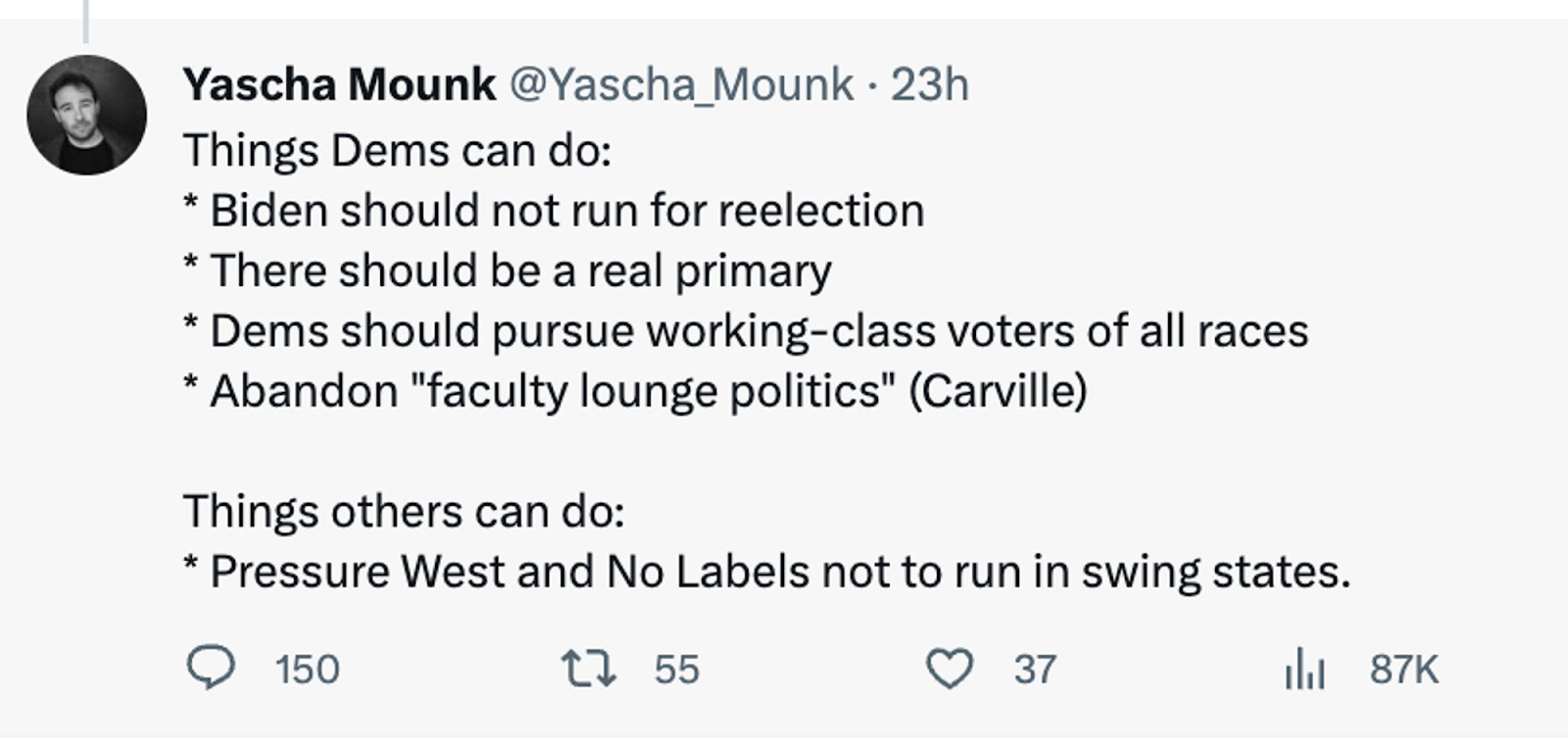
When I first saw this Tweet (Xeet?), my eye was drawn to "Dems should pursue working-class voters of all races." It's a great example of something that is simultaneously (a) alt-center conventional wisdom and (b) utterly inane. What are the sorts of policies Dems should pursue to working-class voters of all races? Answer: the ones they're already supporting! 


Price negotiations for prescription drugs is a great, obvious example of a policy that's geared to the interest of working-class voters of all races. Standing with the incipient wave of labor mobilization is another. The infrastructure bill was yet another. All of these are centerpiece items of the Democratic Party's economic agenda. But the alt-center punditry acts as if they don't exist. The "advice" on offer is "do what you're already doing, but make me pay attention to it." And one cannot help but think that the price the pundits have put on "make me pay attention to it" is "stop distracting me by also supporting policies that are distinctively to the benefit of specific historically marginalized communities."

At the same time, there is a separate vapidity in the "advice" that Biden shouldn't run for reelection. Again, as advice this is just terrible: Biden has a proven electoral track record and has already beaten Trump once. There's no universe where a chaotic primary free-for-all would actually be healthy for the Democratic Party or the broader prospect of ensuring that Trump or any of his lackeys stay out of the White House. The desire for "a real primary" is just thinly-disguised thirst for the good old days of "Dems in disarray" and the chaotic intraparty knife fights that aren't happening on the GOP side because virtually all of Trump's "challengers" can't help but cozy up to him (with a not-so-subtle wink to the various factions within the Democratic Party whose definition of a "real primary" excludes any primary where their preferred candidate doesn't march to victory).

Finally, "faculty lounge" politics is also a meaningless phrase. If it's meant to refer to the notion that Democratic party politics take their cues from whatever petition is currently being passed around the Wesleyan anthropology department email list, it's delusional. If it's meant to be a general referent to so-called "culture war" politics, then it's horribly outdated -- we are long past the days where the main "culture" wedge issues favored Republicans over Democrats. Republicans are getting absolutely blitzed on reproductive rights as their radical campaigns to imprison, maim, and murder women are predictably reviled. And their anti-LGBTQ agenda doesn't fare much better. Democrats have a lot of room to punish Republicans for their extremism here, and absolutely should.

Biden should run for reelection, and in the process will no doubt trounce token primary opposition. He should promote his policies which will improve the lives of working class voters of all races, and he should absolutely torch Republicans for their unabashed extremism in desiring to take American "culture" back to the 19th century.

Thursday, July 27, 2023

Fear of a Good Economy


The following is one of the posts where I don't actually know anything about the subject matter, but I'm going to exercise my God-given right as an internet-denizen to opine anyway.

The Fed raised interest rates again yesterday, putting rates at their highest level in decades. It also left the door open for yet another hike later in the year. The rationale is that there is a continued need to combat inflation. But inflation rates are down significantly. The Fed's stated inflation target of 2% would be quite low by historical standards -- not absurdly low, but well below average. And on the whole, it feels like we were already at mission accomplished.

So why did we need another rate hike? I can't help but feel as if the Fed's rate decisions aren't directly about inflation, but about fear that the economy is running better than expected. Now to be clear, I don't mean this in some sort of conspiratorial "the rabble are getting too much of the pie and as guardians of capital we can't have that" sort of way. Rather, it seems as if the Fed simply won't believe it's truly gotten inflation under control unless we see significant slackening of economic growth. Inflation has been lowered, but the Fed doesn't trust the resilience of that accomplishment unless and until there's an economic downturn to "confirm" the effect.

It doesn't strike me as a good thing that "the economy is still purring along" gets translated as "whelp, better crank those rates higher." Even if the Fed eventually starts believing its own lyin' eyes on inflation, the lagging effects of potentially gratuitous rate hates could end up doing significant unnecessary damage a year from now. That would be very much not good, for a host of reasons (not the least of which being "badly timed economic slide + likely fascist on the ballot" has not augured well for democracy, historically speaking).

But again -- I actually don't know anything about this, so this is me talking completely out of my own behind. Buyer beware.

Friday, December 02, 2022

We Are Not Ready for AI

Two AI developments in rapid succession have me, I'll be honest, a bit rattled.

The first development was a study where an AI player managed to perform very well in an online Diplomacy tournament. Diplomacy is a board game which prioritizes negotiation and manipulation to achieve one's ends (so it's not like a game like Chess, which is purely a matter of raw calculation). Leaving aside my general discomfort with "we've successfully trained an AI to lie and manipulate humans to achieve a goal of world domination!", this represents a huge leap in AI's ability to effectively use natural language and discourse in a way that I think, until recently, would have seemed beyond the realm of possibility.

The second was using OpenAI to answer short answer prompts that might be found on a law school exam. It did ... decently. Not perfect, and sometimes quite wrong, but not awful either, and sometimes more or less correct. For example, here's what it gave me when I asked "How did Twombly and Iqbal change pleading rules?"

Twombly and Iqbal changed pleading rules by raising the standard for the sufficiency of pleadings in federal civil actions. The Supreme Court held in Ashcroft v. Iqbal that "a complaint must contain sufficient factual matter, accepted as true, to state a claim to relief that is plausible on its face." This ruling effectively raised the bar for pleadings in federal civil actions, meaning that plaintiffs must provide more detailed facts in their pleadings than they had to under the old standard. The Court also held in Bell Atlantic Corp. v. Twombly that a complaint must contain more than mere labels and legal conclusions, and must instead contain factual allegations that show that a claim is plausible. This ruling established a two-pronged standard for the sufficiency of pleadings in federal civil actions, requiring plaintiffs to provide more detailed facts in their pleadings than they had to under the old standard.

That's not perfect, but it's not terrible either. And since OpenAI is available to the public, I assume there are more proprietary AI models out there that can do an even better job.

My colleagues are worried about what this means for open book law school exams (students can enter the prompt and have a decent answer spat back out). But I'm not worried about having to adjust my exams (I don't use short answer prompts anyway). I'm worried about what this means for needing human lawyers. Not quite yet, but we're getting there.

All of this, in turn, brought to mind two articles by Kevin Drum on the issue of AI development. The first made the point that once it comes into full bloom AI will not just be better than humans at some jobs, it will be better than humans at all jobs. This is not a problem that is limited to "unskilled labor" or jobs that require physical strength, deep precision, or even intense calculation. Everything -- art, storytelling, judging, stock trading, medicine -- will be done better by a robot. We're all expendable.

Article number two compared the pace of AI development to filling up Lake Michigan with water, where every 18 months you double the amount of water you can add (so first one fluid ounce, then eighteen months later two fluid ounces, then in eighteen more months four fluid ounces, and so on). Both "Lake Michigan" and "18 months" weren't chosen at random -- the former's size in fluid ounces is roughly akin to the computing power of the human brain (measured in calculations/second), and the latter reflects Moore's Law, the idea that computing power doubles every 18 months.

What was striking about the Lake Michigan metaphor is that, if you added water at that pace, for a long time it will look as if nothing is happening ... and then all of the sudden, you'll finish. There's a wonderful GIF image in the article that illustrates this vividly, but the text works too. 

Suppose it’s 1940 and Lake Michigan has (somehow) been emptied. Your job is to fill it up using the following rule: To start off, you can add one fluid ounce of water to the lake bed. Eighteen months later, you can add two. In another 18 months, you can add four ounces. And so on. Obviously this is going to take a while.

By 1950, you have added around a gallon of water. But you keep soldiering on. By 1960, you have a bit more than 150 gallons. By 1970, you have 16,000 gallons, about as much as an average suburban swimming pool.

At this point it’s been 30 years, and even though 16,000 gallons is a fair amount of water, it’s nothing compared to the size of Lake Michigan. To the naked eye you’ve made no progress at all.

So let’s skip all the way ahead to 2000. Still nothing. You have—maybe—a slight sheen on the lake floor. How about 2010? You have a few inches of water here and there. This is ridiculous. It’s now been 70 years and you still don’t have enough water to float a goldfish. Surely this task is futile?

But wait. Just as you’re about to give up, things suddenly change. By 2020, you have about 40 feet of water. And by 2025 you’re done. After 70 years you had nothing. Fifteen years later, the job was finished.

If we set the start date at 1940 (when the first programmable computer was invented), we'd see virtually no material progress until 2010, but we'd be finished by 2025. It's now 2022. We're almost there!

That we might be in that transitional moment where "effectively no progress" gives way to "suddenly, we're almost done" means we have to start thinking now about what to do with this information. What does it mean for the legal profession if, for most positive legal questions, an AI fed a prompt can give a better answer than most lawyers? What does it mean if it can give a better answer than all lawyers? There's still some hope for humanity on the normative side -- perhaps AI can't make choices about values -- but still, that's a lot of jobs taken off line. And what about my job? What if an AI can give a better presentation on substantive due process than I can? That's not just me feeling inadequate -- remember article #1: AI won't just be better than humans at some things, it will be better at all things. We're all in the same boat here.

What does that mean for the concept of capital ownership? Once AI eclipses human capacity, do we enter an age of permanent class immobility? By definition, if AI can out-think humans, there is no way for a human to innovate or disrupt into the prevailing order. AIs might out-think each other, but our contribution won't be relevant anymore. If the value produced by AI remains privatized, then the prospective distribution of wealth will be entirely governed by who was fortunate enough to own the AIs.

More broadly: What does the world look like when there's no point to any human having a job? What does that mean for resource allocation? What does that mean for our identity as a species? These questions are of course timeless, but in this particular register they also felt very science-fiction -- the sorts of questions that have to be answered on Star Trek, but not in real life, because we were nowhere near that sort of society. Well, maybe now we are -- and the questions have to be answered sooner rather than later.

Sunday, June 05, 2022

"Economically Liberal, Socially Conservative" Will Always Decay into Fascism

It's one of the great paradoxes of modern politics. The "economically liberal, socially conservative" quadrant of the political map, which most polls say is quite well-populated amongst voting-aged Americans, also has the least obvious political representation. Many pundits have long suggested that Democrats should try to move into this space -- retreat on "cultural war" issues while talking up bread-and-butter economic interventions that will help working Americans.

I'm skeptical this strategy will work, for one simple reason: the "economically liberal, socially conservative" quadrant is an inherently unstable position that will inevitably decay into fascism.

Terms like "economically liberal" are always kind of fuzzy, but I tend to think of it as meaning tolerance for government spending and intervention in the economic realm; as compared to the more hands-off, laissez-faire approach of economic conservativism. If you're socially liberal and committed to norms of equality and aid for the disadvantaged, that spending and intervention naturally is going to be directed towards either the public, broadly, or the least well off, specifically.

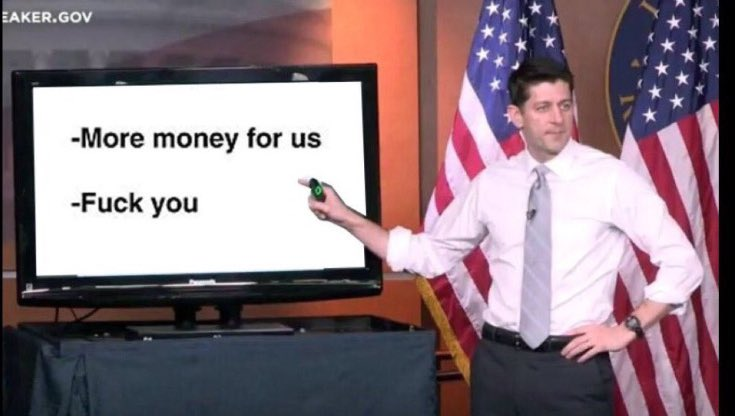
But shorn of those social liberal commitments, economic "liberalism" need not be tied to either a Rawlsian aid for the disadvantaged nor an egalitarian conception of the common good. A socially conservative economic "liberal" is perfectly happy to see government intervene to direct resources into his own pocket while leaving members of outgroups and the underclass to rot. Remember Paul Ryan's famous Obamacare replacement plan?


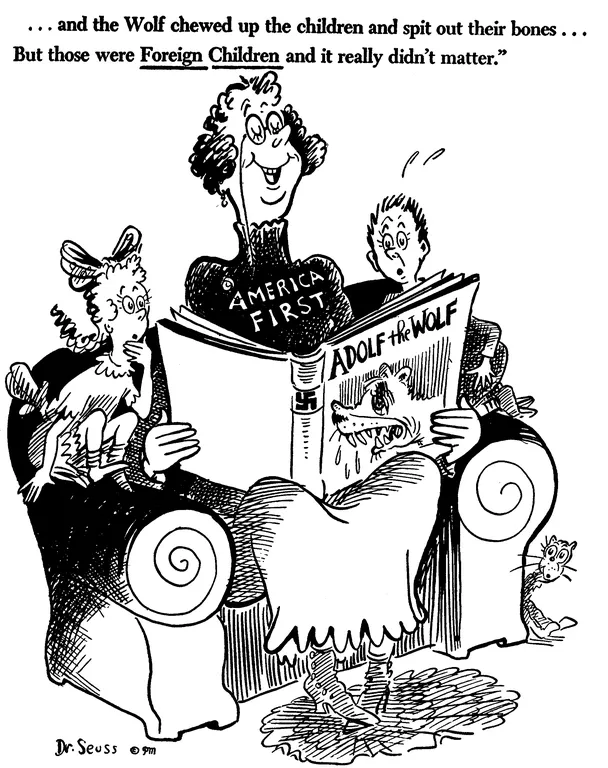
Yeah, it's like that. The right-wing "hur hur hur 'Nazi' stands for national socialist guess it's a left-wing ideology" was always exceptionally dumb, but the tiniest grain of truth there is that if you take "socialist" ideas of public support but violently demand they be provided solely to the favored and dominant in-groups, well, yeah, then you have a fusion of "nationalism" and "socialism". The problem is that the creeping fascism of the GOP is at best already adjacent to that position (what do you all think "America first" means?). 


The GOP does not now have, if it ever did, any commitment to free markets. That was already well known from such Republican-favored boondoggles as infinite subsidies to fossil fuel manufacturers or favored treatment for capital gains. Nowadays, Ron DeSantis more or less openly favors distributing government boons and penalties on the basis of political loyalty. The "economic liberal/social conservative" voter is probably delighted. So long as he gets his, what does he care that the distribution of government cheese is governed by corrupt criteria? If anything, that's a benefit! Democrats can't occupy this quadrant because the whole point of being economically liberal and socially conservative is that it matters to you that the economic distributions support a social hierarchy where your group is at the top and outsiders are punished for their foreign race, religion, nationality, or values, and that's a political space where Republicans will always carry an insurmountable advantage.

Saturday, March 06, 2021

Congress Passes COVID Relief Bill Without Any GOP Support

We should be clear -- this was a bipartisan bill, in the sense that Americans of both parties backed its content. It passed on a party line vote because the GOP is relentlessly partisan and will never back any significant Democratic Party initiative no matter how it is framed or how much effort is put into negotiation. Yes, that includes Moderate Republican (tm) Susan Collins. And it's a very, very good thing that Democrats learned this lesson from the Obama years, and didn't waste time in a futile effort to gain meaningless Republican support. If Republicans had actual good ideas for the relief bill (as opposed to the "idea" of giving less help to fewer people), they were welcome to say so. In the meantime, Democrats should own all the tremendously popular provisions of this law straight through the midterms.

The other thing I want to say is that while yes, the random bites Joe Manchin decided to take out of the final bill were frustrating, stupid, and gratuitous, they also don't change the fact that the final bill is one of the most strikingly progressive pieces of stimulus legislation ever to pass through Congress. That's testament to a serious shift in the Democratic Party coalition which is worth celebrating, and it's also a good illustration that at the end of the day, the difference between Biden vs. Harris vs. Warren vs. Sanders as President pales in comparison to the difference between Ossoff and Warnock vs. Perdue and Loeffler as Georgia's Senators.

Monday, February 08, 2021

What are the GOP's COVID Relief Ideas?

We keep on hearing complaints from Republicans about how the COVID relief bill needs to be "bipartisan". For my part, I'm all in favor of bipartisanship. I welcome any and all Republicans to vote for the COVID relief bill that Democrats bring to the floor.

But in all seriousness, I have no intrinsic objection to incorporating Republican ideas into the COVID relief bill. The problem is I don't know what ideas Republicans have. So far, their main ask has been to request that the bill do less to help fewer people. That's not an idea, that's a contraction of the Democrats' idea. Does the GOP have any positive suggestions for things that could improve the bill?

The one actual policy idea I recall Republicans proposing in the past is tort immunity for businesses that reopen during the pandemic. That's an idea. It's a profoundly terrible idea, and Democrats absolutely should not take them up on it, but it is at least an idea -- it is not just the negation of a Democratic idea.

Do they have any others? Preferably, ones better than "businesses should be allowed to murder their employees with impunity"? Or is the "party of ideas" stuck at preferring more misery over less?

Tuesday, April 28, 2020

Tupac Lives!

By now you've probably heard about this story. Basically, Kentucky Governor Andy Beshear called a press conference to complain about people filing for unemployment benefits under fake names -- a practice which slowed down processing for real Kentuckyians facing real needs. The example he gave was a guy named "Tupac Shakur" -- obvious fake, right? Wrong. There is a real Tupac Shakur living in Kentucky (though presumably not the Tupac Shakur) who really filed for unemployment benefits. Upon learning this, Beshear called the real Tupac to apologize. And Tupac accepted, saying "I understand, he’s dealing with a lot. Mistakes happen."

There isn't really anything substantive worth saying about this. The reason I'm writing is because the story seemed like a rare instance of everybody involved being nice and reasonable.

  • Gov. Beshear was reasonable in thinking the name "Tupac Shakur" was fake.
  • The actual person with that name was reasonably embarrassed to be called out like that.
  • Beshear, upon realizing his mistake, called Mr. Shakur to apologize.
  • Shakur graciously accepted the apology.
Really, I can't ask for much more from either of them. Mistakes happen, apologies are made, people are understanding. It was just nice. And sometimes I like focusing on nice.

Thursday, March 26, 2020

It's Coronatime! Roundup

While I'm dubious that there are actually large numbers of people who will consciously avoid Corona beer because of coronavirus, I still can't fathom what their PR people are going to do with this. It's like all those apartment complexes called "The Isis" -- you hate to see pretty word get ruined like that.

* * *

Trump campaign threatens the operating licenses of stations which run ads critical of Trump's handling of the coronavirus (the ad is damn good too). The real tragedy is that, with college campuses largely closed, there probably isn't some 19-year old Oberlin kid with a stupid protest we can all point to as "the real threat to freedom of speech in America."

Hobby Lobby CEO decides God wants him to keep his stores open, but doesn't really care about giving his workers paid sick leave.

Democrats made the coronavirus bill that passed the Senate much, much better than it was at the start.

Billionaires are ready for American workers to start working again, goddammit!

Technically ex-Rep. Brenda Jones (it's complicated) is seeking a rematch against "Squad" darling Rep. Rashida Tlaib. One might think Jones' unabashed stanning of Louis Farrakhan would present a problem given literally every Jewish opinion piece on antisemitism that's run over the past three years; but you'd be surprised (or not) at how, er, "open-minded" some folks are suddenly capable of being given the opportunity to take out Tlaib (Jones' ongoing praise and admiration for Farrakhan and his organization vs. a solitary article written by Tlaib in an NoI publication 15 years ago -- these probably wash out, right?). The ultimate kicker: Tlaib almost certainly will crush Jones anyway, so all this selling out of deep-seated principles will be for naught.

DOJ intercedes in court to argue that allowing trans women to compete in women's sports (and, one imagines, trans men to compete in men's sports?) is not required by and may indeed violate Title IX.

Sunday, June 30, 2019

SCOTUS Strikes Down Economic Protectionism in Tennessee

This week, in Tennessee Wine and Spirits Retailers v. Thomas, the Supreme Court struck down a Tennessee ordinance which prohibited new residents from obtaining a liquor store license until they had resided in the state for two years (in a particularly galling twist, they can't renew the license until they have ten years of residency -- even though liquor store licenses have to be renewed annually. Yes, that means there is a seven year no man's land in between.). The vote was 7-2, with Justices Gorsuch and Thomas in dissent.

I want to flag this briefly, and particularly the dissents of Gorsuch and Thomas. To be clear: I firmly believe that good policy and proper legal interpretation are not coterminous categories. The question before the Court was (a) whether laws like this violate the "dormant commerce clause" and (b) whether the special legal regime the Constitution provides for alcohol regulation in the 21st Amendment alters that analysis. I'd have to read the case more carefully to decide where I come down on it, though in my extremely brief browse I think the majority has the better of the argument.

But this nonetheless serves as a good example of a simple point: there is no straight line connection between conservative jurisprudence and economic liberty. In many circumstances, there is a more straightforward left-libertarian alliance against unnecessary government licensing regimes which serve only to obstruct disfavored classes from economic opportunity. Sometimes, conservatives will join them (the majority opinion here was written by Justice Alito); in the right circumstances sometimes one sees a massive cross-party consensus on these issues. But there remain plenty of cases where conservative politics and conservative legal analysis implies propping up economic protectionism and government red tape. Any assumption of a natural alliance between economic freedom and conservatism is a myth.

Wednesday, May 01, 2019

A Very Jewish Week Roundup

I'm having a very Jewish week.

It started, mostly, with the column I published in Haaretz calling "bullshit" on the claim that the New York Times presents a greater antisemitism threat than contemporary mainstream conservatism.

That led to a completely out-of-the-blue call from none other than ADL chief Jonathan Greenblatt. Like, literally, I was sitting on my couch and the phone rang and it was him. We've never conversed or connected in any other way (I've bent the ear of the San Francisco ADL office more than a few times), and there didn't seem to be any other motive behind the call other than to say he liked the Haaretz piece.

Then today, I had another phone call with a different prominent Jewish public figure -- I won't say who, since the project she was asking my take on isn't yet public, but let's just say that if Greenblatt is part of the "establishment" wing of the Jewish community, this person is more on the "insurgent" side. Somehow, I seem to be bridging that gap -- at least a little bit.

Tomorrow, I have a conference call to discuss my participation on a panel at the Goethe-Institut on resurgent antisemitism and White nationalism. Then Friday, I'm meeting with a student who sought me out to discuss how one researches issues of antisemitism in contemporary academia.

Oh, and Jill and I went to Talmud study for the first time last night.

* * *

Jews are the religious group most likely to view Muslims favorably. And wouldn't you know it -- but those positive sentiments are reflected right back at us -- Muslims also overwhelmingly view Jews favorably!

Very interesting new article in the Yale Law Journal experimentally measures whether people feel free to refuse intrusive search requests. Answer: they don't, which doesn't surprise. What might surprise a little is that even explicitly telling people "you're free to refuse this search" doesn't move the needle much.

Radical settler Rabbis caught on type expressing admiration for Hitler and racism. Nice.

Robert Farley thinks Team Living actually had decent military strategy in the Battle for Winterfell.

Trump pick Stephen Moore might not have the votes to get a Fed seat --  which is weird because, if he's a crank extremist too far gone to even get through this pliant GOP Senate, how did he occupy all these respectable conservative sinecures for all these years? Such a mystery.

Artist behind NYT's antisemitic cartoon denies it's an antisemitic cartoon, says controversy is a product of the "Jewish propaganda machine." Checks out!

Friday, April 14, 2017

Good Shoes Might Save You This Time

This is a very interesting article by McMillan Cottom explaining why poor people seem to "waste" money buying certain luxury goods (especially clothes). Cottom, whose family experienced multigenerational poverty, explains that such purchases can serve important signaling functions that -- sometimes -- facilitate successful navigation of institutions which might allow for upward mobility. The parent who "looks" middle-class (and therefore looks like she knows how to raise a stink) might be more successful at insuring her school doesn't overlook the needs of her child. The job applicant who "looks" professional (and how often have we all gotten the advice of how important professional appearances are!) might be more likely to be picked out for a higher-status job with greater benefits. Even the supplicant seeking public benefits who "looks" like she knows how to navigate the bureaucratic maze may be more likely to get favorable attention from the various officials and functionaries whose discretionary judgment can make or break a case.

The essay is a useful corrective to the instinct of many to assume the irrationality of the poor -- particularly when they make choices that at first blush make no sense to us (the infamous "If I Were a Poor Black Kid"  essay is a classic of the genre). Very frequently, choices that seem "bad" from the outside have a logic to them -- albeit often a logic born out of coercion and impossible choices -- that makes them quite sensible to persons actually living in the relevant circumstances. It's easy to say "joining a gang is a bad choice." It's harder to say that if not joining a gang means that the gang will gang-rape your sister, or beat you bloody every day before school. It's easy to say "the quick money from dealing drugs isn't worth the long-term consequences of ruining your future." It's harder to say that if your discounted utility is such that you can say "I might not live to be grown up. My life wasn't promised to me."

Put another way, if people aren't making what we deem to be good, pro-social choices, we can conclude either:
  1. They have malsocial preferences (they're "bad people" who don't have a good set of ends);
  2. They're irrational (their choices don't lead to their desired ends); or
  3. The incentive structures are wrong (their rational choices, in pursuit of reasonable ends, nonetheless don't yield pro-social results).
Frequently, we rush to explanations #1 and #2 -- ones which pathologize the poor (and other outgroups). But explanation #3 will frequently be more plausible (not to mention less degrading). And essays like this, which disturb the idea that poor people are simply stupid or diseased, can help point us towards other interventions that view the poor as we view ourselves -- as generally good, rational people who want a basically decent life and are trying as best they can, within the limits of their resources, to secure those ends.

Saturday, November 12, 2016

The Humiliating Best-Case Trump Administration Scenario

I want to talk about what I take to be the best-case Trump administration scenario. Now let's be clear, along a lot of axes that scenario is still a pretty grim one. On many issues -- civil rights and liberties, voting rights, the environment, reproductive rights, to name a few -- it's hard to imagine a Trump administration being anything less than cataclysmic. I don't talk about those here, not because they don't matter, but because they aren't meaningfully different in the "best-case" scenario versus the median-case.

So what is our "best-case"? Well, Trump's victory speech focused on infrastructure, and I've joked with my friends that if Donald Trump wants to distract himself for four years by building trains I would be over-the-moon. And this is hardly implausible -- Trump has very little in the way of firm ideology (he's the consummate populist panderer), but he does like building things. He's already calling for a huge stimulus package, of the sort that Democrats have been begging for for years now but Republicans always derided as socialist. Well, "always" meaning "when Democrats propose it." If there's one thing we know about Republicans, it's that they're entirely fine with massive federal government spending so long as it isn't a Democratic idea. So it strikes me as eminently plausible that this could get through Congress.

Likewise on health care. The big news and the end of this week was that President-elect Trump may consider keeping major portions of the Affordable Care Act: specifically, the ban on preexisting condition discrimination and the allowance that young people can stay on their parents' insurance up until age 26. I've also heard that he might continue to support the Medicaid expansion, and I'm dubious Republicans state politicians will continue to resist taking that money now that it isn't an explicit middle finger to Obama. The ban on preexisting condition clauses, for its part, would make it virtually impossible to get rid of the mandate. I fully expect to see some law out of the Republican Congress that purports to "repeal Obamacare." But rather than "repeal and replace," it may well be in essence "repeal and keep." The "repeal" part would basically be an ego salve; or perhaps more accurately, an effort to appropriate Obama's legacy to themselves by taking what's properly termed a "fix" and pretending like it's a brand-new Republican idea.

So let's see: Infrastructure spending. Stimulus. A health care plan modeled on the ACA. All of these are Democratic ideas, that Republicans will now consider only because it won't be a party of Black people and women that's proposing them. This is actually not even that surprising when you look back at American history -- remember how the healthcare mandate was bog-standard Republican orthodoxy right up until it became Obama's policy, at which point it transformed into the greatest threat to human liberty in the past century? Much like Rock & Roll, they'll savage them right up until they can steal and take credit for them. Again, it's the best case scenario because it preserves or implements some genuinely good policies. But it'll be humiliating to see Republicans act as if they came up with these wonderful ideas all by themselves.

And of course, the real moral of the story would simply be "we can get Congress to invest in America again, but only if we wash it down with a gallon jug of White nationalism and misogyny while we're at it." This would not augur well for the future of American progressive politics.

Monday, February 23, 2015

Energy Lobbying, Environmental Costs, and Zero-Sum Competition

Exelon Corporation, one of the largest energy companies in the United States, has come out in favor of the EPA's Clean Power Plan and has even asked for a carbon pricing schema. This stands out, as one does not typically expect to see large energy companies endorsing aggressive carbon regulation. And I should hasten to add that what follows is not a specific speculation on Exelon's motives. Exelon might have any number of reasons for the position it's taking, not the least of which could be a fear that absent their intervention the EPA plan could end up being more environmentally protective (and thus more economically burdensome). Nonetheless, in general it does seem a little odd: why would an electricity company support EPA rules that almost certainly would place greater costs on its line of business.

The answer might lie in the difference between competitive and monopoly electricity markets. In the former there are multiple firms competing for customers and market share. In the latter, there is a single firm with a guaranteed franchise and customer base. These two models have been struggling for primacy in the electricity sector for the past several decades -- as it stands, we have competition in the generation and wholesale sectors, whereas most (but not all) states have maintained a retail electricity monopoly. At first glance, though, this different market structure is unrelated to support of greater environmental regulations. For either it increases costs, and we can stipulate (though this may or may not be true) that it equally increases costs for firms operating in a competitive versus a monopoly context. It is therefore unlikely that any firm will unilaterally adopt superior environmental restrictions (with some allowance for trying to gain public goodwill or carve out a unique market share). And so it seems unlikely that any firm would lobby to put in place a regulatory regime which increases these costs.

But look a little closer. For the monopoly firm, a policy proposal which increases its costs is an unmitigated bad. The cost increase may be minor, in which case it will be moderately opposed, or significant, in which case it will be significantly opposed, but there is never a corresponding benefit to the cost increase. But in a competitive world, things are different because there is also the opportunity to take over one's competitor's turf. Here, cost increases can be a good thing if one is in a position to better ride them out than one's adversaries. Imagine Company A has already significantly invested in renewable energy infrastructure such that new carbon mandates are likely to only cause a small price increase. Company B, by contrast, is less prepared to handle these new mandates and would be forced to increase prices quite a bit. Company A may well lobby for the regulatory shift because it would give it the opportunity to gobble up market share currently held by B.

This matters because it suggests that, in a competitive context, there is sometimes a business incentive for firms to lobby on behalf of cost-increasing environmental regulation where it feels it can better absorb the costs compared to other companies in the field. To the extent that environmental regulation often in practice needs business buy-in to be effective, this is an avenue worth exploring.

I said that this was not a speculation on the Exelon situation, particularly, and it isn't. That said, I did notice that the speaker who delivered this missive to FERC was described as "Exelon’s senior vice president of federal regulatory affairs and wholesale market policy." If Exelon's wholesale division (remember that wholesale electricity is a competitive sector) thinks that it is better positioned than its rivals to meet EPA carbon requirements, then that would explain why it would come out in support of this initiative even though in absolute figures it probably will raise its cost of doing business.

Wednesday, February 18, 2015

Motivated Reasoning: Social Mobility Edition

I've become more and more interested in the research on motivated cognition -- the processes by which we interpret evidence in a biased manner and reason directionally to our preferred ends. This literature is equal parts fascinating and depressing: fascinating as a window into our modes of thinking, depressing in that it has grim implications for both how much we should trust our learned intuitions and for the ability for evidence and facts to move our mental needles towards more accurate appraisals.

Today, I read an interesting study by John R. Chambers, Lawton K. Swan, and Martin Heesacker entitled Perceptions of U.S. Social Mobility Are Divided (and Distorted) Along Ideological Lines (forthcoming in Psychological Science). The study, as the name suggests, explores how people perceive facts relating to social mobility in the United States. They asked two main questions: First, they asked participants to provide their views on social mobility directly, by asking them to predict how many people who grew up in the bottom, middle, and top third of income brackets end up (as young adults) in the bottom/middle/top brackets (high social mobility would suggest that people move brackets regularly -- a society in which one's origins played no role in economic outcomes would see an even 33/33/33 split; low social mobility would suggest that people generally stay in the income bracket of their parents). Second, they asked people to appraise whether social mobility opportunities had increased or declined over time (they could say it increased a lot, a little, hadn't changed, decreased a little, or decreased a lot).

The results?

Everybody underestimated social mobility (that is, they thought our society was less socially mobile than it was). And likewise, people thought that we had experienced a decline in social mobility opportunities over the past few decades (in reality, social mobility rates have remained flat). But on both points, liberals were further from the mark than conservatives. The authors suggest that this is because liberals are generally pessimistic about the state of economic and social opportunity in America, and so they are motivated to belief that social mobility is worse than it is. Conservatives, by contrast, are more optimistic about America's meritocratic and egalitarian nature, and so (though they underestimated our social mobility too) ended up closer to the right figures.

I bring this up not because it means that social mobility is not a problem. After all, social mobility could simultaneously be more common than we thought and still too low, and indeed there are other western countries which dramatically out-perform America on this front. Rather, I mention these findings because, as the authors note, sometimes motivated cognition is perceived to be a conservative problem ("that's why they don't believe in global warming! They're just cognitively biased!"), and in reality it is a problem shared by all (I assume most of my readers are liberals and thus could use the reminder; conservatives preparing to gloat should know there are plenty of cases where the right is the party led astray). After all, if I'm being honest I can say I was surprised to find that most people underestimated social mobility (which is, of course, exactly what the study would predict would be my response). It's hard for me -- now knowing the data -- to say with confidence how I would have answered the study questions in my naive state, but I suspect at the very least I would have marked that social mobility was slightly worse off than it had been in decades past, and that would have been wrong. And the most likely explanation for its wrongness is that I have certain ideological priors that predispose me to having certain beliefs about the fairness of the American system.

Now, if one wanted to fight the data, there are ways to go about it. Perhaps while social mobility generally has remained unchanged (and is better than we thought), it might be the case that for particular subgroups (over-represented amongst liberals?), social mobility has decreased. There is some evidence pointing in that direction, and this could cause certain people to misperceive social mobility for the polity writ large based on the particular experience of their own group. Another possibility is that the abolishment of Jim Crow, and the resulting opportunities gains for racial minorities, had an upward-social mobility effect that canceled out other factors which generally reduced such mobility -- but that the former is perceived as a one-time "low-hanging fruit" situation while the latter are viewed as more permanent. But, these arguments are, as I said, fighting the data -- it seems likely that the general conclusion (that, for motivated ideological reasons, liberals underestimate the amount of social mobility in America) is accurate. And as a liberal, it's always worth remembering my own fallibility.

Friday, January 31, 2014

Weekend Roundup: 1/31/14

Very busy at work right now. But I have a vacation coming up in a week. These two statements are not unrelated.

* * *

A fascinating peek at Utah's efforts to reform police raids.

The White House has announced it is looking to provide clemency to low-level drug offenders convicted in the days of overly-harsh mandatory minimums. Reason Magazine wonders if he's serious (both links via Radley Balko).

Maine Supreme Court rules that rules that banning a female transgender student from the girls' bathroom violates the state's anti-discrimination law.

Ken White at Popehat tackles people who compare critical speech to "lynch mobs", "the Holocaust", "witch hunts", and other like terms. Fair enough, but I again refer back to this post. "Bullying", for example, often includes physical intimidation, but just as regularly is "just" speech -- yet even Ken seems to recognize that this legitimately seriously harmful in a way that he dismisses in other contexts.

Meanwhile, Jon Chait tackles the ludicrous opinion of the Wall Street Journal that maybe rich people really are at risk of a Holocaust-style wave of terror. Kevin Drum takes a closer look at why -- against all evidence -- the rich "feel" besieged.

Tuesday, October 22, 2013

The 47%, Redux

Maine Governor Paul LePage (R) takes a page out of Mitt Romney's book (via):
Maine Gov. Paul LePage (R) took a page from the Mitt Romney playbook when he told a conservative audience at an event last week that 47 percent of able-bodied people in the state don't work, the Bangor Daily News reported Tuesday.

[...]

"Number two, when you talk about workforce development, it really means that the people that -- about 47 percent of able-bodied people in the state of Maine don't work," LePage said. A woman can then be heard on the recording reacting to that figure, to which LePage reiterated "About 47 percent. It's really bad."
Politifact rates this statement "mostly true" because the real figure undoubtedly contains two digits followed by a percent symbol.

Tuesday, September 03, 2013

Ronald Coase RIP

University of Chicago Law Professor and Nobel Laureate Ronald Coase died yesterday at age 102. Coase was hired by the University of Chicago in 1964, despite not having a law degree. While such hires are not uncommon today, this was basically unheard of at the time. It was definitely a risk that paid off, however, as Coase is credited with basically inventing the Law & Economics movement (a feat all the more impressive given that he did it in what was basically a throwaway paragraph in a piece otherwise about telecommunications law).

Coase's two best known works were "The Nature of the Firm," first published in 1937 (though based on a lecture he delivered in 1932), and "The Problem of Social Cost," published in 1960. The latter is the most-cited law review article of all time. He was awarded the Nobel Prize in 1991, in substantial part because of the massive impact of these articles. The delay in recognition was not lost on him. As he remarked at the time: "It is a strange experience to be praised in my eighties for work I did in my twenties." Speaking of bons mots, Coase is also credited with coining the popular statistics maxim: "If you torture the data long enough, it will confess."

The "Coase Theorem" (he didn't name it), derived from his body of work, is perhaps Coase's most enduring contribution. In a nutshell, the theory holds that if a right to avoid a harm is tradeable and there are zero transaction costs, the market process will result in an efficient allocation of rights regardless of their initial distribution. The Coase theorem is often described as one of the most misunderstood and misapplied concepts in law. Cognizant of these risks, I resolved to not try to apply it at all -- a bold decision for a University of Chicago law student. Nonetheless, based on my classroom recollections I think Wikipedia's illustration of the concept is solid:
For example, two property owners own land on a mountainside. Property Owner #1's land is upstream from Owner #2 and there is significant, damaging runoff from Owner #1's land to Owner #2's land. Four scenarios are considered:

(1) If a cause of action exists (i.e. #2 could sue #1 for damages and win) and the property damage equals $100 while the cost of building a wall to stop the runoff equals $50, the wall will probably exist. Owner #1 will build the wall, or pay Owner #2 between $1 and $50 to tolerate the runoff.

(2) If a cause of action exists and the damage equals $50 while the cost of a wall is $100, the wall will not exist. Owner #2 may sue, win the case and the court will order Owner #1 to pay #2 $50. This is cheaper than actually building the wall. Courts rarely order persons to do or not do actions: they prefer monetary awards.

(3) If a cause of action does not exist, and the damage equals $100 while the cost of the wall equals $50, the wall will exist. Even though #2 cannot win the lawsuit, he or she will still pay #1 some amount between $51 and $99 to build the wall.

(4) If a cause of action does not exist, and the damage equals $50 while the wall will cost $100, the wall will not exist. #2 cannot win the lawsuit and the economic realities of trying to get the wall built are prohibitive.
Importantly, the legal allocation of rights does affect the distribution of who has to pay how much.

Coase continued to write well past the century mark -- his last book, How China Became Capitalist, was published only last year. He was a giant in his field, a giant in academia in general, and his contributions will be missed. As a friend of mine said: "May there be no transaction costs in heaven."

Monday, July 29, 2013

"Judged on the Merits", Part 355

Janet Yellen is one of the prime candidates to be chair of the Federal Reserve. She's certainly got the pedigree: Summa from Brown as an undergraduate and a Ph.D. from Yale, taught at (among other locales) Harvard and Berkeley, and currently a member of the Fed's board of governors. And among said governors, she's got the best track record in terms of predicting what the economy is actually going to do.

In short, it seems that by most objective metrics she's not just "a" candidate, she's the most qualified candidate.

Or, if you're a conservative, she's only being considered because she's a woman. "Gender politics" shouts the Wall Street Journal. The New York Sun was "put in mind of the cartoons" which mocked women's inability to do math, and asked if we are "entering the era of the gender-backed dollar." This is especially ironic because the folks smugly dismissing the woman with best predictive powers tend to be the same folks whose economic prognostication skills have been consistently awful.

In any event, this is yet another instance of the well-worn conservative trope -- judge people on the merits, not based on their identity -- being a false dichotomy. Conservatives time and again have demonstrated that it doesn't matter what your qualifications are -- if you're a woman, or a Latino, or African-American, or gay, or whatever group they think are today's "lucky duckies" because of their fortuitous oppression, you'll be viewed as suspect. Your qualifications will be a lie, your selection an example of affirmative action in motion. Nothing will change that.

And then, come election day, they'll wonder why their rhetoric of equality of opportunity and meritocracy fall on deaf ears. It's because it's all preach, no practice, and those victimized by it aren't idiots.