Showing posts with label conservatives. Show all posts

Saturday, January 17, 2026

What Are You Going To Do?


You know, as soon as I started reading this Paul Campos post about "respectable" conservatives who, in the event that Trump does (as he has started suggesting) try to cancel the 2026 elections, will inevitably find some way to explain why it isn't so outrageous or unlawful or norm-busting or what have you, I immediately thought "Josh Blackman".

Now, that was before I got to the halfway mark and saw that Blackman's name was, indeed, dropped. And perhaps laying a marker down on Blackman here is akin to bragging about picking a one seed to make it to the Sweet Sixteen of March Madness.

But lay down my marker I shall. I can even hear the formulation he'll use: "I can't bring myself to be mad about ....", followed by a citation to some non-analogous alleged liberal sin that supposedly demonstrates that this is all just part of the game everyone plays, and Democrats are just play-acting at crying foul.

Again, I don't pretend I deserve any credit for a bold prediction here. But Blackman really is just the archetype for this particular brand of hackishness. 

And if it feels unfair to say someone like him would really support nullifying the 2026 elections, that's part of the pattern too -- the whole point is the repeated practice of conservatives rationalizing behavior that, a few months earlier when it seemed inconceivable, they would have treated as outrageous slander to assert conservatives would ever rationalize:

Suppose the Republicans move to cancel or annul the 2026 elections.  What will be the justification from the center-right (the same people who never would’ve dreamed of annexing Greenland but now say it’s kind of a reasonable idea, the same people who never would’ve dreamed of endorsing insurrection but now say . . . the same people who never would’ve dreamed of shooting survivors on a boat but now say . . .)?

 In fact, I'd say this is the ur-story of Trumpism, dating back to his first arrival onto the political scene. As I wrote back in 2016, shortly after his first election: "Much of the conservative movement has spent the last two years slowly transitioning from 'it's an outrageous slander to say that a racist cartoon character like Donald Trump represents the conservative movement' to 'it's an outrageous slander to say that the American conservative movement is "racist" or "cartoonish" just because it adopted Donald Trump as its representative.'" It was not, in the scheme of things, too long ago that "supporting Donald Trump" fell into the category of "something so outrageous of course I, the reasonable conservative, would never do it and only a crazed partisan would contemplate otherwise." Blackman, after all, was on the "Originalists Against Trump" letter, urging that we "deny the executive power of the United States to a man as unfit to wield it as Donald Trump." But once Trump's presidency went from impossibility to reality, well, some people will make their peace with Hitler himself if it keeps them inside the inner circle.

Tuesday, December 23, 2025

Rats Flee Floating Ship


You might have heard the story break that the Heritage Foundation, America's leading right wing "think tank", has just been hit with a rush of high-level resignations across several key programs. The resignations were precipitated by Heritage's president, Kevin Roberts, legitimizing the rise in antisemitism explicit antisemitism even more explicit antisemitism on the mainstream right by ostentatiously defending Tucker Carlson friendly interview with neo-Nazi extremist Nick Fuentes.

(Among those resigning is Josh Blackman, and I have to say, caring about other Jews makes a nice change of pace for him).

The scope of the resignations has understandably led folks to frame the events as "turmoil" at Heritage, and there's no doubt they're losing a lot of big names who have decided that Heritage's increasingly open embrace of open nativism and ethnic supremacy is too much for them. And the natural thing to conclude in the wake of such turmoil and disarray is that Roberts has made a major strategic error; failing to recognize that even now there are some things that are still "too far" for even the most hardened conservative loyalist.

But l disagree with that take. To the contrary, I think Roberts is right. This was no blunder, this was strategy, and Roberts is absolutely going to be vindicated in the end.

Now, obviously, when I say Roberts is right -- he's not morally right. He's morally abominable; his positions, reprehensible. But that goes without saying; if he was morally upstanding, he wouldn't be leading the Heritage Foundation.

No, what I mean is, Roberts is right in his assessment of where the conservative movement is going and what it wants. No matter how august their titles and pedigrees, the people departing are not going to cripple Heritage; they will not dim its star in the least. Heritage will be able to replenish it ranks just fine (it helps that mediocrity is not a barrier to success there), and its influence in the halls of conservative power will not wane.

Roberts has calculated that open embrace of White nationalism and nativism is the ticket to success in the contemporary conservative movement. I think he is right in that wager. It is the same calculation made by J.D. Vance -- a man whose completely venal lack of principles makes him, if nothing else, a useful barometer of how the right-wing winds are blowing -- when he jumps all in on White supremacist bullhorns. Roberts knows full well what young Republicans truly think, and what they truly think is that they hate Jews, think Hitler is underrated, revel in being called racist, believe women should get back in the kitchen, and think anyone who isn't a "heritage American" has no rights the white man is bound to respect. These people -- the new GOP base -- will not follow their elders in fleeing Heritage. To the contrary, they will be even more excited to join forces with it.

This is the Republican Party's present and future, and Roberts is making a calculated decision to get out in front of it. It's not surprise that one of the staffers rising to fill the power vacuum after all this is E.J. Antoni, he of the creepy love affair for an iconic Nazi battleship. Antoni's Nazi fascination is exactly what Roberts is looking for, because it's exactly what contemporary conservatism is looking for. The people who don't like it? They're yesterday's conservatives. Their departures mean nothing.

So I suspect that the Heritage refugees will find that, their years of slavish service to the conservative cause notwithstanding, they are now functional irrelevancies. They're not going to pull a Bill Kristol and have a late-stage redemption arc. They're not going to have meaningful influence or clout in contemporary conservative circles either, as they no doubt fantasize. They'll be nobodies. Some will rage impotently against the dying of the light, some will quietly choose to fade away. Some number will, if past history is any guide, come sheepishly crawling back into the fold -- the fate of many a "NeverTrumper" whose "principled" opposition was actually pure opportunism that sadly misread the prevailing political winds. None of them will do much of anything to alter or even ameliorate the tsunami of racist, nativist, antisemitic, and misogynist antagonism that is the sole driving force of the modern conservative movement.

So yeah -- don't see this as the Heritage Foundation being torn asunder. This is the Heritage Foundation perceiving the new conservative normal -- a normal of unapologetic authoritarianism, atavistic ethnic hatred, gutter racism, smirking antisemitism, and vicious nativism -- and deciding it wants to be at the vanguard.

Wednesday, November 19, 2025

Shocked To Find Antisemitism in this Establishment


The decision of the Heritage Foundation to defend platforming an unabashed and unrepentant antisemite like Nick Fuentes has caused a burbling unease over the presence of antisemitism in conservative spaces to crash into the mainstream. It is evident that what might once have been labeled "far-right" antisemitism no longer is especially "far" at all; it is wholly mainstream and incorporated into the most prominent factions of contemporary American conservatism.

We are already seeing evidence of a crackup. Heritage's leadership is thus far standing by its position, perhaps cognizant of the substantial following Fuentes and his band of neo-Nazis have amongst younger GOP apparatchiks (one conservative commentator estimated that "30 to 40 percent of DC GOP staffers under the age of 30 are Groypers."). And they've gotten backup from none other than Donald Trump himself. But others prominent conservatives have dissented, announcing their resignation from Heritage or delivering impassioned speeches criticizing the growth of antisemitism in conservative spaces.

I don't want to denigrate the persons in the latter camp. Truly, I don't. They're speaking up, and that's good. But I do wish they would recognize how the overt antisemitism they're critiquing now is downstream from the slightly more covert antisemitism these same actors had been pushing if not justifying for years.

Consider today's big news story about a wild dissent from Fifth Circuit Judge Jerry Smith in the Texas gerrymandering case, where Judge Smith delivered lurid and histrionic conspiracy theories claiming that the entire litigation is being done at the behest of and to the benefit of George Soros. This sort of raving is simultaneously a clear antecedent of Groyper-ism and also effectively unremarkable in conservative circles save that one rarely sees it emanate from a federal judge. You push the "shadowy Jewish financiers are responsible for everything unholy and wrong in society" as your conservative-mobilization button often enough, and it just can't surprise you when the next generation of conservatives mobilizes around viewing Jews as the problem.

This isn't even the first brush the Fifth Circuit has had with antisemitic allusions in recent years -- I flagged in my "Liberal Jews and Religious Liberty" article an opinion where Judge James Ho complained that corporations have been so overtaken by "woke" ideology that they no longer care about the bottom-line, and concluded by asserting that we live in the era of "the Goldman Rule  .... The guys with the gold get to make the rules." As I noted in my article, several Jewish commentators "flagged this passage—substituting the Jewish-coded name 'Goldman' for 'Golden' to speak of wealthy elites' ability to manipulate and control the rules to the detriment of ordinary Americans—as at least raising the specter of antisemitism."

Judge Smith's opinion is, I think, far more explicitly problematic than Judge Ho's was. But the broader point is that, when I read stories about FedSoc organizing a panel of federal judges to speak out on the growing scourge of antisemitism, I need them to realize that the call is coming from inside the house.

Wednesday, September 10, 2025

Who's Talking About Including Political Diversity on Campus?


Many people hate DEI (no news there). Many of those same people also are emphatic that universities must do more to prioritize intellectual and political diversity on campus. And in the overlapping diagram, it is taken for granted that the DEI apparatus is apathetic if not antagonistic to the project of promoting political diversity. It's not even something argued for; it is a presupposition that forms part of the foundation explaining why DEI is unjust.

And yet, in my experience, the academic site where one is most likely to see discussion about and concern over political diversity is ... in the DEI space.

We had our first faculty meeting of the year yesterday, which included the various faculty committees getting our formal charges. I'm chairing the law school's DEI committee (we're still allowed to have one, I guess). One thing last year's committee did was commission a "campus climate" survey, and the questions (on feelings of inclusion, prevalence of harassment, etc.) included ones keyed to political differences. The questions regarding how to facilitate a campus environment that's inclusive political diversity emanated primarily out of the DEI committee.

That's not because the rest of the faculty is apathetic to the issue. Rather, most issues in academia -- including important issues, including issues which predominantly occupy the public's attention when they deign to think about academia -- don't get thought of that much by most professors, most of the time, for the simple reason that we only have so much time and there is a lot to think about. So we delegate and we divide labor, and the result is that many important issues are reliant on being "picked up" by a specified office or committee within an academic space. And in my experience, the space that "picks up" the issue of intellectual diversity in general and potential feelings of alienation experience by political minorities in particular are the DEI offices and officers -- a role that is entirely overlooked given the near-universally believed dogma that DEI officers are implacably opposed to intellectual diversity in general and conservatives in particular. 

We saw a version of this in the fallout of the Kyle Duncan incident at Stanford, where DEI Dean Tirien Steinbach took the fall for how she managed student protests at a Federalist Society event. Almost entirely occluded in the hatefest Steinbach endured as a supposed ideological commissar of DEI wokeness was the fact that the Federalist Society had identify Steinbach as one of its few allies on campus; a figure who stood out precisely because she was invested in ensuring that FedSoc could participate fully and equally in campus life. It is hard to imagine a clear illustration of this paradox -- the assumption that DEI is the enemy of political diversity and inclusivity; the reality that the DEI official was one of the most active proponents of political diversity and inclusivity -- than this.

Now, to be sure, the political form of "inclusion" isn't straightforward -- and in particular, it doesn't map on especially well to how we think about "inclusion" vis-a-vis ascriptive identities like race or religion. Ascriptive identities are not typically thought of as being appropriately subjected to normative criticism. A place where significant members of the population took positions of the form "I think it is illegitimate/immoral/wrong/incorrect to be Black" would be failing to be inclusive of racial difference in an obvious way. I imagine virtually all would think the same regarding religion ("It's wrong to be Jewish"); I'd say the same thing about sexual and gender identity (though here of course many conservatives would disagree, and very much want to defend the legitimacy of those who assert "it is wrong to be gay or trans").

By contrast, ideological orientations are defined by content that by definition is properly the subject of ongoing normative contestation. To be conservative (or liberal, or Marxist, or MAGA) is to endorse a cluster of normative positions which others will inevitably judge as right or wrong, correct or incorrect, or legitimate or illegitimate. A university could not function at the most basic level if members are not allowed to make those judgments (what would it even mean to say that the law school's mission is thwarted when its members make normative appraisals of ideological positions?). Unlike "I think it is wrong to be Jewish", statements of the form "I think it is wrong to oppose gay marriage" or "I think it is wrong to abolish qualified immunity" cannot be viewed as inherently problematic in a university space -- those are exactly the sorts of statements we expect to see, and there is no intrinsic foul just because one's peers think you've taken the wrong side of an ideological controversy.

This doesn't mean there isn't any space to consider how persons who take ideologically dissident positions in a given space can or should be "included". One thing we can (and I think should) say is that healthy respect for intellectual pluralism means we should be tolerant of a wide range of positions on publicly contested issues, even those we disagree with, and generally relate to such positions via the "normal" processes of respectful dialogue, debate, and consideration. Some think we shouldn't abolish qualified immunity, others we should, but even if "abolish qualified immunity" is the consensus position on campus, we should still be willing to think about the issue critically and debate it in a manner that respects the divergent views. Cultivating that sort of respect for ideological plurality seems very healthy, and hopefully can alleviate some feelings of exclusion conservative students might face. But notice that this isn't how I think we envision what "inclusion" looks like for ascriptive identities -- I do not think our goal with respect to antisemitism should be "some people think Jews are okay, and some don't, but the important thing is that we make sure that persons with all range of views on 'are Jews okay' are able to openly debate and discuss the issue." The sorts of interventions that make sense along the axis of ideological orientation are ill-equipped to address racial or religious (or, I think, sex/gender) identity.

So the issue is not straightforward, and the people who act like it is are selling you a bill of goods. The issue of inclusivity towards political diversity on campus is a complex one and one that requires serious thought. But overwhelmingly, the people who are thinking about it in a serious and systematic way -- not as rabble-rousers, not as part of a bad-faith gotcha game trying to sabotage the university -- are found in DEI offices. And I wish they got more credit for the hard work they're putting in.


Thursday, April 10, 2025

The Global Right Ascendance Will Leave Israel in the Wreckage


Many people have taken note of recent poll data regarding American attitudes towards Israel, which are (to summarize) cratering. Among Democrats, 69% now view Israel unfavorably. This doesn't surprise me, as Israel has done everything it possibly can to spit in the eye of Democrats and liberals (and yet somehow seems ever-so wounded that it's resulted in declining support). To paraphrase Chidi from The Good Place: In order to be a liberal, you have to do liberal things!

But what really should get people's eyebrows up are the numbers amongst young Republicans, where a majority (50%) also view Israel unfavorably (this is in contrast to older Republicans, who overwhelmingly like Israel; amongst Democrats there is a little generational gap). The MAGA Young Turks have no reservoir of good will towards Israel. They may sometimes find it a useful rhetorical trope to instantiate other goals (like xenophobic nativism), but it's a purely instrumental play. Ultimately, the rising tide of antisemitism amongst young Republicans is going to swamp whatever residual utility Israel has in the toolkit of right-wing domestic authoritarianism.

Indeed, reading this poll data reminded me of Robert Kagan's article a few years ago about Israel's future in an illiberal world -- namely, that Israel is delusional if it thinks that, in a world governed by reactionary nationalism combined with short-sighted faux-realpolitik, it will retain any sort of "special relationship" with its erstwhile patrons. Negative polarization alone will accelerate already deteriorating relationship Israel has with other western powers as Israel becomes associated with the new illiberal bloc; but if you look at the prime players in said bloc (Russia, China), Israel's never had an especially warm relationship with them either. Add that to the waxing influence amongst young MAGA sorts of figures like Tucker Carlson and Candace Owens, and why would Israel expect to remain anyone's favorite? Why wouldn't the right jettison Israel the moment it becomes an inconvenience to dealmaking with nations possessing more people, more territory, more wealth, and more oil?

We're already seeing inklings of this in how Israel has been treated in the tariff, er, "negotiations." First, they were slapped with higher tariffs than Iran. Israel tried to preempt that move by dropping its tariff rate for the United States to zero, but it didn't work even after an embarrassing bit of personal supplication from Bibi. Turns out Israel isn't Trump's special favorite; the best it can hope for is to be relegated to a pure client-state, begging for scraps (even antisemites, after all, sometimes are willing to tolerate Jews when they sit in states of permanent abasement).

This is all, of course, leopards-eating-faces on a geopolitical scale. But Israeli conservatives are, I think, in complete denial as to what's happening here. There may or may not be an ascendance of illiberal conservatism over the next few decades. But I predict that, of all the countries that might identify with and try to hop aboard that bandwagon, Israel is the most likely to be left behind in the wreckage.

Wednesday, February 26, 2025

Betar Expulsion as Trump Impeachment


The other day, I wrote about the new(-ish) far-right organization operating in Jewish spaces, Betar. Betar has distinguished itself for its open endorsement of hate and violence directed both at Palestinians (its response to reports of Israel killing children in Gaza was to say "Not enough. We demand blood in Gaza!") as well as Jews it views as insufficiently fundamentalist in our Zionism, which in their case means virtually all of us.

Since them, they've gotten into a spat with the ADL after the latter added them to its database of extremism. And then a competing slate in the World Zionist Congress elections, Kol Israel, moved to have Betar expelled from the American Zionist Movement, citing both electoral blackmail tactics and Betar's "abhorrent" calls "for genocide and the murder of Palestinian babies." Betar, through its coalition partner ZOA (there's a team-up everyone could see coming), has warned of filing retaliatory complaints against Kol Israel.

On the one hand, it's always good to see groups stand up to racist thugs like Betar. On the other hand, this feels eerily reminiscent of how the political establishment treated the rise of Donald Trump. 

After years of ignoring, excusing, coddling, and enabling him, January 6 happened and for an instant it seemed like folks woke up and sanity might be restored. But the reality was it was already too late -- the supposedly unthinkable extremism that Donald Trump represented had become normalized through those years of excuse and neglect. Even in the most incredible moment -- the immediate wake of an outright insurrection against the United States -- the effort to rein him in fizzled out, and he would soon reestablish himself as at the center of a conservative movement that at one point would have viewed as the most outrageous slander the charge that it would harbor the likes of Donald Trump. They failed to stop him when they could, and found themselves isolated and alone when they (briefly) roused themselves to try.

That pattern seems apt here. Efforts to kick out ZOA from the Conference went nowhere. A similar initiative at the Boston JCRC, one where it was admitted ZOA "elevated White supremacism", only ended up yielding the eventual departure of the left-wing group the Workers Circle (that group also left the Conference). In Isarel, years of enabling and nurturing the neo-Kahanists have made them into the dominant force in Bibi's coalition -- a cadre that is not just ("just") contained to secondary parties like Jewish Power but is running riot through Likud itself. In the diaspora, too, Kahanism is being ever-more normalized as something other than a violent mob of racist thugs. Everyone who thought this was just posturing, or political jockeying, or unsavory alliance-making, but who was sure that if and when the time came they could pump the brakes has been proven to be a fool. There are no brakes. As I wrote in my first post on Betar:

[L]eaders of social groups that simultaneously play footsie with the sort of extreme rhetoric while assuaging themselves that of course their actual politics are humanitarian and egalitarian, they're just revving up a crowd or exaggerating for effect, will quickly learn that much of their base isn't in on the bit. They're in it for the hate, and when someone offers that hate better, they won't listen to your attempts to rein things back in.

So as happy as I am to see groups try to stand up to Betar and ZOA, I am dubious about their likelihood of success. The most likely outcome for Betar and ZOA is exactly what they've enjoyed for years by the mainstream Jewish institutions: averting their eyes, kicking the can down the road, hoping the problem solves itself -- and with each passing moment, what once was unthinkable becomes undislodgeable.

Maybe eventually, someone will learn a lesson. But I doubt it will be this day.

Sunday, January 12, 2025

Tech Bros Are Weak Men


When I look at men like Elon Musk, Mark Zuckerberg, Jeff Bezos, I see men who are fundamentally weak.

That sounds judgmental. And it is, to an extent. But maybe not quite to the extent one thinks.

All of these men were at one point self-identified Democrats. Zuckerberg flirted with a run for President before he realized that nobody, you know, liked him. Bezos positioned the Washington Post as a guardian of democracy before taking it dark.

As these men, and others in their cadre, have pivoted to the right, one narrative one often hears is that they were effectively bullied into changing their views by mean anti-big tech sentiments amongst progressives. This is far too pat (not the least because Republicans certainly held their own in highly publicized attacks on the big tech companies), but what is fair to say is that these men see themselves as having promoted liberal causes and they did not get the adulation and adoration from Democrats that they felt they deserved. They were not feted as heroes. They were not recognized as titans of industry. They were not handed the reins of leadership. They weren't even generally recognized as progressive allies. They continued to face pressure and mockery and criticism -- much fair, some not -- and they were deeply, deeply resentful for it. 

It's most obvious in the case of Musk, whose desperation to be liked is transparently obvious and who has transformed an entire social media platform into a Potemkin village of praise for the new tsar. But one sees it across the cohort -- this frustration at not being loved, and the beckoning temptation that if they just sold out then at least somebody would cheer them and make them feel like part of the team.

In theory, this shouldn't matter. For those with requisite moral fiber, one does the right thing because it's the right thing, not because one gets plaudits and cookies from it. But in practice, it is a very ordinary vice to thirst for validation and gravitate towards whatever community seems most liable to hand it out. In the face of that temptation, it takes a strong man to align with a given set of values when others holding those same values can't or won't provide that respect.

And our big tech bro leaders? They are not strong in this way. They are weak -- weak in a way that is very familiar and very human, but weak nonetheless. And we all must unfortunately live with the consequences of their weakness.

Saturday, November 16, 2024

The Media is (Really!) Not Part of the Liberal Family


When I think of what I, as a liberal, want the media to do, it's really quite simple: just tell me what's happening -- without varnish, horserace hypothesizing, or "sanewashing". I don't need them to lie to me. I don't need them to confirm my priors. I don't need to have "bad" news hidden from me. I don't need or want a liberal version of Fox News. Just tell me what's going on! 

For example, immediately after the election and Trump's victory, the stock market went way up. It seems the market was happy with Trump's victory (alongside, I'm guessing, general happiness that the outcome was decisive). As a Democrat, that's not pleasant to see -- but still, I didn't need anyone to hide that fact. I didn't need to construct some Potemkin coverage where it didn't happen. I didn't even need some side-eye slant about how it turns out "the elites" seem rather elated at Trump's triumph (I can make that inference on my own). Just tell me the truth. It will suffice.

Now, I fully admit that this "simple" request isn't so simple. Nonetheless, even accounting for its easier-said-than-done character, there's little doubt that the media has been abjectly terrible at this. And while the reasons behind it are myriad, one answer I keep returning to is an argument I made back in 2018: namely, that the media thinks of itself as part of the liberal "family".

It may be counterintuitive why that leads to conservative media bias. But the idea is that, to the extent journalists fundamentally see themselves as liberals talking to liberals, then there isn't much need to report on various dangers and predations of conservatives. "We" already know that. There's nothing new here. If anything, the job of a journalist is to disturb "our" preexisting narratives. And since the "we" and the "our" are all imagined to be liberals, we get an endless stream of apologetics, explainers, and sanewashing of conservative extremism.oooo

But I said in 2018 and I'll say it now: regardless of the personal politics of any particular editor or journalist, the media is not part of the liberal family. They should not presume their only audience is liberals, they should not assume that their job is to give liberals "the other side of the story", because they should not view conservatives (or liberals) as "the other side" to begin with. This is related to something Jamelle Bouie wrote recently: the political media has a bad habit of thinking its job is to play amateur political strategist for Democrats, instead of just trying to accurately report on what's happening in the world. When we're talking about Biden's alleged mental decline or Trump's rambling political speeches, we don't need hypothesizing about how this is playing out in swing states. Just -- tell us what's happening. Report Trump's speech. Report Biden's speech. The audience can decide for itself whether this reality is "good news" or not for Democrats or Republicans.

I admit, there is a small part of me that harbors hope that the surrenderist policy taken by many journalistic "elites" towards Trump -- exemplified by the owners of the Washington Post and LA Times craven non-endorsement decisions -- might disabuse some other members of the legacy journalist community of the naive notion that "everyone" (who counts) already knows how dangerous Trump and his cronies are. The increasingly evident truth that this assessment is not universally-held (obviously it's not!) should, in an ideal world, dissipate the notion that straightforward, accurate recounting of what's going on in Trumpland is in some way preaching to the choir or superfluous repetition of obvious truths. And likewise, it should be obvious right now that the main "bias" the media needs to combat within itself is not a propensity to overtell liberal narratives, it's an instinct to self-censor truths inconvenient to conservatives because it's viewed as gilding the lily.

On this score, the early returns are not good -- the media is already racing to sanewash RFK Jr.'s anti-vaxx positions on the apparent premise that "we all" know why vaccines are healthful, and need to understand the argument for why they're dangerous. The reality, though, is that we don't all know that vaccines are healthful, and lots of people need to be educated on why avoiding or tamping down on vaccines is what's dangerous.

This, ultimately, is what it actually means to speak to an audience of conservatives and liberals alike. It's not about being evermore coddling and accommodating of conservative conspiracism -- that's never going to work. Ultimately, it means remembering that not "everyone" knows and accepts truths inconvenient for contemporary conservatism, and when reality poses facts troublesome to a conservative reader, it is the media's job to report those facts without varnish or sugarcoating. To borrow from Harry Truman: you're not giving your conservative readers hell -- you just telling them the truth, and they're calling it hell.

Wednesday, October 09, 2024

Kyrsten Sinema: The Origin Story


Here are some quotes from a politician currently stumping in Michigan, rallying voters around the 2024 presidential race:
  • "[W]e do have a real opportunity to win something historic. We could deny Kamala Harris the state of Michigan. And the polls show that most likely Harris cannot win the election without Michigan."
  • "[The goal is] fighting to defeat Harris, not just symbolically but in reality. This is ground zero to punish Kamala Harris and defeat her."
  • "Ultimately, Harris is a more reliable and consistently controllable tool for billionaire interests."
  • "The Democrats were the party of slavery, and of slave owners — that’s in their history."
Now here is my question for you, dear reader: Based on these quotes, do you think this politician is (a) an utterly unremarkable, bog-standard conservative promoting the MAGA right, or (b) a self-described "leftist" campaigning on behalf of Jill Stein?

Guesses in? Answer: It's a trick question! Self-described "leftists" campaigning on behalf of Jill Stein are utterly unremarkable, bog-standard conservatives promoting the MAGA right!

Anyone who was baffled by Kyrsten Sinema's "journey" from the Green Party to obnoxious contrarian "independent" doesn't pay attention to what the Green Party is all about. Though in fairness, even at her worst Kyrsten Sinema never came out and actively campaigned on behalf of Donald Trump.

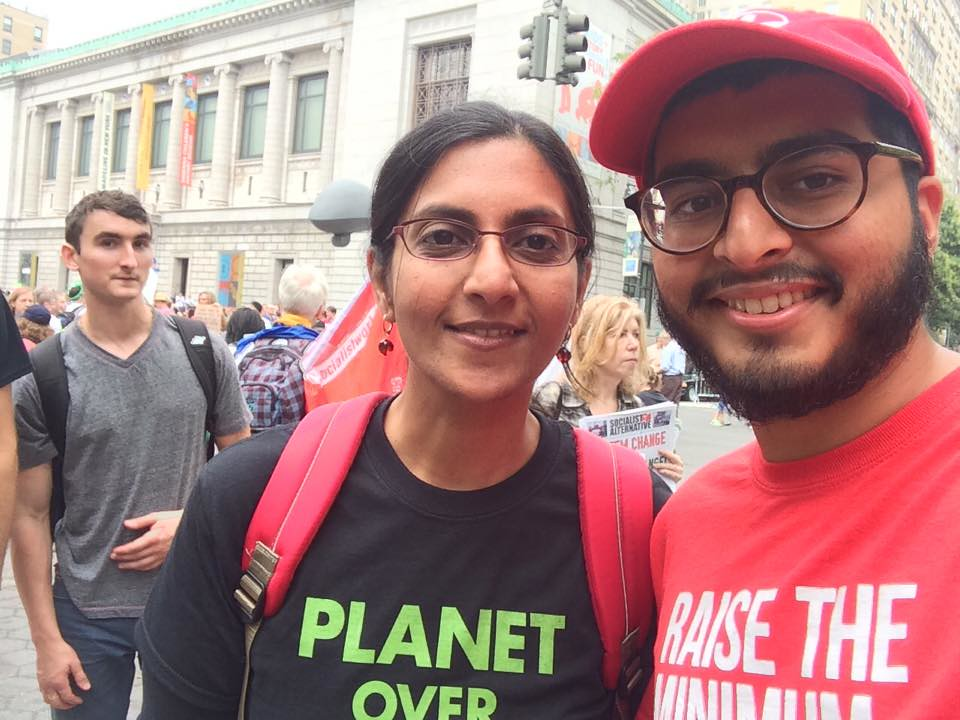
(The politician in question is former Seattle city councilor Kshama Sawant, who was elected under the banner of the Trotskyist-Socialist "Socialist Alternative" party but, in true splitter fashion, has broken away to form two new organizations -- "Workers Strike Back" and the "Revolutionary Workers" party).

Sunday, May 28, 2023

The Debate Link: Origins

This blog is called The Debate Link.

That's no accident.

I started this blog when I was eighteen, just after graduation, when debate was the activity that most defined my high school experience. It was something I did nearly every weekend for four years, travelling all across the country. I was nationally-ranked. I won tournaments at both the local and national level. I wasn't just a "debater". I was, if I do say so myself, a pretty elite debater.

This blog was in many ways a continuation of that experience, and an attempt to fill its void. Its initial tagline was "The arguments, made by and for the debating public." In fact, here's my very first post, from way back in 2004:

Hey everyone! My name is David, and I am an ex-debater from Bethesda MD. My 4 years of debate has given me a healthy appreciation of the issues that concern America, and a desire to share some of the better arguments on some those issues I've come accross during those years. So hopefully, whenever I come up with a good idea (or stumble across someone else's), I'll post it on here.

See you soon,

David

(How adorable was I? Seriously.)

It is impossible to overstate the degree to which high school debate was formative in my life. It taught me how to think. It taught me how to write. It generated friendships that persist to this day. It even, indirectly, made me realize I wanted to be a law professor. There are few facets of David Schraub 2023 that are not in some way traceable to David Schraub, high school debater.

High school debate is having a moment in the news, prompted by this article by James Fishback chronicling an alleged takeover of the events by the radical left. I want to comment on his piece and his allegations, as well as on some commentary given by Kristen Soltis Anderson, who I knew and competed against in my generation of debate.

There are few reasons to read Fishback's account with grains of salt, beyond the obvious fact that he is at the helm of an insurgent competitor to the established National Speech and Debate Association (formerly known as the National Forensics League) and so has a vested incentive in undermining it.

First, whenever I read accounts like this about craziness allegedly afflicting student-centered activities, I always ask myself "what are the students saying?" Do the actual students involved share the perception that high school debate is rotting from the inside out? Or is their view that these accounts are misleading, exaggerated, and not reflective of what's actually happening on the ground? I certainly remember from my student days how frequent it was that I'd read breathless accounts about "what was going on" at my school or in my club or on my campus that bore zero relationship to what I actually saw. Once I was no longer a student, I still tried to remember that experience -- how many times have the "adults" parachuted in to "solve" problems at schools or on campus in cases where the actual putative victims have been screaming "you are not helping!" The older I get, the harder it will be to remember that instinct, but for the moment I can still rage against the dying of the light. And to that end, it is notable that Fishback's post contains very little in the way of contemporary student commentary or support indicating that they share his view about either the gravity or ubiquity of the problems he identifies -- a failure which makes me profoundly skeptical of whether he's accurately describing the underlying reality.

Second, I also remember to beware of apocryphal anecdotes. I doubt there has ever been a generation of debaters that didn't have stories about the lurid, ridiculous, extreme-performative arguments that supposedly were winning rounds left and right. In my generation, I distinctly recall a story circulating about a debater who simply wrote "Rwanda. Rwanda. Rwanda." on the board over and over again in their first speech (on any topic) as some sort of commentary on the moral intolerability of engaging in regular debate in the face of genocide. Trading the story across the lunch table, that debater cleaned up at elite tournaments. In retrospect, I can't say I ever recall actually seeing a round that was anything like that -- and I both witnessed and participated in many elite-level debate rounds. Stories are stories.

All of that said, I can't fully accuse Fishback of nutpicking. The "Marxist-Leninist-Maoist" judge that opens his story was a collegiate debate champ, and so can't be dismissed as a complete non-entity. For recent graduates who are looking back on their competition-days, it is very, very easy to miss "having the ball in your hands"; to think on the arguments you would have made now that you're (slightly) older and (arguably) wiser, and live out that saudade for being a competitor by turning the act of judging into "what would I have argued." It's easy, but it's not good, and it takes the event away from the people who are actually competing in it. There's no such thing, in my view, as a debate where only one side is allowed to show up, and judges who functionally make that demand are toxic to the enterprise.

At the same time, the problem in debate of bad judges is an eternal one. And I have sympathy for the NSDA here, because it's actually a really difficult problem to regulate. It's unfeasible for the NSDA at a national level to actually police the judging styles and capacities of hundreds if not thousands of judges at tournaments across the country (which is one reason why the norm has shifted to disclosure -- we can't control if your judge is good, but you can at least know what their paradigm is). And for obvious reasons, the NSDA does not want to open the door to ad hoc challenges of particular judging decisions on general claims of "unfairness" -- that way lies anarchy (particularly when you're dealing with debaters, who always can come up with reasons why their losses are unfair!). In reality, much like Supreme Court ethics rules, there's probably not much that the NSDA can do other than vaguely promote norms of fairness and hope for the best.

Indeed, in many ways the problem with debate judges is not so different than the problem with Article III judges. There's little that's more frustrating than the sense that the judge in front of you has rigid ideological commitments that will prevent them from fairly assessing your arguments no matter what you do. That frustration is multiplied by the fact that, if they do act in that abusive fashion, there's little in the way of recourse -- we can't get rid of bad, biased Article III judges and, practically speaking, we can't get rid of bad, biased debate judges. The same mechanisms that ensure an independent judiciary and facilitate the orderly administration of justice by not allowing every unpopular decision to be second-guessed also provide a near-impenetrable suit of armor for hacks and incompetents alike if they do manage to get through the door. That is, to reiterate, insanely frustrating. But there's no straightforward resolution to it.

The reality is that the political demographics of both the most common participants in debate (publicly-engaged 14-18 year olds) and the most common judges of those debates (publicly-engaged 18-24 year olds) means that debate will almost inevitably slant to the left. Again, that's not something that can easily be fixed short of manually changing people's political opinions. We hold our opinions because we're persuaded by them; so it's inevitable that the arguments we tend to find persuasive are more likely to be the one's resonant with our opinions. That tendency can be checked, but it probably can't be overcome entirely. 

But to some extent, the focus on "liberal" versus "conservative" ideas in high school debate to my mind reflects a fundamental misunderstanding of what debate is -- and overlooks one of its most valuable features. 

It's natural for an outsider to think that high school debate, insofar as it touches on politically salient issues, naturally divides itself into contemporary liberal and conservative divides. If the topic is a resolution on, say, foreign aid, one participant will lay out roughly what you might hear on the subject from a Democratic Senator, the other, from a Republican House member. But, at least when I was competing, this was rarely what happened. Debate tackled issues from a multitude of different perspectives and angles that rarely, if ever, neatly tracked contemporary partisan divisions. Despite the seeming binary imposed by pro/con, affirmative/negative, the lived reality of debate transcended these narrow divisions.

And this is a good thing. The purpose of debate is not to give competitors a working understanding of and fluency in what arguments are currently circulating in the halls of Congress. Debaters are not there to parrot the arguments that one most commonly hears on CNN or Fox News. The purpose of debate is to give competitors the tools to think creatively about their own arguments, to try to make those arguments as strong as possible, and to assess and defend them against any range of potential responses. It is perhaps a sad commentary on politics that a focus on strong arguments means that the resulting product will typically have little bearing on the actual contemporary disputes over liberal versus conservative politics. But that's how it goes. Moreover, it is entirely possible to have a productive, valuable debate round where both competitors basically accept liberal, or conservative, or Marxist priors and then argue "what's the best way of doing X from within that framework?" That sort of debate also teaches people how to critically assess and defend positions, just as effectively as debate rounds that more expressly cut across classic ideological paradigms. It is far too narrow, and constrains the vision of young debaters, to try to limit them to thinking purely within the well-worn grooves of American party politics.

And that brings me, in conclusion, to some of Kristen's comments. Kristen admits that, in contrast to Fishback's presentation, it does not seem like (in her recent experience) conservative ideas have been locked out of high school debate. And even when it comes to the specific conservative bugaboo of the day -- DEI initiatives -- much of the content the NSDA is promoting is entirely reasonable and salutary. Kristen remembers judges criticizing her and other female competitors for their "shrill" or "squeaky" voices; I remember a major tournament official repeatedly and openly -- as in, when making public announcements of awards -- engaging in homophobic taunting of one of my friends (he would repeatedly mispronounce the name of the student -- who was a regular top-tier competitor and absolutely known to the organizer -- so one of the syllables in his name was spoken as "gay", when the syllable in question was pronounced "guy"). If those sorts of practices are being arrested, it's all for the better.

But Kristen is concerned about some of the things that are listed as potential examples of DEI-related debate topics (inside the NSDA website's section on inclusivity). To be clear, it seems evident that the NSDA is suggesting that tournaments include some of these topics as part of the tournament's overall package, not to exclusively draw from them. But within this subcategory, Kristen thinks that the questions possess a liberal slant -- a problem even if (as is naturally the case in a debate context) people will inevitably be encouraged to take both "pro" and "con" positions.

Reading these topics, I understand why they're thought to be coded as liberal. At the same time, for at least a good quotient of them, it makes me sad that they are coded as liberal. Consider the question "Why are there so few startups founders who identify as women in the United States?" On the one hand, I get why this question seems to be "liberal". On the other hand, why is this question coded as liberal? Can it really be the case that conservatives don't have thoughts on this matter -- or at least thoughts they're not embarassed to share? When did conservatives decide that the only thought a conservative is permitted to think on this sort of question is "don't ask it"?

The students who answer this sort of question are not, overwhelmingly, thinking in terms of "how do I slot this in to a liberal or conservative ideological frame." They're going to be thinking practically about what sorts of factors or conditions lead to disproportionately fewer women founding startups. The reason why this codes as liberal, though, is that the very act of thinking through a question like that with any degree of seriousness (i.e., not just smirking "it's because women are for making babies!") has been coded as something that only liberals do. That, to my mind, is tragic -- but that's not a DEI problem or a NSDA problem, that's a conservative problem. Conservatives absolutely should have thoughts on why there are relatively few women founding startups. They also should have thoughts on questions like "How can the federal government do more to promote Latino/a/x entrepreneurship?" and "How can the US government increase participation rates of gender minorities in STEM fields?" These are important social problems which all of us should be tackling. Perhaps those thoughts will be radically different than what liberals have to say. Perhaps they'll be surprisingly resonant (think about cross-ideological coalitions forming around YIMBY zoning reform, or relaxing occupational licensing requirements). But to the extent that even trying to work through "how can we increase the representation of underrepresented minorities" is viewed as an inherently liberal endeavor; well, I think that's a tragedy.

More broadly: the point, again, of high school debate is not to give teenagers the opportunity to parrot the shibboleths of Democratic or Republican talking heads, and so high school debate does not fail when it forces a student to develop thoughts on a question that Democratic or Republican talking heads don't have thoughts on. So ultimately, I think it's a mistake -- and not reflective of high school debate as I remember it -- to ask whether or not students are presenting "liberal" or "conservative" views on a given question. Overwhelmingly, that entire framework is a projection by adults; it is not the approach taken by the competitors, nor should it be. Institutionally-speaking, debate should be about prompting students to think about interesting questions. The answers we get rarely will fully map on to contemporary political factions -- and that's a very good thing.

Tuesday, May 02, 2023

The Intolerance of Being Unhappy When Extremists Succeed

There's an emergent line I'm seeing from the nationalist-conservative right, complaining about how, as their practical power increases, they and their ideas are no longer looked upon with the same degree of affability as when they were fringe activists chirping at the margins. Adam Mortara put it as follows after he and Jonathan Mitchell, architect of Texas' SB8 and some of the most radical anti-abortion pushes in the country, received an (allegedly) chilly reception by a liberal former mentor.*

“It was hurtful . . . and eye-opening,” Mortara said. “You’re fine when you’re just a yappy little dog that can’t bite. But, if you grow up to be a big dog that can actually do stuff, then you’re probably going to be put down.”

Justice Alito said something similar in his whine-terview in the Wall Street Journal last week -- he alleged that he's really no different than Antonin Scalia, but Scalia was tolerated by liberal elites because he was mostly in dissent. Now that Justice Alito commands a majority, things hit different.

"When you're in dissent," Justice Alito observes, "well, his ideas were amusing and interesting. He spoke at a lot of law schools and he was honored at law schools, but he wasn't a threat, because those views were not prevailing on issues that really hit home."

This line is presented as some sort of gotcha to the liberals. "Oh, you tolerated us when our ideas were basically just fascinating thought experiments, but now that we're winning it's dangerous." To which I say: yes! That's how it works! 

The whole point of liberal free speech commitments is that there is a sizeable gap between "views one is willing to consider and debate" and "views which it would be good, or even acceptable, to prevail in political life." We don't limit our consideration only to those positions which we're willing to endorse on-the-merits; which means that there is no conflict between engaging in such consideration in the abstract and being appalled when certain views actually start winning the day in "real" politics. The "gotcha" completely misunderstands the point of what liberal tolerance in the context of an abstract intellectual discussion is supposed to signify, or commit to.

For example, it is entirely plausible that one might assign, in a political theory class, works by Lenin, and consider/debate them in the classroom context. That's perfectly appropriate. But if the Leninists actually start seizing political power and instituting the purges, that would be bad! And if they said, "Oh, it was fine to debate our ideas in the classroom, but now that we're actually in charge and establishing gulags you have a problem with it," well, yeah, I do! Clearly! And I can think the same thing of compulsory pregnancy and forced childbirth. As a professor, it is important to debate these questions. But the actual political reality of it is catastrophic, and it's fine to say so.

It is not a failure of liberal tolerance to be unhappy when illiberal authoritarianism is on the march. A willingness to debate and consider these views as abstract intellectual exercises does not make said unhappiness hypocrisy. This isn't that complicated.

* Full disclosure: the mentor in question was David Strauss, who was my mentor in law school as well. I also got to know Mitchell when I was a law student, and can attest that he is a personally very pleasant person to interact with in addition to possessing a formidable intellect. Anyone who knows Professor Strauss is well aware of his commitment to nurturing and supporting law students from a range of different ideological backgrounds, and so I have no doubt he is genuine in feeling hurt that Mitchell has used his prodigious legal talents in service of dangerous, even lawless, public initiatives.

Tuesday, February 07, 2023

How Do Conservatives Explain Negative American Exceptionalism?

Over at the Washington Monthly, Keith Humphreys put up a chart comparing various countries along the axes of homicide rates and incarcerations rates.

Chart comparing various countries incarceration and homicide rates


Ideally, you'd want to be a country that has low homicide rates and low incarceration rates (Norway, Germany). Countries that have low murder rates, but get there by locking everyone up, are despotic (Iran). Countries that have low incarceration rates but high homicide rates are lawless (Mexico). And the finally, countries which throw everyone into prison but still have high crime rates are "disastrous", and of course, the U.S. of A. falls decisively into this category.

(Kevin Drum thinks violent crime rates are more useful than homicide rates for this sort of illustrations, which reshuffles some of the countries, but not in a way relevant to our purposes since the United States remains a clear disaster.)

I've long been curious how conservatives explain this sort of American exceptionalism -- metrics where America just clearly and unambiguously is far worse than nearly any other peer nation. Why, under the conservative telling, are we so bad at this compared to other countries?

Liberals don't have too much trouble with this problem -- partially because we're less wedded to chest-thumping about "greatest nation on Earth", more saliently because we have an easy explanation (guns + racism) ready to roll. But of course conservatives aren't going to be fans of that explanation. So what do they go with? It can't be "soft on crime" -- again, we're clearly "tougher on crime" than most peer nations (perhaps some "reforms" in that direction could push us into the "despotic" quadrant alongside Iran -- what a cheery thought -- but it doesn't seem to work as an argument). And I can't say I'm drawing much when I try to think about how they purport to explain this phenomenon. Do they just sit in denial of it?

Monday, November 07, 2022

Why the GOP Can't Quite Quit Kanye and Co.

It's been a month and this tweet is still up:


Why? Why, after spending countless hours railing against "Black antisemitism", is the GOP not interested in repudiating Kanye West?

At one level, the answer is obvious: As I talk about in my latest Haaretz column, the GOP has gone full Jeremy Corbyn this cycle, up to and including the antisemitism. The GOP won't condemn Kanye because the GOP is antisemitic.

At another level, the answer is still obvious: fair weather opposition to antisemitism is hardly a rare phenomenon, and the GOP has hardly shown much in the way of moral fortitude when it comes to denouncing hatred from their "side". The aforementioned "countless" hours attacking "Black antisemitism" were, as any half-awake political observer could tell you, not about genuine solidarity with Jews but a cynical way of living out the GOP's favorite hobby (trashing Black people).

But at still another level, there is something at least a little less obvious, and perhaps more provocative, that can be said. Namely: antisemitism may be a quick and easy way for the GOP to make inroads among Black voters. More than any other issue, antisemitism is a growth opportunity for the Republican Party.

Now I want to be absolutely clear: antisemitism is not a way to actually win a majority of Black voters, or anything close to it. Most Black voters are not antisemitic, most are not interested in antisemitism and are actively turned off by it.

However, the Republican Party doesn't need to win Black voters. It just needs to increase its margins from the currently abysmal levels to the merely horrible. Going from a 10% share to, say, a 25% share still objectively means they're getting absolutely crushed among Black voters -- but it also would make a huge difference in swing-y states like Georgia or Virginia.

So the operative question is not whether antisemitism is popular amongst Black voters, generally. The question is whether it is appealing to the particular tranche of Black voters who are most amenable to being picked off by GOP appeals. And there's good reason to believe the answer is yes. Or put differently: If you're a political strategist trying to flip even a few Black voters to the GOP, the small but not utterly trivial number of Black antisemites represent the lowest hanging fruit.

Kanye himself is evidence of this, of course, as is Candace Owens, recently spotted boosting far-left antisemite extraordinaire Max Blumenthal on their shared hatred of the ADL allegedly inventing contemporary antisemitism. Indeed, the dirty secret of contemporary data on antisemitism in the US is that there is a spike in minority communities -- but that spike is clustered along the most conservative tranche of the community. So it is entirely plausible that this subclass of Black voters -- likely the most natural target of conservative political appeals generally -- could be particularly attuned to emergent GOP rhetoric relying on antisemitic dogwhistles about Soros, about "globalists", about the ADL, and so on.

When one thinks about it, this isn't really anything unique to African-Americans. Similar dynamics are also playing out in Latino communities, for similar reasons. And if it weren't for the fact that White antisemites already vote overwhelmingly GOP, this strategy would work on them too (indeed, such appeals probably are part of what makes the antisemitic alt-left -- including folks like Max Blumenthal or Jimmy Dore -- at least MAGA-curious). Antisemitism appeals to conservatives, and that includes conservatives who -- for either idiosyncratic personal or communal historical reasons -- haven't voted Republican in the past. It so happens that in the Black community that there are more conservative individuals who haven't voted Republican, but the underlying dynamic is little more complex than "conservatives are attracted to antisemitism."

So this perhaps completes the answer of why the GOP can't quite quit Kanye and company. It's not just or exactly that they agree with him, or even pure partisan tribalism. Kanye is symbolic of a particular political opportunity conservatives have to win over, not the majority of Black voters or even a sizeable minority, but a large enough cohort of the most conservative group members.  Kanye represents an incredibly tempting future where the GOP again does not "win the Black vote" or come anywhere close to doing so, but does grab an additional 10% or so that might make all the difference in some crucial races. But the point is that, in terms of that opportunity's content, antisemitism is not just an unfortunate hanger-on. It is central to the appeal.

Saturday, October 01, 2022

The Counterrevolution Eats Its Own: Conservatives Turn On Yale Law Conservatives

A few years ago, I had the distinctly bizarre experience of being the target of a particularly devoted internet troll.

The interesting thing about him, though, was that he initially presented himself as an ally. He saw that I was publicly Jewish and was (at the time) a graduate student at UC-Berkeley, and was eager to hear tale of how horrible my life must be, stuck in such an antisemitic cesspool as Berkeley.

I answered honestly: my experience was mixed. There were definite problems with being Jewish at Berkeley, and I had little patience for those who denied it. I had some discomforting encounters, and I had a particularly tense relationship with my own graduate student union. But at the same time, being Jewish at Berkeley also was not nearly as bad as sometimes portrayed in the media. Berkeley is a big place, and every department is different. What happens in the anthropology department didn't necessarily travel to my home in the political science department. There were professors I had read about who had done terribly antisemitic things, but I had never met them (again, big place!). And my professors were generally quite supportive of my work on antisemitism, even when it may have clashed with some presumed progressive shibboleths. On the whole, the portrayal of Berkeley as a sort of warzone for Jews, where one could not reveal one's faith or (God forbid!) interest in Israel and antisemitism without being ripped to pieces by one's peers, was quite far from my experience; even as I could not say either that there was no fire whatsoever behind the smoke. As I said: a mixed experience.

This, I rapidly found out, was the wrong answer. My interlocutor quickly decided that the only way I could be a Jew at Berkeley and not be beaten down, miserable, and ready to flee for my life was if I was an antisemitic sympathizer myself. And so, a troll was born.

I'm reminded of this story via Josh Blackman's defense of Judge James Ho's announcement that, going forward, he will refuse to hire any Yale Law School graduates as clerks. Judge Ho objects to what he sees as Yale's indulgence of a campus protest culture which he believes has created a toxic and unproductive intellectual climate for campus conservatives. His boycott is an effort to induce and/or coerce Yale into adopting a harsher line (one wonders, if the boycott fails, will divestment and sanctions follow?).

The immediate irony, of course, is that the students most directly effected by Judge Ho's announcements are the putative victims of the campus culture he decries -- the beleaguered Yale Law conservatives. After all, the presumably liberal protesters likely were neither applying to nor would have been hired by Judge Ho even before now. And the irony goes deeper. Refusing to evaluate applicants from Yale "as individuals" and instead impute to them the sins of their broader group rests uneasily with the putative meritocratic individualism extolled by Ho and his allies. After all, isn't it precisely that form of rugged individualism that at least allegedly marks off the core of Ho's ideological disagreement with Yale liberals? Perhaps, channeling Ilya Shapiro, we might ask whether, by enacting a preemptive group-based exclusion that limits the pool of candidates to be considered, Judge Ho has ensured that the "lesser" clerks he does hire "will always have an asterisk attached" to their accomplishment (surprising no one, Shapiro has enthusiastically endorsed Ho's decision to depart from strictly individualist meritocratic consideration).

But so it goes. Perhaps these Yale conservatives, though victims, must necessarily be victimized still further for the greater good. Excluding them is a necessary sacrifice for the cause of restoring Yale's good name and academic reputation. There may be bigger values at stake here that meritocratic individualism.

Enter Blackman. Blackman does not view Yale conservatives as victims. Blackman wants them to know that they deserve what's coming to them. They deserve to be excluded, they are getting no more than their just deserts. 

How can this be? And how can it be reconciled with allegedly defending Yale Law conservatives from the predations of their peers?

The answer is simple. Blackman thinks there is one and only one reason why a conservative student would attend Yale in the year 2022: because they're prestige whores. That, to Blackman, is the singular and defining feature of a Yale conservative. And as prestige whores they can and should be punished for their failure of moral character.

That's harsh, but that's the argument. Read for yourself:

Imagine you are a senior in college. You were accepted to Yale Law School, as well as several other top-tier schools. Mazal tov! Now you have a choice. How do you choose between Yale, Harvard, Columbia, Stanford, Chicago, and Virginia? Perhaps there are financial constraints–some schools may give more aid than others. There may also be personal constraints, such as the need to be close to family. More likely than not, neither of these factors would tip in favor of Yale. I doubt that YLS gives substantially more generous financial aid packages, and New Haven is a pain to get to. Instead, I think an applicant would choose Yale over those other schools because of prestige....

Knowing how inhospitable Yale is to conservatives, why would an applicant still pick Yale over other more tolerant places? The answer, again, is prestige. And the desire to obtain that prestige trumps a commitment to values like free speech and academic openness.

How, then, should a judge assess a conservative applicant who chooses to go to Yale? This person knowingly walked into the traphouse for the sake of an elite degree. I think it is reasonable for a judge to conclude that the applicant exercised poor professional judgment. Indeed, the judge may not want to rely on someone who would sacrifice their principles for prestige. In this regard, the Judge would choose to not hire any conservative YLS graduates because they are unreliable, and maybe even untrustworthy. They have already sold out on their values to go to YLS, and will likely sell out in similar ways in the future. In this view, choosing to go to Yale, with full information, is a failure of moral character.

There are, of course, many reasons why a conservative student might elect to choose Yale over Harvard or other competitors. Perhaps there are particular professors they are eager to work with and learn from. Perhaps they are attracted to Yale's small size. Perhaps they are eager to test their beliefs inside a true bastion of liberalism (this, running in the opposite direction, was part of why liberal me decided to attend the University of Chicago, with its reputation as a conservative citadel). Or perhaps -- and I suspect this is the most unforgivable sin of all -- they do not find Yale's intellectual climate to be quite as inhospitable as it is portrayed in the sensationalist media. Perhaps they, while being conservative, disagree with the conservative orthodoxy on this subject. Perhaps they've come to a different conclusion from the "politically correct" answer, just as I came to my own conclusions about the state of life of being a Jew at Berkeley.

But just as with my assessment of Berkeley, all of these are, of course, the wrong answers. If you are a conservative and you are not fleeing Yale as fast as your legs will take you, the only explanation is you are a morally bankrupt sellout. As Blackman illustrates, there is no tolerance for deviation from the right-wing orthodoxy on this point. If you are a conservative and you do not subscribe to this orthodoxy via your continued attendance at Yale, you are a villain, you are a traitor, you are a RINO, you are an enemy of the movement, and you deserve what is coming to you. And this from the supposed allies of conservatives on campus! How quickly the alleged defenders of intellectual heterodoxy collapse back into singular, ideologically convenient explanations which can brook no departure.

We have seen how quickly alleged concern for "free speech" on campus collapses into calls for censorship, ostracization, and exclusion that dwarfs any of original sins allegedly enacted against campus speech in the first place. This is of a piece with that trend. The counterrevolution eats its own. It always has, and it always will.

Thursday, July 14, 2022

The Default Conservative Response to Inconvenient Facts is to Cry "Liar!"

Many of you have probably been following the horrific story of a ten-year old rape victim from Ohio who was forced to travel to Indiana to have an abortion following her home state's criminalization of the procedure.

No doubt some of you witnessed a collective right-wing response to the story, which was simply to declare it a lie. The Wall Street Journal editorial board called the story "too good to confirm". Ohio Rep. Jim Jordan (R) called it "another lie". National Review contributor Michael Brendan Dougherty called it a "fictive abortion and a fictive rape." Ohio Attorney General Dave Yost suggested the story was a fabrication because he hadn't heard a "whisper" about such a rape case from local law enforcement officials. It was everywhere.

Then the story was (further) confirmed, and those who called it a lie retreated with various amounts of egg on their face. Which is to say, they mostly said they were right to assume the story was made up even though it wasn't.

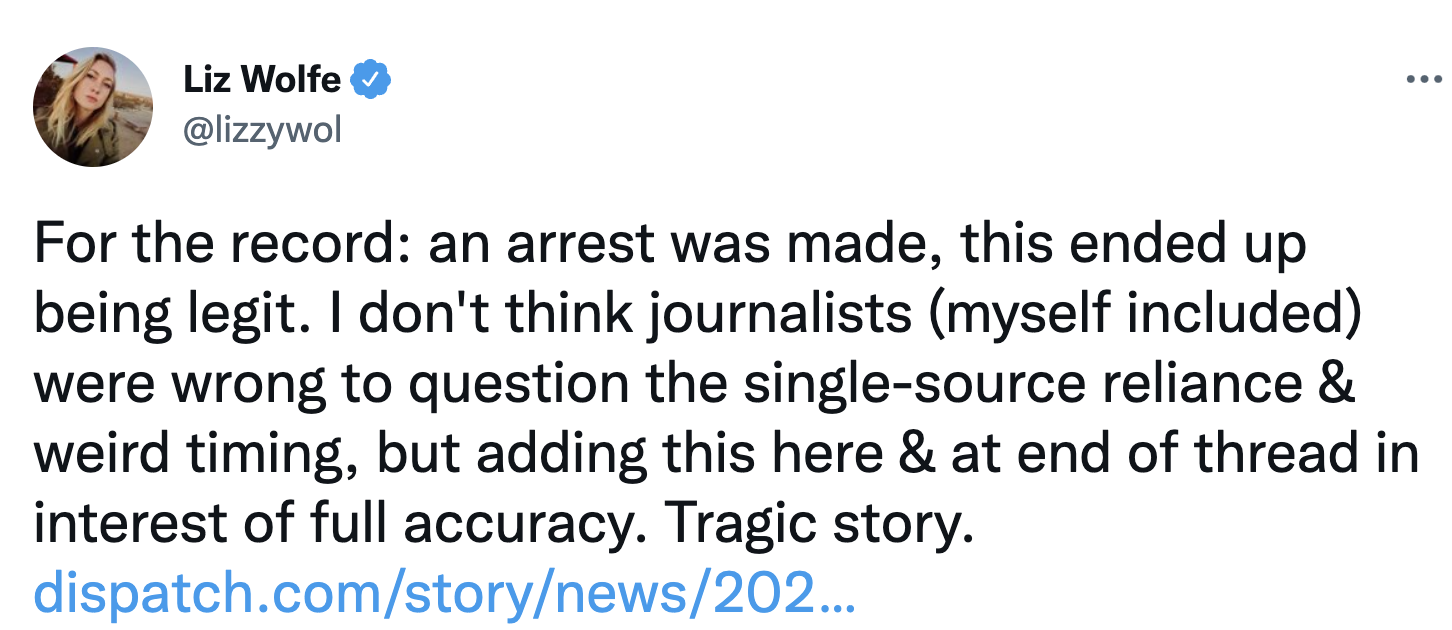
This has been the main meta-media response to the controversy: agreeing that there were "red flags" about the story such as its "weird timing" that meant we should all have taken very seriously the collective right-wing declaration that the story was a hoax, even though it turns out to have been horrifyingly true.

There were no significant "red flags" here. It is not suspicious that the Indianapolis Star did not publish the name, address, photograph, and social security number of a minor rape victim. It is not "weird" that stories of the horrible consequences of criminalizing abortion would begin to emerge shortly after abortion was criminalized. Obviously, if there is actual evidence of malfeasance or fabrication, one should look into that. But that wasn't present here.*

No, what happened here is very straightforward: A story was published that constituted an inconvenient fact for conservatives. So they declared it to be a lie. That's it. That's all that prompted the reaction. No "red flags", no "reasonable grounds to question". The story was inconvenient, and the response was to cry "liar!"

If we had to do meta-coverage of this story, that's what should have been the frame. It is, after all, the same basic instinct that motivated the cries that the 2020 election was "stolen". What prompted those cries was not any "evidence" or "suspicions" or "red flags". Biden winning was an inconvenient fact, and the default right-wing response to an inconvenient fact is to declare it a lie. Same reason why January 6 insurrectionists are declared to be "antifa". Same reason why mass shootings are alleged to be false flags. Same thing for global warming, same thing for whether Israeli soldiers shot Shireen Abu Aqleh, same thing for Trump's connections with Russia. This is not something occurring in isolation. It is a pattern of behavior, and a deeply dangerous one at that. It's always a lie, it's always "fake news".

So if the media wanted to soul-search its coverage, it should start there. What does it mean that conservatives now reflexively and instinctively declare any story that troubles their ideological waters to be a lie, and what does it mean that the media still views those cries as having credence?

This response, after all, is toxic to the proper functioning of democratic politics. Yet rather than identify it for what it is, let alone push back on it, the media aids and abets it with thumb-sucking self-abnegations agreeing "questions were raised." No they weren't! The mere fact that Republicans don't like a given fact or event or story about the world is not and should not be enough for the media to agree that its truth is up for dispute.

So that's the story I want to see. I want a deep dive into how conservatives have begun calling any inconvenient fact a lie. I want a clear and unvarnished explication of the pattern of behavior, contextualizing the most recent instance by reference to other prominent cases where they've run that same playbook. I want comments from self-reflective journalists about why these unevidenced cries of "liar" are given credence, and whether it is appropriate to continue to give credence to those cries going forward.

That's the metastory. Someone should get on it.

Oh, and for those of you wondering: now that the story has been fully confirmed, conservatives are sweeping into action ... by launching a criminal investigation of the doctor who cared for the child and proposing legislation that would criminalizing giving the child an abortion in Indiana. Because the current Republican orthodoxy is that adolescent rape victims should have to give birth or die trying.

* The closest exception I'll cop to is the Ohio Attorney General saying he hadn't heard of such a case, with the strong implication that if the case existed he would have known about it. But since it turned out there was such a case, the proper response for the media going forward is to treat Attorney General Yost as presumptively uncredible unless proven otherwise. Of course, the actual response will be to continue to treat uncorroborated declarations by Yost as rock-hard proof, while spinning in circles to explain why a doctor going on the record about an event they have first-hand knowledge about is too flimsy to take seriously.

Sunday, June 05, 2022

"Economically Liberal, Socially Conservative" Will Always Decay into Fascism

It's one of the great paradoxes of modern politics. The "economically liberal, socially conservative" quadrant of the political map, which most polls say is quite well-populated amongst voting-aged Americans, also has the least obvious political representation. Many pundits have long suggested that Democrats should try to move into this space -- retreat on "cultural war" issues while talking up bread-and-butter economic interventions that will help working Americans.

I'm skeptical this strategy will work, for one simple reason: the "economically liberal, socially conservative" quadrant is an inherently unstable position that will inevitably decay into fascism.

Terms like "economically liberal" are always kind of fuzzy, but I tend to think of it as meaning tolerance for government spending and intervention in the economic realm; as compared to the more hands-off, laissez-faire approach of economic conservativism. If you're socially liberal and committed to norms of equality and aid for the disadvantaged, that spending and intervention naturally is going to be directed towards either the public, broadly, or the least well off, specifically.

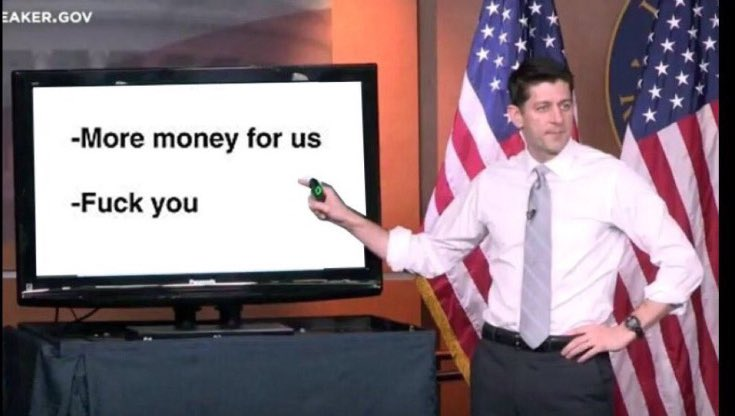
But shorn of those social liberal commitments, economic "liberalism" need not be tied to either a Rawlsian aid for the disadvantaged nor an egalitarian conception of the common good. A socially conservative economic "liberal" is perfectly happy to see government intervene to direct resources into his own pocket while leaving members of outgroups and the underclass to rot. Remember Paul Ryan's famous Obamacare replacement plan?


Yeah, it's like that. The right-wing "hur hur hur 'Nazi' stands for national socialist guess it's a left-wing ideology" was always exceptionally dumb, but the tiniest grain of truth there is that if you take "socialist" ideas of public support but violently demand they be provided solely to the favored and dominant in-groups, well, yeah, then you have a fusion of "nationalism" and "socialism". The problem is that the creeping fascism of the GOP is at best already adjacent to that position (what do you all think "America first" means?). 


The GOP does not now have, if it ever did, any commitment to free markets. That was already well known from such Republican-favored boondoggles as infinite subsidies to fossil fuel manufacturers or favored treatment for capital gains. Nowadays, Ron DeSantis more or less openly favors distributing government boons and penalties on the basis of political loyalty. The "economic liberal/social conservative" voter is probably delighted. So long as he gets his, what does he care that the distribution of government cheese is governed by corrupt criteria? If anything, that's a benefit! Democrats can't occupy this quadrant because the whole point of being economically liberal and socially conservative is that it matters to you that the economic distributions support a social hierarchy where your group is at the top and outsiders are punished for their foreign race, religion, nationality, or values, and that's a political space where Republicans will always carry an insurmountable advantage.

Monday, April 12, 2021

The National Review's Conservative Case for White Disenfranchisement

"I need to find a New Yorker so I can justify this whole pro-slavery stance I've backed myself into."

I pity The National Review sometimes. Most right-wingers these days don't feel the need to justify their positions; owning the libs is reason enough. But it is the National Review's job is to put a respectable face on contemporary conservative priorities which are in no way respectable. They try their best, but in their brave efforts they end up painting themselves into some pretty cramped ideological corners.

Take, for example, Georgia's new experiments in blatant voter suppression. This initially yielded Kevin Williamson coming flat out and asking "why not fewer voters" -- might it not be good for there to be fewer but "better" voters? Of course, few, if any, of Georgia's proposals to suppress the vote have anything to do with making the rump remaining electorate "better" -- unless, I suppose, the best voters are the ones who can stand in line for three hours without food or water without collapsing or, better still, had the wisdom not to reside in a neighborhood with such long lines to begin with. But Williamson's definition of "better" has nothing to do with being informed and everything to do with "demographically more likely to vote Republican" -- raise the voting age to thirty, not, say, tests of accurate political knowledge.* Remember when William Buckley said "I would rather be governed by the first 2,000 people in the telephone directory than by the Harvard University faculty"? Ah, the memories.

Anyway, despite widespread mockery, the conservative intelligentsia wasn't ready to let this one go without a fight. Their next gambit was to attack the entire idea of majoritarian democracy because, and I kid you not, they claim that under "pure" democracy we had Jim Crow and slavery -- two institutions  that were, shall we say, rather famously not committed to pure democratic enfranchisement. But again, even if we take the argument on its own terms, none of the proposals states like Georgia are putting forward would have done anything to check against the abuses of Jim Crow -- if anything, they'd have helped more firmly entrench it. That's obvious once one remembers that the laws Georgia is pushing today are the spiritual successor to Jim Crow, which also used tightly crafted nets of facially "neutral" laws whose mixture of known and desired disparate impacts and biased "discretionary" enforcement in order to maintain a dominant White majority electorate. If one's argument is that it's justified to limit the franchise in order to prevent a democratic (or "democratic") majority from entrenching White Supremacy, you're not making an argument for voter ID laws or for raising the voting age to 30 or for indirect elections of Senators or anything on the GOP's wishlist. The voters you'd have to stop from voting, in this hypothetical justification, are run-of-the-mill White people.

So, I wonder, is that the National Review's new position (quite a ways distant from the position they took at the time)? That the proper response to White Supremacy in the America in the 1960s (and onwards) is to systematically deprive White people of the franchise?

I'm dubious. But alas, such is the position they've backed themselves into.

* Which, to be clear, would also be a terrible and undemocratic idea. However, the reason that Williamson doesn't back it isn't because it's terrible and undemocratic, but because it's terrible and undemocratic in a way that might hurt the electoral prospects of contemporary Republicans, which is the only actual motivator here.