Showing posts with label supreme court. Show all posts

Tuesday, October 06, 2026

The Disappointment of a Man-Child

Last year, as I approached forty years old, I mused about one of the things I missed most about being a kid -- enthusiasm. Not having it, but people being responsive to it. Everybody loves when a kid is excited about something, and they'll often go out of their way to indulge in that excitement. The kid who loves flying gets a tour of a cockpit; the kid who loves cooking might get some tips from a chef. Adults don't get that. That's not wrong -- it's wholly understandable why not -- but it is something I miss.

The other day, I was reflecting on a corollary to that thought, which is as an adult, people don't typically care if you're disappointed. For example, I think the Supreme Court is doing a lousy job. Worse than that: I'm heartbroken at how they have, in my view, being downright cruel and capricious, wrecking lives in pursuit of a narrow partisan agenda. I also know that John Roberts does not care that I think that. Even if I were in a position to confront him (and I swear I was thinking about this before the NYT posted that article about John Roberts getting protested at his vacation island), he wouldn't really care. He'd think I was a schmuck. By contrast, if a child expressed disappointment, or fear, or grief -- "you made my friend's mom disappear" -- I think that would cut different. I'm not saying his heart would grow three sizes that day, but knowing that a kid sees him as their monster-under-the-bed would I bet affect him in a materially different way than knowing that I see him that way.

One of the shortfalls of modern democracy is that, even when we have (deservedly) big feelings about things, it is very hard to feel heard. We feel like we're screaming "this is hurting me", and it's impossible to get anyone to care. In the legal space, I'm more qualified and connected than 99% of Americans, and it's still impossible for me to imagine that my opinions could ever influence anyone with influence one whit. That's incredibly draining. It's also, again, largely unavoidable. This a problem that's been addressed by everyone from federalism enthusiasts to Michael Sandel's "Democracy's Discontent". But it's hard not to miss the sense that people care when you hurt.

Tuesday, August 25, 2026

The Flight 93 Court


"The Flight 93 election" was a term used by conservatives in 2016 to justify voting for Donald Trump. The basic idea was that, even though Donald Trump was essentially everything we, well, knew he was -- a racist, an idiot, a wrecker -- the absolute, desperate need to stop Hillary Clinton from being elected required action that may well be suicidal. "Charge the cockpit or you die. You may die anyway. [But] if you don’t try, death is certain."

Of course, to state the thesis is to underscore the absurdity-cum-perniciousness: the tier one emergency requiring conservatives to abandon all prudence and storm the cabin, was .... the possibility that a bog-standard Democratic politician might win the presidency. It is the prospect of ordinary democratic governance that was the emergency, and that shouldn't be forgotten. As Jamelle Bouie has noted, a running theme of contemporary conservative ideology is the belief that democratic outcomes are fundamentally illegitimate if they result in traditional White men losing. This is what unifies everything from birtherism to January 6 to the attack on mail-in ballots to great replacement theory.

In that vein, I think we might do well to start thinking of the current Supreme Court as a "Flight 93 Court". Over the past several months, it has interceded again and again -- with increasing levels of recklessness -- to sow chaos into the democratic system to the advantage of the Republican Party and the detriment of Democrats. First (well, not "first", but we'll start here) we had Callais, gutting the Voting Rights Act to enable Republican gerrymanders throughout the south and hopefully net the GOP a few more crucial House seats. Callais was followed by Milligan, and then today the Supreme Court's decision to intercede and (for now -- it's a wonky procedural posture) block a challenge to Donald Trump's efforts to sabotage mail-in voting in advance of November's election.

Aside from their obvious partisan tilt, what stands out about these decisions is their perversion of normal legal rules and processes -- blasting past the Court's own nominal guardrails to reach the preferred political result. The most obvious specific is the so-called Purcell principle, which supposedly forbids courts from issuing late-breaking alterations to the rules governing elections in close proximity to said election, but has very quickly developed the implicit caveat of "...unless doing so would benefit Republicans." But there are others. The Court's slaughtering of Humphrey's Executor -- and not just that they did it, but the way they did it; clearing the path for Trump's firings on an emergency basis notwithstanding the clear then-operative precedents that made them obviously unlawful -- spoke to a Court that is positively scrambling to let Trump consolidate as much power as possible, as fast as possible.

It is no revelation to anyone -- even someone as ideologically cocooned as John Roberts -- that these cases are obliterating the Court's legitimacy. Reforms like Court-packing, once viewed as fringe complaints from sore losers, are rapidly becoming litmus tests for any serious Democrat seeking higher office. It is almost impossible to imagine the Supreme Court surviving in its current form in the next Democratic trifecta. Last year, Justice Barrett lectured critics that "agree or disagree with the decisions that the court reaches ... we are engaged in a legal enterprise." The prevailing sentiment among liberal legal observers is to reject precisely this: that we are well past simply disagreeing with the decision the Court reaches, and into the terrain where the Supreme Court should no longer be viewed as engaging in a legal enterprise at all.

Given this cascading, calamitous drop in the Court's public esteem, what is prompting the Roberts Six to press forward? It's not commitment to legal principle -- again these cases stand out for their lack of consistent principle and their deviation from established precedential and doctrinal pathways. Rather, these cases give the unmistakable sense of a Supreme Court that is ready to do anything and everything -- no matter how reckless or lawless -- to stop the Democratic Party from taking power in 2026 and 2028. Nobody seriously thinks that the Court is announcing "law" in any meaningful sense, if by that we mean principles that will govern Democratic and Republican administrations in equal measure. The Court's rush to intercede to maximize Donald Trump's personal authority will not carry over to a Democratic administration. The Court is throwing caution to the wind because it views a Democratic political triumph as an existential threat. It is charging the cockpit, knowing it might die.

Much like the original "Flight 93" justification, we shouldn't lose sight of the fact that, for the most part, the existential emergency prompting the Court's charge is little more than the prospect of Democrats winning. I'll concede there is a slight difference in this context because of the aforementioned emergent Democratic consensus that the Supreme Court needs to be utterly transformed at the nearest possible opportunity -- but again, that is a tide of revolutionary sentiment that is entirely of their own making. A regular, modest conservative Court would not have prompted this sort of backlash (precisely because, to crib from Justice Barrett, legal professionals do know how to distinguish between outcomes they disagree with and outright judicial lawlessness).

So the Court is locked in on its path. It will endorse all of Trump's lawlessness, it will imperil democracy itself. It may kill us all in the process. But standing in the ruins of a shattered electoral system, they'll at least be able to tell themselves that they did everything they could to stop Democrats from winning.

Friday, May 15, 2026

Of Course Dobbs Didn't Completely "Return Abortion to the States"


After a brief delay, the Supreme Court stayed (over dissents from Justices Thomas and Alito) the latest Fifth Circuit gambit to try and take mifepristone off the market. There's plenty to talk about, and plenty of others will talk about it. But I did want to flag one talking point in the dissent that stood out to me for its hackishness.

Justice Alito described the Dobbs decision as having "restored the right of each State to decide how to regulate abortions within its borders." Allowing mifepristone to be sent through the mail, consequently, "undermine[s]" the Dobbs ruling insofar as it permits abortion medication to be sent to states that have sought to ban it. The immediate problem with this logic is obvious: Dobbs did not completely "return abortion to the states." Dobbs held that there was no federally-protected constitutional right to an abortion. But there could be myriad ways the federal government might pass regulations on abortion -- for example, via its power to regulate the safety and distribution of pharmaceuticals.

This point is not novel. Scott Lemieux wrote today that "making mifepristone available through telehealth 'undermines' Dobbs only if the holding was not that the Constitution was silent on abortion but that the Constitution is hostile toward abortion. Louisiana has never had any jurisdiction over the federal drug approval process."

But what I haven't seen flagged yet is just how quickly the dissenters abandon this farkakteh position that they obviously don't believe in the first place. Because you know far you'll have to look in U.S. Reporter to find a Dobbs Justice emphasizing ongoing federal authority on the subject of abortion? Approximately one page, to Justice Thomas' dissent, where he contends that the mailing of mifepristone is illegal nationwide under the Comstock Act! Whatever else one might say about that argument, it is precisely an assertion that federal law continues to have a say on abortion. Which -- of course conservatives believe! There's never been any doubt of that! Or more precisely, there's no doubt of that in circumstances where the federal government might seek to assert authority to limit abortion access, rather than protect it.

As always, the actual meaning of any Supreme Court precedent for the Court's conservatives is whatever they want it to mean, for however long it is convenient for it to carry that meaning. When the Supreme Court in Callais confirmed the continued vitality of the Allen precedent, that commitment lasted approximately two weeks. That's an anemic showing, but it is no match for the one page the ultra-right faction took to travel from insisting that Dobbs forecloses federal regulations on abortion to insisting that federal regulation already makes the distribution of abortion drugs illegal.

Monday, March 02, 2026

The Shock Has Passed, the Awe is Gone


One of the Trump administration's earliest and most vicious power abuses was its attempt to sabotage law firms who it viewed as tied to Trump's adversaries, targeting the firms with outrageous and draconian restrictions on everything from their ability to meet with federal agencies to their license to enter federal buildings. It was an existential threat to these firms' businesses if allowed to go through, and some firms, famously, caved in. 

But others fought, and won injunctions against the administration's unlawful retaliation. And today, the report is that the Trump administration is quietly dropping its appeal of those rulings. It is a victory for rule of law, and for the law firms that understood the actual demands of the moment beyond the most transient instinct for self-preservation.

The timeline of events here is instructive, offering hope and, I'd argue, a lesson. From their first week back in power, the Trump administration came out storming with a cavalcade of some of the most radical attacks on the American constitutional order that have been seen in my lifetime. It was shocking, and people and institutions were shocked. They'd never witnessed anything like this. Many were still reeling from an election they weren't expecting to lose. They didn't know how to respond. And the Trump administration exploited that shock and that awe to spend months just running over the institutional guardrails that should have existed to keep them in check. The law firm submissions were part of that story, but it was much larger than that. Media companies, universities, even the Democratic leadership was left floundering at best, trying to negotiate a panicked surrender at worst.

But now the tide is turning. Once again, the dropped initiative against the law firms is just one part of a larger story. The initial blitzkrieg is grinding to a halt. A dazed opposition has regained its footing. Resistance is mounting. Even the Supreme Court maybe is starting to recognize, just a little bit, that its constitutional role is not to act as the highest rubber stamp in the land. The shock has passed, the awe is gone. People are fighting back, and they are winning. And while nobody should expect the Trump administration to just slink away quietly (even if that's what they did do in this appeal), at the very least it's no longer a romp. They're in for a fight now, and it's a fight we can and will win.

This is not an exculpation of those who turned tail and ran. It is a praise of those who remained steadfast -- a few law firms, sure, but far more importantly ordinary American citizens in places like Minneapolis and Chicago and Portland who planted their feet and said no. Their continued faith and grit is what allowed others to rally and reestablish themselves. They are heroes. May their names ever be sung in our victory speeches.

That's the hope. Here's the lesson. The Trump administration's goals are evil. But the strategy -- of coming out the gates storming, front-loading as much aggressive policy content as possible, as fast as possible -- was a sound one. It worked. Yes, it bred backlash -- eventually. But much of the damage "accomplishments" they wrought is already well-entrenched. The lesson here is Machiavelli's, and I flagged it when the Supreme Court did something similar in loading up its most extreme right-wing agenda all at once in 2022.

[I]f you feel compelled to take certain actions that you know are unpopular, or will engender backlash -- do them all, do them early, and do them all at once.

Do not try to spread them out. Do not feel the need to pull back on some to balance the others. Do not hem and haw with baby steps. Do everything you want to do early, and immediately. The backlash will come, but the backlash won't be materially different between one outrageous thing and ten outrageous things. Spreading them out just creates new moments of fresh anger. Purported sops won't make people forgive in the moment.... Get them all out of the way in one fell swoop.

This was a lesson I argued Democrats should internalize, though it was already too late for them in 2022.

Democrats needed to do big things. Those things would be controversial. Talking them out indefinitely in a bid for a compromise that would never occur only would bleed resources (ask Barack Obama how that went with the ACA). Better to slam them through at the start. Voting rights, anti-gerrymandering, DC statehood, BBB, protecting abortion rights. Yeah, these things would be controversial. They wouldn't be any less controversial if they're spread out in drips and drabs. Do them all, do them together, weather the storm, and then spend the rest of your time consolidating your position. 

That would still be my basic advice if Democrats retake the Oval Office in 2028. By the end of the first week, I'd want to a complete pro-democracy package (including DC statehood) on the president's desk. I want to see prominent Republicans and ICE leaders who've committed crimes frog-marched in handcuffs. I want the corporate executives who approved "settlements" for Trump's frivolous lawsuits indicted for bribery. I want to see public resources and opportunities expressly redirected away from companies and firms who caved to Trump, and towards those who showed backbone, to show that there are penalties to being a quisling. I want the DOJ to announce an anti-corruption task force geared at identifying all the money stolen from the American taxpayer by the Trump family and clawing back as much of it as possible, and I want them to name and shame the Supreme Court as among the primary obstacles to providing accountability for their crimes. I want to uncover the corrupt insiders who bet on the lives of American servicemembers and have their identities blasted across every newspaper in America in advance of their trials. Do it all, do it fast, weather the storm, then consolidate your position.

Does the backlash to Trumpism discredit this strategy? I don't think so. For starters, a Democrat administration hopefully would not have the same proportion of incompetent and corrupt lickspittles undermining its progress at every turn -- it's not clear to me that the same level of backlash would emerge. Indeed, I suspect Trump's hyper-aggression was initially popular in a political climate where many people just have an inchoate desire to see some inchoate powerful "them" receive comeuppance. That instinct can be harnessed by Democrats, but, you know, without resort to random street kidnappings.

But even if there is a real backlash, again -- the brute truth is that Trump "accomplished" a lot in his shock and awe period. Those accomplishments are vicious and evil and destructive, but they're going to prove more terribly durable than they have any right to be. Democrats, too, should try to entrench big victories, even if it does generate adverse political winds. Those winds will come regardless -- that's how politics work. You might as well try to accomplish what you can -- and there's a lot that needs accomplishing.

UPDATE: Now Trump's lawyers are trying to undo their motion to dismiss. This does not undermine my assessment that the Trump war machine is sputtering to a halt.

Tuesday, September 16, 2025

First Amendment Coronado-ism


We are right now living through one of the most significant rollbacks in First Amendment law since the 1950s. To name a few examples:

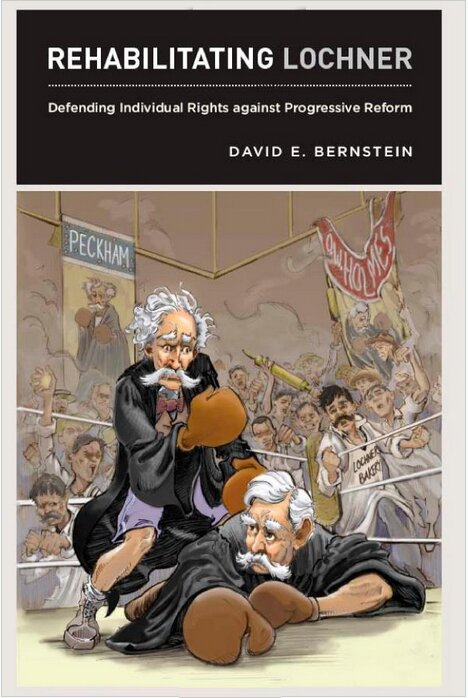
There is irony to this. Until very recently, the constitutional law zeitgeist had been to raise alarms over "First Amendment Lochner-ism" -- the use of "First Amendment" claims as a cudgel to block governmental regulations (think 303 Creative or NIFLA v. Becerra). In this telling, our problem is a First Amendment that has spiraled out of control, a hypertrophic commitment to "free speech" that swallows up anything and everything (since what law doesn't, at some level, regulate "expression"?). In a world of First Amendment Lochner-ism, "rollback" was the furthest thing from anyone's minds.

However troublesome or misguided the First Amendment Lochner cases might be, one might think that their saving grace is that their expansiveness offers a bulwark against the sort of First Amendment regression we're seeing today. Yet few -- and I include myself in this -- seem to actually have confidence that these First Amendment principles will in fact serve as a meaningful shield now in the face of these new conservative assaults. It turns out that we don't have a hyperexpansive First Amendment, we have a First Amendment that implacably guards against enforcement of liberal policy objectives while pliable to the point of contortionism in order to accommodate conservative bugaboos.

This, too, reflects the Lochner era. Lochner itself refers to the Supreme Court's finding of a "liberty of contract" implicit in the Fourteenth Amendment's due process clause, which significantly curtailed states' authority to pass economic regulation. But the Lochner era also encompasses a series of rulings that similarly hamstrung federal authority to pass economic regulation -- limits ironically justified by reference to state's rights and respect for federalism. So, for example, in United States v. E.C. Knight, the Supreme Court struck down application of the Sherman Antitrust Act to a sugar refining monopoly, concluding that manufacturing was not "commerce" and so the law impinged on an arena reserved to the states.

Already the heads-I-win-tails-you-lose logic is apparent here: the feds can't pass economic regulations because of states rights, and the states can't pass economic regulations because it violates federal constitutional limits. But the apex of this logic came in a little-known Lochner era case, Coronado Coal Co, v. United Mine Workers, where the Supreme Court considered applying the Sherman Antitrust Act's prohibition on restraints on trade against union activity targeting a coal mine. Again, E.C. Knight had already concluded that the Sherman Act was unconstitutional as applied to employers (and subsequent cases had explicitly held that mining was akin to manufacturing in not being "commerce"). As bitter a pill as that might have been to swallow for the emergent labor movement, at the very least one might think that this logic would equally prevent leveraging the Sherman Act against collective action by employees (via unions). But no -- in Coronado, the Court concluded that the Sherman Antitrust Act, though not constitutionally enforceable against mining companies or manufacturing concerns, could be enforced against labor unions. The hyperexpansive Lochner rules suddenly were quite pliable once a union tried to be their beneficiary.

So I will suggest that today we do not have a regime of First Amendment Lochner-ism. We actually have First Amendment Coronado-ism. If Lochner stands for judges blocking democratic actors via hyperexpansive interpretations of constitutional law; Coronado highlights judges dropping those barriers the instant they pose an obstacle to their own faction's policy objectives. Lochner is bad law; Coronado is simple lawlessness.

And on a professional level, it has to be said that it is nearly impossible to teach Constitutional Law in a such an environment, at least not without collapsing into complete cynicism. I can defend to my students the position that the First Amendment protects even hateful speech; I can't defend the position that the First Amendment protects hateful speech in all circumstances except quoting Charlie Kirk's own words verbatim. I can defend to my students different standards of proof for defamation cases, I can't defend a rule that says it's defamation for a newspaper to criticize a presidential candidate. These developments breed contempt in my students for the entire notion of "free speech" as it's currently operationalized, and frankly I can't blame them for it -- they see it as a sucker's bet, a check they'll never be able to cash. And as someone who does believe in many of the classic free speech shibboleths it breaks my heart to see it.

A few days ago, Justice Barrett defended herself from Justice Jackson's allegation that the Court's only governing principle was "this Administration always wins" by arguing that the Court's rulings are not about this president but all presidents, and "so the decisions that we make about executive power today are the same ones that will still be precedent three or four presidents from now." Even if they were for "all presidents", these decisions would be catastrophic. But there is ample reason to be skeptical that these decisions do in fact augur a general theory of judicial deference to the executive branch, at least when Democrats occupy the office (quoth Scott Lemieux: "don't google 'Biden v. Nebraska'!").

When Justice Barrett pretends that she's enforcing a principle accessible to all, nobody believes her, and nobody should believe her. And just as I predicted the hyperexpansive religious liberty protections would suddenly find their limits when liberal Jews try to access them, so too do I strongly suspect we're going to see a significant rollback of supposed First Amendment Lochner-ism now that it stands in the way of letting conservatives crush speech they do not like.

Monday, September 08, 2025

Reasonable Suspect


In 2016, I published an article titled "Unsuspecting" in the Boston University Law Review that explored how a constitutionally "suspect" classification (like race) might lose that status. In its conclusion, I argued that suspect classification was doing more harm than good for the groups it purportedly protected. It had become only a tool to strike down legislation that sought to achieve racial equality.

I termed this dynamic "partial racial politics". Far from representing a near per se rule against de jure wielding of race, the actual doctrine is that "government can legislate on race freely, except when it expressly seeks to combat ongoing racial inequality." "Suspect classification doctrine is a vestigial artifact that only comes into play when racial minorities appear to be winning the political game." The government relying on race to cut off Black communities from White neighborhoods, or to decide who to execute? Supposed "strict scrutiny" falls silent. Too many minority students going to college, or voting, or entering into political office? Then strict scrutiny and a commitment to radical colorblindness suddenly comes roaring back.

I wrote that article, again, in 2016, and while living in California. I presented it in Louisiana, where one bit of pushback was basically to argue that the risks of giving up suspect classification for race look different in California versus Louisiana. Just how confident was I, really, that suspect classification doctrine was no longer deterring any sort of racist legislation? Who knows what sorts of White supremacist malice would be unleashed if the "democratic" branches were unshackled once more?

Today, in a typical unreasoned shadow docket opinion, the Supreme Court (by a likely 6-3 vote) cleared the Trump administration to use racial profiling as part of its immigration enforcement raids. Racial background can validly be part of the basis for forming reasonable suspicion that a person is in the United States without legal documentation. The only Justice to write substantively in defense of this atrocity was Justice Kavanaugh, who suggested that undocumented immigrants have no legally protected interest in "evading questioning" and documented immigrants and U.S. citizens suffer no material injury because "the questioning in those circumstances is typically brief, and those individuals may promptly go free after making clear to the immigration officers that they are U.S. citizens or otherwise legally in the United States." What's a little race-based "stop and show me your papers" in the land of the free?

I look at today's decision, and I can't decide whether the conclusion to my 2016 paper was correct. On the one hand, the Court since then has grown only more aggressive in declaring an implacable commitment to colorblindness in the aforementioned circumstances of too many Black and brown people going to school or voting. The juxtaposition of those commitments, chest-thumpingly backed by an ironclad commitment to "colorblindness", against the willingness to sanction "color-consciousness" when it is deployed as a tool to terrorize immigrants (or those suspected of being immigrants, or those the government simply wants to terrorize under the guise of regulating immigration), seems to be a crystalline manifestation of the "partial racial politics" dynamic I identified in my article.

And yet, my Louisiana interlocutor's critique also feels more salient than ever before. In a 2025 where the government is not even nominally constrained from race-based policymaking, what horrors lie just beneath the surface, waiting to emerge? It somehow seems to simultaneously be true that the Supreme Court is doing nothing to stop (indeed, is the handmaiden of) the tidal wave of White supremacist fury crashing over the polity, and also that if we explicitly told the federal judiciary to butt out things could only get worse -- and worse in ways so terrifying I struggle to name them.

I don't have a resolution to this dilemma. We live in impossible times, where nakedly White Supremacist Senators align with a White Supremacist presidency and a White Supremacist Supreme Court to wage war on American constitutional liberty. Against this onslaught, what doctrine could ever hope to save us?

Wednesday, August 20, 2025

The Supreme Court Gave Us This Hell


I know, I know. That title could apply to anything.

But what I'm actually referring to is the escalatory arms race currently occurring over partisan gerrymandering.

After Donald Trump demanded mid-decade gerrymanders from Texas and Missouri in order to shore up a faltering GOP majority, California Democrats have responded by seeking to undo anti-gerrymandering provisions in their state to provide a counter, and New York may follow. Things are growing increasingly chaotic -- Texas Democrats briefly fled the state to deny the legislature a quorum, and now that they're back they're being locked inside the legislative chambers like fairy tale princess kidnapped by an evil dragon.

While those demanding Democratic unilateral disarmament are the usual useful useless idiots, it's true that nobody who cares about democracy can think this is healthy. This entire spectacle is embarrassing, and toxic, and a mockery of the electoral system. And the hell we are in can be laid entirely at the Supreme Court's feet, due to its abominable Rucho decision. 

Rucho pretended that this was an issue that could be resolved at the state level. But the falsely-modest, actually-arrogant hand-washing of the obligation to nationally police partisan gerrymandering virtually guaranteed a national race to the bottom, and that's what we're seeing now. (Also, the fact that states had proven themselves capable of constructing anti-gerrymandering rules obviously falsified the Court's plaintive whine that there could be no judicially-manageable standard governing partisan gerrymandering). Rucho also acted as if it wasn't endorsing partisan gerrymandering; this, too, was clear bullshit at the time and clearer still after the Alexander decision canonized partisan gerrymandering into a constitutional entitlement. Rucho was indefensible on every level, and I fear even the latest contretemps only scratch the surface of the disastrous impact it will have on our basic democratic structure. The horror show we're seeing in Texas and Missouri and California and New York is the natural and inevitable result of the Supreme Court's reactionary arrogance. 

But just as Rucho's democratic hell was not inevitable, neither is unaccountable Supreme Court arrogance. In Kiryas Joel v. Grumet, the Supreme Court struck down the creation of a new school district that would have tracked the borders of a largely Satmar Hasidic Jewish community. The district was created because disabled children in that community needed special education services, and the Supreme Court in a prior case (Aguilar v. Felton) struck down the practice of sending public school teachers to parochial schools to provide those services. But the Court struck down this policy as well, concluding that creating a school district that tracked the borders of a single religious community represented an illegitimate form of religious favoritism.

Justice Kennedy wrote a concurring opinion in Kiryas Joel acknowledging that the state of New York was merely trying to "free the Satmar from a predicament into which we put them." It was the Supreme Court's Aguilar decision which forced the New York to go to the lengths it did to provide adequate educational services to the Satmar. The policy struck down in Aguilar would have been preferable to the "unfortunate course" of creating a bespoke school district for the Satmar, and so the moral Justice Kennedy drew was that Aguilar needed to be revisited. Three years later, the Court would come to agree, and Aguilar would be overturned.

Whatever one thinks about the particularities of Kiryas Joel and Aguilar, Justice Kennedy's writings always struck me as having an admirable modesty to them. No doubt the Aguilar court did not anticipate how its decision would unjustly burden small religious minorities. But once Justice Kennedy saw how the Court's decisions had led to an unjust and unworkable state of affairs, and were pushing religious communities into political arrangements that were even less desirable and justifiable than the one Aguilar sought to foreclose, he acknowledged the old precedents were due for reconsideration.

The states that wish to ban gerrymandering, but which now feel compelled to engage in grotesque counter gerrymanders just to blunt the impact of their more rapacious neighbors, are also in "a predicament which [the Supreme Court] put them." It did not have to be this way, it is this way because of an ill-advised and ill-considered Supreme Court decision. A more modest and self-reflective court would grasp the lesson. It would understand that Rucho was wrong when it was decided and it is wrong now, and it would correct its error.

But we don't have a modest Court. We have a massively, massively entitled Court; one for whom it is scarcely possible to imagine admitting to even the most obvious mistakes. So we seem stuck, in a hell of their devising. At least we can be clear on the blame.

Monday, April 07, 2025

The Constitution is in Exile


One of the small mercies of the past few months is that because I'm paternity leave, I am not teaching Constitutional Law right now. Even before the election I was dreading having to incorporate Trump v. United States into my syllabus. Obviously now, things are much, much worse.

When I was in law school, conservatives spoke of teaching about "the constitution in exile" -- the true and proper legal order that for decades had been flouted and suppressed by the courts. Of course, what they meant by that was a world where Social Security was unconstitutional. But today I think it is fair to say that the constitution is, truly, in exile. 

The upper ranks of the federal judiciary is controlled by a cabal with complete and utter contempt for the most basic constitutional values that are meant to guide this nation. Lawless disappearances, dictatorial executive power, impunity for corrupt officials, sabotaging of democratic elections -- it's all here, and it's all embedding itself into the official accounts of constitutional law as recorded in U.S. Reporter. In the foreseeable future, the prospects of undoing these decisions, or even stemming further decay, feel grim. Certainly, legal arguments don't seem likely to save us.

It is tremendously, tremendously depressing to feel as if the "law" one imparts on one's students is irrelevant; that no legal argument they can make, no matter how well-warranted or justified, will make a difference in legal outcomes if the powers-that-be prefer something different. Robert Bolt once characterized the essence of law as "a causeway upon which so long as he keeps to it a citizen may walk safely." When rule of law breaks down, this causeway turns into a mirage -- the citizen (to say nothing of the visitor or resident alien) who tries to keep to it is acutely aware that it might disappear under his feet at any time. The constitution that was supposed to guarantee us the ability to walk safely is, practically speaking, no longer present. It has been exiled, replaced by an usurper.

So what does one do as a constitutional law professor? I've always believed that my primary job, albeit not my only job, is to teach my students what the law and doctrine is, as it is declared by the Supreme Court. This view of my role is not in contrast to taking a more critical perspective -- to the contrary, the point is that foundational knowledge is a prerequisite to any effective critique. One has to know what the law is, in order to know whether the law is good, right, or should remain the law at all. Those more normative conclusions are for my students to draw for themselves; but it is absolutely in my ambit to give them the resources to make those critical judgments.

That view has not changed. But going forward, it will be even more important to contextualize the law as its being articulated today in terms of other possibilities and roads not taken. The law that we have is not something inalterable or inexorable; it is a choice. There are other choices. What are the reasons behind the choices that were made? What are the arguments for making different choices? Which choices fit better inside the broader corpus of legal values and commitments that were meant to guide the American constitutional project? And if we do currently live in a legal order that lies decisively outside the proper constitutional vision, what results? 

There isn't, I think, any need to be didactic about this. The original "constitution in exile" proponents had faith that simply laying out their alternative vision of what the constitution should be would suffice to gain them acolytes. I have similar confidence that the articulating the actual constitution -- the causeway of safety meant to guard us from predatory abuses and overreach -- will earn similar loyalty. And I do not know how long it will take for this constitution to return from its exile. But one must have faith that with enough support and enough commitment from persons who retained their faith in the rule of law, it will return, and will bring its just reckoning.

Monday, March 24, 2025

Justice Jackson on "Giving Up" in the Face of Tyranny


When I teach the Steel Seizure Case, the Supreme Court's seminal decision on domestic executive power during wartime, I tell my students that while Justice Black may have written the lead opinion, it's Justice Jackson's concurrence that they really need to study. I also tell them that while being a Supreme Court Justice is more than enough to earn one's Wikipedia page, Justice Jackson has another entry in the annals of history: lead prosecutor during the Nuremberg War Crimes trials following World War II. It was evident, I say, that Justice Jackson had this experience in mind when considering the question of permitting runaway executive power justified on the basis of a wartime "emergency."

With that background in place, I draw my students' attention to how Justice Jackson concludes his opinion; in particular, his recognition of the potential futility of the judicial branch trying to stand alone against a truly unbounded executive claiming emergency powers, and why that potential failure should not license judges to simply accept the ascendance of a tyrant:

I have no illusion that any decision by this Court can keep power in the hands of Congress if it is not wise and timely in meeting its problems.... We may say that power to legislate for emergencies belongs in the hands of Congress, but only Congress itself can prevent power from slipping through its fingers.

The essence of our free Government is "leave to live by no man's leave, underneath the law"—to be governed by those impersonal forces which we call law.... The executive action we have here originates in the individual will of the President and represents an exercise of authority without law. No one, perhaps not even the President, knows the limits of the power he may seek to exert in this instance and the parties affected cannot learn the limit of their rights. We do not know today what powers over labor or property would be claimed to flow from Government possession if we should legalize it, what rights to compensation would be claimed or recognized, or on what contingency it would end. With all its defects, delays and inconveniences, men have discovered no technique for long preserving free government except that the Executive be under the law, and that the law be made by parliamentary deliberations.

Such institutions may be destined to pass away. But it is the duty of the Court to be last, not first, to give them up.

The other day, J. Michael Luttig -- former Fourth Circuit Judge and conservative darling turned sharp Trump critic -- published an essay in the New York Times insisting that Trump's war on the judiciary "won't end well for Trump." To this, Josh Blackman unsurprisingly argued the opposite, suggesting it is the courts that will lose this battle and that they should bend the knee to Trump and spare themselves the inevitable humiliation.

For my part, I don't know who will win this showdown (if a showdown there is to be). History does not inspire unalloyed confidence in either direction. 

But I do know that the courts must not surrender in advance.

Justice Jackson was right: it may be that the institutions that undergird our democratic experiment are destined to pass away. But the courts must be the last, not the first, to give them up.

Wednesday, July 03, 2024

Losing Your Chevrons


Somewhere, an environmentalist wished upon a star: "I hate big oil. It's a blight on the universe. If only Chevron would disappear forever!" and a monkey's paw curled once.

I was steeling myself to write about Loper Bright and my official welcome on behalf of the Con Law professoriate to the Admin Law professors joining the "burn all your lecture notes and start from scratch club", and then Trump v. United States came down. Even though the latter is a more immediate big deal and is closer to my expertise wheelhouse (I've fielded far more inquiries from former students asking "what is going on!" with respect to the Trump decision than any ruling in my entire career, Dobbs included), I really don't have all that much to say at this moment. That may change -- in fact, it almost certainly will, as I try to work this blog post into an essay -- but for now I'm going to lay off and just write what I planned to write about the demise of Chevron.

My short version take is this: in many, many cases, we'll see little difference between before and after. This prediction, however, should not be confused with sanguinity. Rather, it is a recognition that judges are human, with the normal assortment of human interests, talents, and vices. 

In most deep-weeds administrative law cases, where judges neither know nor care about the difference between, say, nitrogen oxide and nitrous oxide, they aren't going to actually do a deep dive review of the law from scratch. These issues are hard enough for a team of subject-matter experts with Ph.Ds in the hard sciences grinding away for months. For a judge with a J.D. from Hofstra who last took a statistics class in 11th grade? Forget about it. In practice, no matter what the doctrine purports to demand or what they claim to be doing on the opinion pages, judges will end up deferring to reasonable agency interpretations of the law unless they're howlingly off-base -- which, of course, is why we ended up with Chevron in the first place. Any objective observer of courts sees this sort of thing from judges all the time -- there are all sorts of cases where nominal "de novo" review is the furthest thing from, because judges simply find the topic boring, repetitive, or impenetrable (you can usually spot these cases by their use of the phrase "after careful review ....").

This will be what happens for many if not most cases on obscure rules in unremarkable issue areas. What will change is in those administrative rules on hot button issues of high-salience. Here, Loper Bright doesn't make judges any smarter, but does give them a green light to start substituting their judgment for expert agencies who at least have some measure of accountability to the political process. In other words, Loper Bright won't universally result in the substitution of inexpert judicial policymaking for the judgments of administrative agencies; rather, it will result in that substitution on an ad hoc and arbitrary basis whenever the judge who happens to be draw the case has an idiosyncratic or ideological hobbyhorse to ride. The administrative state will be able to carry on, with a cutaway for partisan judges to meddle more openly whenever partisan proclivities instigate an urge.

So there's your consolation about the end of Chevron. Feeling better? I thought so.

Friday, June 21, 2024

"I'm Not Owned! I'm Not Owned!" Originalists Continue To Insist as They Slowly Shrink and Transform into a Corn Cob


The Supreme Court today reversed the Fifth Circuit and upheld a federal statute prohibiting persons under domestic violence restraining orders from possessing firearms against a Second Amendment challenge. The case, United States v. Rahimi, had quickly become a tentpole example of the disaster show unleashed by the landmark Bruen decision, which tossed out the "heightened scrutiny" review uniformly used by lower courts to adjudicate Second Amendment challenges in favor of a "historical analogue" test that immediately proved almost entirely unworkable. The majority in Rahimi appears to have significantly retreated from Bruen, underscoring that Bruen does not demand a "clone" law but merely something "analogous" that existed at the time of the framing (here, the relevant analogy was "surety" laws, which required "individuals suspected of future misbehavior to post a bond").

The Court's decision was 8-1, with only Justice Thomas (the author of Bruen) dissenting. This isn't too surprising -- most legal observers thought after watching oral argument that the Fifth Circuit's opinion was destined to be reversed. The stance that the "cartoonishly violent" domestic abuser at the center of Rahimi had a Second Amendment right to remain armed and dangerous was predictably something that most of the Justices wanted to race away from as fast as possible.

But the real fun, for me, came in reading the concurring opinions. Two of them, authored by the liberal Justices Kagan and Jackson, are dedicated to making the obvious point that Bruen has been an absolute trainwreck. The conservative concurrences, by contrast, are a spectacle of chest-thumping paeons to originalism as the one true standard of constitutional jurisprudence, distinguished most essentially by the fact that it is not results-oriented and prevents judges from tailoring the outcome of cases to meet their ideological preferences.

Us legal progressives have to enjoy the small things these days, and if ever there have been clearer examples of protesting-too-much in a judicial opinion, I'm not sure I've seen it. It could not be clearer that the outcome in Rahimi dictated the reasoning. It could not be clearer that the contemporary social policy consequences are basically the entirety of what drives the otherwise arbitrary inquiry into how "analogous" is analogous enough (and, for what it's worth, such policy arguments also took center stage in the conservative arguments marshalled to strike down the law -- it's policy all the way down). The ferocity through which Justices Kavanaugh and Gorsuch in particular extol originalism's virtues in their opinions reek of desperation. Bruen was a classic instance of this Court taking a huge theoretical swing in service of an abstract political ideology and leaving the mess for later. Unfortunately for them, the mess piled up quicker than they anticipated, and now they're left in the humiliating position of having to act like the ensuing disaster wasn't one of their own making.

I will give some credit to Justice Barrett for grappling with a few of the critical questions here. She correctly notes that the historical test does not mean that contemporary legislatures are limited to "an updated model of a historical counterpart" in crafting gun legislation, because "historical regulations reveal a principle, not a mold." Within the general class of domains where there is historical evidence states were permitted to implement restrictions on the right to bear arms, the legislature should get significant deference in determining how it wants to instantiate those restrictions -- the flipside of Bruen's general admonition that policy judgments have no role to play in Second Amendment adjudication.

The other essential point Barrett makes is critiquing the assumption "that founding-era legislatures maximally exercised their power to regulate, thereby adopting a 'use it or lose it' view of legislative authority." We can group legislative action -- at the founding or at any other time -- into three broad buckets: (1) laws the legislature passed and which they believed  were constitutional (2) laws they did not pass because they thought they'd be unconstitutional, and (3) laws they did not pass, but not because they believed they were unconstitutional (one hopes the fourth category -- laws that were passed even though the legislature believed they were unconstitutional -- is close to a null set). The third category is an utterly mundane one: the legislature doesn't enact legislation for a whole host of reasons, the vast majority of which have nothing to do with any constitutional worries -- anything from "we think this is bad policy" to "we didn't consider this at all". 

Unless we think that founding-era Americans enacted every single possible gun law that they thought was constitutionally-permissible -- legislating to the utmost limits of their constitutional authority -- there will be entries in both the second and third categories. But to modern eyes, these two buckets will be largely observationally equivalent -- the lack of a historical precedent could mean that laws of this sort were thought to be unconstitutional, or they could mean they weren't passed for the myriad range of other reasons laws don't get passed. Bruen basically papers over this problem by pretending the last bucket doesn't exist, but in doing so it curb-stomps its own historical test. As for me, I don't have a good answer regarding how to disaggregate the two buckets, but doing so is essential to actually applying the historical test Bruen purports to impose. I'll give one cheer to Justice Barrett for at least recognizing the problem, but I suspect that this is yet another reason why Bruen's nebulous and vexing character is going to be intractable and will remain how it's begun: an incoherent mess of law office history cloaking bog-standard ideological policy judgments.

Thursday, May 23, 2024

Gerrymandering as Constitutional Entitlement


I haven't had the chance to read the Supreme Court's decision today in Alexander v. South Carolina, where the 6-3 Republican majority radically circumscribed the ability to bring racial gerrymandering claims in circumstances where (as often will be the case) there is significant overlap between racial and partisan gerrymandering. I was struck, however, by Nicholas Stephanopolous' analysis which suggests the Court's new rule is functionally that a racial gerrymandering plaintiff must "submit an alternative map showing how the state could maintain its plan’s current partisan balance while fixing the alleged racial gerrymandering," In other words, if an alleged racial gerrymander results in a 6-1 GOP/Democratic House map, plaintiffs must show that there is an non-racially gerrymandered map that also yields that same partisan split.

Alexander is the latest case to emerge out of the gibberish that is Rucho, and the impossibility of disentangling racial gerrymandering (nominally unconstitutional) from partisan gerrymandering (effectively permissible) under conditions of extreme racial polarization. Where there is near-complete overlap between "Black voters" and "Democratic voters", how does one decide if a congressional map which packs all the Black/Democratic voters into a single misshapen district is a "racial" or a "partisan" gerrymander? 

The logic behind the majority position in Alexander is that if one can't create a map that yields the same partisan end goal as the map being challenged, that suggests that the status quo map was chosen not for racial reasons, but rather because it better effectuated the goal of partisan gerrymandering that would otherwise be impossible to achieve. "We didn't draw the districts this way because it drew all the Black voters into a single district; we drew them this way because it was the only way to get the desired political slant."

But this gets things exactly backwards. Even assuming that partisan gerrymandering is constitutional (and it's worth noting that technically, Rucho doesn't say that -- it says it is a political gerrymandering claims are non-justiciable political questions, which is not the same thing), it is not a constitutional requirement that states must be allowed to do it under any circumstance. The more natural conclusion is that if you can't successfully engage in a partisan gerrymander without engaging in racial gerrymandering, then sorry, you don't get to partisan gerrymander (or at least don't get to do so to the same extent). The rule against racial gerrymandering places a limit on the ability to partisan gerrymander.

The majority's rule, by contrast, treats partisan gerrymandering as a constitutional entitlement. Any constitutional rule or principle which disenables a state from engaging in partisan gerrymandering to the fullest extent it desires must yield. Otherwise clearly impermissible and unconstitutional conduct becomes licit if it is the only way a state can implement its God-given right to gerrymander.

This is not the first time the Court has made this mistake. I flagged a similar error in the Court's Glossip opinion relating to Eighth Amendment challenges to state execution protocols. The Court there said that a prisoner challenging an execution protocol as cruel and unusual punishment cannot prevail simply by showing that the state's procedure is barbarous or tantamount to torture. The prisoner must also identify a valid execution protocol, accessible to the state, that he would deem permissible. What happens if there is no such protocol -- if all the methodologies available to the state would be agonizingly painful? The logic of Glossip is that in that case, the state is allowed to torture prisoners to death, because the state simply has to be allowed to execute people.

In both cases, the Court is making a basic mistake, conflating constitutional permissibility with constitutional entitlement. It's obvious when you think about it. The state is permitted to try and solve crimes. The state is not allowed to violate the Fourth Amendment, even if doing so would allow it to solve more crimes than if the Fourth Amendment was not enforced. If the state said that, for every claimed Fourth Amendment violation, a defendant must provide an alternative policing protocol that would allow it to solve as many crimes as if it were permitted to violate the Fourth Amendment freely, and if he can't, then the Fourth Amendment can't be enforced, that would be absurd. The Fourth Amendment places a limit on the ability of the state to solve crimes.

So too here. It might (for sake of argument) be true that capital punishment or partisan gerrymandering are not unconstitutional in the abstract. But that does not imply that in practice there must be a constitutionally-viable pathway to do either of these things. If the state can't figure out a way to conduct an execution that doesn't torture people to death, then it can't execute people. If the state can't figure out a way to partisan gerrymander without engaging in a racial gerrymander, then it doesn't get to do the racial gerrymander. That should be simple. But the Court has elevated the already dubious position that the state is permitted to engage in partisan gerrymandering, or the (somewhat less dubious) position that the state is permitted to provide for capital punishment, and converted these practices into constitutional entitlements. That's not reflective of law; that's reflective of the Court's fanatical dedication to these sorts of policies compelling it to erase the law.

Monday, March 18, 2024

Art Maven Roundup

All of the sudden, I've been on an art kick. The below image is a silkscreen I recently purchased from DC-based artist Halim Flowers. Flowers was convicted of felony murder as a juvenile and sentenced to two life terms. He was released after serving 22 years following statutory reforms aimed a juvenile offenders who had received life sentences, and now is showing in galleries around the world.


Pictured: "Audacity to Love (IP) (Blue)" by Halim Flowers. The colors are meant to be reminiscent of the Israeli and Palestinian flags (blue and white, and red, white, and green).

* * *

Trump continues to show his contempt for American Jews, saying any Jew who doesn't support him "hates their religion" (and Israel).

An in-depth story about a White supremacist who was elected to city council in Enid, Oklahoma, and the recall campaign to try and remove him.

Given the well-covered softness in Biden's support in the Muslim community, it seems suicidal to me for Democrats to give into the repulsive Islamophobic attacks holding up the confirmation of Third Circuit Court of Appeals nominee Adeel Mangi (the story indicates that Biden has remained rock-solid in backing his confirmation, but there may be some misgivings in the Senate Democratic caucus).

Writing on the sudden "heterodox" support for revisionist accounts justifying George Floyd's murder, Radley Balko flags what has been obvious for a long time: as much as this cadre likes to bleat about respecting truth, free-thinking, and rationality, it is as if not more beholden to ideologically-convenient narratives at the expense of reality. Pretty much everyone on the internet has been sharing this with their own story of the alt-center blowing past truth in order to push conservative grievance politics; mine was watching them stand in unblinking support of a hit piece on California's Model Ethnic Studies Curriculum even after it was revealed the author completely fabricated the inclusion of a seemingly-damning antisemitic quote.

Interesting retrospective on the Israeli Black Panthers in JTA.

The Supreme Court's frosty reception to the contention that government officials privately lobbying social media companies to take down misinformation is a First Amendment violation is the latest suggestion that the Court is finally losing patience with the regular drumbeat of insane legal theories emanating out of hyper-conservative Fifth Circuit.

Monday, March 04, 2024

The Work of Law


The Supreme Court this morning ruled in Trump v. Anderson that states cannot enforce the insurrection provisions of Section 3 of the Fourteenth Amendment against federal office-seekers. This part of the decision was 9-0,* and it rested largely on pragmatic grounds: state-by-state "enforcement" of Section 3 might lead to a patchwork of inconsistent state rulings and procedures, which would "sever the direct link that the Framers found so critical between the National Government and the people of the United States" and "could dramatically change the behavior of voters, parties, and States across the country, in different ways and at different times."

This pragmatic argument has purchase to it. This sort of "patchwork" was raised by many esteemed commentators, from all across the political spectrum. Many worried, for instance, that if Colorado was allowed to unilaterally disqualify Trump from the presidential ballot, then, say, Texas might do the same to Biden in response -- a tit-for-tat escalation that would throw the presidential election system into chaos.

To be sure, there also are certainly pragmatic arguments that push in the other direction. There is the practical need to ensure that Section 3 of the Fourteenth Amendment is actually enforced, for instance. There's also the fact that our federal system already bakes in a patchwork system of state regulation over federal elections that leads to a host of manifest inconsistencies -- that may be a bad idea, but it's one we've long accepted and will continue to accept in other contexts after this decision. And the worry about retaliatory red state action boils down to "if Colorado disqualifies Trump based on a legally plausible rationale, Texas might do so for transparently spurious and bad faith reasons." Given the state of the modern GOP, this possibility cannot be gainsaid entirely, but it is pathetic that we've even come to that point.

In any event, I digress. The main point I wanted to flag is that the Court rests its decision not so much on "originalism" or "textualism" but based on a practical assessment of what is necessary to ensure the workability of our presidential electoral process. As a pragmatist, I cannot complain about that approach -- except that it is an approach the Court only takes when it is convenient. In a year or so when we get our next Dobbs or Bruen, we will again no doubt see the Court solemnly intone that we must interpret the text of the constitution strictly in accord with the original meaning of the framers, consequences be damned (that's "results-oriented judging"!), and it will be revealed (even more than it already was) as a transparent lie. Beyond the merits of formalism versus pragmatism, it is the cheerful oscillation between the two based on the needs of the moment that reveal the fundamental arbitrariness of the governing Supreme Court majority (my fantasy is that just once we get a dissent that opens with, "the majority begins, as it must occasionally deigns to do, with the constitutional text...." and then but see cite all the cases where this Court has blitzed past the text to reach a "practical" result).

"The work of law," Justice O'Connor famously advised, "is to make the law work." I've long liked that approach. But when the work of law is revealed to be a work, not a shoot, there's little reason to trust judicial decisions that purport to rest either on workability or strict formalism.

* The Court also held, 5-4, that only Congress (not the judiciary) can effectuate the enforcement of Section 3 of the Fourteenth Amendment, based on the view that Section 5 of the Fourteenth Amendment renders this exclusively a congressional prerogative. I don't have much to say on this, except to note that I just finished teaching Section 5 doctrine in my Constitutional Law class last week and my notes contain a line about how "one view of the meaning of Section 5 is that only Congress can 'enforce' the Fourteenth Amendment; courts have to stay out. But nobody seems to take that extreme view ...." Certainly, this robust and exclusive understanding of congressional power would be news to the Congress that saw the Voting Rights Act struck down by the Supreme Court because Congress' textual Section 5 authority needed to yield to the judiciary's invented and atextual "equal sovereignty of the states" doctrine.

Wednesday, November 22, 2023

Bruen Does Not Care About Your Due Process Rights


The landmark Bruen decision inaugurated a lot of chaos in the field of Second Amendment jurisprudence, but perhaps no follow-up case caught the public's eye quite like the 5th Circuit's ruling striking down prohibitions on persons under domestic violence restraining orders from possessing guns. I characterized that ruling (United States v. Rahimi) as "(a) insane and (b) absolutely defensible under the Supreme Court's Bruen decision," but I also flagged it as a potential candidate for Supreme Court reversal. The Supreme Court did grant cert in Rahimi, and the consensus amongst legal observers following oral argument is that the Fifth Circuit's opinion is toast.

One last ditch argument we're seeing by pro-gun zealots to try and avert this outcome is to frame Rahimi as a defendant's rights issue. Fifth Circuit Judge James Ho, in an opinion Chris Geidner characterized as a "judicial version of a post-argument supplemental filing," appealed to this principle -- citing a bevy of criminal law due process cases which protected the rights of even violent offenders and concluding that "if government must turn 'square corners' when it comes to the removal of illegal aliens, surely it must do the same when it comes to the basic rights of our own citizens." Josh Blackman made a similar argument, contending that it will be difficult to write an opinion in Rahimi that upholds the law in question that doesn't similarly pare back other rights of those accused of violent crimes.

Let's start by making one thing clear. Blackman states that "the reason why the Court may 'clarify' Bruen [in Rahimi] is because certain members of the Court don't like the results that it yields." I agree. As I wrote shortly after the Fifth Circuit's decision came down:

[I]f the Supreme Court reverses [Rahimi] -- and they might -- their reasoning will almost certainly purport to be based on some alternate assessment and reading of the historical sources. But this will be a naked smokescreen, and everyone will know it. If the Court reverses the Fifth Circuit here, it will be entirely and solely because the Court finds it too unreasonable and intolerable to permit domestic abusers free reign to carry arms -- a contemporary policy judgment anyway you look at it, no matter how much effort is or isn't expended to cloak it in some faux-historical garb. None of these judges abide by the rules they purport to lay out.

But while I agree that the results-tail will be wagging the doctrinal-dog, the "defendant's rights" argument is not a bulwark against the sort of reasoning. Rather, it is itself a form of results-oriented reasoning that Bruen -- if applied "faithfully" (and again, quotation marks because nobody is even trying to apply it "faithfully") -- expressly disclaims the legitimacy of. Put differently, to the extent Rahimi tries to present itself as faithful to Bruen, the "defendant's rights" argument is incredibly easy to dispense with. Blackman and Ho's position, by contrast, only works if one assumes Bruen does not mean what it says -- or, as I've put it, that Bruen is a one-way ratchet where social policy arguments in fact are permissible ... but only if they stand in support of a pro-gun position.

Let's review what the Bruen rule is. It's quite straightforward: where the "plain" language of the Second Amendment covers given conduct, government regulation of said conduct will only be upheld if it is consistent with the framing-era history of gun regulation. That's the alpha and the omega. No weighing of social policy consequences is permitted, period.

This approach generally has been conceptualized as a means of striking down even laws about guns that seem eminently sensible -- if they lack the relevant historical analogue, they're unconstitutional no matter how salutary they might seem. But in concept, what's good for the goose is good for the gander: a law about guns that seems arbitrary and unfair, but which does have relevant historical analogues, must be upheld no matter how ridiculous it might seem.

Suppose it turned out that there were in many states at the founding era laws that permitted anyone with a last name starting with "M" to be disarmed at the discretion of the state governor. For purposes of this hypothetical it doesn't matter why these laws were passed, and we can all agree that would be a tremendously silly and unfair law. Nonetheless, if a state today passed an identical law, under Bruen it should be upheld: the only question we're allowed to consider is "is there a historical analogue," and by stipulation there is one here. Engaging in the abstract moral theorizing about whether this law is "fair" -- no matter how obvious the answer might seem in this case -- is exactly what Bruen says courts are not allowed to do.

Similarly, suppose we had in Rahimi something that Justice Thomas in Bruen expressly denied was necessary: a "clone" law -- at the founding, there were regularly laws exactly like the federal law at issue in Rahimi throughout the states. In such a circumstance, even Ho and Blackman would have to concede (I think?) that Bruen would compel the federal law in Rahimi to be upheld, and that the "defendant's rights" argument would not enter into it. The law has a historical analogue, and so the discussion ends. That's what Bruen demands.

Of course, there was not a "clone" law at the framing to the federal prohibition on gun possession by persons under domestic violence restraining orders. So the nominal question in Rahimi is whether the laws that did exist are sufficiently analogically comparable to the federal law at issue so as to validate the latter. But that analysis, too, is completely unconcerned with any alleged unfairness to prospective criminal defendants. Either the historical analogues are sufficiently comparable, or they're not. If they are, then it doesn't matter that the results might seem unfair to potential criminal defendants any more than it matters if the results (pointing the other way) might seem unfair to domestic violence victims, or for that matter if the results seem unfair to persons whose last names start with "M". In all cases, Bruen demands we be studiously indifferent to this unfairness.

Bruen, in short, does not care about due process rights. Or put slightly differently, Bruen says that the only process anyone disarmed by the government is "due" is a determination about whether the disarmament is sufficiently analogous to practices that existed at the founding. If it is, then you can be disarmed. If it isn't, then you can't. No other consideration of "fairness" comes into play. 

It is in fact a misapprehension to say that the reason Rahimi could be disarmed consistent with Bruen is because "we're willing to reduce constitutional protections for prospective criminal defendants." If Rahimi can be disarmed, it isn't because he's a prospective criminal defendant, it's because he falls into a category of persons sufficiently analogous to persons who were deemed to be disarmable at the time of the framing. For this reason, a reversal in Rahimi poses no threat to other criminal defendant rights precedents, because in no other domain are constitutional rights treated in this absurdly reductive fashion (here we really see the lie that Bruen was about treating the Second Amendment "the same as" other constitutional rights; no other constitutional domain has a doctrine that's anything close to what Bruen proposes).

In short, all an opinion reversing the Fifth Circuit in Rahimi has to do to "contain" its ruling is state its conclusions in the terms Bruen prescribes: that the historical analogues to the challenged federal law are sufficiently comparable so as to render the latter constitutional. Once it does that, it need not and under Bruen should and cannot say a word about whether this outcome is "fair" or not to people who could prospectively be charged with a crime.

To be clear one more time: even if this is the approach the Supreme Court takes in reversing the Fifth Circuit, it will be a lie. We'll all know that the actual reason behind the Court's decision will be policy squeamishness towards the outcome. But we also know -- already knew, but Ho and Blackman helpfully confirmed it -- that a contrary ruling (or a dissent) will also be driven in part by social policy considerations and abstract arguments about fairness. Even Bruen's putative defenders don't actually take its strictures seriously, which is one more reason why the decision deserves nothing but scorn.

Tuesday, September 19, 2023

ACS Oversights and the Unconstrained Court


In the Atlantic, Caroline Frederickson, until recently head of the American Constitution Society, proffers a "mea culpa" for the ACS generally not during her tenure focusing on economic issues. Over at PrawfsBlawg, Paul Horwitz ventures several guesses as to what caused this longstanding oversight in the ACS' prioritization.

Without challenging any of Horwitz's explanations, all of which are plausible, I'll offer one more: the ACS, like most liberal legal institutions of its era, focused on issue areas where the judiciary would intervene to stop bad actions by other branches of government. On gay marriage, for example, the liberal focus was on judges striking down legislative prohibitions on same-sex marriage. On policing the goal was for judges to hold accountable instances of officer brutality and abuse. On gerrymandering the idea was for judges to invalidate imbalanced or unfair maps. In all of these cases, courts are in an antagonistic posture to other facets of the government and intervene to in some thwart or ameliorate some policy or practice implemented by another branch.

From this vantage, "economic issues" would not have been seen as a natural fit for an organization like ACS. From a template of judicial intervention against other branches, liberals still labor under the ghost of Lochner which holds that judicial overrides of democratic decision-making in the economic realm, in particular, is the sine qua non of illegitimate judicial activism.

Of course, in many cases the liberal desire out of judges in these economic realms (like competition policy and anti-trust) is for judges to stay out of the way and let the democratic or administrative branches do their thing. But here a different bias or blindspot of groups like the ACS emerges: the assumption that liberals don't need to urge the courts towards judicial restraint. Even as the conservative takeover of the judiciary marched along, liberals tended to react to it with dismay that courts might not intervene in areas where liberals believed they should. They wouldn't strike down gay marriage bans, they wouldn't curb abuses of post-9/11 surveillance, they wouldn't combat partisan gerrymandering. Some of these concerns proved prescient, others didn't pan out. But the framing was still in terms of seeking judicial intervention. Restraint was taken for granted.

It took a long time for liberals to fully grok the threat of judicial conservatism not manifesting as too much restraint, but of a complete lack of restraint -- a counter-activism. There were plenty of warning signs that liberals should be worried. But old habits die hard. For example, surely one of the most important liberal legal victories of the past two decades was the Supreme Court upholding Obamacare. Yet Frederickson did not say, and I think most legal liberals still would not say, that one of ACS' priorities either is or should have been "health care". In terms of judicial intervention, health care is seen as an inappropriate, Lochner-esque subject. And in terms of judicial restraint, well, liberals took judicial restraint for granted.

Now, finally, this ingrained presumption is cracking. We are in an era where the conservative judiciary's primary sin is not at all taking restraint too far, but its indulgence in wild interventionist non-constraint. In this epoch, where Chevron and the entire administrative state are under siege, where First Amendment Lochner-ism is roaring back to life, it becomes absolutely essential for liberals to reassert boundaries on judicial arrogance. And so now there is a lot of room for a group like ACS to make economic policy a priority. Today, efforts to shore up the vitality of administrative bodies seeking to police the economic realm isn't a redundancy, but a dire necessity.

When I first started teaching constitutional law, I spent a lot of time trying to pour some cold water on my liberal students' Warren Court idealism and have them consider the risks of judicial activism and the virtues of democratic deference. This was not so much because I was especially inclined towards judicial restraint or minimalism, but rather because the entire concept that courts shouldn't be vanguards of social change was effectively alien to the average student such that the only way I could give them anything new was by trying to at least partially counterbalance the narrative. In 2023, it has become less necessary for me to explain the perils of unconstrained judicial intervention and the dangers of an activist court; now, to some extent, the counterintuitive pitch I have to make sometimes is to explain why and how courts can still be useful forces for good in the world.* But the point is that the conventional wisdom amongst liberals is finally stopped viewing restraint and democratic deference as something they are entitled to on demand. In a world of rampant conservative judicial activism, there is a lot more space for legal liberals to pay attention to the economic realm. 

* Though I will say that I'm surprised, in a world where Brett Kavanaugh is the median SCOTUS vote, just how resilient my students' faith in judicial interventionism remains.