Showing posts with label Michigan. Show all posts

Wednesday, March 18, 2026

Grieving Alone (But Not Entirely Alone) After Michigan


You might recall my post after the attempted synagogue massacre in Michigan, where I wrote that I had basically become numb to such attacks. Even though my baby attends a preschool program very similar to the one that was in session at Temple Israel, I realized that I had mentally "priced in" the possibility of such an assault. It didn't shock me; it barely affected me. I already knew things like that might happen.

There is a common line one hears from more humanitarian-inclined anti-Zionists, condemning attacks like we saw in Michigan on the grounds that they make the Zionist's point (that Jews will never be safe in the diaspora, that our only hope for security lies in an armed fortress of our own). Antisemitism hurts the Palestinian cause. I've always hated this line. For starters, I'm dubious of its truth as an empirical matter. The antisemites, after all, posit that antisemitic terrorism will not harden Jewish resolve, it will cow Jews into submission. Are they wrong? That's an empirical question, not an article of faith. More broadly, antisemitism is one of the most powerful tools of social mobilization the world has ever seen. It is not only not implausible that antisemitism might help those social movements which can successfully harness it, it would be weird if it didn't. The real question is whether anti-Zionists will oppose antisemitism even where it helps their cause. The jury is still out there.

But the more I think about it, the more I think this entire framing -- that antisemitic attacks in the diaspora are what push diaspora Jews to cleave to Zionism -- is slightly off-kilter. For me at least, it is not the attack itself that causes that sort of recoil. It's the response of the public to the attack.

Like a 10/7 in miniature, most people responded to the Michigan assault exactly appropriately -- with horror, grief, and condemnation. Good, and it's good not to overlook the fact that the humane majority was humane. 

But there was a small but vocal slice of individuals, often self-styled pro-Palestinian "progressives", who were insistent that the synagogue was a fair and justified target. And then there was another small but somewhat larger slice of individuals who bent over to explain why the first slice could not be called antisemitic -- uncouth, emotional, un-PC, anything but antisemitic -- and were in fact the primary victims of a smear machine which had the temerity to use the dread slur "antisemitic".

Far more than the attack itself, that's the response that makes me despair. I can accept (maybe I shouldn't accept, but I do) that bad things might happen to me as a Jew. But it is a horribly alienating sensation to feel certain that, if something bad did happen to me, a large chunk of political energy will be dedicated to explaining why I had it coming, to poring over my social media feeds to find "evidence" that I'm one of the bad ones, and to being aghast and appalled that anyone would be so gauche as to find any of this antisemitic.

The anti-Zionist counterproposal to policing and militarism and wall-building as a response to antisemitism is "safety through solidarity". Yet it is ironic that in spite of this rhetorical commitment, solidarity is the last thing they extend. Josh Yunis had a provocative post the other day, where he observed the following:
Antizionists (including antizionist Jews) like to observe – with a feigned helplessness, as if observing a passing cloud – the “inevitable” correlation between increased antisemitism in the diaspora and the actions of the state of Israel. But if we lived in a world in which antizionists were successfully making the case for their worldview, anti-Jewish hatred would decrease or remain steady in spite of Israel’s actions abroad. Antizionists would be springing into action, forming protective rings around synagogues and organizing multi-faith solidarity rallies after each new anti-Jewish atrocity, in which they proclaim that “in spite of our strong, even visceral disagreement on Israel, we want Jews of all kinds, regardless of their views on Israel and Palestine, to know that they are welcome in our communities.” (Surely by now, they’ve had enough time to internalize this lesson and organize such efforts.)
And yet: when was the last time you saw a self-identified antizionist show up at a vandalized kosher restaurant to help clean up its windows, broken in the name of a Free Palestine? Or clean the swastika graffiti off the wall of a synagogue? What we get instead from this camp is the usual dissembling, in which defenders of anti-Jewish harassment rifle through the dumpster for some kind of receipt that indicts this Jew and that Jew for having failed to sufficiently distance themselves from Israeli crimes.
The most compelling antizionist argument imaginable would be to point at the news and tell Jews, “see, even when Israel does horrific things, you are safe here.” But of course, the reverse has happened. It’s one thing for the movement to be doing the valiant work of trying to keep Jews safe, albeit unsuccessfully; it’s another entirely to not even try. Each new retreat to the same old talking point about the regrettable, but inevitable correlation between Israeli policy and antisemitism is itself evidence of a movement that isn’t really interested in trying. On the contrary, each new instance of anti-Jewish violence is trotted out not as a pained expression of their movement’s failures, of the need to do better – of asking “where did we go wrong?” (such hand-wringing questions are de rigueur for leftist Jews when it comes to Zionism) – but as a barely-veiled threat: here’s what happens when you don’t distance yourself from Israel – and you can expect a lot more of where that came from.
That possibility Yunis alludes to, of unconditional love and support, stands out because it is simultaneously so obvious and so fanciful. Of course one could do that. And of course it's actually the opposite happening. The energy here isn't actually around promoting solidarity, it's around justifying abandonment -- here's why you should shun synagogues, here's why you must expel Jewish organizations, here's why the Israeli food truck must be kicked out, here's why the Jewish lesbians can't march with us. The fact that I cannot even imagine any of these people "showing up at a vandalized kosher restaurant to help clean up its windows" -- that is what feeds the sense that the diaspora will never be there for us.

One of the first bad October 7 takes I responded to -- less than a week after the attack -- was a truly wretched essay by Gabriel Winant urging progressives not to grieve the Jews slaughtered by Hamas. Winant's argument was not exactly "these were settlers and colonizers and so had it coming." It was rather that grief over dead Israeli Jews is the fuel for Israel's genocidal machine, so we must resist our humanist impulses lest we feed the beast. My basic critique of the argument was that it was terrible causal inference -- the Israeli response to October 7 would not materially change by whether the broader world grieved or didn't grieve, so one might as well do the humanist thing and grieve. But I also wrote:
If there is even the slightest truth in Winant's framework, it is not that Israel transmutes grief into power. It's that Israel transmutes grieving alone into power. The impetus behind Zionism -- I've been in enough of these conversations to speak confidently here -- is not (just) that bad, dreadful things happen to Jews. It's that bad, dreadful things happen to Jews and Jews are the only ones who will ever care. The only people who will grieve dead Jews are Jews; the only people who will rally to the defense of threatened Jews are Jews; the only people who will feel empathy (or anything at all, really) towards frightened or traumatized Jews are Jews; the only people who will erect fortresses to protect Jews are Jews; and so ultimately the only people who can be entrusted to protect and ensure the lives of Jews are Jews. It is not grief alone, but grief alone, that fuels these instincts.
Taken from that vantage point, the scenes of collective global grief over dead Jews represent what might be the closest thing Israelis can get to a non-violent catharsis for their trauma -- the knowledge that Jews aren't actually alone, that others do care when we are pricked and bleed. If you want something that might actually sap the machine of violence and vengeance of some of its forward momentum, that's by far your best bet -- not enforced loneliness, but unconditional embrace and empathy in the moments where it is needed most.
As I said, the contretemps following Michigan felt like a miniature version of what we saw post-10/7. Thankfully, the Michigan attack was largely thwarted and had no casualties other than the attacker, but that also made the alienation from the aftermath come into sharper relief.  Once again, we're confronted with the fact that in our moments of intense pain and fear the response from a non-trivial segment of our peers will be to explain why we deserve it, and the response from another segment will be to bend over backwards to explain why the true victims are their friends in the first segment who are oh-so-unfairly being maligned. With regard to Winant, I argued that even if he personally wasn't quite saying "the Jews got what was coming to them," the appetite for his argument came largely from those who "desperately don't want to accede to the overwhelming power of 'Who can begrudge tears for those lost to violence?' [and who want] an excuse, an apologia they can wield to begrudge, begrudge, begrudge." The sheer amount of energy and enthusiasm dedicated to propping up that horrible point is itself proof of the problem.

Again, I don't want to exaggerate the prevalence of these sorts of responses -- they are and remain a distinct minority compared to most people responding with basic human empathy. But if one is looking for a causal chain that ends in "and here's why diaspora Jews still believe in Zionism", I think these responses are more germane than the attack itself.

I'll close with one more thought. When New York City mayor Zohran Mamdani condemned antisemitic remarks from prominent Palestinian author Susan Abulhawa in the wake of the Michigan attack, he took some serious heat from the more irredentist wing of the pro-Palestinian movement who, of course, presented him as a traitor even as they mocked the idea that Mamdani's words would put him in the good graces of the "Zionists" (the possibility that Mamdani might not be doing this for credit, but because he actually believes it, is apparently beyond consideration). There were some Jewish voices that sought to poo-poo Mamdani's words since condemning Abulhawa's obvious antisemitism -- among other things, she's been promoting neo-Nazi "noticer" accounts and said no Israeli or Jew (she specifically clarified she didn't care if the two were conflated) should "feel safe anywhere in the world" -- was "the bare minimum". Arguable, but that's not the point. 

The point was that, although Mayor Mamdani clearly has substantial, deep-felt disagreements with many (if not most) Jews on a matter of deep personal importance to him, he was saying that those disagreements do not matter in the context of a larger threat to Jewish safety and equal standing. He was committing himself to the protective ring, he was saying that no matter what Israel does over there he won't compromise on keeping Jews safe here. That's laudable. That's meaningful. I disagree with Mamdani on some important things, he disagrees with me on some important things. But the reality is he's performing the actual hard work of solidarity -- extending even to those who aren't in his political camp, even to those who represent a very hostile audience -- and that really does stand out as deserving considerable credit.

Saturday, February 22, 2025

How Can I Be Antisemitic? I Know a Guy Named "Schwartz"!


A candidate for the Michigan Democratic Party Chairmanship, Al "BJ" Williams, is in hot water after saying that the Democratic Party is "not the Jewish party."

“This is not the Jewish party, this is the Democratic Party,” Williams told the group, according to the Detroit News. “There are more voices than just Zionists in this party. There are more voices than just Jewish Americans within this party. There are more voices than just those anti-Arab American voices within this party.”

Unsurprisingly, this has led to a chorus of condemnations from Michigan Democrats (Jewish and not). Reportedly, both of the organizations which hosted the event Williams made his remark at, the People's Coalition and Arab American Democratic Caucus, have endorsed Williams' main rival, former state senator Curtis Hertel. As one leader of the People's Coalition, Rima Mohammad, put it, "If that’s what Al thinks we want to hear as Palestinians, he is completely wrong."

Williams is, unsurprisingly, in damage control mode, insisting that his remarks were (say it with me now) "taken out of context." The right context is Williams' belief that "no single group should dominate the party’s identity," which, um, isn't really better.

But speaking of better, here's Williams' other big play to prove he isn't an antisemite: he knows a guy named Schwartz! Who's (probably) Jewish!

[E]arlier this week on Instagram, his campaign attempted to counter what they called “false claims of being an anti-Semite” by trumpeting an endorsement from a man named Michael Schwartz, who the Williams campaign identified only as an “attorney.” In a video accompanying the post, Schwartz — who never explicitly identifies himself as Jewish — called the antisemitism allegations "baloney."

Remember when Roy Moore tried to refute antisemitism allegation by telling us his attorney was a Jew, and people spent weeks trying to figure out who was Moore's Jewish buddy, and then it turned out the guy was Messianic? Definitely giving off some of those vibes (though I'll harbor a guess that this Schwartz is at least actually Jewish).

Hertel, in addition to the aforementioned endorsements from the Arab American Democratic Caucus and People's Coalition, also boasts the support of (among others) Michigan's incumbent Governor, Lieutenant Governor, both Senators, and the party's Black, Jewish, Bangladeshi American, Yemeni, and Veterans caucuses.

Wednesday, October 09, 2024

Kyrsten Sinema: The Origin Story


Here are some quotes from a politician currently stumping in Michigan, rallying voters around the 2024 presidential race:
  • "[W]e do have a real opportunity to win something historic. We could deny Kamala Harris the state of Michigan. And the polls show that most likely Harris cannot win the election without Michigan."
  • "[The goal is] fighting to defeat Harris, not just symbolically but in reality. This is ground zero to punish Kamala Harris and defeat her."
  • "Ultimately, Harris is a more reliable and consistently controllable tool for billionaire interests."
  • "The Democrats were the party of slavery, and of slave owners — that’s in their history."
Now here is my question for you, dear reader: Based on these quotes, do you think this politician is (a) an utterly unremarkable, bog-standard conservative promoting the MAGA right, or (b) a self-described "leftist" campaigning on behalf of Jill Stein?

Guesses in? Answer: It's a trick question! Self-described "leftists" campaigning on behalf of Jill Stein are utterly unremarkable, bog-standard conservatives promoting the MAGA right!

Anyone who was baffled by Kyrsten Sinema's "journey" from the Green Party to obnoxious contrarian "independent" doesn't pay attention to what the Green Party is all about. Though in fairness, even at her worst Kyrsten Sinema never came out and actively campaigned on behalf of Donald Trump.

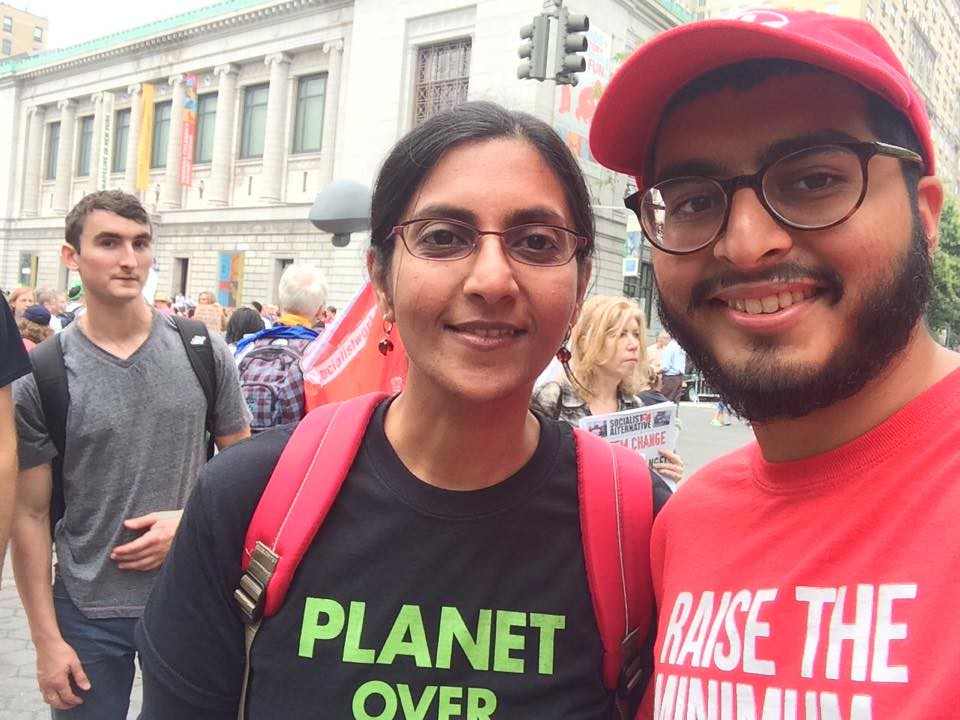
(The politician in question is former Seattle city councilor Kshama Sawant, who was elected under the banner of the Trotskyist-Socialist "Socialist Alternative" party but, in true splitter fashion, has broken away to form two new organizations -- "Workers Strike Back" and the "Revolutionary Workers" party).

Tuesday, August 27, 2024

The Shut It Down Strategy at the University of Michigan


This is a really interesting article about goings-on at the University of Michigan, where a "Shut It Down" party won effective control of the campus student government in elections last spring (they have the presidency and vice presidency, and 22 of 45 student council seats). They ran on a platform of refusing to distribute student activity money unless and until the university administration acts on their demands for divestment. The funds not being dispersed include everything from subsidies for the airport shuttle to money for the Ballroom Dance team to rent rehearsal space. As many of the effected groups have noted, these consequences tend to fall on the most vulnerable and marginal students (who are dependent on subsidies and support to access the full panoply of campus offerings).

As far as "protests" go, it's hard to argue that this one is out-of-bounds. The students who ran on the shut it down platform made no secret about what they planned to do, and they were able to convince enough of their peers to vote for them (I don't know if 20% turnout is low or not for a student government election, where turnout often is thin even by America's comparatively low bar). "Democracy," as the saying goes, "is the theory that the people know what they want and deserve to get it, good and hard." We know well that political movements predicated on anti-"establishment" backlash and throwing sand in the gears of the "system" can generate genuine appeal -- at least temporarily -- and so too here. Whether that enthusiasm is sustainable once the machine actually starts sputtering to a halt is another question.

Practically speaking, the most obvious strategic analogue for what the students are doing is the recent choices of House Republicans, who have also regularly threatened to shut down government unless their political rivals cede to their demands. It is not clear, to say the least, that this strategy has worked out for the GOP -- either materially or politically -- and there are some reasons to think it will be even less successful in this context.

For one, House Republicans had the "advantage" of genuinely not caring about all the suffering their chaos play was going to cause. That sociopathic lack of empathy may or may not characterize the student political leadership at Michigan; it is quite plausible to me that they will feel more pressure to back down if and when the consequences of their defunding start to actually land on their fellow students. And I should be clear that when I say this sort of strategy isn't "out-of-bounds", I mean that it doesn't break any formal rules. Obviously, one can still criticize it for how it hurts vulnerable student in order to (perhaps not even effectively!) make a predominantly symbolic statement about a war occurring thousands of miles away.

For two, I don't see where the actual leverage over the university administration comes from. The tangible pain the Shut It Down caucus is proliferating falls almost entirely on the heads of students -- it doesn't (arguably in contrast to some of the protest activities) make the administration's life significantly more difficult. Faced with student frustration over, say, airport shuttles that have doubled in price, they can pretty easily lean back and say "we hear you, and the student council can release those funds any time it wants." Fairly or not, the comparative lack of democratic accountability for the administration compared to the student council means that any student frustration will probably be channeled towards the student council, since they're the ones who can be most easily ousted and they're the ones who are most obviously holding up distribution of the funds.

Indeed, the article suggests that there's already been some kind of side deal where the central campus will fund the frozen student activities, with the promise that the student government will pay them back later. On the one hand, this insulates the Shut It Down caucus from the consequences of their demands, perhaps making their protest more sustainable over the long-term. On the other hand, it also obviates the theoretical leverage they're trying to exploit (i.e., immiserating the campus), returning the "protest" to the level of the near-totally symbolic (for what it's worth, the Shut It Down leaders appear to be opposed to this deal -- they do not want the pain to be symbolic).

So on the whole, I'm skeptical that this strategy will work, and I think there is a solid chance -- particularly if the funding freezes actually are allowed to play out -- that there will be a substantial backlash against the Shut It Down caucus whenever the next elections are. But as "protests" go, this one is clearly one that is playing inside the rules of the game. In contrast to "shout downs" or violent disruptions or indefinite occupations of campus buildings, there is absolutely no question that students are permitted to run for and win elections in their student government and then decide to freeze their own budgets. I'm very interested to see how this plays out.

Tuesday, June 11, 2024

From Scarsdale To Dearborn, Enough with the Dogwhistles Already


Incumbent Rep. Jamaal Bowman (D-NY) is facing a tough primary challenge from fellow Democrat George Latimer. Much of the heat in the primary has centered around Israel (Bowman is a harsh critic; Latimer has AIPAC backing), and in that context Latimer claimed in a public debate that Bowman's constituency is not the local residents of New York, but rather "Dearborn, Michigan" (and "San Francisco, California"). Dearborn is well-known for its large Arab and Muslim population, and so Bowman quickly called him out for the racist "dog-whistle".

I, of course, immediately harkened back to not-so-fond memories of Antone Melton-Meaux's 2020 primary challenge to Ilhan Omar,* where Omar's campaign sent out a mailer highlighting her challenger's donor support, singling out one from the heavily Jewish suburb of "Scarsdale, New York" (all of the named donors in Omar's mailer were also Jewish). This, too, was pounced on by Omar's opponents and said to be an antisemitic dog-whistle.

Latimer's defenders say he was merely highlighting Bowman's lack of local support. Omar's defenders likewise contended she was being unjustly smeared as a critic of Israel.

So, is this sort of attack a dog-whistle? Quick -- everybody switch sides!

In all seriousness, if you condemned the Omar campaign for its "Scarsdale mailer" you don't get to give Latimer a pass on this. And likewise, if you poo-pooed the Scarsdale mailer as a ginned up controversy over nothing you can sit right down in your high dudgeon over the Dearborn remark.

(My answer: Both instances were shady and both politicians deserved to be called out on it.)

* I'm bemused to rediscover that my blogpost on this controversy was titled "I Have To Talk About Omar and Melton-Meaux, Don't I?", which really captures a certain mood, doesn't it?

Thursday, March 28, 2024

March Badness


A GOP state legislator in Michigan, Rep. Matt Maddock, saw a bus with too many brown people near at the airport and jumped to the obvious conclusion: "Happening right now. Three busses just loaded up with illegal invaders at Detroit Metro. Anyone have any idea where they’re headed with their police escort?"

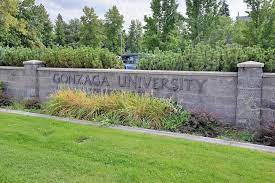
It was Gonzaga's basketball team, headed to the Sweet 16 round. But don't let facts get in the way of some good racism and red-baiting:

Maddock made his false claim in a month during which false and misleading claims about airplane flights involving migrants have proliferated on the political right.

Hundreds of social media users quickly disputed Maddock’s post on Wednesday, but Maddock refused to concede. He replied to one of the many people who pointed out the plane and buses were likely for NCAA basketball teams: “Sure kommie. Good talking point.”

Maddock continued to dig in on Thursday morning. He wrote a new post saying, “We know this is happening” and that hundreds of thousands of illegal immigrants are “pouring into our country.” He added: “Since we can’t trust the #FakeNews to investigate, citizens will. The process of investigating these issues takes time.”

Meanwhile, in Idaho the Utah women's basketball team was essentially chased out of the state after they endured repeated racial abuse at the hotel they were staying at in Coeur d'Alene (they switched to a different hotel in Spokane).

It's nothing novel to say that athletics (and college athletics in particular) represent a prominent arena where young men and women of color are placed in the (nominally positive) spotlight of predominantly White institutions, and there are a lot of White people who really can't handle that.

Wednesday, February 28, 2024

The Uncommitted Story


Last night, Joe Biden won the Michigan primary with approximately 81% of the vote. Donald Trump also won with 68% of the vote (you wouldn't necessarily clock that Trump did comparatively worse than Biden given the coverage, but that's hardly a surprise anymore). But while the foregone conclusion outcome isn't super interesting, many people have been keeping an eye on the relative performance of "uncommitted" in the Democratic column. 

For those of you who don't know, a campaign largely emanating from Michigan's substantial Arab and Muslim community urged Democratic primary voters to cast a ballot for "uncommitted" as a means of signaling discontent with President Biden's support for Israel in the war in Gaza. A few days ago, I registered my genuine curiosity regarding how "uncommitted" would play out in the Michigan Democratic primary. On the one hand, I said, I absolutely could see it "capturing genuine frustration amongst [Democratic] partisans (so getting substantial support)." On the other, I also could see it "mostly an online/activisty thing (so being a nothing burger come the actual vote tallies)." Since both hypotheses seemed plausible, I was genuinely interested to see what the reality would be.

Towards the start of the evening (with, as I recall, approximately 20% of the votes tallied), I wrote the following:

If “uncommitted” typically gets 10% and it holds at 16% (which it may not, in either direction), I’d say that’s not a huge performance (6% over baseline) but still meaningful given how tight MI will be. It’s not something that should be ignored; but neither is it “popular groundswell of rebellion”.

The "10%" baseline is based on the last analogous election where an incumbent Democrat was running -- Barack Obama in 2012. Ten percent (10.7%, to be precise) of Democratic voters then voted "uncommitted" despite there not being (to my knowledge) any significant organized campaign pushing for the vote, suggesting that this is baseline level of support for "uncommitted" that isn't attributable to anything more than inchoate background status quo discontent. Given that, my assessment was that getting an additional six percentage points of support is not trivial, but also isn't proof of some broad-based sentiments of frustration and opposition.

As I said, though, the tally was early and things might change in either direction over the course of the evening. I saw some people suggest that they expected the number to rise as the night went on, on the theory that "bluer" jurisdictions like cities were going to report later and the assumption that "uncommitted" voters would be more prevalent in those areas. But what ended up happening is that "uncommitted" faded over the course of the evening, finally settling at 13.2% -- about 2.5% over the baseline expectation (it's also below the 15% threshold necessary to pick up statewide delegates at the DNC, though it did get two delegates due to strong local performances).

From my vantage point, this really can't be said to be that impressive of a performance. It still matters in the sense that Michigan will likely be close and so every little bit counts. But ultimately, a well-organized campaign, with the support of some significant local Democratic figures (albeit opposition from many others) managing to overperform doing nothing by 2.5% really doesn't demonstrate much in the way of serious political muscle. I don't want to say the frustration that the "uncommitted" campaign is tapping into isn't real. But objectively speaking, it doesn't seem to be translating into significant alterations in Democratic voter behavior -- to that extent, it may be a largely cloistered thing. If I'm the Biden campaign, I'm certainly not ignoring this issue (for a variety of reasons, not the least being that its salience to activist, elite, and media cadres clearly punches above its weight, and then also because one wants to do the right thing and have a good policy that takes into account the views of all relevant stakeholders). But I think we've dispensed with the need for incipient panic.

That said, the "uncommitted" campaign did a wonderful job of setting expectations. The nice thing about a symbolic play like this is that since an objective win is obviously off the table (and not the realistic goal) pretty much anything can be sold as a victory. If you lose an actual election, you have to (well, I guess we've learned you don't have to) concede defeat. If you're not actually running to win but instead are just trying to trumpet your existence as a voting bloc, however, there's essentially no outcome where one has to "concede defeat". You will never see organizers release a statement to the effect of:

Our goal was to demonstrate that the people of Michigan care about X issue and that our values cannot be ignored. But given our anemic performance, the voters today have made clear that Michigan voters don't care about X at all and that we completely overestimated our influence. Thanks to everyone for taking part in this civic experiment, and we'll adjust our priors accordingly.

Here, the uncommitted organizers really basically set their bar on the floor -- they said their goal was to get 10,000 votes for "uncommitted", and they are celebrating for blowing past that tally. On the one hand, 10,000 is not a completely made-up figure -- it was roughly Donald Trump's margin of victory in 2016. On the other hand, in this primary 10,000 votes would have been barely over 1% of the total tally -- less than half of Dean Phillips' tally and a tenth of the Obama 2012 baseline. It is true that turnout is up considerably since 2012 (10.7% then was a little less than 21,000 votes; 13.2% in 2024 is over 100,000 votes) -- but it's hard to view that as bad news for Democrats.

The other observation I want to make relates to that prediction I saw that the "uncommitted" tally would rise as bluer, urban jurisdictions came in, when the reality was that "uncommitted" faded over the course of the evening. I wasn't following the returns closely enough to confirm whether the bluer areas were in fact reporting later. Assuming that they did, though, I think this is a good time to correct another common and understandable misapprehension: that the most partisan Democratic areas of a state are also necessarily the most progressive.

It's an understandable inference. In a two-party system, we might imagine that a voter who is only slightly left-of-center would regularly be at least tempted to vote GOP (given the "right" candidates), a voter who is more decisively liberal would be less likely to crossover, and the most liberal voter would also be the least likely to be tempted away to the other party. From that, we would infer that the most partisan Democratic voters (those least likely to ever vote Republican) are also the most progressive voters (there preferences are furthest away from those of Republicans).

But it isn't necessarily true. At one level, it's falsified by the presence of "both parties are the same" uber-leftists -- such persons may or may not be tempted to vote GOP, but they're obviously not Democratic partisans. The most partisan Democratic clusters are persons who are probably progressive enough not to be tempted by the GOP, but also not so left-wing that they find arguments like that appealing. But beyond that, there's more that goes into committed Democratic Party loyalty than ideological alignment. We know, for instance, that African-American voters are the most committed Democrats and that African-American Democrats are more likely to identify as moderate or conservative compared to White Democrats. There are other factors beyond ideology that are significantly responsible for why Black voters are Democratic loyalists. Likewise, the post 9/11 trend whereby Muslim voters overwhelmingly voted Democratic also was not primarily a feature of deep-seated ideological leftism -- it stemmed from "other factors" (i.e., rampant GOP Islamophobia) which superseded still-extant ideological moderation or even conservatism.

All of this is to say that the assumption that Black voters, because they are steadfast Democratic voters, also must sit on the left edge of the party on an ideological level, is a mistaken apprehension, and consequently the sorts of issues that are motivating the ideological left-edge of the party are not necessarily the same ones that motivate the base of the party. This isn't to say that the Democratic base is actually conservative; it's still probably true that it is relatively to the left of the average person who votes Democrat in any given November. It's just not all the way at the left-most edge of the party. That mistake, I suspect, is a large part of what generated the wrong assumption that "uncommitted" would perform substantially better in those locales.

For what it's worth, on a very quick gaze there doesn't seem to be much correlation between the Black vote and "uncommitted"; if anything, it seems to have underperformed. The overall Black population of Michigan is approximately 14%, and there are four counties which have proportionally larger Black populations than that: Wayne County (Detroit and Dearborn), Genesee County (Flint), Saginaw County (Saginaw), and Berrien County (St. Joseph) (Oakland County, north of Detroit, is exactly 14% Black).

Wayne County saw "uncommitted" get 16% -- but that's almost certainly more a product of Dearborn than Detroit (disaggregating those figures would be very interesting, but the fact that "uncommitted" outright won in Dearborn and Hamtramck, both of which are approximately half Arab-American, mathematically suggests it did much weaker numbers elsewhere in the county). By contrast, Genesee County, which contains Flint, saw "uncommitted" have one of its worst performances -- 9.5%. Saginaw County saw "uncommitted" get 10.2%, Berrien County 9.6%, and Oakland County 12.5%.

Plot "uncommitted" based on the most Democratic parts of the state (based on 2020 Democratic vote share), and things similarly look blurry at best. Joe Biden only won 11 counties in Michigan last time around. He won all of the above-mentioned counties except Berrien, plus Washtenaw (Ann Arbor), Ingham (Lansing), Kalamazoo (Kalamazoo), Kent (Grand Rapids), Muskegon (Muskegon), Leelanau (Traverse Bay), and Marquette (Marquette, on the upper peninsula). "Uncommitted" had possibly its best performance in the entire state in Washtenaw County, at 17.2% -- certainly a product of the University of Michigan community. And it did slightly better than its statewide average in Kent County (13.8%). But in every other county Joe Biden won, "uncommitted" underperformed its statewide average -- from 13.1% in Ingham to 9.1% in Saginaw. That said, the two counties "uncommitted" performed best in (Wayne and Washtenaw) are two of the heaviest Democratic hitters (along with Oakland) in terms of raw Democratic vote margins; the other counties listed, while won by Democrats, tend to be either smaller or closer (or both). 

So I'd say these results are mixed, and again, my advice to Biden isn't to just ignore this issue outright. Rather, it's to observe that the coalitional politics that drove the "uncommitted" movement are distinct from "the base" (and, in particular, Black voters). That's an important thing -- democracy is about appealing to diverse constituencies who have an array of distinct and differentiated interests, and this issue certainly had strong salience amongst Michigan's Arab and Muslim community, plus a fair amount of weight in the collegiate environs of Ann Arbor -- but it's not necessarily the same thing as it's been presented.

Wednesday, March 22, 2023

Michigan Republicans To Michigan Jews: Get Lost

The opening to JTA's story about Michigan Republicans comparing the state's new gun control laws to the Holocaust reads as follows:

 The official Twitter account of Michigan’s Republican Party posted an image comparing gun control to the Holocaust on Wednesday. Then, following condemnations of the post by Jewish groups, the party doubled down on its message.

It’s the latest example of Holocaust imagery being utilized to deliver a partisan political message.

It is the latest example of Holocaust imagery being utilized to deliver a partisan political message. It's also the latest example of Republican politicians responding to Jewish concerns by saying "get bent".

Of course, saying "F U to the Jews" isn't surprising coming from the Michigan GOP, which is now led by election-denying conspiracy theorist Kristina Karamo:

Karamo, a Trump-backed election denier, has in the past been accused by the Anti-Defamation League’s regional director of invoking antisemitic tropes about Jewish power. During her campaign for secretary of state last year, Karamo accused the Democratic incumbent, Jocelyn Benson, of being a “puppet” controlled by Jewish billionaire George Soros. She also has claimed Benson, who is Jewish, and the state’s Jewish attorney general, Dana Nessel, are “all part of the Soros minion club.” 

Still, it's worth noting that those condemning the Michigan GOP statement include not just mainstream Jewish bodies and organizations, but also prominent Jewish Republicans including the Republican Jewish Coalition. This, of course, only accentuates how the Michigan Republican Party and Karamo are making a conscious choice to extend a big ol' middle finger to all the Jews, even their nominal friends.

I'll reiterate once again that one of the biggest points of differentiation between the status of Jews in the Democratic Party and the status of Jews in the Republican Party is that Democratic Jews, when we have inward-facing concerns, still can get a hearing from people who care about what we think. It's not always smooth or frictionless, but that fundamental bondedness that stems from decades of relationship-building and solidaristic organizing is still present. By contrast, when Jews face antisemitism from the Republican Party, the institutional GOP's immediate, reflexive, and typically solitary response is to close ranks and lash out against the messenger. We've seen it before, and we're seeing it again here.

Wednesday, January 18, 2023

If SCOTUS Had Its Way, Countless Michigan Jews Would Be Dead By Now

A Dearborn, Michigan man was indicted on gun charges stemming from an alleged plot to attack a Michigan synagogue. The suspect, Hassan Chokr, was blocked from purchasing a shotgun, rifle, and semiautomatic pistol following the conclusion of a background check, and federal prosecutors said that in his attempt to purchase a gun Chokr made "three false statements, any one of which would prohibit him from possessing a firearm." Those statements were denials that Chokr
  1. Had ever been convicted of a felony;
  2. Had currently pending charges of a felony; and
  3. Had ever been committed to a mental institution.
Presumably, the background check revealed the existence of one or more of these flags in Chokr's record, thus preventing the purchase and likely averting a tragedy.

Given that, it's worth noting that all three of these bases for denying someone a gun purchase are currently on thin ice following the Supreme Court's Bruen decision, which radically circumscribed the government's ability to place limits on American's right to gun ownership.

On the first, the Third Circuit is in the process of reconsidering its earlier ruling that non-violent felons can be excluded from gun ownership (Chokr's conviction related to theft relating to a financial device such as a credit card, and so likely would be viewed as a non-violent felony).


And on the third, prominent gun advocates like Eugene Volokh have aggressively challenged whether a per se bar on gun possession by persons who have been committed to a mental institution is constitutional.

In short, it is entirely plausible that the federal judiciary, following the Supreme Court's lead in Bruen, will conclude that all the failsafes that successfully prevented Hassan Chokr from purchasing guns he would have likely used to massacre Michigan Jews are unconstitutional and must be stripped from the books. It's not guaranteed -- while Bruen's language is expansive to the extreme, nobody knows how far the Supreme Court's nerve will go when push comes to shove -- but none of these objections can dismissed out of hand given Bruen's radical reinvention of Second Amendment doctrine.

Certainly, the Court has been crystal clear that the essential liberties of the Second Amendment are far more important than the countless lives its jurisprudence puts at risk. You know what they say: the tree of liberty must periodically be watered with the blood of tyrants innocent Jews.

Thursday, March 24, 2022

Levin and Stevens Talk to Michigan's Jews

Michigan Reps. Andy Levin and Haley Stevens -- Democrats thrown into the same district following redistricting -- had a candidate's forum today hosted by the Jewish Democratic Council of America, which Ron Kampeas was helpful enough to livetweet. Levin (who is Jewish) is known as a strong progressive, while Stevens (not Jewish) usually presents as more of a moderate, so it was interesting to see how they pitched their message in this particular forum.

My takeaway -- and this is just from following Kampeas' tweets -- is that they actually didn't sound too different from one another. A lot more agreement than disagreement. There was some distance on issues like Israel and the Iran Deal -- Levin favored the Iran Deal and has spearheaded efforts to reinvigorate the two state solution, which has earned him the ire of AIPAC, while Stevens tends to take more modest and AIPAC-friendly line on these issues -- but they weren't wildly apart. And their rhetoric on domestic policy was pretty similar, and pretty progressive -- which is to say, it seemed like in front of this audience, Stevens was tacking closer to Levin than vice versa.

What does this mean? While I tend to think many intra-party divisions amongst Democrats are overstated, particularly when they're presented in flatly apocalyptic terms, that doesn't mean I think Levin and Stevens are basically interchangeable. Levin really is a more progressive option than Stevens is, rhetoric from this debate notwithstanding. And moreover, I suspect that in other venues Stevens may do more to accentuate her "moderate" credentials -- I don't think this is necessarily symbolic of how she'll run her entire race. What is interesting is that both Levin and Stevens apparently came to the conclusion that the way to appeal to the Jewish audience, specifically, was to emphasize their progressive bona fides. In contrast to some narratives of "Jexodus" or "Jexit" or whatever portmanteau neologism is being pushed this week, the betting line on how to talk to Jewish Democrats is to emphasize that you are a progressive Jewish Democrat. That's heartening to see.

Tuesday, July 03, 2012

Snyder Vetoes Voter Suppression Bills

I'm pleasantly surprised by this: Michigan Governor Rick Snyder (R) has vetoed a set of bills which, though nominally targeting (largely non-existent) voter fraud, would in effect serve to suppress eligible voters. Snyder said the bills would cause "confusion" due to the obscure procedures they enacted.

I have no idea why Snyder -- a rather orthodox (which is to say, tea-flavored) Republican, decided to break with the GOP orthodoxy on this. I don't know of any inside-baseball explanation for this, so let's just congratulate him on doing the right thing.

Thursday, December 18, 2008

Support for the Michiganers

As a proud member of the University of Chicago Law School's class of 2011, it's rare that you'll see anything but contempt by me towards our compatriots at the University of Michigan.* But I'll make an exception for the Michigan 2L who was charged by police after reporting her assault in the course of engaging in sex work. She gives her story here. If ever there was a reason to legalize and regulate sex work, it's so stories like this didn't happen.

* This is, of course, a lie. Not only is UM a fine law school, but they were exceedingly nice to me when I applied and had perhaps the finest personal touch of any law school that admitted me -- a sense that I've heard verified from other law school applicants. I'm genuinely appreciative of that fact.

Wednesday, October 22, 2008

Up and Down at UM

After the first year of barring race-conscious programs at public universities in Michigan, the local press has begun to examine the fall-out. Basically, the stats are mixed, but the upshot is that minority enrollment shifted to lower-ranked schools, and higher ranked programs are having trouble attracting even qualified minority applicants because their scholarship programs also had to be discontinued. One interesting outcome (though it might be statistical noise) is that minority enrollment dropped even at schools that did not previously use race conscious admissions procedures.

Also, interesting article given the topic: Richard Lempert, David Chambers, & Terry Adams, Michigan's Minority Graduates in Practice: The River Runs Through Law School, 25 L. & Soc. Inquiry 395 (2000). Basically, it surveyed the history of minority Michigan law students admitted under affirmative action programs, in terms of their success after graduation. The results? Under every metric measured, these students performed equal to their White peers.

But remember, they weren't qualified to be there.

Thursday, September 11, 2008

Voter Suppression Tactic of the Day

I bet Hans loves this one:
The chairman of the Republican Party in Macomb County Michigan, a key swing county in a key swing state, is planning to use a list of foreclosed homes to block people from voting in the upcoming election as part of the state GOP’s effort to challenge some voters on Election Day.

“We will have a list of foreclosed homes and will make sure people aren’t voting from those addresses,” party chairman James Carabelli told Michigan Messenger in a telephone interview earlier this week. He said the local party wanted to make sure that proper electoral procedures were followed.

Yes, you read that right. Michigan Republican leaders' response to home foreclosure is to make sure the victims also can't vote (apparently, Ohio Republicans -- always looking for new ways to block the voting booth -- have also considered this tactic).
One expert questioned the legality of the tactic.

“You can’t challenge people without a factual basis for doing so,” said J. Gerald Hebert, a former voting rights litigator for the U.S. Justice Department who now runs the Campaign Legal Center, a Washington D.C.-based public-interest law firm. “I don’t think a foreclosure notice is sufficient basis for a challenge, because people often remain in their homes after foreclosure begins and sometimes are able to negotiate and refinance.”

As for the practice of challenging the right to vote of foreclosed property owners, Hebert called it, “mean-spirited.”

You're damn right it's mean-spirited. But what can you do? Elections are played to win, and Republicans think that the best way they can win is to stop the people who've been screwed over by their rule from voting (they tried to pull this on veterans too). But it's dishonorable, it's an affront to democracy, and it should be stopped in its tracks.