Showing posts with label voting. Show all posts

Friday, June 05, 2026

The Candidate of Their Choice


Before it was butchered by the Roberts Court, a key purpose of the Voting Rights Act was to ensure that, where cohesive minority communities exist, they would have a reasonable opportunity to elect the candidate of their choice.

For Black communities, this often understandably meant electing a Black representative. But not necessarily.

For example, the Tennessee congressional district that until recently was anchored around Memphis is a majority-Black district represented by a White man, Steve Cohen. Why does Cohen represent that district? The same reason anyone represents any district: the majority of voters in his district like him, he's earned their trust, so they keep reelecting him. Periodically during his tenure he would draw an African-American challenger, often to much fretting and teeth-gnashing from the national media, and each time he would absolutely flatten them, because again, Steve Cohen was well-liked and trusted by the voters in his district. That he kept winning, and winning handily, in a majority-Black district was not a failing of the Voting Rights Act. Neither would it have been a failure of the Voting Rights Act if Memphis decided to vote differently. The purpose of the Voting Rights Act is to give cohesive minority communities, like that which exists in Memphis, the ability to elect the candidate of their choice. If they choose someone like Steve Cohen, that's their prerogative.

All of this is introduction to the fussing that's surrounding Debbie Wasserman-Schultz's decision, in the wake of Florida's latest round of partisan gerrymandering wrecking her current district, to run for re-election in the safely-blue and majority-Black 20th district (just north of, but not encompassing, her current turf). The complaint is that, with the evisceration of the VRA already signaling a cataclysmic drop in Black representation (particularly in the South), Wasserman-Schultz's bid will necessarily come at the expense of one of the few districts where a Black Democratic representative might have shot at winning.

But again: the point of the VRA is to permit minority communities to elect the candidate of their choice. And either they'll choose to elect DWS or they won't. If they do, that's their prerogative. If they don't, that's also their prerogative. It's not a foul for Wasserman-Schultz (or any other politician) to try to win the support and backing of another political community, any more than she is entitled to the support of a community. Again, either she wins or she doesn't, but that's a decision that can and should be made by the voters of the district.

I'll give this Mo Tkacik column an inch of credit for at least gesturing at a more viable basis for complaining at DWS' choice: that she should have run in the 22nd district (where she lives) because with a strong candidate it represents an at least outside chance at a Democratic victory and Democrats need to expand the playing field as far as possible. Sure, she'll probably lose in the 22nd. But she might not, and she'll give team Blue a better chance than any other candidate. Meanwhile, a Democrat will represent the 20th district no matter what. So DWS is placing her own self-interest in trying to occupy a safe seat over the party's interest in winning as many seats as possible.

Maybe. It's not exactly clear to me why DWS is the only strong candidate Democrats could possibly run in the 22nd district -- a depressing thought, if true. And this being Mo Tkacik, by the end of the column it dissolves into rambling about AIPAC and some real old-school classics about how DWS rigged the primary for Hillary Clinton against Bernie. Aside from its nostalgic value, though, that last part again speaks to this very frustrating tendency in some segments of the Democratic Party (and, to be sure, all segments of the Republican Party) that losing an election under via normal political contestation must be cheating.

On that note, there's chatter that some of the Black candidates running in the 20th District have held a meeting to see if any will drop out, in the hopes that this will consolidate the Black vote and make it more likely one of them will win. Under "Bernie was robbed" logic, non-viable candidates dropping out and endorsing a remaining candidate is, of course, the most abusive act of rigging imaginable. Under actual, normal politics, there's no problem here and such a decision is their prerogative as well. Once again, DWS is not entitled to this seat, and she is not entitled to have the political factions which oppose her just roll over and clear a path for her. If at the end of it all she wins, good for her. If she doesn't, good for whoever does. Either way, the most we can hope for is that the voters in one of the apparently few remaining majority-Black districts are able to elect the candidate of their choice.

Saturday, March 22, 2025

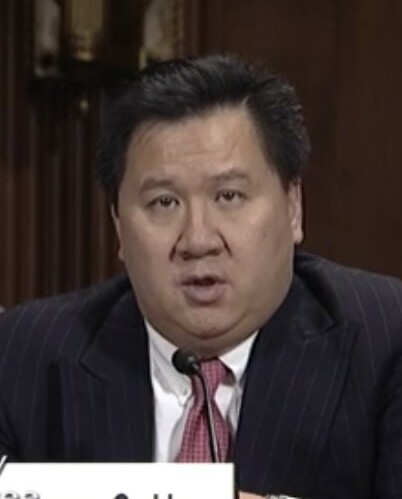
Judge Ho's Politics of Collectivist Grievance


Last week, the Fifth Circuit refused to rehear en banc its bombshell ruling that states are, in most circumstances, forbidden from counting ballots that are submitted before election day but received after election day -- even where the practice is expressly authorized by state law. Permitting ballots postmarked by election day, but received sometime afterwards, is a common practice in many states across the country, and Congress has said nothing on the subject. But the Fifth Circuit -- channeling the recent partisan right attacks on mail-in voting nationwide -- decided that congressional silence demanded prohibition of this longstanding electoral practice.

I'm not going to write on the substantive question of this case though (Election Law Blog collects coverage here). Rather, I want to flag Judge Ho's two-page concurring 4chan post opinion, where he takes aim at his dissenting colleague Judge Higginson for noting the powerful critique of the panel decision by a "topflight" lawyer unaffiliated with the parties and who urged that it be addressed by the court.

Judge Ho is unimpressed. He says that this attorney's intervention doesn't offer any useful information to the court -- indeed, he doesn't address it at all. Rather, it "may just reflect the institutional bias at many of the nation’s largest law firms."

At one level, given the timing of this opinion, it is hard not to see Judge Ho's attack on national law firms as intentionally aligning itself with the Trump administration's crackdown on these same firms (also putatively because of their "bias" towards liberal causes). One major clue that is Ho's angle is a gratuitous shot he takes at BigLaw DEI practices, which has nothing to do with either the case at hand or law firms' alleged preference for liberal causes in their pro bono case selection, but of course looms large in Trump's own assault on the American legal citadel.

But it also is reflective of a broader pattern in Judge Ho's judicial temperament (or lack thereof) -- a pattern of grievance where, upon identifying broad classes of enemy groups, he defiantly abandons any pretense of judging individuals as individuals or on their individual merits.

Judge Ho's jeremiad in this opinion is against the practices of law firms. As a class, Ho alleges, these firms exhibit "institutional bias", these firms "are falling short of 'the great traditions of the profession,'", the firms "have abandoned neutral principles of representation, and instead engage in ideological or political discrimination in the cases that they’re willing to take on," and consequently the firms should not "be surprised when others take notice that they are no longer abiding by the principles of the profession, and react accordingly."

All of these attacks on large law firms elides the fact that Judge Higginson did not ever appeal to, or even mention, the august reputation of large law firms. He rather flagged the critique of one particular "topflight" lawyer -- Adam Unikowsky. Unikowsky is indeed a partner at the BigLaw firm Jenner & Block, he also as it happens is a former clerk for Justice Scalia. I don't know what types of cases either he or Jenner more broadly typically takes on pro bono. I do know in this case he made a highly-publicized critique of the panel decision, one that many legal observers found compelling, on an issue he otherwise had no connection to. But note that the whole point of Ho's fusillade against what law firms, as a collective, are allegedly doing is to justify his peremptory refusal to even entertain the substantive arguments made by Unikowsky, as an individual. He is lumped into this broad bloc of "large law firms", and from there he can be summarily dismissed as doing what "they" do: "motivated lawyering designed to reach a predetermined result." And here -- well before any engagement with Unikowsky's actual arguments, solely on basis of collective associations -- the thinking ends.

This is not novel behavior by Judge Ho. Ho has been a leading figure promoting academic boycotts of both Yale and Columbia Law Schools, refusing to hire as clerks graduates from either institution on the grounds that both universities allegedly discriminate against conservatives (for Columbia, he also cited alleged antisemitism). Here, too, the point of the "boycott" is an announced refusal to judge certain law school graduates as individuals, on their individual merits. There is surely no quarrel with Judge Ho declining to hire a clerkship applicant who he deems to have discriminated against conservatives on campus -- one doesn't need a "boycott" to do that (one also suspects those suspects would not be applying to Judge Ho's chambers). Rather, those most impacted by the boycott are most likely to be those victimized by the alleged predatory behavior Ho identifies, or at the very least innocent bystanders. Again, no matter: the payoff -- and indeed, the point -- of Ho's "boycott" is to make it so that these applicants do not get evaluated as individuals. Their individual merits and demerits do not matter. They fall under the umbrella of an enemy collective, and that is all the thinking he needs to do about them.

The MAGA right pretends (though less and less often) that its objection to "DEI" is that it fails to respect people as individuals or judge them on their individual merits. In reality, there are few more avid practitioners of anti-meritocratic politics than contemporary conservatives, for whom everything is filtered through a lens of identity and grievance. And that's all the more reason to state clearly what has become obvious: Judge Ho's politics (and he is nothing if not a political judge) are fundamentally collectivist in nature. He is constantly looking for excuses to refuse to evaluate individuals as individuals if they belong to the wrong group. The only thing that matters to him is whether you fall in the friend or the enemy camp. For the former, everything; for the latter, the law(lessness).

Here, too, every accusation is a confession. When it comes to group-based grievance politics that deny Americans' right to be judged based on the content of their character, there are few more flagrant abusers that Judge James Ho.

Monday, November 04, 2024

Vote Joy


Tomorrow is election day. Voting isn't the only obligation of a democratic citizenry, but it is the most basic one. Voting isn't the guarantor of positive change, but it is an essential component of it.

If you haven't voted already, please make sure you get to the polls. And when you do, I encourage you to vote joy.

Friday, June 09, 2023

Why Did The Law Constrain Them Now?

Way back when, I spotted a great parodic bumper sticker during the 2008 presidential campaign. It read: "Bush-Cheney 2008: Why should the law stop us now?"

Yesterday in Allen v. Milligan, the Supreme Court defied expectations and, in a 5-4 ruling, preserved some semblance of a Voting Rights Act by striking down Alabama's congressional maps as illegally racially gerrymandered. Chief Justice Roberts and Justice Kavanaugh "crossed the aisle", so to speak, and now everyone is trying to figure out why (for Roberts in particular, whose hostility to voting rights long predates his time on the Court).

It is a sign of our cynical era that virtually nobody thinks the answer is "because they felt this was the right legal answer." This is especially striking because, when a justice does vote against their presumed ideological proclivities, that would seemingly spawn a greater inference that they genuinely believed in their position's formal legal correctness. If they faced the happy coincidence of "the law supports the defendant" and "I, personally, support the defendant", why wouldn't they raise a glass to their good fortune and vote accordingly?

But on the constitutional law listserv I'm a member of, everybody seems to think that this is some political legitimacy play. The conservative members cannot fathom that their preferred outcome is not legally correct; they think that Roberts and Kavanaugh voted in some ill-conceived attempt to "store political capital" and stave off allegations that the Court has become a six-member right-wing wrecking ball. Needless to say, they hold such a practice with nothing but contempt; they think Roberts and Kavanaugh are squishes. The liberals in the group, of course, do think the outcome is legally correct, but they too seem to think it's fanciful that something as trifling as "the law compels it" motivated Roberts' and Kavanaugh's votes. After all, they might ask, after years of taking a flamethrower to settled judicial doctrine and longstanding precedents in service of a hard-right agenda, why should the law have constrained them now? They also don't give much, if any, credit to the justices for any "legitimacy" chits they might have thought they earned.

It is hard for me not to credit the cynicism here. But if I were to craft a non-, or at least less-, political explanation for Roberts' and Kavanaugh's votes, it would be to distinguish between the millenarian and Burkean conservative impulses seen on the Court. 

The former is the pull of reactionary revolution -- you see the promised land, and are ready to chop down anything in your path that poses a barrier to reaching it.  In this mode, the Court's conservatives will burn down precedent, torch settled expectations, and tank the Court's political legitimacy in pursuit of a vision of idealized legal conservatism that they insist is right and true. "The heavens may fall that justice be done." Millenarianism is the impulse that yielded DobbsBruen, and Kennedy, the new "major questions" doctrine and the possible overturning of Chevron, the prospective end to affirmative action and the stunning plausibility of adopting the Independent State Legislature doctrine. Radical alterations of law with unknown and unknowable consequences, in deference to abstract right-wing legal theory and/or concrete right-wing political results. Thomas, Alito, Barrett, and Gorsuch all seem to be in thrall with the millenarian vision, albeit with perhaps slightly different visions of what utopia should look like.

The Burkean mode, by contrast, is the mode of caution, prudence, and restraint. It shies from radical change, it is cognizant of the many things it doesn't know. Recognizing the complexity of the legal machine it oversees, the Burkean conservatives are reluctant to fiddle with the dials too readily. They're willing to trim and cut, but look skeptically upon sweeping change. This impulse, at least, is found in Roberts' Dobbs concurrence, the mifepristone stay, and the so-far unwillingness to endorse any of the yearly crackpot attempts to kneecap the Affordable Care Act. It is not about liberal outcomes (as my placing Roberts' Dobbs opinion in the category should make clear); in other times, Burkeanism might operate as a voice of restraint against sweeping progressive legal victories (recall Roberts' Obergefell opinion). But on this Court, the realistic choices are between radical right-wing change and upholding the status quo -- it's hard to think of a single example of a Court ruling since Barrett's ascension that actually represents change (radical or otherwise) in a progressive direction (the liberal "victories" have generally taken the form of "managing to hold the line against a conservative assault").

On the current Court, Roberts and Kavanaugh have been most susceptible amongst the conservatives to the Burkean impulse, albeit typically in no more than halting fashion. But it's more than just naked political appeasement or trying to impress the libs (neither justice, I think it is fair to say, has shown either much interest or much success in garnering even begrudging liberal admiration). Burkeanism is a branch of conservatism too, and it shouldn't surprise that within the conservative coalition there would be those who find it comparatively more appealing. Some conservatives look at the messianic fervor that has gripped their compatriots and get antsy. They certainly feel the temptation. But ultimately, they are not quite so keen to smash the machine; they are not quite so confident they understand the fallout. And so, periodically, they step back from the abyss, and restrain themselves. Perhaps that's what happened here.


Sunday, June 26, 2022

Voting Isn't Enough. You Also Have To Vote Enthusiastically

For the past several years, a battle has raged within the progressive commentariat about the importance of voting. In 2016, quite a few influential left-of-center figures were very public about how they would sit the election out, or vote third party, because they just could not bring themselves to support Hillary Clinton. This approach is sometimes dubbed the "consumerist" theory of voting, where politicians are products you either like or don't like, and if you're not happy with the product, you don't buy it.


This approach seemingly was discredited by the 2016 election results (spoiler: it was also discredited before the 2016 election results), though a surprising number of people were insistent for years thereafter that they were entirely right and correct to sit out 2016. Voting is for suckers, voting doesn't change anything, voting is a distraction from something something grand proletariat revolution something. Incredibly, we're still seeing a permutation of this argument now, as people respond to Republicans reaping the fruit of their electoral success by literally arguing "I tried voting in 2020 and it didn't work". I barely know how to even respond to that level of narcissistic self-indulgence. Politics is hard. It's slow, and arduous, and often a game of inches, but it definitely won't be won by people who think that the failure to travel lightyears in a day means they're entitled to sit out in protest.

That said, over the past few days I have noticed a bit of a shift amongst people I'd broadly define as occupying these sectors of progressive politics. They no longer say they won't vote in 2022. Instead, they issue long screeds contemptuous of voting and decrying voting and insisting that voting won't bring any useful change or benefits whatsoever. Then, somewhere in the middle of the diatribe, they will, with all the enthusiasm of a petulant child, agree that they will vote in 2022, but they won't like it and you can't ask them to like it, but if it will finally make you shut up okay they'll agree to vote.

Progress, of a sort. But not good enough.

The consumerist theory of voting treats voting as a matter of individual expression. This new permutation still fits that mold, only now voting only matters as a sort of civic duty checkbox one individually marks off (albeit reluctantly).

But the reason voting matters isn't to express your deepest emotions nor is it to validate one as  having satisfied an individual civic duty. The reason everyone is saying voting matters is because we need to win these elections in order to secure the changes we want, or at the very least to prevent things from deteriorating even worse. Democrats retaining control of government in 2022 might not be sufficient to arrest the damage the Supreme Court is doing to our public life, but it sure as hell is necessary. So your obligation isn't just to vote for Democrats, it's to take the steps necessary so that Democrats win. And one such step is projecting a sense of excitement about the prospect of Democrats winning.

 ("Excitement", to be clear, is being used here as a somewhat imprecise catch-all term encompassing any number of affective dispositions towards Democrats winning that view that outcome as a substantial positive and the opposite outcome as a substantial negative. So I would count "excited at Democrats winning" and "terrified at Republicans winning" as both falling into the relevant category; either way, someone who affectively holds those views should be enthusiastic in pulling the lever for Democrats come November. Perhaps "motivated" is better than "excitement"; insofar as it captures the sense that you care, deeply, about the outcome of the election. In any event, I doubt it matters too much what exact form that affective disposition takes, so long as it is in this broad category of substantial positive, as opposed to the sulky "I'll do it but it won't matter").

It is a truism to say that one vote rarely makes a difference. Voting matters as a collective endeavor where we unite to exercise power and self-determination together. Our decision to vote, and whether we do so enthusiastically or view it as a grim chore, influences those around us, and so has a multiplier effect that extends will beyond our one vote

People are more likely to vote if their friends and neighbors vote, and they're even more likely to vote if their friends and neighbors are excited about voting. Anybody who is talking about voting on Twitter almost by definition is on the bleeding edge of heightened political engagement, which in turn means they are well-positioned to influence multiple others in their circle who are more likely to fall towards the fat part of the bell curve of political apathy and are highly responsive to cues from their social environs. Your vote matters, but your affective disposition towards voting as a means of effectuating change also matters and arguably matters even more. Every voter has one vote, but the publicly excited voter carries in their wake the votes of a dozen friends and acquaintances. The publicly downcast and reluctant voter sheds a similar number of votes.

"I'm sorry, but I can't fake enthusiasm." Yes, you can! You shouldn't need to, in many ways I'm blown away that anyone needs to "fake" feeling positively disposed to Republicans not gaining another hammerlock on power, but yes, you absolutely can fake enthusiasm. Indeed, I'd argue that in the present moment it's self-indulgent not to. You're willing to call for a general strike but you're not willing exaggerate a smile to win an election? Are you kidding me? Sulking is not a strategy.

Voting is a tactic, and our obligation now is to take the steps most likely to make that tactic successful. One of those steps is being publicly enthusiastic about voting, so that other people who are less politically engaged than you also find the prospect of voting to be something worth doing. My basic rule of thumb here is that if you're politically engaged enough to be publicly complaining about how unfair it is that people are asking you to vote again, after you already tried that two years ago, then you're politically influential enough to carry the responsibility of publicly orienting to voting in such a way so as to maximize its likelihood of success.

This doesn't mean one doesn't pressure Democrats to do more or do better when they have power. I have hardly been blown away by the immediate Democratic response to the fall of Roe, though in part I think that's because Dobbs was a huge defeat and huge defeats are rarely pretty. There is no elegant way to lose in crushing fashion (I view the chaos after the Afghanistan withdrawal in much the same way). Nonetheless, I do not at all dispute there are plenty of criticisms one can make at the Democratic leadership in their immediate response to Dobbs. But it is entirely possible to level these critiques while also maintaining an affective disposition of strong positivity towards Democrats winning elections. Every bit of frustration I have towards Democratic decisions while in office - and there are plenty -- has not dampened in the slightest my strong and unwavering view that Democrats winning elections is far, far better than Democrats losing elections, and that we should view any moment where Democrats win and Republicans lose with absolute elation.

And guess what? Enthusiastically voting doesn't stop you from enthusiastically going to protests, or enthusiastically supporting a mutual aid organization, or enthusiastically engaging in a union drive, or enthusiastically taking any number of other steps which might also be part of the collective endeavor of building power to effectuate positive change. It's not either/or, nobody is arguing that it is either/or, and using that false dichotomy to justify your sulky attitude towards participating in electoral politics isn't fooling anyone. So buck up, and get excited about winning in 2022. Fake it if you have to, or do what I do and find genuine enthusiasm for the prospect of fending off America's slide into fascism. Either way, you do what it takes to win.

Wednesday, June 15, 2022

Why Is Democratic Support Amongst Latinos Crumbling?

Republican Mayra Flores won a special election for a heavily Latino Texas House seat on Tuesday, turning a historically blue seat red for the first time in over a century. While redistricting means that the seat will likely elect a Democrat in the fall, Flores' victory is the apex of a trend where Democratic performance has crumbled in the historically-blue Rio Grande Valley.

What is causing this trend? I'll dispense with one no doubt popular hot take -- the whole "Latinx" thing. No, it's not popular amongst the broader Latino community. But also, no, it's almost certainly not driving a major vote shift given how few Latino Americans have even heard of the term.

That said, something is clearly in the air. It seems evident that many Democrats just assumed that Trumpist rabble-rousing about immigration would permanently turn off the Latino community and send them (further) into the arms of the Democratic Party. That maybe led to some coasting, which is now coming back to bite Team Blue. But that still doesn't offer a positive explanation about what issue areas are driving the Latino vote today -- especially when it seems that the Republican Party's political extremism, and ties to White nationalism, is growing more pronounced.

Of course, one can fairly observe that "the Latino vote" is an amalgamation of several different political collectives who hardly share identical interests or perspectives. Mexican-Americans in the Rio Grande Valley have many differences from Puerto Rican voters in New York or Cuban-Americans in Miami. But even if we cast a more focused lens, concentrating on places like the Rio Grande Valley, I think the puzzle remains (and I'd also ask whether there is, right now, a substantial subsector of the Latino population which is currently moving in a more Democratic direction? If not, then it seems there is a problem here that is occurring across cohorts).

Likewise, it has long been known that many Latino Americans are socially more conservative than the median American Democrat. But that's always been true, raising a "why now" question. Is this a backlash against (perceived or real) excesses amongst progressives in socially liberal policy? I know everyone likes to blame "the Squad" for everything, and I think that's a temptation to be resisted, but at least it's a hypothesis that needs to be explored. Nonetheless, I doubt that's the only valid explanation on offer, and I'm interested in hearing others.

Tuesday, May 24, 2022

Inventing "Fraud" Isn't Necessary for the GOP's 2024 Robbery Plans

In 2020, Republican politicians made bogus claims of fraud in order to justify attempting to steal an election they lost. But why bother with the "fraud" allegation at all? Why not just attempt the robbery? The answer, presumably, is that claiming fraud -- however spuriously -- was necessary to justify overturning the will of the voters and assigning electoral college voters to a candidate who got fewer votes.

The problem with this strategy was, of course, that the fraud claims were obvious nonsense and every sane observer -- including virtually all judges -- knew it. Insofar as the strategy was based on a flagrant lie, it was vulnerable to rejection once it actually hit the judiciary.

Fast forward a few years, though, and Republicans are coming to a realization: They don't need to claim fraud. They can cut out the middleman entirely and just assert the right to ignore the voters entirely. The claim being developed is a version of the "independent state legislature" doctrine that just asserts that state political officials (themselves often in highly gerrymandered seats that bear no relationship to the popular will) have free reign to decide who gets their state's electoral votes. Their decision need not be in any way constrained by such piddling trivialities like "who the voters of their state actually voted for" -- even in the funhouse mirror sense of "well if you discount the votes that we assert are fraudulent because *mumble mumble brown people*, then the voters actually chose our guy." The new version of the steal is a straight line argument that if the state legislature wants to assign their EVs to Trump, Trump gets them. The people can pound sand.

Unlike the concocted fraud allegations, this is fundamentally a legal assertion -- an extreme, terrifying legal assertion, but a legal assertion all the same. Getting the GOP judiciary to accept it does not depend on forcing judges to deny reality, it just depends on getting the right mix of reactionary nihilists who can issue a chin-stroking pontification about how slave states in 1810 organized their elections with a straight face -- and recent history suggests that a welter of federal court judges will be eager to accommodate them. 

Nonsense fraud claims might gild the lily of this endeavor, but they aren't necessary to the strategy. And for that reason, this strategy for stealing the election is far more likely to succeed than the last one. The 2020 steal attempt was a largely ad hoc, on-the-fly paint splatter thrown together by the least competent attorneys Trump's money could buy in a context where it still was mostly taken for granted that the vote tallies ought determine the winner. In 2024, the GOP establishment will have had time to prepare itself logistically, but also mentally -- it will have come to terms with making the argument that in our allegedly constitutional democracy votes don't have to matter at all (See the Senate! See the electoral college itself! We're a republic, not a democracy!).

Republicans swung as hard as they could in 2020, but they just weren't strong enough to ring the bell. This time around, they'll be trained, toned, and ready. I hope we are too.

Friday, February 18, 2022

Who's Afraid of Jewish Priorities?

The JTA reported yesterday that the Jewish Federations of North America, the umbrella organization of local Jewish Federations, had removed several prominent issues -- such as gun control, LGBTQ rights, and voting rights -- from its list of "policy priorities". The relevant document now speaks in far vaguer generalities about "policies that ensure justice and equity" and promoting "resources to combat abuse and harassment." Many suspected the change came at the behest of conservative elements in the Jewish community annoyed that our umbrella organizations were tackling issues they view as politically controversial or contested. The document does continue to specifically list "support for Israel" as an ongoing policy priority.

For their part, JFNA officials claimed that the change was meant to permit local federations to be more "nimble" in their approach, and contended that it was "misleading" to suggest it constituted a backtracking on prior commitments to at least LGBTQ and gun control issues. Its decision to speak in terms of more "theme-based priorities" should not be seen as a denigration of the importance of specific issues like guns or gay rights (I actually have not seen, in any of the subsequent commentaries and apologies from JFNA spokespersons, an express mention of voting rights as a continued priority area).

I seem to recall a branch of Jewish public discourse that was positively furious anytime, say, "antisemitism" was left unnamed or held to be subsumed under some generic commitment to "equality". They would call that move "all lives matter-ing" the issue; perhaps we could refer to the JFNA's new approach as one of "all issues matter"? In any event, it seems quite evident that the move away from explicitly naming these issues as priorities is an attempt to decenter them, and that in turn is yet another example of mainstream Jewish organizations kowtowing to right-wing pressure even in the face of an obvious Jewish consensus.

For example, polls indicate that on the matter of guns, Jews have a perfectly robust consensus: 70% favoring a pro-gun control position versus 25% opposed. That 25% figure, incidentally, is about the same as the percentage of Jews who stake out anti-Israel positions that sharply deviate from what JFNA and like organizations would no doubt consider "support for Israel". To be clear, I don't have any objection to the JFNA representing the huge majority of Jews who do care a lot about "support for Israel" over the comparatively small minority that takes the dissident view. But the point is that the "consensus" around the two issues is identical, yet it's no accident which one the JFNA feels comfortable cutting loose. It is part of a long pattern and practice of Jewish communal organizations taking liberal Jews -- the Jewish majority! -- for granted, and thumbing us in the eye as expendable. Our issues can be thrown out, even if they carry huge majority support, based on mewling complaints from the right flank -- a privilege never accorded to liberal Jews objecting to more conservative priority areas.

The issues that JFNA decided they now want to soft-pedal for fear of upsetting delicate conservative feelings are policy arenas which are reaching a crisis point in 2022. After Colleyville and Louisville, can we really say gun violence is no longer a critical area? We're seeing a veritable torrent of state legislative action targeting queer and especially trans youth for ostracism and discrimination, a pattern that has only accelerated over the last year. And of course, on the question of voting rights, following 1/6 and the Supreme Court's laser-like determination to gut the Voting Rights Act, the basic precepts of American democracy may never have been under more direct threat in my lifetime. To deprioritize them now represents an appalling abdication of duty.

The broad point is this: when the JFNA decides to decenter and soft play issues like gun control and voting rights, they are not acting to promote "Jewish priorities". They are afraid of "Jewish priorities". They think "Jewish priorities" are too partisan, too controversial -- frankly, too liberal -- to fit within their comfort level. And so they make the decision to jettison them. That's them selling out the very people they purport to represent. It's outrageous, and they deserve every bit of blowback they've gotten over this.

I wrote a somewhat ... pointed ... email to my contacts at the Portland JFed making these points, and both urging that the local organization continue to be clear it will work in these policy arenas and communicating to the national office that it cannot keep selling out the liberal Jewish majority like this. I received a perfectly nice note back confirming that our local JCRC has and will continue to advocate in all of these areas (though demurring on calling out the national body). But it is important to keep the heat on (and I think it's notable that the JFNA clearly did feel some heat and responded somewhat defensively). These organizations have to come to understand that "Jewish consensus" is not "when the right agrees with the center".

UPDATE: The JFNA has released a new document which adds back in many of these priorities. One can still quibble with the details, and be annoyed at their initial skittishness, but it is a good thing they both felt and were responsive to community pressure on this axis.

Tuesday, October 26, 2021

The Hardball Case for Democrats Abolishing Congressional Districts

How can Democrats respond to Republican attempts at consolidating power and locking out even future Democratic majorities? For example, aggressive Republican gerrymandering may subject America to perpetual minority rule even in the branch of government (the House of Representatives) meant to be most majoritarian in character. But what can Democrats do to stop it?

People often talk about "hardball" options, as if the only reason Democrats aren't acting to defend themselves is a failure of steely-eyed will. Admittedly, that is a vice some Democrats have. But it's not the only issue. A particular problem with many hardball tactics is they invite tit-for-tat retaliation. If Democrats engage in court-packing, for instance, Republicans can just re-pack the courts again the next time they take control of the presidency and Senate. By contrast, one advantage of DC statehood is that it is relatively immune from direct retaliation -- there are no obvious GOP-leaning states that can be admitted in response.

So the ideal hardball tactic is one that Democrats can use (a) in states they control, without Republican (or, perhaps as importantly, Sinema/Manchin) permission, and (b) where Republicans cannot easily respond in kind. And so here's my pitch, more as a thought experiment than anything else: in solid blue states, Democrats should abolish congressional districts entirely, elect all House representatives at-large without any form of proportional representation.

Right now, for example, California has 53 House seats (soon to be 52). Some of these districts are Republican, some are competitive, most are Democratic. Currently, California's delegation comprises 42 Democrats and 11 Republicans. But since California is reliably Democratic at the statewide level, if all representatives were elected at-large (without any nod to proportional representation) we can assume all 53 would be Democrats -- a net gain for Democrats of 22 seats.

Of course, by stipulation I say that Republicans are allowed to retaliate, and so if California passes this law, so does Texas. Texas currently has 23 Republicans and 13 Democrats;* but if all are elected statewide and Texas retains its red hue then all 36 seats would go GOP -- a net gain of 26 for team red (If this makes you think California more gerrymandered than Texas is, recall that Trump won Texas in 2020 by approximately 5.5%, while Biden won California by 29%).  And then there are the states where this doesn't matter, because they're already all-blue (Massachusetts) or all-red (Oklahoma). Switching to at-large would yield the same outcome as the status quo, just without defined districts.

So doesn't it wash out? Not if you play it out, no.

Let's make two simplifying assumptions to start: first, that all House seats in a state-wide at-large race will go to one party (there will be no ticket-splitting), and second, that each state will vote for the party it voted for in the 2020 presidential election. The first of these should under conditions of strong polarization remain true enough (and idiosyncratic exceptions should cancel out). The second is obviously dicier (what if we're in the universe of 2016 instead of 2020?), and I'll address it in more detail in a moment. The result would be basically be the same as the electoral college outcome if we remove DC and the distorting impact of the Senate (recall that every state gets two extra electoral votes from their Senate seats, regardless of population).

Right now, the House of Representatives is Democratic-controlled by a 220-212 margin (with three vacancies). But if all states voted at-large under the above assumptions, the House breakdown after the 2020 election would 253-182 -- a huge Democratic swing.

Now, of course, it is hardly guaranteed that the 2020 election results will replicate themselves in future House elections. Georgia, for instance, went Democratic at the presidential level but had voted for a GOP governor just a few years prior. It would be foolish for Democrats to pin their House majority hopes on Georgia reliably being a blue state and thereby giving all of its seats to Democrats. There is a live possibility, after all, that it goes red, then under my above assumptions all of its seats would go Republican instead. Ditto states like Michigan or Wisconsin or Pennsylvania. In 2016, for example, the House under the above model would have had a 246R-189D split.

So let's complicate the model slightly. In swing states (which we'll define as states where the margin of victory in 2020 was less than 5%), we will assume that the state will not adopt the at-large system but instead will prefer the (typically gerrymandered) status quo as the risk-averse option. For example, right now Florida has a 16-10 Republican advantage in the House notwithstanding that Trump won Florida by just 3.3%. The GOP-controlled Florida legislature might be willing to roll the dice on the at-large system in the hopes of getting all 26 seats; but of course doing so runs a non-negligible risk that they might lose all 26 seats. Better to preserve the status quo where they can, by redistricting, guarantee themselves most seats rather than go for broke. The case is even clearer in Georgia, where Republicans hold an 8-6 advantage in the House delegation in a state Biden won (albeit by a sliver). They're already getting more than they should via gerrymandering, why take a risk and potentially lose everything? In Nevada, Democrats face the same prospect in the opposite direction: they already have a 3-1 lead in the House delegation -- why risk letting the GOP run the table in a good year just to get one more seat?

If only the non swing states use the at-large system (while the swing states preserve the status quo and vote the same as they did now), the 2020 House margin would be 235-200 in the Democrats favor. The forty-two non swing states would break down 186-142 for team blue. The remaining eight swing states are Arizona (4R/5D), Florida (16R/11D), Georgia (8R/6D), Michigan (7R/7D), Nevada (1R/3D), North Carolina (8R/5D), Pennsylvania (9R/9D), and Wisconsin (5R/3D) -- this totals 58 Republican seats and 49 Democratic seats.


Pictured: The 2020 presidential map, with "very close" states greyed out. Note that each state's number of electoral college votes is two more than its number of House seats (House seats plus Senate seats). The 2016 map is below.

What about 2016?


There were even more very close states in 2016 than 2020 -- 11 were decided by five points or less. Of course, states can't necessarily predict in advance that they'll be close (who saw Minnesota coming?). But again, if we assume that only the non-close states would use the at-large (functionally) winner-take-all system, that would start us off with 167 Democrats and 156 Republicans. The eleven swing states were Arizona (4D/5R), Colorado (3D/4R), Florida (11D/16R), Maine (1D/1R), Michigan (5D/9R), Minnesota (5D/3R), Nevada (3D/1R), New Hampshire (2D/0R), North Carolina (3D/10R), Pennsylvania (5D/13R), and Wisconsin (3D/5R). That yields a final result of 223R-212D (thanks to a whopping 67-45 advantage in the swing states). Still a GOP win, but much narrower than its actual 2016 margin of 241-196 (and, in fairness, the GOP -- barely -- won the House popular vote in 2016). Also note that two of those states, Pennsylvania and North Carolina, were forced to revise their lines shortly after the election -- it is likely that the GOP lost enough seats just from those rulings such that, under the reformed lines, Democrats would have been able to win a narrow majority even in 2016.

So this is not a "Democrats always win" solution, by any means. But it does offer Democrats some advantages. For one, it allows Democrats to fully leverage their advantage in larger states where they are leaving more "meat on the bone", so to speak. Many solid red states already have all or nearly all GOP delegations -- switching to the at-large system wouldn't change much in, say, Oklahoma or Utah, which currently have no Democrats in Congress at all and where Democrats in their best year maybe could squeak out one winner. Big solid blue states like California, New York, and Illinois would be rich prizes. Outside Texas, there aren't that many comparable opportunities for the GOP. Ohio would be a solid possibility, but Ohio is already gerrymandered so ludicrously aggressively (11R/3D) that the at-large switch wouldn't actually do that much -- just a six seat swing. Compare that to New York, where going all blue from the current 19D/8R status quo would net Democrats 16 seats.

But the other reason it works is because it neutralizes the specific GOP advantage in gerrymandering swing states. A major reason the House is so close right now is that the GOP has a nine seat advantage in the eight 2020 states that were decided by five points are fewer, even though Biden won six of them. In 2016, the Pennsylvania GOP's "gerrymander of the decade" gave them a 13-5 House advantage in a state that Trump won by less than one percent. That is largely the product of extremely favorable (to say the least) districting lines. Abandoning those lines for an effectively all-or-nothing at-large system would be incredibly dangerous for the GOP. But without going for it in these states, Republicans would be hard-pressed to overcome Democratic advantages in populous, deep blue states like California.

Again, as much as this might seem like stacking the deck, we should note that all that this system really does is make it more likely that the party which gets the most votes controls the chamber that is intended to be most responsive to majority preferences. The above analysis is fancy footwork that boils down to "under this system, the party with the most votes is most likely to win". In 2016, under the modified model where the swing states are risk-averse, Republicans would have narrowly won a House majority after narrowly winning the (House) popular vote. In 2020 under that model, Democrats would have secured a wider House majority after earning a wider (House) popular vote win. This is a good thing.

That said, putting aside its tactical utility as a hardball play that forces recalcitrant players towards more robust democratic solutions, do I think abolishing congressional districts is a good (as in virtuous) idea? That is, would I support it on its own terms, regardless of its usefulness in counteracting GOP gerrymandering? Honestly -- not really. There are good reasons to have politicians represent smaller geographic districts to whom they feel particularly accountable towards -- someone looking out for Fresno or Tacoma or Springfield specifically. An at-large process could still account for that somewhat -- the Democratic "slate" in California could self-consciously include figures from around the state who would hold themselves out as responsive to the needs of a particular community and would take point in responding to local constituent concerns. But there's no doubt there'd be a genuine loss there.

My preference, then (to the extent we're moving this beyond "thought experiment") is for this proposal to be expressly set to sunset at the moment there are uniform federal rules governing redistricting (and forbidding partisan redistricting). Basically, it tells Kevin McCarthy "agree to national rules on voting rights or you can kiss your precious California House seat goodbye". If he agrees to cooperate, lovely. If he doesn't, well, then you make good on the threat.

[Note: It took me about an hour to write this post and then another two to check and recheck my math. I'm not a math guy, so I can't guarantee the math is perfect now -- but I think it should be close. If I made any gaping mistakes, please let me know.]

UPDATE: Turns out that federal law (2 U.S.C. 2c) appears to forbid this, insofar as it requires states establish an equal number of districts to the number of representatives they're entitled to (with each district only electing one representative). I suppose one could try to skirt this by establishing multiple "districts" which overlap the same geographic territory (or better -- detach districts from geography altogether and randomly assign voters to districts). But alas, seems like this thought experiment must stay firmly in the realm of the thought.

Tuesday, June 01, 2021

What To Over-Extrapolate From the NM-01 Special Election

Democrats easily held New Mexico's first congressional district in a special election tonight, with state Rep. Melanie Stansbury (D) currently leading state Sen. Mark Moores (R) by a 62-34 margin. The seat was vacant after former Rep. Deb Haaland was appointed Secretary of the Interior.

The result is not a surprise. The NM-01 is a solid blue seat. But in the grand election coverage tradition of over-extrapolating from a single data point, what can we learn?

The reason people were paying attention to this district was not because anyone seriously expected the GOP to flip the seat. It was the margins that mattered, and in particular, whether Democratic turnout would fall off with Donald Trump no longer serving as our common enemy (the other question was whether Republicans could effectively leverage a "rising crime is the fault of defund the police" narrative). Mid-term and off-cycle election turnout has long been the Democratic bête noire, with the conventional wisdom being that Team Blue struggled more to get its voters to the non-presidential polls compared to the GOP. Hence, Dave Wasserman set the following benchmarks for what should count as a "win" in this blue seat:
  • Win by >15: Dems should be very happy
  • Win by 10-15: about what we might expect
  • Win by <10: sign of a Dem turnout problem post-Trump
For comparison's sake, Biden won this district by 23 in 2020, and Haaland (with the benefit of incumbency and Biden's coattails) won it by 16.

Stansbury is currently up by 24 -- not just blowing Wasserman's benchmarks out the water, but overperforming Haaland and at the moment even Biden (it's possible these margins might narrow a bit as the last few votes come in).

This makes me wonder if we might be missing a shift in the relevant dynamics. Is it still the case that Democrats are disadvantaged by off-cycle turnout dynamics? With the almost complete transition of party polarization away from class and towards education, I wonder if the opposite may be true -- if Democrats might start being better-positioned to hang onto their voters in low-turnout elections (high-education voters also tend to be high-turnout voters). I've been flagging this possibility for awhile now, and count this as another data point. One bonus bit of irony is that this likely means many of the GOP voter suppression techniques will actually end up backfiring -- doing more to deter their own base than the Black Democratic voters they're so nakedly targeting.

In addition, I think it's worth asking whether Trump on the ballot was doing more to boost GOP turnout compared to Democratic turnout -- and, in turn, whether the lack of Trump topping the ticket will see more of a red fall-off than a blue one. In the above post, I noted how the needle barely moved on Texas in 2020 not because Democrats failed to get their voters out -- they did, and then some -- but because Trump managed to match increased blue turnout step-for-step. Take Trump out the equation, and it's far from clear the GOP can rally its base as effectively.

All of this points -- and again, "points" is very much about over-extrapolation -- to the GOP being the one to struggle mightily as we head into 2022. Midterms are often a referendum on the presidential incumbent, and Biden's approval line has been ramrod straight throughout his term at around 53%. If he can hold onto that, and benefit from a post-pandemic recovery, he and the Democrats will be very well-positioned for a good outcome next November.

Monday, April 12, 2021

The National Review's Conservative Case for White Disenfranchisement

"I need to find a New Yorker so I can justify this whole pro-slavery stance I've backed myself into."

I pity The National Review sometimes. Most right-wingers these days don't feel the need to justify their positions; owning the libs is reason enough. But it is the National Review's job is to put a respectable face on contemporary conservative priorities which are in no way respectable. They try their best, but in their brave efforts they end up painting themselves into some pretty cramped ideological corners.

Take, for example, Georgia's new experiments in blatant voter suppression. This initially yielded Kevin Williamson coming flat out and asking "why not fewer voters" -- might it not be good for there to be fewer but "better" voters? Of course, few, if any, of Georgia's proposals to suppress the vote have anything to do with making the rump remaining electorate "better" -- unless, I suppose, the best voters are the ones who can stand in line for three hours without food or water without collapsing or, better still, had the wisdom not to reside in a neighborhood with such long lines to begin with. But Williamson's definition of "better" has nothing to do with being informed and everything to do with "demographically more likely to vote Republican" -- raise the voting age to thirty, not, say, tests of accurate political knowledge.* Remember when William Buckley said "I would rather be governed by the first 2,000 people in the telephone directory than by the Harvard University faculty"? Ah, the memories.

Anyway, despite widespread mockery, the conservative intelligentsia wasn't ready to let this one go without a fight. Their next gambit was to attack the entire idea of majoritarian democracy because, and I kid you not, they claim that under "pure" democracy we had Jim Crow and slavery -- two institutions  that were, shall we say, rather famously not committed to pure democratic enfranchisement. But again, even if we take the argument on its own terms, none of the proposals states like Georgia are putting forward would have done anything to check against the abuses of Jim Crow -- if anything, they'd have helped more firmly entrench it. That's obvious once one remembers that the laws Georgia is pushing today are the spiritual successor to Jim Crow, which also used tightly crafted nets of facially "neutral" laws whose mixture of known and desired disparate impacts and biased "discretionary" enforcement in order to maintain a dominant White majority electorate. If one's argument is that it's justified to limit the franchise in order to prevent a democratic (or "democratic") majority from entrenching White Supremacy, you're not making an argument for voter ID laws or for raising the voting age to 30 or for indirect elections of Senators or anything on the GOP's wishlist. The voters you'd have to stop from voting, in this hypothetical justification, are run-of-the-mill White people.

So, I wonder, is that the National Review's new position (quite a ways distant from the position they took at the time)? That the proper response to White Supremacy in the America in the 1960s (and onwards) is to systematically deprive White people of the franchise?

I'm dubious. But alas, such is the position they've backed themselves into.

* Which, to be clear, would also be a terrible and undemocratic idea. However, the reason that Williamson doesn't back it isn't because it's terrible and undemocratic, but because it's terrible and undemocratic in a way that might hurt the electoral prospects of contemporary Republicans, which is the only actual motivator here.

Thursday, March 25, 2021

DC Statehood Is Not Going To "Backfire"

Noah Feldman has a truly idiotic -- and I don't say that lightly, but it's bad -- column arguing against DC statehood because it might "backfire" against Democrats by increasing partisan polarization. Others have done the requisite line-by-line refutation. I'll just reiterate my earlier observation that one of the virtues of DC statehood is that, in comparison to other forms of political "hardball" by congressional Democrats, it is relatively immune from partisan retaliation. What are Republicans going to do -- add Wyoming as a state? It's already a state! As it happens, for oh-so-mysterious-reasons there aren't a bunch of non-voting disenfranchised American territories overwhelmingly populated by White folk lying around that Republicans could give statehood too the next time they win back control of Congress. 

Friday, December 04, 2020

I (Don't) Hart Election Challenges

At the moment, the margin in Iowa's second congressional district is a whopping six votes. Republican Mariannette Miller-Meeks (again, that name!) holds the infinitesimal lead over Democrat Rita Hart in the open seat race, and has been certified the winner by Iowa election officials.

Hart has suggested she will forgo court challenges and instead take the race directly to the House. This, of course, puts Democrats in an awkward position. We've been harping on the sanctity of certified election results for weeks now in the face of completely unsubstantiated fraud claims by the Trump campaign. But now Democratic officials are being asked to overturn those certified results for their own benefit.

And look -- there's obvious differences between a race decided by tens of thousands of votes that isn't going to anywhere in a recount, versus one decided in the single digits. And moreover, Hart is not to my knowledge making any spurious claims about fraud -- she thinks a more rigorous counting process will pick up some ballots wrongfully discounted and push her into the lead (such inferences are rarely justified, but in the context of -- again! -- a six vote margin, they might actually bear out).

But still, the optics here are just terrible, and she's placing House Democrats in an awful position. Given the disappointing underperformance of House Dems this cycle, it's frustrating to lose a seat by such a tiny margin (and there's yet another House seat, New York's 22nd, which currently sits on a margin of less than 20 votes). Yet right now, more than ever, we can't be playing clever games with voting certification. Hart's decision to forgo court challenges and instead force the House to act is wretched politics, and I for one do not appreciate it.

Sunday, November 22, 2020

Who Does High Turnout Help?

For as long as I can remember, it has been accepted wisdom that Democrats benefit from higher turnout. This is the view that motivates "if we can just get more people off the sidelines, Democrats will win every election", as well as more pessimistic declarations of how Democrats fare in midterms, off-cycle races, and run-off elections in, oh, let's say, Georgia.

But is it true today? The 2020 election is giving me a bit of pause.

2020 was a big turnout year. We had record turnout -- the highest percentage in at least 100 years, in all likelihood -- and that's with COVID throwing a wrench in things. But while Joe Biden won, and won clearly in the national popular vote, it's not the case that the additional turnout was all a tidal wave of new blue voters. Trump, too, has shown himself to be a turnout machine for the red column. Texas is a good example, where Joe Biden added 1.4 million votes to Hillary Clinton's 2016 total, only to see Donald Trump roughly keep pace by stacking an additional 1.2 million votes on top of his performance in the prior election. That's a lot more people voting, but not a huge net gain for Democrats -- especially given the general "blue-ing" of the state that had been observed over the past four years.

So what's going on? One thing to consider is who the marginal non-voter is, and who they're likely to support if they do come out to the polls. Non-voters are likely less politically engaged and aware -- the classic "independent" voter (which is to say, low-information and ideologically incoherent), and probably exhibit less trust in and affinity towards American political institutions generally. In our current climate, it's far from clear that these aren't easier for a Trumpist style populist politician to win.

More than that, though, is the issue of the broader realignment we're seeing in partisan identity. Historically, the case for Democrats being aided by high turnout has I think relied on the notion that Democratic voters skew poorer, and poorer voters are less likely to turn out, so the marginal vote gained by heightened turnout is more likely to be a Democratic one. But while it is not the case, contra some lazy takes, that Democrats are now the party of wealthy coastal elites, it is the case that the biggest divide between the parties right now does not track class but rather education. Democrats are overperforming among college-educated voters (of all economic backgrounds), Republicans do much better among those lacking a college degree (again, regardless of economic background). And highly-educated voters are a high turnout group -- they're likely to hit the polls even when other actors do not.

So it's quite possible that reductions in turnout could end up, counterintuitively, aiding Democratic candidates. You can imagine dividing voters into different turnout "tranches", where the highest tranche turns out in every election (that is, even in ones where nobody else votes), the ones below that in slightly more active races, the ones below that in moderately high turnout affairs, and so on down the line until the final tranche which never votes at all. If Democrats are disproportionately represented among the highest tranches, they'd be better served if elections remain low-turnout affairs, since they'd be the only ones showing up to the polls.

Again, this is just a hypothesis and an oversimplification at that. But I do think the education realignment may require adjusting some of our assumptions regarding who benefits from high turnout.

Monday, November 02, 2020

Reluctantly Not Being Evil

In Texas, a federal judge has thrown out an effort by Texas Republicans to invalidate over 100,000 legally cast ballots down via "drive-up" voting procedures in Harris County, ruling that the plaintiffs lacked standing. That's rightfully the headline, and it certainly puts this judge ahead of his colleagues on the 8th Circuit, but buried in the middle of the story we read that -- had he found the plaintiffs had standing -- he would have enjoined any further (i.e., today's) drive-up votes from counting. In other words, he thinks the plaintiff's crackpot theory is correct on the merits, he's just bound by technicalities not to give them what they want.

Meanwhile, the Supreme Court today reversed the 5th Circuit's decision that prison guards leaving an inmate in a cell overflowing with his own bodily waste and sewage deserve qualified immunity, concluding this was one of the rare instances where even general statements of law could provide fair notice that the relevant governmental conduct was unconstitutional. This is noteworthy on its own, as the Supreme Court virtually never intercedes to chide lower courts for being too willing to grant qualified immunity, but apparently this case was a bridge too far. Justice Alito concurred in the case -- which, again, puts him ahead of Justice Thomas, who dissented without opinion -- but wrote separately to chastise the Court for even taking the case, deeming it a matter of mere error-correction that was not worthy of the Court's time. Again, Justice Alito seems flatly annoyed that he was placed in a position where he felt compelled to be less of a schmuck than he'd like -- and anyone who voted for to intercede in Dunn v. Ray has permanently lost the ability to complain about the Court being too loose in hearing cases.

Sunday, October 20, 2019

Overriding Veto, Maryland Expands Voting Rights to Released Felons

The Maryland legislature, overriding a veto from Republican Governor Larry Hogan, has voted to restore voting rights to convicted felons upon their release from prison. Under prior law, voting rights would only be restored after parole and probation were completed.

I'm a bit of a fundamentalist on this issue -- I'm dubious that it's justifiable to remove the vote even from prisoners -- so I obviously support this move in Maryland. Our system of criminal justice needs to and should focus far more than it does now on how to reintegrate convicted criminals into society. Voting -- and participating in civic institutions more broadly -- is a powerful lever to do that.

This is the sixth veto Governor Hogan has laid down against bills passed in the Maryland legislature last session, and the sixth to be overriden. While it remains deeply embarrassing that Maryland has a Republican Governor in the first place, at least the legislature is doing what it can to ensure he remains an irrelevant speed bump.

Thursday, June 27, 2019

SCOTUS Just Set Off an Arms Race

On partisan gerrymandering, Anthony Kennedy was maximum Anthony Kennedy -- puttering around, leaving open the possibility that there could be a constitutional objection without ever pulling the trigger on any individual case -- until finally he left the court, leaving the matter unresolved and the door open for the Court to do whatever it wanted.

Today, John Roberts slammed that door shut, holding on behalf of 5-4 conservative majority that partisan gerrymandering was a non-justiciable political question.

When I was but a wee lad, first encountering the political question doctrine, I did so in the context of the "one person one vote" cases. Many states had gerrymandered their legislative chambers (and sometimes congressional districts) with wildly uneven population figures -- one state senator might represent 2,000 people, another 200,000. It was a ridiculously perversion of democracy that vastly under-weighted the voting power of certain (usually urban) residents.

But in Colegrove v. Green, the Supreme Court said that it couldn't touch the issue -- it was a "political question", for which the remedy had to come through the democratic-legislative process. This, of course, was a joke: those very legislators the Court suggested appealing to were the prime beneficiaries of the gerrymandering, and by virtue of the gerrymandering were immune to even huge majoritarian pressure to redraw the lines. Of all the places to demand especial deference to the legislative process, drawing district lines is perhaps the most ridiculous. I've always taken a dim view of the political question doctrine, no doubt because Colegrove gave such a negative first impression.

It is fair to say, then, that today's decision is the worst political question ruling since Colegrove. Chief Justice Roberts even includes the same limp apologia that individuals upset with partisan gerrymandering can appeal to the legislature for change -- again, the same legislature whose power is constituted through the gerrymander. As Justice Kagan notes in dissent, this is -- to reiterate -- the worst possible location to apply the political question doctrine. And the majority's claim that the issue is just too-gosh-darn convoluted for judicial review defies credibility. Much the opposite: lower courts had been successfully converging on reasonable, common-sense standards for adjudicating these claims. The reason that the Court decided to make its political question determination isn't because there were no available justiciable standards; it's because it was afraid that there were were available justiciable standards.

So where to now? In some states, state-level litigation remains available -- though this is patchwork (it's obviously not going to go anywhere in, say, Wisconsin). Other options include using referendum to bypass the gerrymandered legislature outright and place redistricting in the hands of a non-partisan commission -- though the constitutionality of that move was only recently established via 5-4 vote in Arizona State Legislature v. Arizona Redistricting Commission, with Roberts among the dissenter and Kennedy writing the majority opinion. Fortunately, we can rely on the Roberts court to show a healthy respect for preced--sorry, I can't actually finish that sentence.

The reality is, in most states, the main effect of the Court's decision won't be to trigger some fantasy-land popular resurgence that manages to somehow leverage democratic forces of accountability on an issue that is literally designed to insulate legislators from democratic accountability. The main effect will be to trigger an arms race. And as bad as things are now, they can get much worse.

You think the 7-1 Dem/Rep gerrymander in Maryland is bad? Here's an 8-0 map -- what wonders you can do if you can just chop up the Eastern Shore to bits! What's to stop them? Why, honestly, should they stop? Do you honestly think Republicans in Florida will hesitate on this? The rational move for legislators is to try and maximize partisan gerrymandering, to lock in their own power and kneecap the opposition.

And let's not overlook the looming threat to the Voting Rights Act here. Nominally, one effect of the Court's decision is to channel more gerrymandering claims into claims of racial bias rather than partisan bias, since the former remains justiciable while the latter isn't. But we're already seeing Republicans responding to those claims by explicitly saying "our goal wasn't to disenfranchise Black voters, it's to disenfranchise Democrats -- who just happen to be Black." Put aside the Court's general hostility to the Voting Rights Act, and the overall theme of the Jurisprudence of the Second Redemption ("It is impossible for any amount of evidence to establish any government actor has ever done anything racist ever -- with the exception of when they try to help Black kids go to college"). This partisan-not-racist rationale is actually reasonably plausible -- and the Court couldn't have more openly endorsed this strategy if it had waved a green flag and sung an ode in its praise.

This Court has issued many disastrous decisions. Some of them are minor in scope but stand out for their cruelty. Others are far-higher profile in the damage they've done to our national fabric. Most of them, though, at least have the "virtue" of being the product of democratic processes that can be undone through democratic processes. This decision -- which very much should be seen as a companion to Shelby County -- degrades and decays the basic democratic quality of the American form of government. It actively resists the prospect of democratic revision; it actually encourages and will no doubt accelerate the de-democratization of the American state.

It is impossible to overstate how dangerous this is. Our country already has many -- too many -- areas designed to subvert and undermine the majority will (the Senate, the Electoral College, the colonies in DC and Puerto Rico, among others). We are sliding -- and the Court is facilitating the slide -- towards systems of permanent minority rule, where the majority is by design and in perpetuity blocked from exercising power. That cannot stand. The best we could hope for is that this pressure eventually would be released by the judicial system. With that vent now blocked, I fear we might in the future -- perhaps not the far future -- see a far more tumultuous explosion.

Monday, March 25, 2019

Well That's One Way To Put It

Mississippi is currently engaged in litigation over whether its State Senate district boundaries diluted the voting power of Black residents. Shocking, I know. A district court found that Mississippi had acted illegally, and the Fifth Circuit refused to stay the decision pending appeal.

Judge Edith Clement dissented from that decision. And she chose an interesting descriptor for the panel majority, whose opinion she believed was out-of-step with what the majority of active Fifth Circuit judges would have decided:
This case presents several extraordinary issues. Unfortunately, this court’s usual procedures do not appear to permit en banc review of this denial of a stay even if a majority of the active judges would otherwise grant it. I am afraid defendants have simply had the poor luck of drawing a majority-minority panel.
Now, to be clear, all three judges on the panel were White. Judge Clement is literally referring to the fact that the majority on the panel on the issue of a stay would have likely been a minority on this issue were it to go to the full court (while she doesn't say so directly, the logic is almost certainly that the case would break down on partisan lines and the Fifth Circuit currently has a GOP-appointed majority).

Nonetheless: this is certainly a striking phrase to use in a race discrimination/voting rights case. "Majority-minority" is not an esoteric term in this context; Judge Clement is well aware that it is almost exclusively used to refer to districts whose population is predominantly made up of racial minorities (literally: it is majority-minority). That is the evocation that any reader -- certainly any reader familiar with voting rights cases -- will hear.

And so its use here -- as part of a dissent where Judge Clement thinks the panel majority is being too solicitous towards minority voters in Mississippi -- does not feel accidental. It feels much more dog-whistle-y, and those whistles have been getting much more audible as of late.

Friday, January 05, 2018

The Other Voting Rights Travesty

One interesting aspect of studying "anti-discrimination" issues in America is the degree to which Indigenous rights are frequently simply forgotten. In Australia, New Zealand, or to a lesser extent Canada, indigenous issues often occupy a substantial part of the attention of scholars in this area, but in the United States Native Americans are completely overlooked. An American law student, for example, will invariably get a significant education in the history of civil rights legislation and jurisprudence spanning the entirety of American history. But one can get an entire American legal education at most schools and pretty much never read a case that is primarily about Native American law.

On that note, I found very interesting this New York Times article about renewed pushes in Native communities to get and protect their right to vote. Whether the demand is opening polling stations in remote areas where Native Americans often live, to contesting gerrymandered districting lines which deprive Native Americans of proportionate representation, to ensuring that Native Americans have equal access to the necessary infrastructural prerequisites to voting (e.g., adequate postal service in vote-by-mail communities, or available registration offices in places that require voter ID), Native voting rights issues overlap with but are also distinct from the more familiar set of problems that are present in the race field.

Anyway, the article makes for a good read. Recommended.

Wednesday, September 13, 2017

The Eternal Mystery of Why Jews Vote Democratic

People sometimes ask me why Jews vote Democratic. There's no real mystery behind it. The explanation is simple:
First, on every issue aside from Israel, Jews prefer Democrats to Republicans.
Second, on the issue of Israel, Jews prefer Democrats to Republicans.
As we look at Donald Trump's poll ratings amongst Jews -- far lower than even his catastrophic nationwide ratings -- we see this born out. On every issue save Israel, Jews think Trump sucks. And on Israel ... Trump still is significantly underwater, and well below where Barack Obama polled on that issue at his nadir. It's just not that mysterious why an overwhelmingly liberal electoral subgroup would keep voting for the more liberal of the two parties.

But, you know. 2014 2015 2016 2017 will be the year Jews finally come to our senses and realize who truly loved us all along!