Saturday, June 25, 2022

On the Power of Sharing Stories

The personal should not have to be political.

But it is.

There are innumerable reasons why someone might terminate a pregnancy. Virtually none of them entail events one wishes to broadcast to the world. That's not a matter of shame. Someone who finds out that their very badly wanted pregnancy is non-viable, and that the safest way to forward is through an abortion proceeding, might not feel especially inclined to share a play-by-play on Facebook. Very often, abortions occur because something didn't go right -- the pregnancy was unplanned, or unwanted, or it was wanted but non-viable, or any number of other permutations -- and people are, or should be, allowed to grieve in private.

And yet. I have been inspired by the number of people in my circles who have shared their stories of having an abortion, or seriously considering having one, or having the immediately live prospect of needing one. As much as the Supreme Court just rolled back the constitutional clock, it cannot do so entirely, because these stories are out there and are publicly shared. The world is not as it was in 1973. Women who quite directly relied on Roe's promise for their own health know what would have been had Roe not been present for them. Women who tomorrow will not be able to access that care will know, in a very public way, what could have been.

Dobbs will bring about terrible things, but those terrible things (what an awful consolation prize this is) will be public in a way they would not have been in 1973. We have language to speak of them, and we know we could live in a world free of those terribles because we had lived in it. What had been countless discrete experiences in isolation, out of the public eye, out of the public discourse, now is a shared reality. Being able to name it, being able to organize around it, being able to know that one isn't alone and that it doesn't have to be this way is an irreplaceable resource. The stories matter, and the willingness to share them matters. It will make a difference. Every story, account, and tale, makes those who suffer these terribles feel a little less alone. Again, what an awful consolation prize. But it is the seed of how we fight back.

It shouldn't have to be like this. Each time I read one of these stories, typically someone sharing a wrenching, emotional, miserable moment at the most intimate core of their personal lives, my heart breaks twice -- first that it happened, second that the narrator now feels obligated to share something so personal with the world. They shouldn't have to. It is, in itself, a massive sacrifice they are making for us. But they are sacrifices that make a difference, and I am grateful for every story.

What Politics Has Done, Politics Can Undo

"The majority has overruled Roe and Casey for one and only one reason: because it has always despised them, and now it has the votes to discard them."

That's from the joint dissent in Dobbs. It's true. Nothing about the Constitution changed from the start of this week to the end of this week, or indeed (in relevant part) from 1973 to today. What changed was politics. The conservative right spent fifty years in a slow, grinding war of political attrition -- gaining power, entrenching itself in key institutions, pushing forward -- and Dobbs was the payoff. That's a political accomplishment, not a legal one.

It is difficult to tell my students that no legal argument that they will learn in my Con Law class will make the slightest difference in terms of potentially seeing Dobbs overturned, just as no legal argument actually played any role in seeing Roe overturned. Nonetheless, it is true. But that just means the relevant arena for fighting is different. What politics did, politics can undo.

There is a bruising fight coming. There is no weird trick by which Democrats can win it in a one-punch knockout tomorrow. It will likely take years. Overturning Roe took Republicans nearly fifty years. God willing, reviving Roe will not take that long. Indeed, my fondest dream is that the reversals happen while at least some of the current GOP justices are on the Court. I want them to be there as their work crumbles to dust, I want them to mewl helplessly as their precedents (and I don't just mean Dobbs here) are brushed aside as aberrant malignancies on the constitutional body politic. But it will take a sustained, disciplined political campaign, at all levels of government, that matches or even exceeds what anti-abortion advocates threw at the issue for the past fifty years.

And while no, "just vote" is not a sufficient part of that strategy, yes, voting is a necessary and indeed critical and central part of that strategy, and anybody is who is indulging in mocking voting or undermining voting or depressing voting is functionally abetting the anti-abortion cause no matter what else they claim to be doing on the issue. All the other components of fighting for abortions rights in 2022 -- from protests to strikes to mutual aid programs to deleting your period tracking apps -- are at most rear-guard actions without more Democrats in power. It doesn't matter who the Democrat is. Yes, even the supposed "pro-life" Democrats. Why? Because when Democrats, as a party, are in a stronger position, the gravitational pull of politics moves all Democrats in a pro-choice direction. It's no accident that Joe Manchin, who long has presented himself as "pro-life", is now talking about codifying Roe. It's also no accident that Susan Collins, who long has identified as "pro-choice", was a key player in ensuring that the anti-Roe majority was present on the Supreme Court. Republican power alters the center of gravity of politics in an anti-abortion direction even if individual Republicans claim to be pro-choice; Democratic power does the oppose even if individual Democrats claim to be pro-life. It's obviously better to have pro-choice Dems than pro-life Dems, but it's better to have any Dems than any Republicans in office. If nothing else, Susan Collins is testament to the strategy that if you keep control of the dice long enough, eventually the party apparatus will win out.

I won't claim to be especially impressed with the manner in which the Democratic leadership has responded to Roe's demise -- but then, crushing defeats are rarely pretty for the defeated party. Nonetheless, unless more Democrats are elected, there is no hope of reviving Roe. It's that simple. There's no substitute for having power.

Thursday, June 23, 2022

The Eighth Circuit's Boycott Ruling Does a Lot More and a Lot Less Than You Think

Yesterday, the Eighth Circuit sitting en banc upheld Arkansas' law prohibiting government contractors from boycotting Israel during the tenure of their contract. The ruling makes for interesting reading, more because of what isn't said than what it is. At one level, the ruling seems to have dramatic implications extending far beyond the case of Israel. And on another level, the ruling (including the solo dissent from Judge Kelly) barely even discusses what I would consider to be many of the critical issues in play.

First thing's first. As many of you know, I clerked on the Eighth Circuit, and it is now as it was then a very conservative court. JTA's bland statement that "The Eighth Circuit is considered to have a conservative makeup" does not do it justice. There is a grand total of one Democratic appointee serving on the court, the inestimable Judge Jane Kelly. While it lacks the outright nihilist streak that has afflicted the Fifth Circuit of late, it is fair to characterize the Eighth Circuit as among the most right-wing courts in the country.

In any event. The Arkansas law requires that state contractors certify they will not "boycott Israel" for the duration of the contract. "Boycott Israel", in turn, is defined to encompass doing any of the following three things “in a discriminatory manner”:

(1) “engaging in refusals to deal”; 
(2) “terminating business activities”; or 
(3) taking “other actions that are intended to limit commercial relations with Israel, or persons or entities doing business in Israel or in Israeli-controlled territories.”

The court essentially divides its analysis in two. One question is whether things like "refusals to deal" or "terminating business activities" should be seen as potentially implicating First Amendment values (that is, are they expressive). The second question is whether the third clause, covering nebulous "other actions", includes activities that are unquestionably First Amendment protected (e.g., writing an editorial supporting BDS -- which presumably would be "intended to limit commercial relations with Israel"), or whether that clause should be read to only cover commercial conduct akin to that covered in the first and second clause.

The first question basically gets to the issue of whether "boycotts" are First Amendment protected. Citing Rumsfeld v. FAIR, the majority concludes they are not, because boycotts are non-expressive conduct that only garners an expressive meaning if accompanied by explanatory speech. The venerable NAACP v. Claiborne Hardware case does not control, the court says, because Claiborne only extends to the speech that accompanies the boycott (e.g., the signs and pickets around a store), not the "action" of the boycott itself.

This is a big ruling. The holding that the "action" of boycotting falls categorically outside First Amendment protections is a major decision, and one that deserves every bit of public scrutiny and inquiry that this decision is getting. In that respect, the Eighth Circuit decision is getting the proper amount of attention and concern.

This makes it all the more strange the fact that the court itself doesn't act as if its conclusion was a big deal. Its holding was delivered in conclusory fashion at scarcely three pages worth of analysis. While the Eighth Circuit does tend to prefer relatively terse opinions over the long, rambling, and often self-indulgent treatises that other circuit courts typically issue, there's little indication that it viewed the "are boycotts speech" question as a substantial issue. 

Likewise, most of the dissenting opinion also does not really question the majority's assumption that boycotts are not speech. Indeed, far more of the debate between the majority and dissent focuses on the second question -- whether or not the Arkansas law, in its third provision, captures activity that is unquestionably First Amendment protected. This is a matter of statutory interpretation -- what is the best way to read the statute under Arkansas law? -- and while that may be an interesting question to some, it is certainly not what is driving the interest over this case. Yet nearly all of Judge Kelly's solo dissent focuses on this second question, while arguably taking for granted the seemingly big sweep the court makes regarding the first question. The result is that the "boycotts are speech" position -- fervently held and believed in by substantial sectors of the American people -- neither gets a substantial challenge (from the majority) nor a substantial defense (from the dissent). This is a very, very odd omission.

Judge Kelly does not spend much, if any time, arguing that the "action" of boycotting is First Amendment protected. Rather, her position is that the law goes beyond regulating non-expressive economic activity and captures purely expressive speech (again, the proverbial pro-BDS editorial or flyer). On my quick read, both majority and dissent have plausible arguments for what the best read of the Arkansas statute is -- but again, that is not the issue anyone actually cares about. A ruling that says "Arkansas' law is unconstitutional because it does not just target the act of boycotting but also pure expression supporting a boycott" should be equally upsetting to critics as "Arkansas' law is constitutional because it only targets the act of boycotting and does not cover pure expression supporting a boycott." Yet that appears to be the locus of the dispute between majority and dissent.

Judge Kelly at most only alludes to the questions that many of us view as central to a case like this. For example, the very end of her dissent briefly suggests that the law does not just cover what the contractor does in the course of fulfilling his or her contract but also "prohibits the contractor from engaging in boycott activity outside the scope of the contractual relationship 'on its own time and dime.'" This is something I've long felt was important in distinguishing valid versus invalid state regulations in this field. Is Judge Kelly correct that Arkansas' law does limit the contractor's "own time" behavior? Does that make a difference? Neither majority nor dissent really say.

Likewise, the seemingly key question of whether boycotts are at all "expressive" is given scant attention. The majority cites FAIR to say they are not, because the conduct would not be understood as "expressive" absent additional speech explaining the intended meaning. In FAIR, the question was whether a law school could refuse to allow military recruiters on campus as a means of protesting Don't Ask Don't Tell; the Court said that was not expressive because an observer wouldn't know that the recruiters' non-presence was meant to be a message sent from the law school absent the law school saying "the recruiters are not here because we are sending the message that ...."

There is some purchase to applying FAIR to the case of boycotts. Imagine two people walk into a store. They both see a Hewlett-Packard computer on sale. They both then walk out without buying it. Have they "boycotted" HP? An observer would have no way of knowing absent the customer explaining their behavior as a boycott. After all, there are a myriad of other reasons why one wouldn't buy an HP computer; the average observer would not have any basis for assuming that the non-purchase was for boycott related reasons.

However, the logic of FAIR also cuts in the other direction. In FAIR, the Solomon Amendment required that law schools provide access to military recruiters. It didn't matter why a law school didn't want to provide such access (whether for "expressive" or "non-expressive" reasons); the schools had to provide the access regardless. In this way, the law didn't single out "expressive" objections for singular opprobrium; it treated the expressive and non-expressive objectors exactly the same (i.e., by bulldozing the objection).

Anti-boycott laws, though, are different. The Arkansas law here certainly does not say "every government contractor must buy Israeli goods". There are myriad reasons why a contractor might not purchase from an Israeli vendor, and for the most part they remain free to do so. The only time they are forbidden from doing so is when their action is a boycott. But that means that, unlike FAIR, the hitherto hidden expressive character of their conduct is what distinguishes licit and illicit behavior. Judge Kelly does allude to this in a footnote, pointing out that the ordinary meaning of  "boycott" (undefined in the Arkansas statute) "includes an inherent element of expression" -- it is a refusal to buy that is done as a means of protest or disapproval. Hence, the contractor's action is only illegal if it is expressing a particular (disfavored) message -- something that should spark obvious First Amendment concerns.

We should recognize we're treading on very precarious terrain here. While not defining "boycott" directly, the Arkansas statute frames what is prohibited as "discrimination" against Israel. The risk that First Amendment protections for "boycotts" could generate First Amendment protections for "discrimination" is by no means unfounded, particularly in the era of Masterpiece Cakeshop and First Amendment Lochner-ism. Applying the above analysis to anti-discrimination claims, one can imagine a restaurateur refusing to seat a Black patron, then defending himself by saying "there are all sorts of reasons why I might not seat a patron; yet what makes my conduct illegal is the message I intend to convey -- that I object to Black people." Courts have not (yet) accepted that logic, and there are some bases for making distinctions here. But ask yourself how much you want to prop that door open for Alito and company by going all in on "refusal to engage in business transactions with disfavored groups is your First Amendment right!"

Finally, one other nettlesome issue about the Arkansas law that comes to my mind is the potential viewpoint discrimination problem. Different states have written their anti-BDS laws in different ways, and I've noted before my strong preference for those which do not single out Israel for special treatment but instead craft a broader rule forbidding, e.g., discrimination on basis of nationality or national origin. Arkansas' law is not like that -- it provides enhanced protections for Israel and only Israel. Contractors are apparently free to boycott Palestine, or France, or Germany, or Russia or Ukraine or China or India or Zambia without consequence.

This to me generates a serious viewpoint discrimination problem. As Justice Scalia pointed out in R.A.V. v. City of St. Paul, even where a state has legitimate reasons for restricting certain types of speech -- and we can stipulate for sake of argument that nationality-based discrimination, even where styled as a "boycott", is one such case -- it "has no such authority to license one side of a debate to fight freestyle, while requiring the other to follow Marquis of Queensberry rules." If Arkansas thinks this sort of behavior has to be restricted, it has to restrict on both sides of the ledger -- it cannot single out one side of the controversy for special restriction because that side represents the disfavored viewpoint. After all, we might not be aghast if a state required its contractors to certify that they do not discriminate on the basis of race; I think we'd be far more concerned if a state only required them to certify they do not discriminate against White people, while being a-okay with contractors who discriminate against other racial groups.

In any event, the Eighth Circuit decision devotes cursory, if any, attention, to all of these issues. That applies as much to Judge Kelly's dissent as Judge Kobes' majority opinion. Normally, I'm not upset by the Eighth Circuit's preference for shorter and more compact opinions, but here I think they made a very big move without fully thinking it through or potentially even realizing it. This case very well could end up before the Supreme Court, and with the court that we have who knows what hash will be made of both First Amendment and anti-discrimination legal guarantees?

Tuesday, June 21, 2022

The Ministerial Exception and Neutral Rules after Carson v. Makin

States like to give money to things. They like to fund schools, or recycling campaigns, or building repairs, or sports programs. And sometimes, religious entities are among organizations who conduct the program the state is funding -- they run the school, or the recycling campaign, or the the building, or the sports program. In such scenario, there are constitutionally-speaking three possibilities:
  1. The state is prohibited from giving the money to the religious entity. Funding the religious organization is an Establishment Clause violation.
  2. The state is required to give the money to the religious entity. Refusing to fund the religious organization, when other comparable organizations are funded, is a Free Exercise violation.
  3. The state can choose whether to give the money to the religious entity. There is "play in the joints" between the Free Exercise and Establishment Clause issues, and states can choose how they want to resolve that tension.
Today, in Carson v. Makin, the Supreme Court took a big step towards Door #2. The Court struck down a Maine program which (for certain rural areas lacking public schools) funded private schools, but only if those schools are non-sectarian. If Maine is offering parents funds to send their kids to private schools generally, it cannot withhold those funds if the parents elect to send their children to a religious academy. Religious schools must be eligible for generally-available funding on the same basis as any other "comparable" private school.

In making this ruling, the Court distinguished (and significantly narrowed) an older case, Locke v. Davey, where the Court upheld a program which excluded ministerial training from an otherwise generally available scholarship program. The Carson Court said Locke was limited only to circumstances where the school was specifically training ministers; not "religious education" more broadly.

This got me thinking, however, about what options are still available to a state like Maine which is perhaps leery about sending its tax dollars to directly support religious education. Carson does not directly say "states must fund religious education" after all. It merely says that states must allow religious schools to obtain funding when they would otherwise be eligible based on the general criteria the state uses for assigning funds.

So imagine the following rule: "No school shall be funded unless each of its employees is fully subject to anti-discrimination rules." The state, it is fair to say, has a strong interest in ensuring that the subjects of its funding abide by and are protected by anti-discrimination rules. Still, anti-discrimination law contains certain exemptions, one of which is known as the "ministerial exemption" -- ministers are not subject to anti-discrimination protections. In Hosanna-Tabor Evangelical Lutheran Church and School v. EEOC, the Court expanded who counts as a minister beyond the proverbial priest or Rabbi to include many teachers at religious institutions -- these teachers now cannot sue if they are the victims of discriminatory conduct. Religious schools are relatively likely to have such "ministers" on the payroll, so they would run afoul of the neutral rule, and would not be eligible for state funding.

Whether this gambit will work depends a lot on how it is phrased and the degree to which courts are willing to accept it as a neutral rule (which, in turn, may relate to whether there are other schools whose eligibility for state funds would be limited by the rule for reasons having nothing to do with religion). But -- on about an hour's worth of thought -- it seems like a plausible argument.

Sunday, June 19, 2022

The Two Halves of Linked Oppressions

Consider paired statements of the following form:

  • "Freeing Palestine is a queer issue"/"Queer liberation is a Palestinian issue."
  • "Fighting racism is a Jewish issue"/"Fighting antisemitism is a Black issue."
  • "Opposing colonialism is a woman's issue"/"Opposing misogyny is an anti-colonial issue."

One can imagine plenty of other pairings. My question is to what extent the two components of the pair should be read as a making identical or at least inextricable points, such that affirming one half of the pair necessarily means affirming the other.

At one level, when I see statements of this form being made, while typically only one half of the "pair" is presented, the defense of the statement sounds in logic that implies that the other half is necessary as well.

Consider the antisemitism/racism pair as our example. Pressed to defend the claim "fighting racism is a Jewish issue", one most often hears either an argument about intersectionality or an argument about linked oppression. The former notes the existence of Black Jews to observe that advocating for "Jews" necessarily requires fighting the anti-Black racism that some Jews experience. The latter makes a broader contention that various forms of structural injustice are linked together such that a campaign against antisemitism will never be successful unless it tackles racism as well -- these oppressions nourish each other, reinforce each other, and so must be attacked together. Both of these arguments imply that the position could be as easily expressed by its inverse: the existence of Black Jews means that advocating for Black people must mean fighting the antisemitism some Black people experience; the interconnectedness of anti-Black racism with antisemitism means that a campaign that is "solely" against the former will be doomed to fail.

Yet it doesn't seem that it is random or trivial which half of the "pair" is trotted out, suggesting that there are practical differences between the two even if they are nominally express the same analytical point.*

One difference could be exhortative: which group is being encouraged to act in a particular way. "Palestine is a queer issue" encourages members of the LGBT community to relate in a particular way to Palestine. "Queer liberation is a Palestinian issue" encourages members of the Palestinian community to relate in a particular way to the LGBT community. Partial overlap notwithstanding, those exhortations are being directed to largely different audiences. There may different reasons for appealing to one audience over another, and likewise the relative success of the appeal might be appraised differently for one audience over another.

Another difference between the claims is descriptive: does community X view issue Y as "their" issue? If I'm a member of X, I can make the assertion that yes, it is (even if it is perhaps aspirational); but I can't necessarily make that claim about a community not my own -- so as a Jew, I can proffer that anti-racism is a Jewish issue, but it's harder for me, not being Black, to say authoritatively that antisemitism is a Black issue. Even if we accept that a non-member is entitled to make such an assertion about a group-not-their-own, again, practically speaking such a claim is less likely to be viewed as authoritative. And for the same reason, the different half of the dyad suggests different people who can validly contest the claim. Even if they are analytically wrong, it obviously matters if descriptively members of X seem to quite loudly deny that Y is in fact "their" issue.

I'm a bit of skeptic about too-easy claims about linking up all oppressions, which I think can paper over legitimate tensions and conflicts both across and within groups. So I don't think claims of the above pairings being necessarily tied to one another are self-evident as analytical propositions (even if they may still be valid moral imperatives). But I really just wanted to flag some fuzziness in how these pairings are used and the sometimes submerged implication of which half of the pair is forwarded; consequences which are elided insofar as the underlying normative argument presents the two halves of the pair as analytical equivalents.

*  Perhaps the most striking iteration of this asymmetry -- and I know I've made this point sometime in the past, but I cannot find the post -- comes in the assertion "Jews will not be free/safe/liberated until Palestine is free." True or not, I have never once heard this argument paired with its flip: "Palestine will not be free until Jews are free/safe/liberated", even though the analytical logic suggests both have to be true. The implicit justification for the omission is usually that Jews are already free/secure/liberated -- which betrays an internal contradiction off the bat (the first half of the pair stipulates that Jews are not free yet). A slightly better apologia is the assertion that the latter goes without saying, but to my ears that is far too cavalier. The reality is that it is perfectly possible to imagine the existence of an entity broadly recognized as a free Palestine in a universe where antisemitism still exists; the assertion that the absence of the latter is necessary for the former to obtain isn't actually accepted as anything but a debater's point. The far harder work is fighting against antisemitism even when it has nothing to do with whether there is a free Palestine or not; just as the harder work is fighting for a free Palestine even when it has nothing to do with furthering Jewish freedom.

Friday, June 17, 2022

Rate that Apology, Part 11: Lizzo

I will confess: I don't know much about Lizzo. But my wife is a fan -- she actually saw Lizzo in concert years ago before she was even the headlining act (she was opening for Haim at a show in Berkeley). So I have a cool wife, even if I remain a very nerdy husband.

Anyway. One of the songs in Lizzo's recently released album uses the word "spaz" in a somewhat unfriendly fashion, a slang for from being freaked out or uncontrollable ("I’m a spaz/ I’m about to knock somebody out/ Yo, where my best friend?/ She the only one I know to talk me off the deep end."). She was criticized by members of the disability community, who contended that "spaz" was an ableist slur. Here's her apology:

It’s been brought to my attention that there is a harmful word in my new song “GRRRLS”. Let me make one thing clear: I never want to promote derogatory language. As a fat Black woman in America, I’ve had many hurtful words used against me so I understand the power words can have (whether intentionally or in my case, unintentionally). I’m proud to say there’s a new version of GRRRLS with a lyric change. This is the result of me listening and taking action. As an influential artist I’m dedicated to being part of the change I’ve been waiting to see in the world. Xoxo, Lizzo.

This is, I think, superb. Seriously, it's a model. It is contrite in a way that is proportionate to the harm caused. While it gives some mitigating context (e.g., that the harm was unintentional), it is not primarily framed as an apologia, nor does it suggest that good intentions are the be-all-end-all of the relevant analysis. It takes responsibility and commits to a tangible action item that will ameliorate the wrong caused. It's hard to imagine what more one could ask for. Great work, Lizzo!

And on that note: one nice thing to observe here is that, as the linked article notes, Lizzo's apology seems to have been well-received.  She has not been "canceled"; it seems that most of her critics are satisfied with the response she made. Certainly, it helps that Lizzo has a broad base of goodwill she can draw upon -- most of her fans are not looking for an excuse to exile her from polite society. Nonetheless, it is notable that the histrionic cries that cancel culture is naught but a bloodthirsty mob out to destroy lives without possibility of redemption doesn't seem to be borne out. If you actually take the complaints seriously and respond in a way that shows you're taking responsibility, people will appreciate that.

Grade: 10/10

Wednesday, June 15, 2022

Why Is Democratic Support Amongst Latinos Crumbling?

Republican Mayra Flores won a special election for a heavily Latino Texas House seat on Tuesday, turning a historically blue seat red for the first time in over a century. While redistricting means that the seat will likely elect a Democrat in the fall, Flores' victory is the apex of a trend where Democratic performance has crumbled in the historically-blue Rio Grande Valley.

What is causing this trend? I'll dispense with one no doubt popular hot take -- the whole "Latinx" thing. No, it's not popular amongst the broader Latino community. But also, no, it's almost certainly not driving a major vote shift given how few Latino Americans have even heard of the term.

That said, something is clearly in the air. It seems evident that many Democrats just assumed that Trumpist rabble-rousing about immigration would permanently turn off the Latino community and send them (further) into the arms of the Democratic Party. That maybe led to some coasting, which is now coming back to bite Team Blue. But that still doesn't offer a positive explanation about what issue areas are driving the Latino vote today -- especially when it seems that the Republican Party's political extremism, and ties to White nationalism, is growing more pronounced.

Of course, one can fairly observe that "the Latino vote" is an amalgamation of several different political collectives who hardly share identical interests or perspectives. Mexican-Americans in the Rio Grande Valley have many differences from Puerto Rican voters in New York or Cuban-Americans in Miami. But even if we cast a more focused lens, concentrating on places like the Rio Grande Valley, I think the puzzle remains (and I'd also ask whether there is, right now, a substantial subsector of the Latino population which is currently moving in a more Democratic direction? If not, then it seems there is a problem here that is occurring across cohorts).

Likewise, it has long been known that many Latino Americans are socially more conservative than the median American Democrat. But that's always been true, raising a "why now" question. Is this a backlash against (perceived or real) excesses amongst progressives in socially liberal policy? I know everyone likes to blame "the Squad" for everything, and I think that's a temptation to be resisted, but at least it's a hypothesis that needs to be explored. Nonetheless, I doubt that's the only valid explanation on offer, and I'm interested in hearing others.

The Debate Link Reaches Legal Adulthood

Happy eighteenth birthday to The Debate Link! I started this endeavor in 2004, just after graduating high school. Now it's 18, and I'm 36 -- meaning that I've been blogging for half of my entire life.

There's a sobering thought. Anyway, happy birthday! To many more!

Tuesday, June 14, 2022

Why Hasn't AIPAC Endorsed Marjorie Taylor Greene?

AIPAC's much-criticized decision to endorse a slew of Republican insurrectionists has been the talk of the pro-Israel town over the past few months. AIPAC's tweet today praising top Trumpist leader Elise Stefanik -- just a few days after one of Stefanik's prize House recruits came under fire for (checks notes) praising Hitler -- is par for the course. AIPAC's defense has always been straightforward: we do not care what any politician says or does on any issue but Israel. Insurrection, antisemitism, bigotry, corruption -- it all takes a back seat. AIPAC is laser-focused on one thing only, and that's Israel policy.

But here's my question: If that's true, why hasn't AIPAC endorsed Marjorie Taylor Greene?

Greene is a fanatic, a bigot, an antisemite, and a certified loon. But I would be surprised if her policy on Israel is meaningfully distinct from that of any other far-right House Republican. So what explains AIPAC's hesitance?

It's obviously not a sudden bout of scruples. It's a calculation -- Greene is someone they don't want to associate with because of her extreme views on issues other than Israel. Which is correct -- they shouldn't associate with her. But having made that judgment, it is entirely reasonable to note that the implied corollary -- that other bigots, extremists, and haters are people they are willing to associate with. It's not a single-minded focus on Israel. They making broader judgments. And they can be justly criticized for them.

Friday, June 10, 2022

Be Careful If Anyone Symbolizes You

Chesa Boudin, San Francisco's reform-minded chief prosecutor, was recalled by a wide margin on Tuesday. The media has been quick to hail it as a huge repudiation of the progressive approach to policing and prosecution. Those in the know, know it's hardly that simple. Boudin's position was precarious from the start, and the structure of a recall disadvantaged him greatly. Other progressive prosecutor sorts had great success in contests across California. San Francisco isn't even the largest population unit in its region. Boudin was unfairly blamed for an "increase" in crime that wasn't actually even real and for failures of policy around homelessness that were not in his portfolio.

These are fair points, and I think the accurate political commentator should take note of them. That said, I can't quite follow the notion that it is unfair of the media to treat this as a symbolic repudiation. After all, Boudin's victory was a symbolic victory. He got attention in a way that Contra Costa County's lead attorney never will. Certainly, the cheerleaders for a new approach to public safety had no interest on tamping down the meaning of Boudin's symbolism when he was winning -- "accuracy" be damned. So they can hardly complain when that symbolic weight also attaches to his defeat. That's the risk of propping up symbols. Symbolic victories become symbolic targets. It's the way of the political world.

For my part, just like with the last San Francisco recall my lukewarm take is that any take that promises a tidal change is probably wrong. The ideology behind progressive prosecution is not a slumbering giant of electoral politics, thirsted after by a silent majority crushed under the jackboot of the state. Many of the communities that are supposedly most victimized by overpolicing were the ones that turned against Boudin most sharply in the recall. Yet it was also absurd to ever imagine that the ideology behind progressive prosecution was ever going to finally and decisively sweep the field in one masterstroke. Like all political movements, its progress will be slow, incremental, prone to reversal, and prone to adjustment and compromise. It won't look the same at the end as it did at the start, and it almost certainly won't have in its victories the pristine purity its activist core imagined of it when they first started organizing. That's okay. That's the way it works. That's the way it always works. Win some, lose some. Push the ball forward more than you get pushed back. The Boudin recall is a datapoint -- but it's only one.

Sunday, June 05, 2022

"Economically Liberal, Socially Conservative" Will Always Decay into Fascism

It's one of the great paradoxes of modern politics. The "economically liberal, socially conservative" quadrant of the political map, which most polls say is quite well-populated amongst voting-aged Americans, also has the least obvious political representation. Many pundits have long suggested that Democrats should try to move into this space -- retreat on "cultural war" issues while talking up bread-and-butter economic interventions that will help working Americans.

I'm skeptical this strategy will work, for one simple reason: the "economically liberal, socially conservative" quadrant is an inherently unstable position that will inevitably decay into fascism.

Terms like "economically liberal" are always kind of fuzzy, but I tend to think of it as meaning tolerance for government spending and intervention in the economic realm; as compared to the more hands-off, laissez-faire approach of economic conservativism. If you're socially liberal and committed to norms of equality and aid for the disadvantaged, that spending and intervention naturally is going to be directed towards either the public, broadly, or the least well off, specifically.

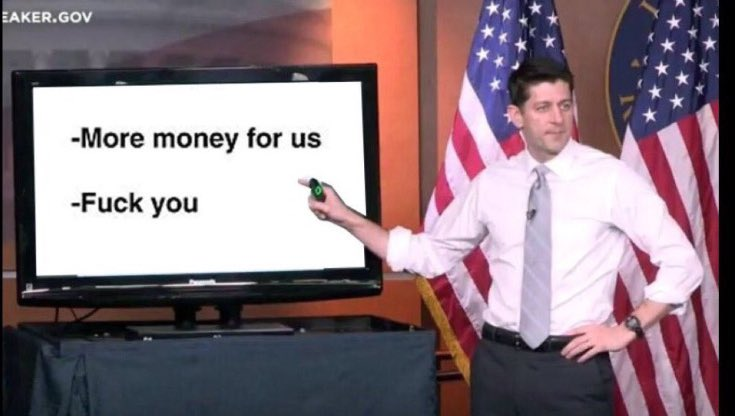
But shorn of those social liberal commitments, economic "liberalism" need not be tied to either a Rawlsian aid for the disadvantaged nor an egalitarian conception of the common good. A socially conservative economic "liberal" is perfectly happy to see government intervene to direct resources into his own pocket while leaving members of outgroups and the underclass to rot. Remember Paul Ryan's famous Obamacare replacement plan?


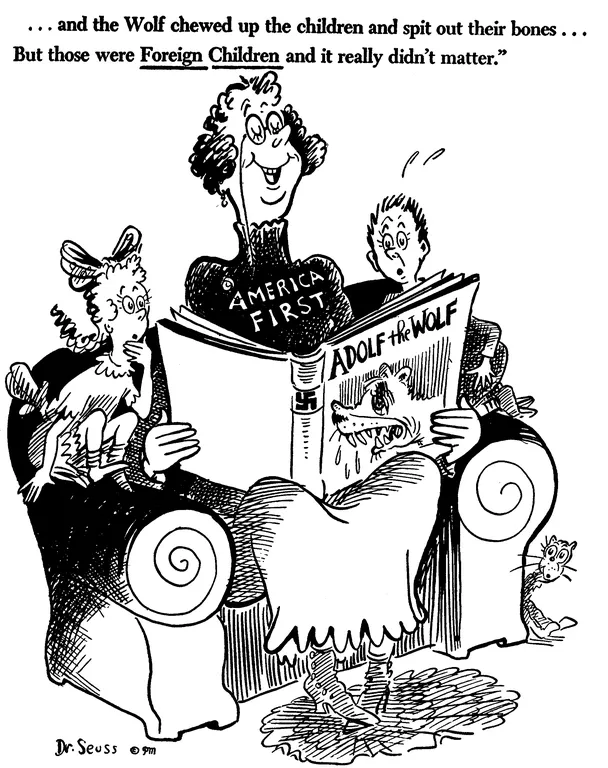
Yeah, it's like that. The right-wing "hur hur hur 'Nazi' stands for national socialist guess it's a left-wing ideology" was always exceptionally dumb, but the tiniest grain of truth there is that if you take "socialist" ideas of public support but violently demand they be provided solely to the favored and dominant in-groups, well, yeah, then you have a fusion of "nationalism" and "socialism". The problem is that the creeping fascism of the GOP is at best already adjacent to that position (what do you all think "America first" means?). 


The GOP does not now have, if it ever did, any commitment to free markets. That was already well known from such Republican-favored boondoggles as infinite subsidies to fossil fuel manufacturers or favored treatment for capital gains. Nowadays, Ron DeSantis more or less openly favors distributing government boons and penalties on the basis of political loyalty. The "economic liberal/social conservative" voter is probably delighted. So long as he gets his, what does he care that the distribution of government cheese is governed by corrupt criteria? If anything, that's a benefit! Democrats can't occupy this quadrant because the whole point of being economically liberal and socially conservative is that it matters to you that the economic distributions support a social hierarchy where your group is at the top and outsiders are punished for their foreign race, religion, nationality, or values, and that's a political space where Republicans will always carry an insurmountable advantage.

Saturday, June 04, 2022

A Rare, Coveted Debate Link Endorsement: Andy Levin

I don't like member-on-member Democratic primaries. That's because, for the most part, I like Democratic incumbents. I rarely bear them ill-will, and so I don't wish for them to lose elections. A member-on-member primary forces me to choose, and I resent that.

So it is in the Haley Stevens/Andy Levin match over in Michigan. I like both representatives just fine. I have no desire to see either out of Congress. And yet I've come to the conclusion that it's important to back Rep. Levin, because the message that would be sent by his defeat would be exceptionally toxic in Democratic Party circles. Rep. Levin is one of Congress' leading proponents of a two-state solution for Israel/Palestine -- an actual proponent, not a rhetorical one; someone who is actually willing to put money next to mouth and invest the resources necessary to induce both sides to take the steps necessary to make a just peace happen. It would be sad to lose his voice, but it would be catastrophic to lose his voice in a manner that suggests this very advocacy is what doomed his career.

Perhaps counter-intuitively, my logic is similar to that which prompted support for Shontel Brown over Nina Turner in their Ohio race. I noted there that Turner's formal position papers on Israel were not actually anything too objectionable. However, the coalition surrounding Turner seemed eager, even gleeful, at the prospect of sticking it to the Jews Zionists in a way that really couldn't be rewarded. Similarly, when they spoke to Michigan Jews, Stevens and Levin didn't seem that far apart on key issues -- there was a difference in how they talked about Israel, but it wasn't some gaping chasm. But the atmosphere around Stevens' campaign is very much "we need to punish Levin for his heresies about Israel", and that rhetoric hit a fever pitch early. On this, I agree entirely with Abe Silberstein's assessment:

The reason Andy Levin has drawn such vocal opposition from pro-Israel groups is not because he supports the two-state solution. It's because he doesn't accept the dogma on why a two-state solution has not materialized (Israeli flexibility/Palestinian rejectionism binary).

That's absolutely correct. One hears often from many Jewish and/or pro-Israel groups that they don't object to "criticism of Israel", what they object to is one-sided criticism of Israel; criticism that treats the entire conflict as wholly a matter of Israeli wrongdoing and malfeasance. The reality is, though, that many of those groups love "one-sided" criticism -- so long as it's Palestinians that are the only side being criticized. The last thing they want is an account of the Israel/Palestine status quo that takes seriously the reality that Israel bears a considerable portion of the responsibility for getting us here. 

Levin's support for a two-state solution isn't rhetorical, it's actual; and being actual it entails Israel changing portions of its conduct just as Palestinians must. That's good, healthy, necessary, what many if not most Jewish organizations say they want to hear -- and is apparently absolutely, positively intolerable in practice. The amount of energy and resources being devoted to taking out Levin, not just from groups like AIPAC but from organizations that really should know better, like the JDCA, is suggestive that these groups cannot and will not tolerate actual action supporting a two-state solution, and that'd be a devastating lesson to internalize.

It's no knock against Stevens herself. Again, I bear her no ill-will. I wish both Democrats could stay in Congress next year. But the atmosphere that surrounds this race makes it very important that Andy Levin win it. And so for that reason, the rare and highly coveted Debate Link endorsement has to go to Rep. Levin.

UPDATE: Andy Levin liked this post. I'm so tickled.

Sunday, May 29, 2022

Schoolchildren Shouldn't Have To Live Like Jews

In the wake of the Uvalde massacre, the internet is replete with proposals on how to avoid or at least mitigate the risks of yet another school shooting. Some in the Jewish community have suggested adopting some of the measures we have taken to keep our schools, centers, and synagogues safe -- things like controlled entry, on-site security, and other forms of "hardening the target".

Some of these suggestions might be good ideas, and most are being made with the best of intentions. But I feel like they overlooking something very important.

Growing up Jewish, these sorts of security interventions are so normal one can almost forget how abnormal they are. Of course there is a noticeable police presence during high holiday services. Of course someone has to check you in at the door before you're allowed to even enter the synagogue. Of course there is onerous keycard entry requirements if you want to access the building for a evening Torah study session. It is jarring to encounter the freedom of places that don't have that sort of security because they don't operate with the background presupposition that someone could be trying to kill their patrons at any moment.

Because these interventions are so normalized, we forget that having to impose these sorts of security measures is bad. These measures make Jewish life worse -- less open and more stressful, less accessible and more cloistered. Does anybody think that the ideal synagogue experience is like this? They may nonetheless be necessary because of the dangers Jews face -- but that's just it: they are reflective of Jews being a persecuted minority who are regularly targeted with violent threats and assaults. What does it mean to cross-apply them to the context of public elementary schools? It's saying that every 5 - 11 year old in America is as vulnerable as a member of the minority group that is, per capita, the most common target of hate crimes in the country! That's terrible! That should be seen as a catastrophe! If that is indeed the state of being a student in America, that is an appalling failure!

The title of this post is deliberately provocative. Jews should not have to live like this either. We should be able to live our communal life open and without fear, not looking over our shoulders for the next active shooter. But we've resigned ourselves to an inability to eliminate the root cause of our problem, antisemitism. We can't do it on our own, and broader society is not interested in investing the effort to make the project a success. So stuck with the reality of persistent violent antisemitism, at least over the medium term, these measures are suboptimal ameliorations of the consequences of our continued marginalization.

If schoolchildren are in the same boat, that must mean we've reached the same conclusion for them: as a polity, we just have given up on our ability to actually eliminate the threat to schoolchildren. We cannot be bothered to make the social and political investments necessary so that the status of schoolchildren is not analogous to that of a persecuted minority regularly targeted by violent threats. We have resigned ourselves to that level of vulnerability for our children, and now just seek to ameliorate the effects. That is appalling. It is appalling that Jews are forced to accept this; and it is a perverse form of justice that this quiescence be extended to every family with minor children.

I do not claim that the experiences of the Jewish community cannot be helpful in building out better security for public schools, in this decidedly suboptimal world where we have apparently decided to just accept this terrible vulnerability as a baseline. But we should not lose sight of the fact that if our experiences are even analogous -- what a striking indictment that is of our society. People should not have to live like this.

Wednesday, May 25, 2022

Well-Trained, Courageous Police Won't Stop Another Uvalde

There's a lot of chatter right now about reports that police waited quite a long time before police entered in force the Texas elementary school where a shooter had murdered nearly two dozen people. Much of that chatter is of a very typical brand of Twitter discourse of the "what good are cops, what were they waiting for, they're cowards, even in a situation like this they won't risk they're lives" variety.

I think that at least some of this criticism, though not all of it, is probably unfair. But more to the point: it is because I think that some of this criticism is probably unfair that I am very confident police responses are not going to stop another Uvalde. 

Here's the blunt truth: a school shooter, who does not care about his own life and hopes to kill as many other people as possible, has (to put it extremely bloodlessly) flexibility that those trying to stop him do not. To take one example: the gunman can, whenever he wants, enter any room he wants firing entirely indiscriminately. The police, by contrast, cannot simply enter any room they want firing indiscriminately; nor would we want them to. It's not a matter of courage, or numbers; it is a structural imbalance that favors the gunman over those trying to stop him.

But that's exactly why all this talk of "hardening the target" or bringing even more cops with more guns is so clearly not a viable response. Putting aside (though we shouldn't) the problem that this "solution" is basically to convert our schools into fire traps or prisons. Once a shooter is on site with a gun and a disregard for human life, they have a built-in advantage that no amount of police presence can fully reverse. Sometimes their rampage will be stopped earlier, other times later, but it's all mostly a matter of luck. Short of turning schools into bunkers, the idea that the "right" security measures can stop a man who doesn't care about his own life and can freely and easily access high-powered weaponry without breaking a sweat is nonsense. 

I have no idea whether the Texas police who were on site during the Uvalde shooting responded with ideal tactics. And, as awful as it is to say, if a shooting is ongoing, there really isn't much replacement for bringing it to an end other than armed officers. But if a shooting is ongoing, we've already failed in the most relevant respects. If the goal is to prevent these shootings from occurring outright, not to shrug our shoulders and say "it could have been worse", armed police are not going to do much good -- and it has nothing to do with courage, or armament, or tactics, or temperament.

Tuesday, May 24, 2022

Uvalde Parents Are About To Learn Just How Little the American People Care About Them

A shooting at an elementary school in Uvalde, Texas has killed nearly two dozen people, including nineteen children.

I grieve for the parents and families of those who were killed. They are going through a tragedy I cannot even begin to fathom. But as awful as things are right now, I cannot imagine what the survivors will have to endure starting about a week or a month from now.

Because that is when it will be hammered home just how little the American people care about them.

I want us to really understand this point. We love to talk about tragedies bringing out the best in the American people. We love heartwarming stories about blood being donated and volunteers flooding hospitals and homes being opened up. I don't want to discount any of those things. But we never talk about, and we should talk about, how tragedies like this bring out the absolute worst in the American people -- and here I'm not talking about the shooter. I'm talking about us, all of us, as a collective polity, who in a democratic society is tasked with making a collective response to catastrophes like these and has consistently collectively decided to shrug and carry on as if nothing happened.

It is human nature to shout, holler, cry out when we are hurt or scared. The more grievous the injury, the louder the scream. Why? To attract attention. Deeply rooted in our psyche is a fundamental belief that if others become aware of our hurt, they will help us.

The level of grief and pain the Uvalde parents are going through is unimaginable to me. Experiencing it, and knowing that others know you're experiencing it, naturally breeds the assumption that others will try to help you. How could they not? How could they be impervious to such raw, acute anguish? How could they just ignore the cries?

Imagine if you were shot on a public street. You cry out; people see your distress. Imagine if they do nothing. They just keep going about their business. Perhaps a few shoot you a sympathetic glance as they carry on with their errands. You beg for help -- maybe your leg can be saved if you get to a hospital quick enough. Nobody does anything. You are left alone to fester in agony -- seeing with your very eyes people who you know know how hurt you are and are consciously electing to do nothing about it.

And yet -- we know from far too much experience that ignoring is exactly what will happen to the Uvalde parents. We all are witnesses to their anguish, we all hear their cries for help. They know we hear them, and we know they know we hear them. Even still, there will be no serious efforts to respond to this catastrophe or ensure it does not happen again; same as there were no such efforts for the catastrophe before this, or the one before that. In a few days, the American people will have moved on. In a few months, they will make choices at the ballot box that could be responsive to the pain of the Uvalde parents, but most likely will not be. We could choose to elect politicians who would enact policies that might stop tragedies like this, but we won't -- stopping CRT in schools or maximizing our tax breaks will be far higher priorities. And so our politicians will continue to not pass meaningful gun control measures, and our judicial overlords will continue to pick away at the few that are enacted in slavish fealty to a maximalist interpretation of the Second Amendment. Nothing will change. The Uvalde parents will have been utterly abandoned to their grief. They will know, in their bones, that Americans simply do not care.

I've been struck, when reading about the "anti-CRT" panic, how often the complaint of the activist-rabble rousers sounds in the register of avoiding "guilt". "I don't want my kid to feel guilty!" I absolutely do not believe anyone should feel guilty for who they are. But we absolutely can justly be made to feel guilty for the choices we make, or fail to make. Our collective decision to turn away from scores of grieving parents, to not take any meaningful action to try to ameliorate their pain or at the very least change course so the next tragedy does not occur, is indeed a choice, and one we should feel very guilty about.

Maybe that's the right approach. Fear that our children might be next doesn't motivate us; nor does justice and retribution for the last batch of victims. Perhaps being forced to sit with the guilt that our choices represent abandoning our fellows in their moments of greatest need, to really stew in our own callousness and confront our abject indifference to the searing pain around us -- maybe that will be enough to motivate a change in behavior. I'm doubtful. But maybe.

Inventing "Fraud" Isn't Necessary for the GOP's 2024 Robbery Plans

In 2020, Republican politicians made bogus claims of fraud in order to justify attempting to steal an election they lost. But why bother with the "fraud" allegation at all? Why not just attempt the robbery? The answer, presumably, is that claiming fraud -- however spuriously -- was necessary to justify overturning the will of the voters and assigning electoral college voters to a candidate who got fewer votes.

The problem with this strategy was, of course, that the fraud claims were obvious nonsense and every sane observer -- including virtually all judges -- knew it. Insofar as the strategy was based on a flagrant lie, it was vulnerable to rejection once it actually hit the judiciary.

Fast forward a few years, though, and Republicans are coming to a realization: They don't need to claim fraud. They can cut out the middleman entirely and just assert the right to ignore the voters entirely. The claim being developed is a version of the "independent state legislature" doctrine that just asserts that state political officials (themselves often in highly gerrymandered seats that bear no relationship to the popular will) have free reign to decide who gets their state's electoral votes. Their decision need not be in any way constrained by such piddling trivialities like "who the voters of their state actually voted for" -- even in the funhouse mirror sense of "well if you discount the votes that we assert are fraudulent because *mumble mumble brown people*, then the voters actually chose our guy." The new version of the steal is a straight line argument that if the state legislature wants to assign their EVs to Trump, Trump gets them. The people can pound sand.

Unlike the concocted fraud allegations, this is fundamentally a legal assertion -- an extreme, terrifying legal assertion, but a legal assertion all the same. Getting the GOP judiciary to accept it does not depend on forcing judges to deny reality, it just depends on getting the right mix of reactionary nihilists who can issue a chin-stroking pontification about how slave states in 1810 organized their elections with a straight face -- and recent history suggests that a welter of federal court judges will be eager to accommodate them. 

Nonsense fraud claims might gild the lily of this endeavor, but they aren't necessary to the strategy. And for that reason, this strategy for stealing the election is far more likely to succeed than the last one. The 2020 steal attempt was a largely ad hoc, on-the-fly paint splatter thrown together by the least competent attorneys Trump's money could buy in a context where it still was mostly taken for granted that the vote tallies ought determine the winner. In 2024, the GOP establishment will have had time to prepare itself logistically, but also mentally -- it will have come to terms with making the argument that in our allegedly constitutional democracy votes don't have to matter at all (See the Senate! See the electoral college itself! We're a republic, not a democracy!).

Republicans swung as hard as they could in 2020, but they just weren't strong enough to ring the bell. This time around, they'll be trained, toned, and ready. I hope we are too.

Wednesday, May 18, 2022

Has AIPAC Invested Any Substantial Money in GOP Primaries?

Yesterday was a big primary day, and there are a lot of storylines being bandied about. One close to my neck of the political woods has been AIPAC's heavy investments in Democratic primaries attacking candidates it perceives as insufficiently pro-Israel. Their success rate was mixed -- two AIPAC-backed Democrats, Valerie Foushee and Don Davis, won in North Carolina, but in Pennsylvania Summer Lee looks to have narrowly defeated Steve Irwin for the Democratic nomination in a Pittsburgh-area seat where AIPAC dumped $2.7 million in on Irwin's behalf (AIPAC spent over $2 million on each of the North Carolina races).

Seven million dollars is quite a bit of cash on three Democratic primaries (in another race, AIPAC has backed Rep. Henry Cuellar in his primary run-off against Jessica Cisneros to the tune of $1.2 million). My question is whether there are any GOP races where AIPAC has spent equivalent sums seeking to ensure that its preferred candidate wins (or -- perhaps more saliently -- that a dispreferred candidate does not)?

I haven't heard of such expenditures, though I won't pretend I'm such an eagle eye that I'd necessarily spot them if they'd occurred -- that's why I'm asking! Still, my guess is that the answer is no, they haven't (this disclosure also suggests that AIPAC's United Democracy Project super PAC has only spent money on Democratic races). And the reason for my guess is that there aren't any credible Republican candidates whose positions AIPAC considers unacceptable on Israel. I could dimly imagine that they might have gone in against Thomas Massie, whom they've sparred with in the past over Iron Dome funding, but Massie cruised to victory last night with 75% of the vote.

What we're really seeing -- and this isn't a shocking revelation -- is that AIPAC has no meaningful "right-wing" boundary to what it considers acceptably pro-Israel. Absent David Duke style neo-Nazi anti-Zionism -- which actually is starting to nibble into the conservative mainstream but hasn't yet manifested on any national stage to my knowledge -- it is fine with literally any GOP position on Israel, no matter how conservative. One-stateism, pro-apartheid, pro-settlement -- nothing is off-limits to AIPAC. It may pay lip service to supporting a "two-state solution", but when it comes to things that actually get them off the couch and spending money, all the action occurs on the Democratic side of the aisle.

Tuesday, May 17, 2022

The (Non-)Prevalence Problem of CRT

Years ago, I remember reading a famous paradox concerning how Americans viewed the subject of foreign aid. If you asked them "should the US spend more or less on foreign aid," most Americans would answer "less" -- they thought we spent way too much money on the issue. But when you asked them to estimate how much the United States spent on foreign aid each year, they gave an answer that was an order of magnitude higher than what we actually spent. And worst of all, if you asked them how much they thought we should spend on foreign aid, their answer was still far higher than what we actually did spend -- and remember, this is from people who thought their position was that we needed to cut foreign aid!

At one level, this confluence mostly just shows that most people are innumerate. But taking it somewhat at face value, there is a nettlesome political puzzle here. What does one do if people say they want to adopt position X, but actually advocate for moving away from X, because they are under the misapprehension that the status quo is on the far side of X and thus believe that moving away from X actually means moving towards it?

This is a problem with some folks who've joined up on the "anti-Critical Race Theory" crusade. Of course, there are plenty of people who make no bones about their position -- they think CRT is a Globalist Marxist Socialist Communist Soros Triple Parenthesis plot, and they want to destroy it. But others at least purport to believe that Critical Race Theory should be taught, it just shouldn't be the only thing that is taught. For instance, David Bernstein of the "Jewish Institute for Liberal Values", a prominent anti-CRT voice in the Jewish community, took the position that any school which teaches a "traditional" narrative about civil rights should also teach a CRT perspective.


Now here's the thing. If your opinion is that every school should teach both a "traditional" and "CRT" style approach to civil rights, you are advocating for a position that is way to the left of the status quo. The vast majority of primary and secondary schools in the United States do not teach "CRT" at all. In some small number, you might get a CRT-influenced approach in conjunction with more traditional accounts. The number of students who are only being exposed to CRT, and no other perspective, is absolutely negligible. Objectively speaking, if your view is "students should hear both traditional and CRT views", you should be pushing for far more inclusion of CRT into public school curricula than is present in the status quo.

In other words, the entirety of the barrier to getting to the world Bernstein claims he wants to see comes from folks like the Speaker of the Wisconsin Assembly, who's trying to get the University of Wisconsin to rescind its hiring of respected scholar Jennifer Mnookin as Dean because Mnookin (this is a direct quote) "supports critical race theory being taught on campus". It's Texas passing laws limiting what can be taught in the classroom with the express goal of seeking to "abolish" CRT. It's Florida with a veritable cavalcade of legislation seeking to target and suppress "woke" ideologies.

Yet Bernstein, like the ill-informed respondent on foreign aid, has adopted a politics that sprints off in the exact opposite direction from where he claims he wants to go, because he has a wildly off-base assessment of how common Critical Race Theory is. He thinks CRT is everywhere, so getting to a position of even-handedness means pushing back against CRT's hegemony, even if it means making common cause with some unsavory actors. The reality is that CRT is still relatively obscure for most Americans, and so getting to evenhandedness would mean a more aggressive deployment of CRT into the American educational curriculum than would be dreamed by even the philosophy's most fervent supporters. 

Is he actually that ignorant about the true (non-)prevalence of CRT in the American educational system? I think he probably isn't; but there is something to be said for a certain type of elite who forgets the world exists more than 10 miles beyond Brooklyn and so confuses what is commonplace in a Williamsburg coffeeshop with the national status quo. A little of column B, a little (a lot) of column B, I'd wager. 

Thursday, May 12, 2022

The PA Has All the Leverage When It Comes To Investigating Shireen Abu Aqleh's Death

Earlier this week, Shireen Abu Aqleh, a highly respected Palestinian journalist, was killed during an Israeli raid in the West Bank. Eyewitnesses contend that Israeli soldiers shot her, and the bulk of the evidence points in that direction, though Israel maintains it has not yet been conclusively established who fired the bullet. Israel has asked the PA to conduct a joint inquiry into Abu Aqleh's death, but the PA has thus far refused -- preferring to conduct its own investigation and communicate the results to the US and Qatar (Abu Aqleh worked for the Qatar-based al-Jazeera, and she was a U.S. citizen).

As I said, as of right now the evidence strongly points towards the conclusion that an Israeli soldier killed Abu Aqleh. That corresponds with eyewitness testimony (including testimony that, at the time of the shooting, there were no Palestinian militants operating in the area). The bullet fired is one that is used by both IDF and Palestinian forces, so that washes. And an early video which purported to show Palestinian gunmen as the perpetrators has basically been debunked (the video was taken in an area that was nowhere near where Ms. Abu Aqleh was shot and from where it would have been effectively impossible for her to have been hit by any fired round).

Given all this, the fallback position of Israel's online defenders has been to cry foul over the PA refusing to cooperate with Israel in jointly investigating the event. "Why don't they want the truth?" "What are they trying to hide?"

But the fact remains that the PA has very little incentive to cooperate with Israel here, and "truth" has little (though not nothing) to do with why.

There is basically one, and only one, thing a joint investigation with Israel might be able to offer to the PA that it cannot get on its own. It's not access to the "true story" -- most people believe, and most of the available evidence suggests, that Israel is responsible for killing Ms. Abu Aqleh, and the marginal benefit of "confirming" that belief (whatever that means) is likely to be minimal even if we thought that a joint investigation would make such confirmation more likely.

Rather, what Israel might be able to provide that the PA almost certainly cannot get on its own is information on the actual individual who fired the bullet. If the goal is to see a particular John Doe face potential criminal consequences for killing Ms. Abu Aqleh, then a joint investigation is probably necessary.

That's the incentive for cooperation: not just the "truth", in the abstract, but the specific possibility that the investigation will reveal the personal identity of the shooter, who then will face material and appropriate consequences. What are the risks?

It is true that, from a bloodless, political vantage, the status quo of the narrative on this story is already one aligned with the PA's interests. Most people believe, and most of the available evidence suggests, that Israel is responsible for killing Ms. Abu Aqleh. An investigation could confirm that belief, or refute it, or muddy it up ("we cannot know for certain ..."). From the PA's vantage point, the latter two outcomes are very bad. And that's assuming the Israelis investigate in good faith, a stipulation that even some Israeli government officials concede is not one that Israel is entitled to receive.

The risk, in short, is not just that "the evidence" won't back up the prevailing narrative, it's also either that a bad faith Israeli investigation claims exculpation, or (whether in good or bad faith) the investigation only acts to kick sufficient dust around the issue so as to blunt calls for accountability. The PA presumably deems these risks to be quite weighty; and that fear cannot be dismissed as unfounded. And unfortunately, sans the unlikely event of absolute incontrovertible evidence emerging (which seems unlikely), any outcome other than "all parties agree an Israeli soldier was the shooter" -- whether it's (1) Israel lying about whether one of its soldiers killed Ms. Abu Aqleh, (2) it being genuinely not knowable whether an Israeli soldier killed Ms. Abu Aquleh, and (3) an Israeli soldier actually not having killed Ms. Abu Aquleh -- are largely going to be observationally equivalent.

So the choice of whether the PA should cooperate with Israel can be summarized as a weighing of the following probabilities:

P(Israel identifies a specific soldier who shot Ms. Abu Aqleh and subjects that soldier to adequate criminal possibility)

vs.

P(Joint investigation genuinely reveals Israel wasn't responsible) or

P(Israel in bad faith uses investigation to disclaim responsibility) or

P(Investigation, whether in good or bad faith, cannot decisively establish who bears responsibility)

Simply put, it strikes me as very hard to argue that the first probability is high enough to outweigh the latter three. Again, the PA has no reason to believe Israel will investigate itself fairly. Nor does it have much cause to believe that, even if Israel did identify a discrete perpetrator, that it would subject him to meaningful criminal sanctions. The most prominent recent case of an Israeli soldier being convicted of homicide against a Palestinian actor was Elor Azaria, who served a mere nine months for manslaughter after shooting a disarmed and incapacitated Palestinian assailant -- even that short sentence occurring in the face of massive public pressure supporting Azaria (something like two-thirds of Jewish Israelis backed pardoning him outright). I suspect the PA weighs the likelihood of the first probability -- that the investigation will fairly seek out the perpetrator and that the IDF will identify him if it is an IDF soldier and that the Israeli justice system will adequately punish him for any criminal misconduct -- as essentially nil.

In an ideal world, a joint investigation would still be the best outcome: if all sides act in good faith, a joint investigation is most likely to get at "truth" and most likely to identify any perpetrators who ought to face criminal liability. In the world we have, we cannot assume good faith and so we cannot assume a joint investigation in any way makes the "truth" more likely to come out. In practice, the PA has no doubt written off the realistic possibility that it will get the name of any Israeli soldier who shot Ms. Abu Aqleh, much less that he will face significant criminal consequences. Given that, the PA has zero incentive to give Israel the opportunity to blur the extant public narrative of this case; while Israel has every interest in hoping something ("truthful" or otherwise) will alter the prevailing discourse. 

In this environment, the PA has all the leverage, and it's up to Israel to offer something that the PA wants to make a joint investigation worth the latter's while. The most obvious thing Israel might be able to offer is the prospect that, if a perpetrator is found, he will face meaningful justice. It is hard for me to imagine how Israel could make that commitment in a manner that the PA would find credible -- unless, of course, Israel is able on its own initiative to find and arrest the shooter. If it can't do that (whether because it doesn't actually want to, or because it isn't actually able, or because no such shooter exists), I don't know what it could do that would make the PA inclined to be cooperative.

Monday, May 09, 2022

"Ex Post Facto" Abortion Prosecutions

I don't want to give any grandstanding GOP District Attorney ideas here, but I have a question about potential legal jeopardy of women who had abortions while Roe was good law following its likely invalidation in Dobbs.

If you've seen the maps about the status of abortion rights post-Roe, you've likely seen figures suggesting about half the states in America would ban abortion in Dobbs' immediate aftermath. Some of these are just states which are poised to act when Roe falls. Others have so-called "trigger" laws, which would criminalize abortion starting from the moment Roe is overturned.

But in at least a few states, there were laws which pre-dated Roe banning abortion that have never been repealed. And that, to my somewhat untrained eye,  presents a big problem for women in those states who may have had an abortion during the Roe era.

When a law is "struck down" as unconstitutional, it is not, as is popularly held, stricken from the books. The law still exists, it is just practically unenforceable. One effect of Dobbs would be to resurrect these zombie laws. But the question is whether the prohibitions found in those laws could be used to prosecute women who had an abortion while Roe was still in effect.

The instinctive answer is no, because the constitution prohibits ex post facto criminal lawmaking. You cannot criminalize conduct retroactively. So a state could not newly criminalize abortion and make that law apply to conduct that occurred before the law was passed. That would characterize many of the "immediate" abortion ban states; including, I think, the "trigger" law states.

But in the case of our states that simply kept their pre-Roe abortion prohibitions on the books, things may be different. The argument there would be that abortion was always illegal in those states, including during the Roe period. Yes, those laws couldn't be enforced during Roe's pendency, but the criminal prohibition was still on the books at the time the woman had the abortion in question. It will not be Dobbs that criminalizes abortion in these states, Dobbs will just remove the barrier that had prevented the state from enforcing its always-operative anti-abortion statute. It's as if you committed a crime but the DA couldn't prosecute because his hands were literally tied behind his back. Once he is freed from restraints, you cannot then say "well, I acted relying on the knowledge that the DA was incapacitated".

Does the rule against ex post facto criminal laws prevent prosecutions in such a case? It is far from clear to me that the answer is yes. Women in states that had continuous abortion bans in place during the Roe era may be at real risk of prosecution (assuming they're within the relevant statute of limitations). Yet another way that overturning Roe will wreak havoc on the settled expectations of millions of American women.