Wednesday, April 03, 2024

Glass House Cleaning


Anecdotally, the Israeli attack on WCK humanitarian aid workers delivering food in Gaza appears to be a tipping point for some people. On some of the (ostensibly) liberal Zionist forums I frequent, I saw people who just last week were arguing that the entire concept of "proportionality" shouldn't constrain Israel's military response now are shocked and appalled, and they aren't buying Israeli excuses about "maybe we thought a Hamas operative was in the area." Query why this event triggered the shift, but change is change.

The JTA has a story on the reaction of various Jewish institutions to the strike. It breaks down pretty much exactly as you'd expect: the liberals being clear-eyed in condemning the killing, the leftists condemning the killing and situating as part of the broader allegation of Israeli genocide, the centrists expressing sadness for the deaths while obscuring responsibility. And then there's ZOA:

Morton Klein, the president of the right-wing Zionist Organization of America, said that he did not know about the incident before being informed of it by JTA on Tuesday in the early afternoon. He said, “Now that you’ve made me aware of it, obviously I’m devastated that totally innocent people trying to do humanitarian work have lost their lives, I’m sure unintentionally.”

He also said the ultimate responsibility for the aid workers’ death belongs to Hamas.

“I blame Hamas. Every single fatality is blamed on Hamas for launching this war,” Klein said. “In any war you’ll have deaths of civilians that are unintentional. In a war, mistakes are made, targets are missed. if one takes the position that one doesn’t go to war if any innocents will be killed, you won’t go to war and Hamas tyrants will win.”

I happened to read this right at the same time as I read Bret Stephens' latest column on "the appalling tactics of the 'free Palestine' movement." The thesis of his article is that "the mark of a morally serious movement lies in its determination to weed out its worst members and stamp out its worst ideas"; among his examples of the worst members/worst ideas was the infamous statement by a coalition of Harvard student groups, immediately after October 7, which held "the Israeli regime entirely responsible for all unfolding violence."

One notices, of course, that this is exactly -- exactly -- the formulation that Mort Klein adopted vis-a-vis Israel killing the WCK workers: "I blame Hamas. Every single fatality is blamed on Hamas for launching this war." So one might ask if this "member" of the pro-Israel will be weeded out, and if his ideas will be stamped out. As someone who has watched repeated endeavors try and fail to hold ZOA accountable, I can tell you the answer: they're not. Stephens isn't wrong, exactly, when highlighting some of the repellant extremism that sits largely unchallenged in the pro-Palestine movement. But if the mark of a morally serious movement is its determination to weed out one's worst members and worst ideas, the pro-Israel movement is sitting in a terribly fragile glass house.

The Israeli attack on humanitarian aid workers is about more than just the seven innocents Israel killed. It is another boulder on the scale of evidence which overwhelmingly suggests that -- "most moral army in the world" protests notwithstanding -- Israel's orientation towards innocent life in this conflict has been one of cavalier indifference at best, malicious destruction at worst. Protestations that "war is hell" and "don't second-guess the generals" are ringing increasingly hollow as against the near-uniform conclusion of media, eyewitness accounts, NGOs, international observers -- you name it. Some may be biased (but then, so are Israeli government figures and their apologists). But people are entitled to draw conclusions from the reality before their eyes.

(Oh, and you should read the op-ed Jose Andres published simultaneously in the New York Times and Yedioth Ahronoth).

Tuesday, April 02, 2024

Free Fire


An apparent Israeli air strike killed seven aid workers from the World Central Kitchen who were distributing food supplies in the Gaza Strip in what the IDF is calling a "tragic incident". The IDF is already promising an investigation at the "highest ranks", but the facts already don't look good. The car carrying the workers was clearly marked (as one can see in the picture above), and the World Food Kitchen claims it was coordinating its movements with IDF officials.

"Despite coordinating movements with the IDF, the convoy was hit as it was leaving the Deir al-Balah warehouse, where the team had unloaded more than 100 tons of humanitarian food aid brought to Gaza on the maritime route," the [WCK] statement said.

"This is not only an attack against WCK, this is an attack on humanitarian organizations showing up in the most dire of situations where food is being used as a weapon of war. This is unforgivable," said World Central Kitchen CEO Erin Gore.

According to the statement, "the seven killed are from Australia, Poland, United Kingdom, a dual citizen of the U.S. and Canada and Palestine."

One thing this demonstrates is that the current apologia regarding the food situation in Gaza -- that it's not a supply problem, it's a distribution problem -- fails even on its own terms. "Distribution problems" are not acts of God; in this case, they plausibly emerge in significant part from the fact that the people doing the distributing have an alarming propensity to become targets for IDF strikes. If distribution requires security, and security requires people with some measure of military hardware (whether that be guns or armor or flak jackets), and IDF commanders are deciding that everybody bearing military hardware is a Hamas terrorist and is fair game to take a missile to the throat, well, small wonder food isn't being distributed.

That, in turn, underscores a larger point: this attack is only the latest in an avalanche of evidence demonstrating, at the very least, that the IDF's rules of operation seem unacceptably lax. The killing of three Israeli hostages by Israeli fire was perhaps the most obvious exemplifier of the problem, but it doesn't stand alone -- among other incidents, Israel also has been accused of targeting a "clearly identifiable" Reuters journalist with tank fire in Lebanon, and a Doctors Without Borders shelter whose "precise location" was known to military authorities. Haaretz reported this weekend on "free fire" zones that Israel has set up throughout the Gaza Strip, where essentially anyone who crosses the vicinity is deemed a valid military target and shot (this was what reportedly led to the hostages being killed -- they inadvertently crossed into one of these unmarked zones while fleeing their captors). The article suggests that some portion of the reported terrorist casualties Israel is reporting are derived from the uncorroborated assumption that anyone (or at least any military-aged male) killed in one of these free fire zones is a terrorist. As much as we hear about how we can't trust the "Hamas-run Health Ministry statistics" regarding the total number of Palestinian deaths (notwithstanding the fact that these figures have been born out in the past and Israel is not to my knowledge contesting them), we also have to take seriously the notion that right now, in this context and with this government, there is ample reason not to blindly trust Israeli figures and conclusions regarding casualty counts too.

And the conclusion that Israel is acting with cavalier indifference to civilian life is, perhaps, the most generous of the plausible inferences from the evidence. The alternative, of course, is that these attacks are not matters of recklessness but rather are deliberate. This does not require the implausible belief that Bibi has enacted some secret policy to kill all aid workers. It rather relies on the sadly not-implausible notion that some portion of midlevel and field commanders who've imbibed the drumbeat of "the media is the enemy, the NGOs are the enemy, everyone is the enemy, they're all conspiring against us" that is omnipresent in the right-wing press actually take that narrative seriously and are deciding to act on it. It doesn't take the entire army apparatus for this to be a problem -- just a few well-placed people who decide to take lines like "Al-Jazeera is a Hamas mouthpiece" seriously and literally, who feel secure in the knowledge that they'll never face meaningful consequence or punishment for their endeavors.

Either way, this cannot be allowed to continue. The Israeli government has nobody to blame but itself for putting itself in a position where an obviously just struggle against Hamas has become converted in the world's eyes into an indiscriminate pulverizing of the Palestinian people, because over and over again the evidence bears out that this is exactly what Israel has elected to do. Those choices were not inevitabilities, they were choices; and Israel has no cause for protest that it is being held responsible for those choices. It could have chosen differently. It opted not to. People are entitled to draw reasonable conclusions from the facts before their eyes.

Saturday, March 30, 2024

A Bridge Too Far


Immediately after the Key Bridge collapse, I wrote the following:

Congress needs to pass $$ for the Key Bridge rebuild ASAP. The longer it waits, the more likely some insane r-w conspiracy develops about how “bridges are DEI” and suddenly the funds are being tied to burning Pride books or something. 

Sigh

This week, Pennsylvania GOP Representative Dan Meuser slammed President Biden for calling on Congress to fully fund the response to the Baltimore collapse. Meuser insisted it’s “outrageous” that Biden wants to fund repairs in their “entirety,” and even demanded that some of this money must be taken from “ridiculous EV expenditures.”

[....]

Some GOP lawmakers are already treating future funding of the Baltimore response as a future concession on their part. Representative Jeff Duncan says Congress should not spend “one more dime” of additional infrastructure money before a border wall is built, as if the need for disaster relief can be used to extort Democrats into funding MAGA priorities in return.

[....]

It gets still worse. Some right-wing media personalities are floating whackjob theories blaming the collision on diversity, equity, and inclusion programs, on our supposedly open borders, and other MAGA preoccupations. Some “online influencers” and GOP politicians indulged in trivializing nitwit speculation and targeted Baltimore mayor Brandon Scott and U.S. Department of Transportation Secretary Pete Buttigieg with other assorted hateful smears.

Some predictions are too obvious to get credit for nailing.

(H/T) 

Thursday, March 28, 2024

March Badness


A GOP state legislator in Michigan, Rep. Matt Maddock, saw a bus with too many brown people near at the airport and jumped to the obvious conclusion: "Happening right now. Three busses just loaded up with illegal invaders at Detroit Metro. Anyone have any idea where they’re headed with their police escort?"

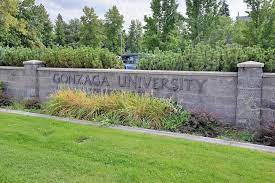
It was Gonzaga's basketball team, headed to the Sweet 16 round. But don't let facts get in the way of some good racism and red-baiting:

Maddock made his false claim in a month during which false and misleading claims about airplane flights involving migrants have proliferated on the political right.

Hundreds of social media users quickly disputed Maddock’s post on Wednesday, but Maddock refused to concede. He replied to one of the many people who pointed out the plane and buses were likely for NCAA basketball teams: “Sure kommie. Good talking point.”

Maddock continued to dig in on Thursday morning. He wrote a new post saying, “We know this is happening” and that hundreds of thousands of illegal immigrants are “pouring into our country.” He added: “Since we can’t trust the #FakeNews to investigate, citizens will. The process of investigating these issues takes time.”

Meanwhile, in Idaho the Utah women's basketball team was essentially chased out of the state after they endured repeated racial abuse at the hotel they were staying at in Coeur d'Alene (they switched to a different hotel in Spokane).

It's nothing novel to say that athletics (and college athletics in particular) represent a prominent arena where young men and women of color are placed in the (nominally positive) spotlight of predominantly White institutions, and there are a lot of White people who really can't handle that.

The Looming(?) Haredi Draft


For many years, Israel has effectively exempted Haredi youth from the otherwise universal requirement (for Jews) of IDF service. This has been a serious source of tension and strife in Israeli society -- a rallying point for secular and moderate Jews who view the Haredim as failing to pull their weight, and an absolute bedrock priority for Orthodox parties for whom avoiding military service is their number one policy demand.

The blockbuster decision out of the Israeli supreme court you might have read about doesn't quite compel the draft to start, but it does say that Haredim can no longer get their governmental stipends if they don't serve. In practice, the Haredi community is going to view it as the same thing -- an end to the system where they got paid to study Torah instead of serve in the army.

I won't claim to be an expert on this issue -- this is where I comment as an "interested amateur" -- but here are some initial thoughts.

  • One immediate way to identify a complete know-nothing hack is if you see anyone saying this ruling demonstrates that the Israeli government is starving for manpower or some other vulgar materialist explanation. The current government, which depends on the support of Orthodox parties for its majority, was and is absolutely dead-set against this ruling.
  • That said, the current war and the strain it's placed on Israel's military capacities has certainly even further elevated this issue's salience amongst the opposition, and that may have helped create a further permission structure for the court to rule as it did.
  • It is entirely possible that this ruling could bring down Bibi's government. The mercurial nature of the Orthodox parties is I think a bit overstated (people are so proud for knowing better than the naive story about the ultra-Orthodox being the primary drivers of Israeli right-wing extremism -- "they've joined left-wing governments before! Shas backed land for peace!" -- that they skip past the ways that this social cadre has genuinely shifted rightward in recent years). But this issue really is the sine qua for the ultra-Orthodox, and if the current government can't secure it, that's going to create a yawning fissure in an already creaky coalition.
  • It might be weird to think of "more militarization" as helping bolster pro-peace impulses in Israel. But we might see some shift in that direction, for at least two reasons. 
    • Number one, in general, if every social sector is sharing the burden of military service, that may put a damper on needless military adventurism. Parties that are happy to risk the bodies of other Israelis to defend settlement outposts may be less willing to do so once their bodies are on the line. 
    • Number two, for the Haredi parties in particular, the only way they might plausibly get their exemptions back is in a world where Israel is less reliant on constant militarization. So that could create some possibility for working relationship with more liberal forces in the state; albeit an "alliance" that will always be on shaky footing.
In any event, stay tuned -- this is a big deal.

Wednesday, March 27, 2024

End Spoofing


The Portland JCC, which also houses the local Jewish Day School, was swatted today.

Elsewhere, the mom of a friend of mine nearly got victimized by a scam where someone used voice-altering software to impersonate her daughter and beg for money after she was "in a car accident".

It's no mystery that these sorts of scams seem to be on the rise, and seem to be increasingly sophisticated. And I doubt I'm giving any hot take when I say that these scammers are absolutely, 100%, the lowest of the low.

One common tactic in these thugs' repertoires is "spoofing" -- basically, impersonating another number when they call you, so it shows up on Caller ID as your doctor or the IRS or a customer support center (or just hides the actual number that the person is calling from). 

I don't know whether spoofing was involved in either of the above incidents. But I'm increasingly of the mind that we might need to just ban spoofing outright.

I'm aware of the legitimate reasons for spoofing. A business wants a call to register as emanating from their main line, not whatever back office is calling you. Or someone working from home still wants to be identified as calling from their company, not their personal cellphone. I even can understand some cases where spoofing may have anti-fraud properties (it lets me know that the call is coming from someone at Aetna, which I may be disinclined to believe if the phone number is the random area code of wherever the nurse went to high school).

But at this stage, I just don't see those real benefits as outweighing the costs. It doesn't seem like the phone companies have any real way to distinguish "bad" spoofing from good. And while I don't actually know the mechanics (so what I say next might be entirely wrong), it seems to me that it would be technologically-easier to simply ban the practice outright -- create no mechanism through which phone calls can "identify" themselves as anything but their unique actual phone number -- than to engage in what seems to be a losing game of whack-a-mole.

And sure, I know in my heart that this is probably a lot more complicated than I realize (though I do genuinely believe that it's one of those things where, if there was some serious government regulatory muscle behind it, you'd see the telecom providers hop to it). But one of the joys of aging is that I get to cantankerously grumble about problems and just demand they be fixed, and I'm leaning in. 

Friday, March 22, 2024

Jewish Protests at Berkeley, a Follow Up and Victory Lap


UC-Berkeley Political Science professor Ron Hassner has ended his sleep-in protest, stating that the university administration has agreed to all of his requests. In particular he flagged the following:


(1) First, he asked that "all students, even the ones wearing Stars of David, should be free to pass through [Sather Gate] unobstructed. The right of protestors to express their views must be defended. It does not extend to blocking or threatening fellow students." The university has since "posted observers from the Division of Student Affairs to monitor bullying at the gate. These are not the passive yellow-vested security personnel who have stood around Sproul in prior weeks. The Student Affairs representatives are there to actively document bullying, abuse, blocking, or intrusion on personal space."

(2) The second request was for the Chancellor to "'uphold this university’s venerable free speech tradition' by inviting back any speaker whose talk has been interrupted or canceled. The chancellor did so gladly and confidently. The speaker who was attacked by a violent mob three weeks ago spoke to an even larger crowd this Monday."

(3) The third request was to fund and implement "mandatory Islamophobia and anti-Semitism training on campus". This has also apparently been arranged.

I give Ron a lot of credit. First, he's not dunking on the administration here, in fact, he gives them a lot of credit: "It is my belief that campus leaders would have fulfilled all these requests of their own accord even in the absence of my sleep-in.... At best, our sleep-in reinforced the university’s determination to act and accelerated the process somewhat."

Second, it's important to emphasize that Ron's protest did not ask or come close to asking that Berkeley silence anyone else's speech, including that of the protesters at Sather Gate. While they should not be able to obstruct Jewish students seeking to travel to campus, they have the right to present their views as well as anyone. It is not a concession but an acknowledgment of the proper role of the university administration that he did not press for them to end the protests outright.

Third, one might notice that Hassner's last demand was for antisemitism and Islamophobia training to be implemented on campus. In recent years, it has become almost cliched to hear certain putative anti-antisemitism warriors express fury whenever the fight against antisemitism is paired with the fight against Islamophobia, racism, or other forms of bigotry. They call it "All Lives Mattering" (although, when these coalitions against hate form and antisemitism isn't included in the collective, they call it "Jews Don't Count"). I've long thought that this was an abuse of the "All Lives Matter" concept, and it is notable that Hassner -- who not only has a ground-level perspective but who is actually putting his money where his mouth is in terms of combatting antisemitism -- doesn't see the pairing as a distraction or diminishment of what he's been fighting for but as an asset. More people could stand to take note.

Monday, March 18, 2024

Art Maven Roundup

All of the sudden, I've been on an art kick. The below image is a silkscreen I recently purchased from DC-based artist Halim Flowers. Flowers was convicted of felony murder as a juvenile and sentenced to two life terms. He was released after serving 22 years following statutory reforms aimed a juvenile offenders who had received life sentences, and now is showing in galleries around the world.


Pictured: "Audacity to Love (IP) (Blue)" by Halim Flowers. The colors are meant to be reminiscent of the Israeli and Palestinian flags (blue and white, and red, white, and green).

* * *

Trump continues to show his contempt for American Jews, saying any Jew who doesn't support him "hates their religion" (and Israel).

An in-depth story about a White supremacist who was elected to city council in Enid, Oklahoma, and the recall campaign to try and remove him.

Given the well-covered softness in Biden's support in the Muslim community, it seems suicidal to me for Democrats to give into the repulsive Islamophobic attacks holding up the confirmation of Third Circuit Court of Appeals nominee Adeel Mangi (the story indicates that Biden has remained rock-solid in backing his confirmation, but there may be some misgivings in the Senate Democratic caucus).

Writing on the sudden "heterodox" support for revisionist accounts justifying George Floyd's murder, Radley Balko flags what has been obvious for a long time: as much as this cadre likes to bleat about respecting truth, free-thinking, and rationality, it is as if not more beholden to ideologically-convenient narratives at the expense of reality. Pretty much everyone on the internet has been sharing this with their own story of the alt-center blowing past truth in order to push conservative grievance politics; mine was watching them stand in unblinking support of a hit piece on California's Model Ethnic Studies Curriculum even after it was revealed the author completely fabricated the inclusion of a seemingly-damning antisemitic quote.

Interesting retrospective on the Israeli Black Panthers in JTA.

The Supreme Court's frosty reception to the contention that government officials privately lobbying social media companies to take down misinformation is a First Amendment violation is the latest suggestion that the Court is finally losing patience with the regular drumbeat of insane legal theories emanating out of hyper-conservative Fifth Circuit.

Conversations with Normies


I enjoy talking to my brother about politics because he is, for lack of a better way of putting it, far more normal than I am. He is not passionate about politics, but he's not ignorant about it either. He pays some measure of attention because he's a good citizen who cares about the world around him, but it's not something he's independently especially interested in. There are, of course, a lot more people like him than there are people like me, even though there are a lot more people like me talking about politics online. So chatting with my brother feels like getting a sense of the pulse of normie America (even though of course he's not necessarily representative).

In terms of ideology, my brother is probably best described as a moderate Democrat. His line for the past several years has been pretty consistent in saying that there is a universe where he could imagine voting Republican, but it is not our universe because he fully recognizes that the Republican Party in America today is fully captured by insane people. 

So there was never any question that he'll be voting blue come November. But we happened to have a chat about his current political outlook on things. I present these not as endorsement or non-endorsement, but simply because what he said may be of interest to a readership who I suspect is (like me, unlike him) very much not of the normie bent.

1. He loves Joe Biden. One of the first things he said was that he's annoyed and frustrated by the notion that Biden is "the lesser of two evils" or a sort of shit sandwich you have to swallow given the alternative. My brother thinks Biden is great! He thinks he's had a tremendously successful presidency! In particular, my brother gave Biden a bunch of credit for lowering political temperatures and trying to pursue actual solutions to problems rather than demagoguing and grandstanding. 

Admittedly, my brother started off as a Biden supporter -- he was his favorite candidate at the outset of the 2020 primary (back when David was deciding between Booker and Warren). But now he wonders if he's really alone in that assessment, because so much of the prevailing narrative is centered around how nobody actually likes Joe Biden, they at best tolerate him. My brother is a loud and proud "I like Biden" guy.

2. He's lost patience with Israel's Gaza campaign. We're both Jewish, and while neither of us is super religious, we've both stayed involved in Jewish life as adults (and unlike me, he's visited Israel). He was obviously repelled by what happened on October 7 and thinks Hamas is a despicable terrorist outfit. Nonetheless, his take on the current status of the conflict in Gaza is that at this stage it feels to him as if it is no longer (if it ever was) about Israel's security, and now is just unconstrained vengeance being taken out upon the Palestinian population. He has no trust in or love for Bibi, and thinks he needs to go.

3. He's interested in Freddie DeBoer. That was, of all the names, the person he said he'd been reading recently whose work had been resonating with him -- didn't agree with all of it, but found him thought-provoking particularly on matters of mental health and "wokeness". I confessed that I hadn't thought about Freddie DeBoer in ages, so I couldn't really react to it. I suggested reading Matt Yglesias' "Slow Boring"; he laughed because Yglesias and DeBoer apparently despise each other even as they (in his mind) didn't seem too far apart when it came to tangible policy beliefs.

4. He's skeptical about the impact of "woke" trends. He doesn't identify with the efforts to destroy trans health care or anything like that (again -- he recognizes the GOP is crazy). But he did express concern about what he described as "wokeness", even though he also said he thought that term was clearly imprecise for what he was speaking of since it also captures plenty of activity he fully approves of. 

At first, I assumed he was talking about certain cringy performative activities that I could imagine being grating to someone of his views. But he emphasized that it wasn't just a matter of performance -- in his space (the non-profit world), he felt as if impactful programs that were doing a lot of good in marginalized communities were getting short-changed as donor priorities redirected towards initiatives that could more easily packaged as messaging DEI values (even if they didn't tangibly improve as many lives in the communities they purported to be uplifting). So his grief was partially an objection to performance, but with a tangible kick. I recommended he read Elite Capture: How the Powerful Took Over Identity Politics (And Everything Else) by Olúfẹ́mi O. Táíwò; he said he had heard of it but hadn't had the chance to read it.

Friday, March 15, 2024

Is Originalism a Sandwich?


In the latest iteration of her "notable sandwiches" series, Talia Lavin tackles the age-old question "Is a hot dog a sandwich?" She gathered a host of experts from a range of different disciplines to give their take, and while there wasn't a consensus, it seemed to me (I didn't count) that more leaned against it being a sandwich. The general thrust of the argument that most resonated with me, from sociolinguistics professor Matt Garley, was to frame the question as "Do people commonly or regularly refer to a hot dog (outside of this particular debate) as a sandwich?" In that light, the answer seems to be generally "no", even if it seems to formally meet the dictionary definition of a sandwich ("two or more slices of bread or a split roll having a filling in between.").

Later in the post, Talia gets a quote from Jesse Sheidlower, a lexicographer and former editor of the Oxford English Dictionary, who gave some insight on how dictionaries themselves approach this problem. Contrary to (perhaps) popular belief, dictionaries are not in the business of trying to give precise definitions that perfectly include and exclude everything that descriptively falls within the category-type of a given word. I'll quote him at length:
The general thing to know about dictionaries is that you're usually not trying to capture the complete and exact description of something; you're trying to get a general picture of what something means. This is hard enough for concrete nouns that we more or less know, like "horse" or "sandwich"; it's impossible with abstract nouns like "freedom" or "beauty". One of the most famous definitions in lexicography is the one for "door" in Webster's Third of 1961:
"a movable piece of firm material or a structure supported usually along one side and swinging on pivots or hinges, sliding along a groove, rolling up and down, revolving as one of four leaves, or folding like an accordion by means of which an opening may be closed or kept open for passage into or out of a building, room, or other covered enclosure or a car, airplane, elevator, or other vehicle."
This is what happens when you try to be exact—you get something useless.

So most dictionaries, that are written for native speakers and that assume a good-faith effort to understand the definition, give a reasonably broad definition, that will include most things that should be included and exclude most things that should be excluded.

There are, conventionally, two main types of lexicographers: lumpers and splitters. Lumpers include as much as possible ('liquid food' for soup); splitters write a dozen super-narrow definitions, and when a new variant comes up, they write another one.

Dictionaries are generally more lumpy than splitty. A sandwich is a food with something inside a bready thing. Trying to be super-precise is only going to lead to frustration (or the "door" definition above): Most people feel that a meatball sub is a kind of a sandwich but a hot dog isn't, but that's very hard to explain, so unless you have a definition like "… or a split roll having a cold or hot filling (that is not a solid length of sausage)…", you're kind of stuck.

If I can turn serious for a moment—and this is very serious—the reason that this is genuinely important, and not just a parlor game, is that people sometimes put a lot of faith in dictionary definitions. In particular, courts use old dictionaries to try to determine what words meant at a time when laws were written. But that is very much not how dictionaries should be used. If it's this hard to determine what a "sandwich" is, what are we supposed to do about words like genocide, or to bear arms? Or woman in reference to a trans woman? People literally die because dictionaries are misused. There are ways to attempt to answer these questions—corpus linguistics, sociolinguistic interviews—but thinking that a dictionary is an exact map of reality is not a correct one of these.

I wasn't expecting to see this point made in a fun post about the concept of a hot dog, but here we are. And it did crystallize for me an objection I've been flagging recently about "vulgar" textualism or originalism; a practice of judicial interpretation that purports to distinguish itself by close and careful reading of texts, but actually is just very bad at reading texts. Many of the cases that take this approach begin with a very close parsing of dictionary definitions in order to fix textual meaning. But this from the jump misunderstands what dictionaries are even trying to do. Even at the moment they are written, dictionaries are an at best imperfect map onto actual public meaning (the idea being that even if we were looking at a dictionary published today to answer the question "is a hot dog a sandwich", we'd likely be heading off in the wrong direction). And that gap only grows wider as time passes, because the actual meaning of words depends on a host of agreed-upon implicit assumptions and cultural horizons that are constantly shifting and temporally-contingent. 

We run into this question when trying to figure out how to apply an old word ("search") to technology that hadn't been invented yet when the word was written ("heat scanning"). One way of answering "is heat scanning a search under the Fourth Amendment" is to look at the dictionary definition of "search" circa 1789 and figure out if it fits. But that actually wouldn't really be the accurate answer, because what we'd actually want to know is if the relevant interpretive community would have generally used "heat mapping" as falling under the category of search. And that question, in turn, is essentially incoherent unless we also import into that community a host of surrounding cultural and linguistic practices that make "heat mapping" a legible concept that could be part of a robust linguistic pattern to begin with (if you plop down a heat mapper into 1789 without all of that context, then it's going to be seen less as a "search" and more as "eldritch magical witchcraft"). So what we're really asking when trying to figure whether heat mapping qualifies as a search today is "how would the relevant class of interpreters understand the relationship between these words, if they had the full cultural and linguistic context that we have today -- and at that point, our "originalism" is essentially just living constitutionalism.

Monday, March 11, 2024

Jewish Protests at Berkeley


I wrote a few days back about goings-on at Berkeley regarding protests -- which turned destructive -- against an Israeli speaker and a general deterioration of the situation for Berkeley's Jewish community. A few other developments have occurred since then, both of which entail Jews becoming the protesters, rather than the protested.

First, my friend and former colleague Ron Hassner has begun a sit-in in his own office, refusing to leave until the Berkeley administration takes action regarding a series of demands he's made regarding how to address campus antisemitism. Second, a large group of Berkeley Jewish students marched on Sather Gate, where a different group of pro-Palestinian students had been blocking passage as part of their own protest (and reportedly have been haranguing Jewish students in the vicinity). Initially, the plan appeared to be to force a confrontation by attempting to pass through the gate; in the end, the Jewish marchers diverted around the gate, wading across a small creek before reemerging on the other side.

I've given a recap before of my own experience at Berkeley, but that was from several years ago and certainly times and circumstances have changed since then. So I won't comment on the actual state of affairs for Jews on campus -- I'm not on the ground, and people like Hassner are. I do think this is an interesting example of Jews adopting what I termed a "protest politic" -- seeking change via the medium of a protest (as opposed to, say, a board resolution, letter to the editor, or political hearings). I wrote in that post that while I personally am averse to protests (not on general political or tactical grounds; it's a temperamental preference), it does seem that acting via protest -- sit-ins, marches, or even disruption -- was a way of marking yourself as being of a particular political class on campus and so a way of being taken seriously.
At least on campuses, it seems that certain brands of protest have become the language through which communities communicate that they are part of the circle of progressive concern. We can identify an issue as a "progressive" one by reference to how its advocates perform their demands -- the medium rather than the message. If something is demanded through a sit-in or a march, that's an issue that's in the progressive pantheon. Something that is pressed through a Board of Trustees resolution, not so much.
Again, I don't comment on whether these protests are "good", either in their tactical efficacy or their underlying demands. But I do find the adoption of this particular medium, and its comparatively transgressive character, to be an interesting development, and so I wanted to flag it.

Wednesday, March 06, 2024

The Uncommitted Story, Part II


I've been trying my best to give a dispassionate account of how the "uncommitted" campaign is doing. Obviously, supporters have an incentive to pump up its successes; opponents have a perhaps more mixed set of incentives (you don't want to give the impression that they represent the true majority, but there can be benefit in promoting a scary monster lurking in the woods). 

But for my part, I'd like to think we do ourselves no favors when we delude ourselves about the state of the world. If "uncommitted" is doing exceptionally well and demonstrating a genuine groundswell of opposition to Joe Biden's policies, there's no sense denying that just because one wishes it weren't so. If "uncommitted" is not performing especially impressively and doesn't stand out from always-present grousing at a coronated incumbent, then there's no sense denying that just because one wishes that weren't so.

So to actually figure out how "uncommitted" really is performing, it's important to establish our comparator. JTA put a piece up last night breathlessly comparing "uncommitted's" Super Tuesday support against how "uncommitted" fared in 2020. Framed that way, "uncommitted" had an outstanding night:

The uncommitted percentages barely dented Biden’s overwhelming win in each state, but far outdid 2020 percentages for uncommitted voters. In Minnesota, with 74% of votes counted at 10 p.m. Central Time, uncommitted was getting 20% of the vote; it garnered less than a half percent in 2020.

[...]

In Colorado, with 74% of the vote counted at 9 p.m. Mountain Time, uncommitted was getting 7.5% of the vote. It did not register at all in 2020.

In North Carolina,  at 11 p.m. Eastern Time, with 93% of the vote counted, uncommitted voters were 12.5% of those voting in the Democratic primary. In 2020, it was 1.64%.

In Tennessee, at 11 p.m. Eastern Time with 80% of the vote counted, uncommitted garnered 8% of the vote. It got less than a quarter of a percent in 2020.

In Massachusetts, with 51% of the count recorded at 11 p.m. Eastern Time, uncommitted was getting 9% of the vote. It got less than a half percent in 2020.

The problem is that 2020 is obviously not the right year of comparison -- an open Democratic primary with a sprawling field of candidates to choose from is very different from a reigning incumbent running for reelection (virtually) unopposed (if in 2020 you couldn't find a single Democrat of the approximately 531 running for president to "commit" to, I don't what your problem is).

So in terms of trying to give an objective assessment of "uncommitted's" performance, the actual comparison is to the last analogous presidential primary -- Obama 2012, since that was the last time we had an incumbent Democratic president running for re-election. 

In such cases, we would expect that there will always be some baseline number of people dissatisfied with the incumbent and looking to cast a protest vote. The question for "uncommitted" in 2024 is whether it is exceeding that baseline. Generously, we can assume that any overperformance compared to the 2012 figures is attributable to the "uncommitted" campaign vis-a-vis Gaza (though obviously, that might not be true). By contrast, if "uncommitted" isn't performing any differently (or worse!) than it did in 2012, then it seems unlikely that the "uncommitted" campaign is actually making much of a mark. So, for example, in Michigan "uncommitted" got 2.5% more in 2024 than it did in 2012, and then we have to decide what that level of improvement says about the strength of the underlying sentiment -- my conclusion was that this was a modest impact, but ultimately not too impressive save for the fact that Michigan's narrow margin makes anything meaningful.

With that in mind, how did "uncommitted" do compared to baseline expectations on Super Tuesday?

Unfortunately, Colorado and Minnesota didn't hold primaries in 2012, so we can't do a direct comparison. I will nonetheless eyeball agree that the 19% uncommitted took in Minnesota looks relatively impressive (though it actually isn't necessarily an outlier figure, as we'll see below). In the other three states, by contrast, things look very different for "uncommitted":

Massachusetts: 9% (2024) compared to 11% (2012)

Tennessee: 8% (2024) vs. 11.5% (2012)

North Carolina: 12.5% (2024) vs. 21% (2012)

These are all substantial underperformances compared to what we saw in 2012. Again, I understand why "uncommitted" backers are trying to juice them up, but these are not good showings! And these are the highlighted state where uncommitted did best! Except for Minnesota and Oklahoma (which seems to have a disproportionate share of randos on the ballot), Biden's broke 80% in every state he ran in on Super Tuesday. By contrast, back in 2012, Politico was running stories about Obama's primary weaknesses by pointing to states where he wasn't even cracking 60% of the vote (uncommitted got over 40% in Kentucky that year!).

So why is the media making a mountain out of this molehill? Certainly, "uncommitted" can give us some interesting microdata (the frustration among Michigan Arab and Muslim voters seems real, for instance, and notable). And in close states, any type of discontent can make a difference (though that proves too much -- any type can make a difference, meaning that any potential grouse or grumble is equally problematic). But I also think that we're seeing the effects of some relatively online journalists who are attuned to a relatively online campaign and so think there must be a "there" there. That, coupled with a deep-seated desire for anything that makes the horse-race story more interesting, and of course this is a tempting morsel.

But the reality seems to be that Biden actually is doing fine, compared to Democrats in analogous situations, of consolidating support. If anything, we've been seeing pretty persistent underestimation of his electoral appeal (itself perhaps a worthy topic for a post). "Uncommitted" right not seems to be mostly (not entirely, but mostly) sizzle rather than steak.

Tuesday, March 05, 2024

Israel Has a Right To Exist -- After That, It's All in Play, Part II


A few years ago, I flagged a poll of American Jewish attitudes regarding Israel that had some to my mind interesting data. Basically, many of the more strident "criticisms of Israel" -- ones that many mainline organizations had often characterized as antisemitic, like "apartheid" or "genocide" allegations (this was well before October 7) -- were not generally viewed as antisemitic by most Jewish respondents. To be clear, they were not agreed with either. But fewer than half of American Jews characterized such claims as antisemitic, which I found significant.

Yet there was significant outlier to this finding: the statement that Israel has no right to exist. That statement was overwhelmingly rejected and generally thought to be antisemitic. Contrary to what one might have expected, there seemed to be a significant number of Jews who had no problem with (or outright agreed with) statements claiming Israel was genocidal, but who drew a very firm line at denying its right to exist.

I found this a bit of a perplexing finding. It's not that I found the position incoherent, but it didn't seem to track any particular movement or cadre I was familiar with participating in the discourse. For example, the "thought leaders" (if you will) who tended to promote the view of Israel as an apartheid state did not, generally, take pains to affirm Israel's right to exist; in fact, they typically were quite dismissive of that claim as well. Indeed, I'm not sure I can think of any significant organization that occupies that lane of "Israel is an apartheid, genocidal state, and also it's wrong to deny its right to exist", even as statistically it seems that this is a significant quadrant of the political space.

More recent data is confirming this point, and thus deepening my confusion. A recent ADL survey found rising anti-Israel (and antisemitic) sentiments in the American public essentially across the board, some of the more alarmist findings include a third of respondents who wouldn't want to support a "pro-Israel" political candidate, almost 45% thought (at least "somewhat") that Israel was intentionally trying to inflict as much suffering on Palestinians as possible, and nearly a third thought Israel supporters controlled the media. Half of Gen Zers would be fine holding friendships with a Hamas supporter. And yet, here too, "Israel's existence" stands out as an outlier -- almost 90%(!) of all respondents thought that "Jews have the right to an independent country," a statement that may not be identical to "Israel has a right to exist," but probably is substantially overlapping for most people. Again, try to think of a major thought leader or NGO that takes the line "Jews have the right to an independent country" and also "Israel is intentionally trying to inflict as much suffering on Palestinians as possible" -- I don't know who we're talking about here. And yet, this distinction apparently does matter quite a bit.

The apparent distinctiveness of "Israel has the right to exist" or "Jews have the right to a state", which stands apart from even vitriolic criticism of Israeli policies, also can help guide how we interpret some new data on the state of antisemitism on college campuses. Eitan Hersh, who is doing absolutely essential work getting actual hard data to supplement the often "vibes-based" discourse around antisemitism, has released a series of new surveys measuring various components of Jewish (and pro-Israel) experience on campus. The first* of these, exploring the "social costs" of being Jewish as well as being a supporter of Israel on campus, found significant levels of exclusion along all fronts that rose dramatically after October 7. Some questions had nothing to do with Israel ("In order to fit in on my campus, I feel the need to hide that I am Jewish"; "People will judge me negatively if I participate in Jewish activities on campus."). But even the question about Israel -- "On my campus, Jewish students pay a social penalty for supporting the existence of Israel as a Jewish state" -- was tied to this seemingly distinct, outlier position of support Israel's existence, without any comment on particular policies (Hersh wrote that this question was "purposefully worded so that it doesn’t reference support for the current government in Israel or for any particular political view other than the right of a Jewish state to exist in the land"). Given that, the extremely high levels of social marginalization associated with this view -- over 75% say they will experience marginalization just for supporting Israel existing -- is quite alarming.

Hersh also asked a similar question of non-Jewish students: asking whether they "wouldn’t want to be friends with someone who supports the existence of Israel as a Jewish state" (so again, keyed to this seemingly distinct "Israel has a right to exist" position). While there was general uniformity amongst students of all political persuasions, liberal, moderate, and conservative, in how they answered this question (approximately 25% agreeing), the one exception was "very liberal" student for whom almost 50% agreed.

These findings might be worrisome even in taken in isolation. But juxtaposed against the broader polling which suggests that most people (Jews and non-Jews) do seem to view "Israel has no right to exist" as a distinctly problematic, redline position even if they otherwise endorse very strong criticisms of Israeli policy, and they're more worrisome still. It suggests that amongst at least some cohorts of younger Americans, the Israel-related views which trigger social sanction and penalty include even the most bare-bones "Israel has a right to exist position" that is overwhelmingly viewed as problematic not just by stalwart pro-Israel defenders, but even many erstwhile harsh critics. That, to me, is significant evidence that this problem cannot be waved aside as "conflating criticism of Israel with antisemitism" -- we have a more fundamental pathology at work here that needs to be tackled.

* The other two studies Hersh released cover how campus Jewish life and identity has altered since October 7 and how political ideology mediates student attitudes about Jews and Israel. All are very interesting, all include data that will challenge anyone's presuppositions and presumptions about where antisemitism "is" on campus and in what forms it manifests. And again, I want to applaud Hersh for giving us some helpful data in a field that is saturated with anecdote and innuendo. There's a role for narrative and a role for theory (I myself am a theorist, not an empiricist), but we're only helped when we have actual, reliable data upon which to tie our theories and narratives to, and I'm incredibly grateful to Hersh and his research partners for taking this project on.

Monday, March 04, 2024

The Work of Law


The Supreme Court this morning ruled in Trump v. Anderson that states cannot enforce the insurrection provisions of Section 3 of the Fourteenth Amendment against federal office-seekers. This part of the decision was 9-0,* and it rested largely on pragmatic grounds: state-by-state "enforcement" of Section 3 might lead to a patchwork of inconsistent state rulings and procedures, which would "sever the direct link that the Framers found so critical between the National Government and the people of the United States" and "could dramatically change the behavior of voters, parties, and States across the country, in different ways and at different times."

This pragmatic argument has purchase to it. This sort of "patchwork" was raised by many esteemed commentators, from all across the political spectrum. Many worried, for instance, that if Colorado was allowed to unilaterally disqualify Trump from the presidential ballot, then, say, Texas might do the same to Biden in response -- a tit-for-tat escalation that would throw the presidential election system into chaos.

To be sure, there also are certainly pragmatic arguments that push in the other direction. There is the practical need to ensure that Section 3 of the Fourteenth Amendment is actually enforced, for instance. There's also the fact that our federal system already bakes in a patchwork system of state regulation over federal elections that leads to a host of manifest inconsistencies -- that may be a bad idea, but it's one we've long accepted and will continue to accept in other contexts after this decision. And the worry about retaliatory red state action boils down to "if Colorado disqualifies Trump based on a legally plausible rationale, Texas might do so for transparently spurious and bad faith reasons." Given the state of the modern GOP, this possibility cannot be gainsaid entirely, but it is pathetic that we've even come to that point.

In any event, I digress. The main point I wanted to flag is that the Court rests its decision not so much on "originalism" or "textualism" but based on a practical assessment of what is necessary to ensure the workability of our presidential electoral process. As a pragmatist, I cannot complain about that approach -- except that it is an approach the Court only takes when it is convenient. In a year or so when we get our next Dobbs or Bruen, we will again no doubt see the Court solemnly intone that we must interpret the text of the constitution strictly in accord with the original meaning of the framers, consequences be damned (that's "results-oriented judging"!), and it will be revealed (even more than it already was) as a transparent lie. Beyond the merits of formalism versus pragmatism, it is the cheerful oscillation between the two based on the needs of the moment that reveal the fundamental arbitrariness of the governing Supreme Court majority (my fantasy is that just once we get a dissent that opens with, "the majority begins, as it must occasionally deigns to do, with the constitutional text...." and then but see cite all the cases where this Court has blitzed past the text to reach a "practical" result).

"The work of law," Justice O'Connor famously advised, "is to make the law work." I've long liked that approach. But when the work of law is revealed to be a work, not a shoot, there's little reason to trust judicial decisions that purport to rest either on workability or strict formalism.

* The Court also held, 5-4, that only Congress (not the judiciary) can effectuate the enforcement of Section 3 of the Fourteenth Amendment, based on the view that Section 5 of the Fourteenth Amendment renders this exclusively a congressional prerogative. I don't have much to say on this, except to note that I just finished teaching Section 5 doctrine in my Constitutional Law class last week and my notes contain a line about how "one view of the meaning of Section 5 is that only Congress can 'enforce' the Fourteenth Amendment; courts have to stay out. But nobody seems to take that extreme view ...." Certainly, this robust and exclusive understanding of congressional power would be news to the Congress that saw the Voting Rights Act struck down by the Supreme Court because Congress' textual Section 5 authority needed to yield to the judiciary's invented and atextual "equal sovereignty of the states" doctrine.

Friday, March 01, 2024

Berkeley Has a Tough Task Ahead of It


I just finished a draft article (now before law reviews!) entitled "They Managed a Protest: Prohibitory, Ethical, and Prudential Policing of Academic Speech." As the name implies, it addresses recent controversies regarding free speech on campus, though the framing device is the Kyle Duncan incident at Stanford Law which these days feels almost quaint. In any event, one of my main objectives in the paper is to explore the position of the university administrators -- often untenured -- who are tasked with enforcing free speech policies in the context of campus protests. They occupy difficult positions, not the least because many external observers think their position is easy -- just severely punish disruptive protesters and call it day. What could be simpler than that?

Of course, things aren't as simple as that, even in the seemingly clearest cases. Earlier this week, a group of protesters organized by the "Bears for Palestine" student organization managed to violently shut down a scheduled talk by a right-wing Israeli speaker at UC-Berkeley. Protesters smashed windows and the door of the building where the talk was scheduled to occur, and allegedly assaulted and slurred Jewish students trying to attend the event.

There's little question that this behavior violated UC-Berkeley policy and, probably, state law. The UC-Berkeley Chancellor, Carol Christ, has written a strong statement denouncing these actions. And for my part, as much as I respect the right of students to engage in protest, the allegations of what happened in this event are such that severe punishment -- including potentially suspensions or expulsions -- would seem to be warranted for at least the most serious offenders. To that extent, this is a simple case.

Even still, though, I do not envy the Student Affairs officials* who are tasked with operationalizing that simple case into actual disciplinary action.

To begin, it is abundantly clear that Berkeley is under immense pressure to significantly punish someone. If at the end of their process nobody gets more than a slap on the wrist for violations of this magnitude, they will be accused of turning a blind eye to this sort of behavior, or even tacitly sanctioning it. It needs, at the end of this, to put a few heads on pikes.

But to that end, while I suspect that Berkeley will be able to identify many of the students present at the protest, it likely will not be easy to figure who exactly is responsible for the more egregious acts that would justify the harshest punishment (the antisemitic slurs, the destruction of university property). Many protesters wore masks, and the group itself was comprised of students and non-students. 

So what is the university to do? It could adopt a policy wherein it just throws the book at everyone -- "expel 'em all and let God sort it out." But that sort of short-circuiting of normal due process protections will generate intense backlash and possibly make them vulnerable to a lawsuit. Breaking windows, smashing doors; these are violations of university speech policies. But -- depending on what went down at the event -- being in the vicinity of those actions, without participating in them, may not be. It's the difference between attending Trump's "Stop the Steal" rally versus actually breaching the Capitol. One might not think the former are good people, but they haven't done anything illegal.

In short, there are severe cross-cutting pressures at play here that make reaching even the "simple" right outcome harder than it appears. Those pressures are amplified by the very loud voices on both ends of the spectrum, some of whom will insist that nothing short of a complete extirpation of all pro-Palestinian advocacy on campus means capitulation, others of whom will fulminate that any consequence to any righteous protester on any ground is tantamount to jackbooted censorial thuggery. While we can perhaps justly demand that Student Affairs professionals ignore those voices (easier said than done), their presence, too, complicates significantly the more legitimate problems the office will face in its quest to come to a good decision.

* Disclosure: My wife works in the UC-Berkeley Student Affairs Division, albeit not in a role that has anything to do with meting out student discipline.

Wednesday, February 28, 2024

The Uncommitted Story


Last night, Joe Biden won the Michigan primary with approximately 81% of the vote. Donald Trump also won with 68% of the vote (you wouldn't necessarily clock that Trump did comparatively worse than Biden given the coverage, but that's hardly a surprise anymore). But while the foregone conclusion outcome isn't super interesting, many people have been keeping an eye on the relative performance of "uncommitted" in the Democratic column. 

For those of you who don't know, a campaign largely emanating from Michigan's substantial Arab and Muslim community urged Democratic primary voters to cast a ballot for "uncommitted" as a means of signaling discontent with President Biden's support for Israel in the war in Gaza. A few days ago, I registered my genuine curiosity regarding how "uncommitted" would play out in the Michigan Democratic primary. On the one hand, I said, I absolutely could see it "capturing genuine frustration amongst [Democratic] partisans (so getting substantial support)." On the other, I also could see it "mostly an online/activisty thing (so being a nothing burger come the actual vote tallies)." Since both hypotheses seemed plausible, I was genuinely interested to see what the reality would be.

Towards the start of the evening (with, as I recall, approximately 20% of the votes tallied), I wrote the following:

If “uncommitted” typically gets 10% and it holds at 16% (which it may not, in either direction), I’d say that’s not a huge performance (6% over baseline) but still meaningful given how tight MI will be. It’s not something that should be ignored; but neither is it “popular groundswell of rebellion”.

The "10%" baseline is based on the last analogous election where an incumbent Democrat was running -- Barack Obama in 2012. Ten percent (10.7%, to be precise) of Democratic voters then voted "uncommitted" despite there not being (to my knowledge) any significant organized campaign pushing for the vote, suggesting that this is baseline level of support for "uncommitted" that isn't attributable to anything more than inchoate background status quo discontent. Given that, my assessment was that getting an additional six percentage points of support is not trivial, but also isn't proof of some broad-based sentiments of frustration and opposition.

As I said, though, the tally was early and things might change in either direction over the course of the evening. I saw some people suggest that they expected the number to rise as the night went on, on the theory that "bluer" jurisdictions like cities were going to report later and the assumption that "uncommitted" voters would be more prevalent in those areas. But what ended up happening is that "uncommitted" faded over the course of the evening, finally settling at 13.2% -- about 2.5% over the baseline expectation (it's also below the 15% threshold necessary to pick up statewide delegates at the DNC, though it did get two delegates due to strong local performances).

From my vantage point, this really can't be said to be that impressive of a performance. It still matters in the sense that Michigan will likely be close and so every little bit counts. But ultimately, a well-organized campaign, with the support of some significant local Democratic figures (albeit opposition from many others) managing to overperform doing nothing by 2.5% really doesn't demonstrate much in the way of serious political muscle. I don't want to say the frustration that the "uncommitted" campaign is tapping into isn't real. But objectively speaking, it doesn't seem to be translating into significant alterations in Democratic voter behavior -- to that extent, it may be a largely cloistered thing. If I'm the Biden campaign, I'm certainly not ignoring this issue (for a variety of reasons, not the least being that its salience to activist, elite, and media cadres clearly punches above its weight, and then also because one wants to do the right thing and have a good policy that takes into account the views of all relevant stakeholders). But I think we've dispensed with the need for incipient panic.

That said, the "uncommitted" campaign did a wonderful job of setting expectations. The nice thing about a symbolic play like this is that since an objective win is obviously off the table (and not the realistic goal) pretty much anything can be sold as a victory. If you lose an actual election, you have to (well, I guess we've learned you don't have to) concede defeat. If you're not actually running to win but instead are just trying to trumpet your existence as a voting bloc, however, there's essentially no outcome where one has to "concede defeat". You will never see organizers release a statement to the effect of:

Our goal was to demonstrate that the people of Michigan care about X issue and that our values cannot be ignored. But given our anemic performance, the voters today have made clear that Michigan voters don't care about X at all and that we completely overestimated our influence. Thanks to everyone for taking part in this civic experiment, and we'll adjust our priors accordingly.

Here, the uncommitted organizers really basically set their bar on the floor -- they said their goal was to get 10,000 votes for "uncommitted", and they are celebrating for blowing past that tally. On the one hand, 10,000 is not a completely made-up figure -- it was roughly Donald Trump's margin of victory in 2016. On the other hand, in this primary 10,000 votes would have been barely over 1% of the total tally -- less than half of Dean Phillips' tally and a tenth of the Obama 2012 baseline. It is true that turnout is up considerably since 2012 (10.7% then was a little less than 21,000 votes; 13.2% in 2024 is over 100,000 votes) -- but it's hard to view that as bad news for Democrats.

The other observation I want to make relates to that prediction I saw that the "uncommitted" tally would rise as bluer, urban jurisdictions came in, when the reality was that "uncommitted" faded over the course of the evening. I wasn't following the returns closely enough to confirm whether the bluer areas were in fact reporting later. Assuming that they did, though, I think this is a good time to correct another common and understandable misapprehension: that the most partisan Democratic areas of a state are also necessarily the most progressive.

It's an understandable inference. In a two-party system, we might imagine that a voter who is only slightly left-of-center would regularly be at least tempted to vote GOP (given the "right" candidates), a voter who is more decisively liberal would be less likely to crossover, and the most liberal voter would also be the least likely to be tempted away to the other party. From that, we would infer that the most partisan Democratic voters (those least likely to ever vote Republican) are also the most progressive voters (there preferences are furthest away from those of Republicans).

But it isn't necessarily true. At one level, it's falsified by the presence of "both parties are the same" uber-leftists -- such persons may or may not be tempted to vote GOP, but they're obviously not Democratic partisans. The most partisan Democratic clusters are persons who are probably progressive enough not to be tempted by the GOP, but also not so left-wing that they find arguments like that appealing. But beyond that, there's more that goes into committed Democratic Party loyalty than ideological alignment. We know, for instance, that African-American voters are the most committed Democrats and that African-American Democrats are more likely to identify as moderate or conservative compared to White Democrats. There are other factors beyond ideology that are significantly responsible for why Black voters are Democratic loyalists. Likewise, the post 9/11 trend whereby Muslim voters overwhelmingly voted Democratic also was not primarily a feature of deep-seated ideological leftism -- it stemmed from "other factors" (i.e., rampant GOP Islamophobia) which superseded still-extant ideological moderation or even conservatism.

All of this is to say that the assumption that Black voters, because they are steadfast Democratic voters, also must sit on the left edge of the party on an ideological level, is a mistaken apprehension, and consequently the sorts of issues that are motivating the ideological left-edge of the party are not necessarily the same ones that motivate the base of the party. This isn't to say that the Democratic base is actually conservative; it's still probably true that it is relatively to the left of the average person who votes Democrat in any given November. It's just not all the way at the left-most edge of the party. That mistake, I suspect, is a large part of what generated the wrong assumption that "uncommitted" would perform substantially better in those locales.

For what it's worth, on a very quick gaze there doesn't seem to be much correlation between the Black vote and "uncommitted"; if anything, it seems to have underperformed. The overall Black population of Michigan is approximately 14%, and there are four counties which have proportionally larger Black populations than that: Wayne County (Detroit and Dearborn), Genesee County (Flint), Saginaw County (Saginaw), and Berrien County (St. Joseph) (Oakland County, north of Detroit, is exactly 14% Black).

Wayne County saw "uncommitted" get 16% -- but that's almost certainly more a product of Dearborn than Detroit (disaggregating those figures would be very interesting, but the fact that "uncommitted" outright won in Dearborn and Hamtramck, both of which are approximately half Arab-American, mathematically suggests it did much weaker numbers elsewhere in the county). By contrast, Genesee County, which contains Flint, saw "uncommitted" have one of its worst performances -- 9.5%. Saginaw County saw "uncommitted" get 10.2%, Berrien County 9.6%, and Oakland County 12.5%.

Plot "uncommitted" based on the most Democratic parts of the state (based on 2020 Democratic vote share), and things similarly look blurry at best. Joe Biden only won 11 counties in Michigan last time around. He won all of the above-mentioned counties except Berrien, plus Washtenaw (Ann Arbor), Ingham (Lansing), Kalamazoo (Kalamazoo), Kent (Grand Rapids), Muskegon (Muskegon), Leelanau (Traverse Bay), and Marquette (Marquette, on the upper peninsula). "Uncommitted" had possibly its best performance in the entire state in Washtenaw County, at 17.2% -- certainly a product of the University of Michigan community. And it did slightly better than its statewide average in Kent County (13.8%). But in every other county Joe Biden won, "uncommitted" underperformed its statewide average -- from 13.1% in Ingham to 9.1% in Saginaw. That said, the two counties "uncommitted" performed best in (Wayne and Washtenaw) are two of the heaviest Democratic hitters (along with Oakland) in terms of raw Democratic vote margins; the other counties listed, while won by Democrats, tend to be either smaller or closer (or both). 

So I'd say these results are mixed, and again, my advice to Biden isn't to just ignore this issue outright. Rather, it's to observe that the coalitional politics that drove the "uncommitted" movement are distinct from "the base" (and, in particular, Black voters). That's an important thing -- democracy is about appealing to diverse constituencies who have an array of distinct and differentiated interests, and this issue certainly had strong salience amongst Michigan's Arab and Muslim community, plus a fair amount of weight in the collegiate environs of Ann Arbor -- but it's not necessarily the same thing as it's been presented.

Sunday, February 25, 2024

Dealing with the Deal After the Day After


Bibi Netanyahu has finally released a "day after" plan for Gaza. It's not a real plan, for many reasons. It's not surprising it took this long, and it's not surprising it's not real: even though the nominal military objectives Israel is pursuing in the Gaza Strip are obviously impossible to effectuate without some serious plan for "what comes after", any serious day after plan is a conceptual non-starter for the hard-right coalition keeping Bibi in power. So of course Bibi is going to tap dance around this issue and defer it as much as possible; a new iteration of the old "airstrikes while you wait" policy. While in theory Israel is blowing up Gaza to accomplish certain policy objectives -- from the short-term bringing the hostages home to the long-term securing of the Gaza/Israel border -- in practice Israel is blowing up Gaza because as long as it's doing that it can avoid thinking seriously about how to accomplish those objectives insofar as a serious grappling with said issues would require concessions that are ideologically unacceptable by the Israeli right -- for example, recognizing Palestinians' legitimate rights to self-determination. 

But tempting as it is, I'm not going to go on a rant regarding the inadequacies of this plan (though, to stress again, it's woefully inadequate and intentionally so). Rather, I want to focus in on one aspect of it -- the vague nod to some "local" Palestinian administrators and operatives who would implement these policies on the ground. The questions that immediately raised include "who exactly does Israel have in mind" and "what self-respecting Palestinian would agree to serve as the Israeli government's cat's paw?" My friend Layla referred to it as a proposed "quisling" regime, and in context that's difficult to argue against.

Yet I do think we need to unpack that issue a little more. One of the most unfair features of an eventual Israeli and Palestinian peace agreement is that it is going to have to be agreed to by people you hate. And by hate, I'm not referring to some sort of atavistic bigotry, I mean a hatred that has very real and justified foundations behind it. It's going to be agreed to by people who supported kidnapping Israeli kids on October 7. It's going to be agreed to by people who supported destroying Palestinian cultural heritage throughout the Gaza Strip. And that's going to be very difficult to deal with.

Consider the following statement: "If you find yourself agreeing with Hamas, stop and turn back, you're doing it wrong." Seems straightforward enough. And yet, any deal in the foreseeable future we might reach will be, quite literally, in part an agreement with Hamas. That's unavoidable (as Rabin famously observed: "You don't make peace with your friends."). And the problem is that where "agreeing with Hamas" is (understandably) taken as strong evidence that a position is a bad one, then necessarily every possible proposed deal will immediately become suspect the moment Hamas signals it might agree to it (i.e., it becomes an actual deal). It's a huge thumb on the scale in favor of rejectionism.

The same is true running in the reverse direction: a deal with Israel means a deal with Israel; by definition, the governmental structure that emerges in Gaza as part of that deal will be one that is at some level acceptable to Israel. Indeed, that's the hope of a good deal -- it's one that everyone will be happy or at least content with. But this very fact also means that any "deal" will be vulnerable to the charge that it represents capitulation to the hated Zionists -- the very fact that they find it agreeable proves it is a deal not worth taking. Again, to reiterate, I'm not accusing Layla of this -- in the context of this proposed "deal" the charges have very real legs. The point, though, is that this is an omnipresent phenomenon -- it stands ready to sabotage any agreement, insofar as agreeability from the wrong party can always be leveraged as proof that we're being taken for a ride.

I think this dilemma is what generates one of the great misguided fantasies that pervade discussion of Israel and Palestinian -- the belief that it is possible for one side ("my" side) to generate a solution and just impose it, without having to account for the other. Some "pro-Israel" writers imagine a sufficiently vanquished Palestinian people such that Israel can simply write the terms of the final arrangement and have it be accepted durably ever after; this fantasy is in many ways what motivated the plan Bibi just released. To the victors go the spoils and all that. And this also can be found in the "anti-normalization" kick amongst some "pro-Palestinian" activists: they affirmatively reject collaborationist peacebuilding initiatives with Israelis in favor of a fantastical future where practices of ostracization and coercion sufficiently squeeze the lifeforce out of Israel such that they can just decree the ultimate solution and Israelis will have no choice but to accede (or leave). 

In both cases, the fantasy is one where one can come to a "deal" without actually having to deal with the party that one hates. And while I can in concept understand the appeal of the fantasy, it is ultimately a fantasy. It can't be made real. Worse, it comes perilously close to suggesting that the way we know a deal is just is that the "bad" side hates it and has to be coerced into accepting it -- if they agree to it with any emotion other than miserable defeatism, then we're being exploited. That way lies disaster.

I've long been a fan of Amos Oz's observation that, on a national level, what Israelis and Palestinians need is a divorce, not a marriage. And the events of the past few months only reinforce that view. As distant as a just two-state solution may seem, a just one-state solution seems farther still. Given what Gaza's government did to Israelis on October 7, and what Israel's government is doing to Palestinians now, if you believe that there's a viable route to "and then both polities unite under a single political structure in the spirit of brotherhood and liberal tolerance, happily ever after", I'd say you're either hopelessly naive or you don't actually care about one faction's happily ever after at all (for casuals, it's typically the former; for more committed partisans, it's definitely the latter).

But that doesn't mean divorces are easy. While it might seem to be the most straightforward thing in the world -- just get two parties who hate each other to agree to separate from one another -- what makes some divorces impossibly acrimonious is when the participants decide that their dead giveaway for a "bad deal" is that their interlocutor finds it acceptable, and their lodestone guide for a "good deal" is that their counterparty despises it.

So I write this to prepare us all for the uncomfortable future we'll have to deal with if we want to see an actual deal (not a fiated decree by our righteously prevailing host). Making a deal will mean agreeing with people every bone in your body may say "it's a bad sign that I'm agreeing with them!" That challenge will always be on there by people who want to sabotage the deal. But it can't be enough. You don't make peace with your friends.