Showing posts with label foreign policy. Show all posts

Thursday, July 31, 2025

Israel is How Europe Can Stick It To Trump


Over the past few days, we've seen a spate of hitherto solid Israel allies in Europe announce they'll be recognizing the state of Palestine. France kicked things off, and it was swiftly followed by the UK and Canada. (There also has been an interesting wave of Arab states calling on Hamas to demilitarize and relinquish power).

I'm not going to comment here on the substance of the decision. Briefly, it is obvious that Palestinians deserve self-determination in a recognized state, and I'm unpersuaded by those who are arguing the move will backfire against the Palestinians. As for those who claim that recognition "rewards Hamas", I say that, if we are to think of this decision in those terms, it's better to see this as not as rewarding Hamas for 10/7, but as punishing Israel for its conduct after 10/7.

But that's not what I want to focus on here. Rather, I want to explore a different question: Why now? What made these countries take this step now?

Obviously, there is not one single answer to that. But in addition to some of the obvious factors -- increased sympathy for the Palestinian cause and increased frustration with Israeli intransigence chief among them -- I suggest an additional cause is that stepping out on Israel is a comparatively cheap and insulated way to symbolically repudiate Trump and Trumpism.

The Trump administration's pivot away from our traditional allies and alliances has been met with a justified mixture of alarm and fury from those we've abandoned. From escalating trade wars to threats of annexation, Trump has done unprecedented damage to America's global standing. People want to see their leaders punch back. But many of the most obvious avenues for retaliation come with substantial risks of their own. As idiotic and self-destructive as tariffs are for the United States, it remains the case that European countries must be careful and adroit in their own trade negotiations. Symbolism has its place there, but it can't be the whole story; missteps can exact real and serious tangible damage on one's own people.

But sticking it to Israel offers much of that same symbolic flouting of Trump, at a much lower risk. Most of the "damage" there, if there is any, will be externalized, not internalized. To the extent some countries might have been reluctant to step out against Israel for fear of alienating the United States, that ship has sailed; today these countries are looking for opportunities to signal they're standing up to the American madman. And while the Trump administration might make noises about retaliation, I think they're fighting on too many fronts for protecting Israel diplomatically to be a serious priority -- and that's even if one believes that Trump's Israel policy is based on sincere ideological commitment, which I don't. If one thinks Trump is just using "Israel" as an excuse to enact various forms of domestic repression, the ultimate disinterest can be doubled. In essence, Europe recognizing Palestine (a) looks increasingly justified and sensible given recent Israeli conduct and (b) offers an opportunity to be seen as standing up to Trump, in a context where tangible blowback is likely to be minimal. No wonder it's looking more attractive!

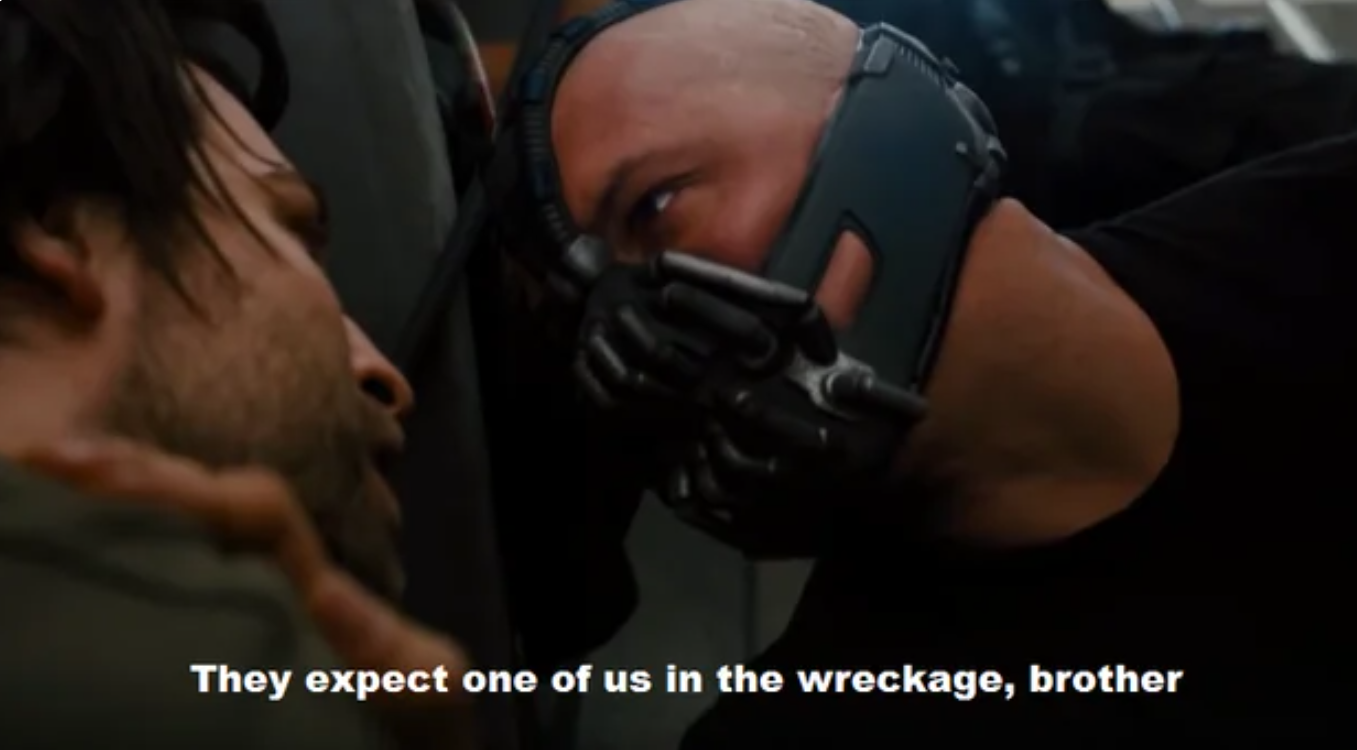
None of this should be seen as warranting any sympathy for Israel of course. They've chosen their course -- lashing themselves to the most extreme and vicious iteration of global rightwing ultranationalism -- and they have to live with the consequences. That's the risk of hitching your wagon entirely to a single powerful but widely loathed patron -- if daddy gets distracted, you're on your own and you've made yourself an awfully tempting target. Once again, when the right is done finding Israel useful, it will leave it in the wreckage.

Thursday, April 10, 2025

The Global Right Ascendance Will Leave Israel in the Wreckage


Many people have taken note of recent poll data regarding American attitudes towards Israel, which are (to summarize) cratering. Among Democrats, 69% now view Israel unfavorably. This doesn't surprise me, as Israel has done everything it possibly can to spit in the eye of Democrats and liberals (and yet somehow seems ever-so wounded that it's resulted in declining support). To paraphrase Chidi from The Good Place: In order to be a liberal, you have to do liberal things!

But what really should get people's eyebrows up are the numbers amongst young Republicans, where a majority (50%) also view Israel unfavorably (this is in contrast to older Republicans, who overwhelmingly like Israel; amongst Democrats there is a little generational gap). The MAGA Young Turks have no reservoir of good will towards Israel. They may sometimes find it a useful rhetorical trope to instantiate other goals (like xenophobic nativism), but it's a purely instrumental play. Ultimately, the rising tide of antisemitism amongst young Republicans is going to swamp whatever residual utility Israel has in the toolkit of right-wing domestic authoritarianism.

Indeed, reading this poll data reminded me of Robert Kagan's article a few years ago about Israel's future in an illiberal world -- namely, that Israel is delusional if it thinks that, in a world governed by reactionary nationalism combined with short-sighted faux-realpolitik, it will retain any sort of "special relationship" with its erstwhile patrons. Negative polarization alone will accelerate already deteriorating relationship Israel has with other western powers as Israel becomes associated with the new illiberal bloc; but if you look at the prime players in said bloc (Russia, China), Israel's never had an especially warm relationship with them either. Add that to the waxing influence amongst young MAGA sorts of figures like Tucker Carlson and Candace Owens, and why would Israel expect to remain anyone's favorite? Why wouldn't the right jettison Israel the moment it becomes an inconvenience to dealmaking with nations possessing more people, more territory, more wealth, and more oil?

We're already seeing inklings of this in how Israel has been treated in the tariff, er, "negotiations." First, they were slapped with higher tariffs than Iran. Israel tried to preempt that move by dropping its tariff rate for the United States to zero, but it didn't work even after an embarrassing bit of personal supplication from Bibi. Turns out Israel isn't Trump's special favorite; the best it can hope for is to be relegated to a pure client-state, begging for scraps (even antisemites, after all, sometimes are willing to tolerate Jews when they sit in states of permanent abasement).

This is all, of course, leopards-eating-faces on a geopolitical scale. But Israeli conservatives are, I think, in complete denial as to what's happening here. There may or may not be an ascendance of illiberal conservatism over the next few decades. But I predict that, of all the countries that might identify with and try to hop aboard that bandwagon, Israel is the most likely to be left behind in the wreckage.

Wednesday, June 19, 2024

Israel Threatens New Settlements in Retaliation for Palestine Recognition


CNN ran this story a few days ago, detailing statements from some Israeli government officials promising expansion of West Bank settlements in response to the decision by several European nations to recognize Palestine as a state.

Israel’s government says it is looking to “strengthen” Jewish settlements in the occupied West Bank after several countries unilaterally recognized a Palestinian state.

In a statement issued on Sunday, the Prime Minister’s Office said all of the proposals for strengthening settlements in what Israel biblically refers to as Judea and Samaria would be voted on at the next Security Cabinet meeting.

Norway, Ireland, Spain and Slovenia have each recognized an independent Palestinian state in recent weeks, a move motivated at least in part by Prime Minister Benjamin Netanyahu’s open refusal to commit to a two-state solution.

[....] 

Israel’s far-right finance minister, Bezalel Smotrich, said in May that Israel should approve 10,000 settlements in the West Bank, establish a new settlement for every country that recognizes a state of Palestine, and cancel travel permits for Palestinian Authority officials.

At the top level, this is another data point for an already-complete illustration showing that the Israeli government has quite a few far-right expansionist extremists in positions of alarming power and influence. Not new, but still essential to flag.

But there is another point worth mentioning, which also is not especially novel but does need to be pointed out. It is common to argue that Israel's brutal, hyper-aggressive assault on Gaza is persisting because other nations (particularly, but not exclusively, the United States) haven't taken sufficient punitive action against Israel to punish it for its misdeeds. Diplomacy is a function of carrots and sticks, and we've left the "stick" part out of our repertoire for too long. Had we utilized sticks more robustly, then maybe much of the current crisis could have been averted or at least ameliorated.

Perhaps. But as the above story illuminates, it's not necessarily the case that diplomatic "sticks" always serve to bring their targets to heel, or even arrest their bad behavior. Sometimes, particularly over the short-term, they can instead accelerate it. For obvious reasons, states have a very strong incentive to not give the impression that hostile action (or actions they perceive as hostile) against them will yield positive results. To the extent Israel doesn't want other countries to recognize Palestine, it's very predictable that its next move in the game will be to take actions that suggest "doing this has led to X Y Z bad consequences you don't want to see repeated." Countries that feel isolated or as if they can only rely on themselves often are more aggressive or reckless than those enmeshed in thick webs of relation, precisely because they believe that even a single mistake or miscalculation could be their ruination. As awful as it can seem to feel complicit in another nation's bad behavior because one is seemingly continually coaxing and pleading and appeasing rather than just putting a foot down and saying "no", the latter approach often runs the risk of being triggering terrible backlash with devastating immediate consequences.

This isn't to say sticks are never warranted at all. Sometimes the stick-like action is important enough for its own sake to absorb the immediate negative reaction. More broadly, the stick-wielders also have good reasons to communicate that where a given actor crosses certain redlines, they'll endure consequences they won't enjoy.

All of which is to say that diplomacy is a delicate dance, and there are more moving parts than many would care to admit. Sometimes it's worth swallowing an immediate bad consequence to set a broader precedent or to secure a long-term goal. But sometimes there are good reasons to think that the stakes of the immediate backlash demand swallowing one's pride and continuing to take what to an outsider may seem to be a maddeningly light-touch approach. The fact is that in all diplomatic relationships there are multiple players in the game, and it is rare that anyone -- even a hegemon like the United States -- can simply fiat someone else into compliance (I thought this old post from Cheryl Rofer on the term "deterrence," and how the term purports to "transfers agency to the deterrer" while obscuring that the "deterred" has agency too and won't necessarily react how you want them to, raised similar points).

Am I saying recognizing Palestine is a circumstance where countries should have backed off to avoid the Israeli reaction? No -- in fact, I think there are some very good reasons why here it was reasonable for the countries in question to bite the cost and go through with recognition. Again, sometimes absorbing the immediate backlash is worth it. But we should be clear-eyed about the trade that may have been made: recognition of Palestine for increased and accelerated settlement activity in the West Bank.

Is it fair that this is a "trade"? No. But diplomacy isn't about what's fair. And the broader lesson is one that's important to remember -- regarding Israeli and Palestinian actors alike. Too often, too many of us are seduced by the notion that it is possible to simply bludgeon the bad guy into obedience. The reality is that often, the project of avoiding the worst outcomes means making nice and doing nice things to actors who are doing, have done, and will continue doing all sorts of unlovely activities. If you can't accept that, you might want to find a different field to commentate on.

Sunday, February 18, 2024

Learning the Right Wrong Lessons


The Biden administration's decision to withdraw from Afghanistan should be viewed as a milestone moment in political courage. Instead, as both Scott Lemieux and Kevin Drum observe, it's probably one of his biggest political millstones. How did this happen?

We need to be clear: Afghanistan had become a hopeless quagmire. As Lemieux puts it, we could stay "for six more months" in perpetuity and just slowly bleed more and more, or we could make a decision to leave. Eventually, someone would have to make the decision to leave, and the only question was who would rip off the band-aid. Three different presidents kicked that can down the road for someone else to deal with.

It was Biden who finally had the guts to step forward, and he did so knowing he'd take a hit. There was no way withdrawing from Afghanistan was going to be pretty. Losing rarely is. But in the scheme of things, the withdrawal went about as smoothly as reasonably possible. Again, "reasonably possible" -- losing isn't going to be pretty. But all the armchair generals in the world still haven't offered much alternatives aside from "stay for another six months, and another six months after that." See point one.

Biden should have earned praise for this call. Instead, he get hit with a brutal one-two punch -- one from the media, which positively excoriated him over the "chaotic" withdrawal; and then from the putatively anti-war left which gave him essentially no credit for the move and certainly showed zero interest in providing substantial political cover for it. Indeed, it is fair to say that the Afghanistan withdrawal was the negative turning point in Biden's poll numbers with the American people. Doing the right thing got him nothing with the left and got him scorn with the right.

It can be hard to predict political fallout -- my students are now young enough that I have to emphasize to them that the moral taken from Nader 2000 was absolutely not "Democrats learned that they can't take the left for granted!" -- but even the most dimwitted politician surely will understand what obvious lesson to draw from this story, and it's not a good one. Nice work, team.

Tuesday, December 12, 2023

The Day After Hamas


The New York Times reports increasing "daylight" (to use an old term) between President Biden and Netanyahu regarding what the aftermath of the Gaza campaign will look like -- specifically, regarding the role that the Palestinian Authority might have in governing Gaza once (knock on wood) Hamas is defeated. 

Paul Campos thinks this is reflective of the worries regarding "the administration’s up until now very muted response to the siege of Gaza, and the gathering human rights and public health catastrophe that it represents." I'm not sure that's quite right, though it's perhaps lurking in the background. The more prominent instinct, I think, is that Biden fundamentally agrees with Israel regarding the merits and necessity of destroying Hamas, but fundamentally disagrees with Bibi regarding "the day after". The more "the day after" becomes salient in our minds and we start thinking not in terms of the war's prosecution but its aftermath, the more we're going to see latent but always-present disagreements between Bibi and Biden come to a fore. One sees this dynamic particularly in how Biden relates his response to Bibi's claim that the allies "carpet bombed Germany" -- "I said, 'Yeah, that’s why all these institutions were set up after World War II, to see to it that it didn’t happen again.'" The former point is about prosecution of the war, the latter point is about how we handled the aftermath.

For Biden, destroying Hamas has to be followed by aggressive state-building efforts meant to provide a real future (economically, socially, and politically) for the Palestinian people. The allusion to the Marshall Plan after World War II is clearly part of this, and other relevant players are also insisting that any plans for rebuilding Gaza credibly commit to a realistic pathway for Palestinian statehood. For Bibi -- well, I really have no idea what Bibi's "day after" plan is. I don't think he actually wants to fully reoccupy Gaza; but he also doesn't want the PA involved; or international involvement; and certainly Hamas is out the question; so ... where are we left? He seems much more interested in what he'll say "no" to than what he can plausibly say "yes" to, because at this stage in the game reality has become Bibi's unconquerable enemy. And Biden, in turn, isn't going to have a lot of patience for Israel post-war simply refusing to let Gaza rebuild itself or have any sort of self-governance structure whatsoever just because Bibi can no longer square the circle of "no formal occupation" and "no Palestinian independence" by building a castle around Gaza and then never thinking about it again..

Even if one accepts that Israel is pot committed to destroying Hamas, that doesn't obviate but rather accentuates the need to have a serious answer to the "day after" question. Anyone remotely serious figure understands that the war in Gaza is the middle of the story, not the end, which makes it unsurprising that Bibi wants to treat it as an end and just close his eyes to what happens in the aftermath. Biden is a more serious person, and so he's actually contemplating these questions. 

Monday, February 20, 2023

Biden Visits Ukraine

President Joe Biden made a top-secret (but now public) visit to Ukraine in a show of solidarity as the country continues to face down Russia's war of aggression.

I don't have a lot to add to this except to say that as symbolic gestures go, this is quite the move. It obviously is reminiscent to trips Presidents Bush and Obama had made to Iraq and Afghanistan, but even more difficult to pull off given that Ukraine doesn't have American troops on the ground providing a security buffer.

As the GOP continues to play footsie with Putin's authoritarian thuggery, and the usual red-brown alliance pushes for Ukrainian capitulation and subjugation, this act of solidarity by the President is more than welcome.

Monday, February 14, 2022

The DSA Seizes The Tankie Moment

The original "tankie" incident, the one that gave the term its name, came when the Soviets invaded Hungary in 1956 to crush a workers' uprising. "Tankies" were those leftists who followed Moscow's line in supporting the invasion, dutifully repeating Soviet propaganda about how this was "anti-fascist" or how it was responding to "American aggression", despite the fact that under any objective metric it seemed a straightforward form of imperialist aggression by a powerful state against the very democratic and labor forces that these same leftists claimed to stand in stalwart defense of. 

Most of us, of course, were not around in 1956 and so missed the opportunity to be original tankies. But all that's old is new again, and we now literally are faced with a seemingly imminent decision by Russia to once again send in tanks to invade southeastern Europe! And the Democratic Socialists of America have responded by showing just how excited they are at the chance to fly their tankie flag high. Their statement that regurgitates every predictable horseshoe-theory trope about why Russia is really the victim here, everything bad is America's fault, and "solidarity" means telling Ukraine it deserves what it has coming to it. Way to seize the moment, DSA! Who even cares that Russia is now itself a right-wing kleptocracy? It's adverse to American interests, and that's (apparently literally) all that matters.

It's a side issue, but I think there were some Jewish progressives who had some sympathies with the DSA, at least on matters of domestic policy, and were accordingly a bit rattled by the DSA's decision to go all-in on backing BDS in its most extreme and uncompromising possible form -- not because of the "trend" it did or didn't portend, but because it caused them (the Jewish progressives) to second guess their own instincts that were averse to BDS. If the DSA is a reliable guidestone to good progressive policymaking generally, what does it say that I'm bucking them here? It is, I imagine, a relief to remember that the DSA's foreign policy approach is consistently terrible, anti-democratic, and pro-authoritarian (see also: Venezuela), and that there is absolutely no reason to feel even remotely anxious or skittish if you end up on the opposite side of the argument from them.

Tuesday, August 17, 2021

Thinking of Refugees First

A not-so-modest proposal:

The next time the United States commences a large-scale military incursion into another nation (and let's be realistic, that will happen again -- perhaps because it will be genuinely necessary, perhaps because we never do learn our lessons), someone in Congress should attach a rider to the authorization bill that preemptively opens up America's immigration process for persons fleeing from that country in the wake of the hostilities. The longer we're there, the more migrants we agree to accept -- as a pre-commitment, not a slapdash farce as we race out the door.

It probably won't pass -- hubris is a hell of a drug -- but at the very least when Congress votes to begin a war members should be forced to think about what happens when it ends.

Friday, August 14, 2020

You'll Miss It When It's Gone (Iran Deal Edition)

The UN Security Council today declined to extend an arms embargo against Iran, over furious protests by the United States, Israel, and Arab Gulf States. The main opponents of the arms embargo were, naturally, Russia and China. But several European nations -- France, Germany, and the UK -- expressed hesitation, claiming that the United States was no longer in a position to credibly push for sanctions on Iran after it withdrew from the JCPOA (aka "the Iran Deal").

Fancy that. And speaking of the JCPOA, the Conference of Presidents of Major American Jewish Organizations, in its own statement denouncing the UNSC's vote, urged that Security Council consider implementing the JCPOA's "snapback" provisions as an alternative means of blocking Iran from advancing its nuclear weapons program. An interesting idea -- if only a certain country hadn't detonated the JCPOA framework! It's almost like the Iran Deal contained important leverage and hard-won commitments even from countries not otherwise inclined to care about Iranian aggression, and when the United States unilaterally abandoned the deal we lost a ton of international credibility that we can't easily earn back.

Many, many people warned against the reckless decision to back out of the JCPOA, precisely on the grounds that doing so would ruin the ability of the United States to credibly pursue any sort of robust diplomatic containment strategy against Iran going forward. And now we're seeing the real fruits of the Trump administration's decision. Way back when the Iran Deal was initially being debated, I noted that one of the most persuasive arguments I read in its favor was the experts who observed that every time we reject or abandon an "Iran deal", the one we're able to get two or three years later is far worse than the one we left behind. The common cycle is a deal is proposed, conservatives say "how dare you give everything away to the terrorist regime of Iran", we abandon the deal, and then next time around ... we're in an even worse negotiating posture than we were before and what once looked like "giving everything away" now is an unattainable fantasy.

We are, as always, apparently doomed to keep reliving history. Heckuva job, Trumpie.

Thursday, August 13, 2020

Quick Thoughts on the Israel/UAE Deal

As you may have heard, Israel and the UAE have announced a historic agreement to normalize ties, in exchange for which Israel has committed to "suspend" plans to annex the West Bank. My quick thoughts:

  • This is a good thing. And it's okay to say it's a good thing! It doesn't make you a Trump supporter to say this is a good thing!
  • If you can only take joy in policy announcements these days if they anger someone you hate, be advised that the extreme settler-right in Israel is furious about this -- they view it as Bibi once again Lucy-and-the-footballing them with regard to annexation.
  • In all seriousness, this is probably the biggest foreign policy accomplishment of Trump's entire term. Of course, when one zooms out, that means his biggest foreign policy accomplishment is "Israel establishing diplomatic relations with its third Arab neighbor, in exchange for which Israel steps off a ledge Trump put them on." Less impressive.
  • The best defense you can give of Trump's approach here, appearing to green-light annexation, is that it was a case of brinkmanship that paid off. Still a hell of a gamble though. When David Friedman says Israel could have annexation or peace, but not both, he's basically admitting his favored policy was one which would have denied Israel peace for generations.
  • In "brinkmanship doesn't always pay off", see also Iran, whose increasingly belligerent orientation towards its Arab neighbors has had the effect of drawing them closer to Israel in ways unthinkable in the recent past.
  • Will this announcement be an "icebreaker" for other Arab states to follow suit? I've seen Bahrain and Oman cited as candidates. One awkward but probably accurate assessment: It's simultaneously healthy for Israel and its Arab neighbors to develop closer ties and for the U.S. and Israel to have greater critical distance.
  • While stopping annexation is an unambiguous good thing, it still leaves in place a status quo where Palestinians are under occupation and lack full democratic and self-determination rights. "Stopping annexation" is not and should not be the be-all-end-all of American support for Palestinian equality.
  • Has annexation been stopped? Bibi is saying it is still "on the table". What's that I often hear about leaders who say one thing to their domestic audiences and another to international listeners? (I actually think this is Bibi once again playing the rule of Lucy vis-a-vis the settler-right and putting the football back down, but still).

Monday, October 21, 2019

Finding Something Nice To Say: Tulsi Gabbard Edition

My position on the 2020 Democratic primary, and all the diverse candidates running -- from Kamala Harris to Elizabeth Warren to Pete Buttigieg to Bernie Sanders -- has always been "There are many great candidates running for the Democratic nomination, and also Tulsi Gabbard."

That hasn't changed. But you should always find something nice to say about everyone, and here's mine for her.

Nobody should disrespect Tulsi Gabbard's military service. That principle I think is pretty well adhered-to, and obviously it doesn't mean that she's immune from critique due to her military service. But in particular, I do not think it is wrong or hypocritical for Rep. Gabbard to take the positions that she does on international affairs given her military service. That is something I have seen people do -- calling her out for opposing "regime-change" wars in the Middle East given that she effectively participated in such wars herself.

But military veterans are allowed to come to the conclusion that the wars they've fought in were ill-advised or unjust. It is wrong (and foolhardy) to insist that all veterans, to the extent that they rely upon their combat service in public affairs, can only speak out in favor of more interventions or operations of the sorts they participated in.

Rep. Gabbard's foreign policy positions are abysmal (here ends the "nice" part). But they're not more abysmal because of her military service. On that score, she deserves the same respect accorded to any other veteran -- including respecting her right to come to her own conclusion that the military operations she participated in reflected bad American policy.

Anyway, having said all that -- Rep. Gabbard's campaign continues to get no traction, and it is to the Democratic electorate's great credit that they have  shown no evidence of even being slightly tempted by her brand of Assadist-apologizing faux "anti-imperialism".

Tuesday, October 15, 2019

What I Did Over My Yom Kippur Break

I was home this year for the high holidays, which is always nice -- I got to see old friends, and my family hosts a Rosh Hashanah luncheon which is a highlight of the Bethesda social season.

Each year at Yom Kippur, between the morning and the afternoon services, my synagogue hosts a panel discussion with some foreign policy luminaries (it is a DC-area congregation) who give their thoughts on various international issues afflicting the world today. Israel is obviously typically discussed, but it's not the only topic -- the Kurds, Russia, and China were high on the agenda this year as well. It's mostly a way to keep our minds distracted from our stomachs as the fast rolls on, but it's still interesting nonetheless.

Anyway, this year I got to ask a question to the panel, and here's what I said (paraphrased -- I don't remember the exact words):
When I was growing up (and well into my adulthood) it was an article of faith in the Jewish community that if a fair deal between the Israelis and Palestinians was put on the table -- one that created a viable, democratic state with reasonable borders for both an Israel and a Palestine -- Israel would accept it, while Palestine would have to be induced or pressured into accepting it. Today, I don't think that assumption can be taken for granted, and we need to reckon with the possibility that Israel will have to be induced or pressured into accepting a fair deal as well.
My question is what sorts of inducements or pressures on the Israeli government are viable and appropriate to achieve this end? It seems boycotts are out -- fine. But when I talk to my students at Berkeley about BDS, many of them are receptive to the concerns the Jewish community has about boycotts, but then they ask me "okay, I hear you, but if not that, then what?" What are the alternative modes of pressure or inducement -- either from the U.S. government, or from American Jewish institutions -- that should be on the table?
I asked this question because it's one I'm genuinely curious about. I tell all of you that I asked this question because I think there is a lesson in how it was received, when asked at a synagogue, on the high holidays.

On the one hand, pages and pages of internet analysis tell me that asking this question, at a synagogue, on the high holidays!, should have gotten me run out of my congregation on a rail. But I would have been very surprised had that happen, and indeed that didn't happen. To the contrary, the question was appreciated; several congregants (including one staffer at the Israeli embassy -- again, DC-area congregation) came up to me afterwards to say they thought it was an important question and they were glad I asked it.

Not for the first time, I'm left wondering whether my home congregation is just very, very atypical in the Jewish community. Because as much as I read about "unquestioning support" this and "silencing" that, my experience continues to be that so long as you're not a gratuitous provocateur people in my Jewish spaces -- growing up and today -- are receptive to and willing to grapple with hard, probing, and challenge questions on matters that are often portrayed as communal third rails. So either my circle of Jewish community is highly anomalous -- or maybe we should think twice about some of the narratives we spread about collective Jewish intransigence around these issues.

On the other hand, and lest I brag too much about my community's willingness to dive into the hardest questions fearlessly and without flinching -- well, the panelists didn't give a straight answer to the actual question I asked. They were quite explicit that Israel is rolling down a one-state annexationist path and that this is not acceptable, that it's sort of all hands on deck in insisting that this isn't acceptable, and that we in the Jewish community need to emphasize the dangers of one-stateism at every available opportunity -- which was a bracing and important message, to be sure. But that litany, welcome as it was, didn't actually answer my question about "viable/valid forms of inducement and pressure on the Israeli government."

On the other, other hand, the congregants I talked to later had no trouble coming up with ideas on that score -- ranging from conditioning American aid to Israel to supporting more pointed UN security council resolutions on issues like the settlements and occupations. This conversation came with no fulminations, no recriminations, no screaming about how I was a self-hating Jew. Just a thoughtful, considered discussion.

So take from all of that what you will.

Tuesday, February 14, 2017

David Friedman Will Be Confirmed Because Republicans Don't Care About Israel

Republicans understand that Israel resides in a dangerous part of the world. Its security -- its very survival -- depends on the daily navigation of increasingly choppy diplomatic waters in one of the world's most volatile powderkegs. Republicans get that. They take these things seriously.

And that's why a Republican Senate will likely confirm a Republican President's nomination of David Friedman as Ambassador to Israel.

It was sadly predictable that the GOP wouldn't care about Friedman comparing liberal Jews unfavorably with Nazi collaborators. It was a little less predictable, but still sad, that many mainstream Jewish organizations have decided to let that slide as well. But one might have though that, with all the talk about the dangers Israel faces and the difficulties it must confront in the diplomatic arena, that the putatively pro-Israel folks might insist that America's diplomatic representative to the Jewish state not be a rank amateur. The only thing thinner than David Friedman's skin is his qualification to serve as an Ambassador. A guy who casually calls other Jews "worse than Kapos" and the ADL "morons" doesn't exactly scream "diplomatic temperament."

It's one thing to blow smoke when you're an irrelevant bankruptcy attorney in New York. As Ambassador these things have consequences. If Israel sits in as precarious a position as we're often told it is, and one cares about preserving its stability and security in the face of regional and international pressure, the idea of having someone like David Friedman sit in our embassy in Tel Aviv Jerusalem Tel Aviv should be flatly terrifying.

If one cares. If one doesn't, and Israel is just a nice talking point to rile up parts of your base, then by all means confirm away.

In any event, right now Senate Foreign Relations Committee chair Bob Corker (R-TN) is refraining from endorsing Friedman until after his committee's hearings, and ranking member Bob Menendez (D-NJ) is refraining from opposing Friedman until the same. I wrote to my Senators urging them to vote against Friedman, but I doubt we'll see any significant Republican defections.

Monday, July 11, 2016

GOP Not So Interested in Adhering to Pro-Israel Redlines

Ignoring objections by, among others, AIPAC, the GOP has dropped from its party platform any support for a two-state solution to the Israeli/Palestinian conflict. We've remarked on how this is nominally a redline for who is considered "pro-Israel" -- remarks that near-invariably come tied to an observation that this constraint is imposed only on the left, not the right. And one suspects we'll see it here again -- despite engendering opposition by virtually the entirety of the pro-Israel spectrum, I suspect we'll wait in vain for any editorials proclaiming that the Republican Party is now the anti-Israel party.

Of course, political realities are what they are, and one can understand why major Jewish and pro-Israel groups need to keep pacified one of America's two major parties, even when it seems wholly uninterested in actually listening to what Jews and pro-Israel activists have to say. But if nothing else, perhaps this can cause us to dispense with the fiction that Republicans are listening to Jewish voices whilst Democrats failed to do so. GOP Israel policy is, at this point, almost entirely divorced from what American Jews desire it to be. They're open about that fact, they're proud about that fact, and its time for pundits to forthrightly acknowledge that fact.

Thursday, March 27, 2014

The Sun Never Sets on the Jewish Empire

The KKK went recruiting in Rhome, Texas. Their message is the usual mix of paranoid, racist, anti-Semitic conspiracy-mongering. I found it depressing -- but not for the reason you'd think:
The message informs callers that the United States government “is just like Al Qaeda,” and that it’s using “taxpayer money to fund terrorist acts in the Ukraine” so the U.S. can put in “a puppet government so it can protect the Satanic state of Israel.”

The new “main battles,” it continues, “will take place in Iran and Syria,” and “the Jew bitch behind this scheme is Victoria Nuland,” the Assistant Secretary of State for European and Eurasian Affairs at the United States Department of State.
Now, as a Jew, one thing that comes with the territory is the conspiracy theories. We're blamed for literally everything. It's a simple formula: take a social problem, identify a Jew in a position of power, and voila! Obviously it's their secret Jewish plan! And think of the cast of characters they had to draw on! Paul Wolfowitz. Richard Perle. Donald Rumsfield (not Jewish, but that never seemed to stop anyone). It was a list of Devilish World-Controlling Jews we could all be proud of.

And where are we today? The Assistant Secretary of State for European and Eurasian Affairs? That's who we're relying on now? What happened to us? What happened to the ZOG?

Thanks a lot, Obama.

Thursday, August 29, 2013

People I Don't Listen To

I don't have strong feelings regarding what we should be doing regarding Syria. People who I trust are similarly ambivalent, which makes me feel more secure in my own uncertainty. But there are several classes of person who I definitely don't trust:

* People who are similarly unsure regarding what we should be doing in Syria, but are quite certain that Obama should be impeached over whatever we do (or don't do).

* People who support bombing Syria because their entire foreign policy could be summed up in a Michael Bay movie.

* People who aren't sure what's going on in Syria, but are absolutely sure that the Jews are behind it.

Fortunately, this significantly narrows down the class of persons whose opinions I need to consider.

Friday, June 07, 2013

Waiting for a Sign

America's policy towards Syria has been rather ambivalent. And most Americans seem to share in that ambivalence. It's not hard to understand why -- it's a complicated problem with a lot of moving parts and competing interests at stake. On the one hand, Assad is most certainly a bad guy. On the other hand, the rebels are an amalgamation of different factions ranging from genuine reformers to Islamist radicals. On the first hand, Assad's forces have been continually massacring civilians. Then again, the rebels hands aren't exactly clean either. American intervention might stop some of the more egregious atrocities; but of course America is belatedly discovering that we're generally not as good at intervening as we think we are. Stepping in could send a message that America will stand up for the innocents in the middle east, or it could be seen as yet another imperialist intrusion.

So it's complicated, and I don't begrudge anyone for thinking that it's complicated and not having firmly set views. What I do find somewhat amusing -- to the extent one can find humor in this tragedy -- is how some people clearly want to take a firm stance, but can't figure out what stance that is because the only thing that drives them is opposition to some third party who remains infuriatingly neutral.

For example, some leftists are very desparate to stake out a position opposing "Zionist" interference in Syria. Unfortunately, they're stymied by the fact that Israel doesn't have a clear favored side. Israel's relationship with neighbors like Syria is complex -- while obviously Assad is no friend of the Jewish state, he's also the devil they know, and instability on Israel's borders is a more immediate threat than the relatively manageable current Syrian regime. The result is that Israel generally doesn't care what happens inside Syria so long as their own border remains secure and weapons aren't transferred over to Hezbollah (this same logic, incidentally, is why contrary to popular belief Israel was not a prime cheerleader for the Iraq invasion). But you can see certain folks just straining to identify which side Israel supports -- propping up their puppet Assad or tearing down their enemy Assad -- so they can go all in on the other side.

I feel like I'm seeing a similar dynamic with respect to congressional Republicans and Obama. A lot of them seem quite anxious to attack our Syria policy, save for the part where they don't know what they think it should be. Are we abandoning democratic revolutionaries because we don't have a stomach for a fight? Or are we supporting the new al-Qaeda and giving comfort to terrorists? Since the Obama administration hasn't taken a decisive step, they're at a loss. It is, in a sense, a sterling example of the maxim that "today's conservatism is the opposite of what liberals want today: updated daily" (specifically, the impoverishment of conservative ideology when it isn't clear what liberals want today).

Thursday, July 12, 2012

Keeping Things On the Table

I nominate "off the table" as the dumbest concept in foreign policy. It's why Alan Dershowitz says J Street isn't "pro-Israel" -- they allegedly demand that the military option be "off the table" with respect to Iran (J Street denies that's their position, they simply think a sanctions-based approach makes more sense).

But what, exactly, does "off the table" even mean here? Unless J Street has secretly sabotaged our nation's armed forces, the "military option" is always "on the table". We still have planes! They can still bomb things! That's always available. Even if we decide not to do it now, we can change our mind later -- the military will still be there. Now, of course, at some point it might be too late -- but that could be the case if the military option is "on the table" but ultimately not used.

Compare, for example, if Iran said they were developing nuclear weapons, but using them offensively was "off the table". Would you be comforted? No, of course not -- in part because we might not trust them, but in larger part because even if they're being genuine they can always change their mind instantly. As can we -- military capacity isn't a perishable good. It'll keep.

Monday, February 06, 2012

Your Mouth Says No But Your Name Says Yes

In the course of discussing how it is that tensions between Iran and Israel have escalated so much, Jeffrey Goldberg remarks off hand that "I'm opposed to an Israeli strike on Iran; I'm also opposed to an American strike on Iran." Who wants to bet this will have precisely zero impact on the constant stream of articles insisting that Goldberg actually desires the exact opposite? I mean, come on, he's Jeffrey Goldberg. Who could possibly be so naive as to presume his policy preferences bear a relationship to what he publicly states them to be? Come on.

In other news, about six people were protesting near my apartment in favor of world peace and against war with Iran. One poster said "Not to war with Iraq/n", with the "q" turning over to an "n" like an odometer, which I thought was clever. Another said "no war for Israel", which was decidedly less so. It just made me wonder who we should go to war for? The U.S.? Well that just raises the question of what our "interests" are, and whether protecting a friend can count as one. Actually, I imagine the protesters just think we shouldn't go to war at all, but then why is it particularly distressing if we go to war "for Israel" as opposed to "for Kurds" or "for oil" or "for America" or "for freedom"?

In any event, I am in agreement with Goldberg that I'm not particularly keen on American or Israeli military action towards Iran (though I'd note that the odds either party would launch any sort of Iraq-style ground invasion, as opposed to airstrikes akin to what NATO did in Libya, are virtually non-existent, and that the latter has a very different calculus -- moral, strategic, diplomatic, logistical -- attached to it from the former).

Wednesday, October 26, 2011

Influential Roundup

I had class today, and one of my students remarked that the Derrick Bell piece I assigned (Serving Two Masters: Integration Ideals and Client Interests in School Desegregation Litigation, 85 Yale L.J. 470 (1976)) was one of his favorites of the year. Of course it was -- Bell was a brilliant thinker who will be missed.

* * *

Rush Limbaugh won't apologize to LRA victims after defending the terrorist cult group as simply a group of Christians that Obama wanted to oppress.

Tom Friedman assesses Barack Obama's foreign policy successes and failures.

The momentum to recall Scott Walker may have stalled, but it is still looking like a razor-tight race.

Some people have promoted this attack on nation-states as "the idea that will not die", but I'm supremely unconvinced. It is hardly the case that multi-ethnic states -- even those without weak governmental structures -- have been paragons of stability and harmony. And there are plenty of post-national movements that still have quite their share of blood on their hands.

San Francisco is a very, very strange place.

85-year old state senator releases a Rocky ad. Oh for cute.

Re: Occupy DC: "When the Jews show up, you know it's serious."

The mystery of why Rep. Paul Ryan (R-WI) is seen as some sort of wonk, rather than a nutjob hack, endures.